Assembly Magazine logo
search
Ask ASSEMBLY AI
cart
facebook twitter linkedin youtube
  • Sign In
  • Create Account
  • Sign Out
  • My Account
Assembly Magazine logo
  • TRENDS
    • Ask ASSEMBLY AI
    • Trends
    • News
    • New Products
  • INDUSTRIES
    • Aerospace
    • Appliance
    • DFMA Assembly
    • Medical Devices
    • Green Manufacturing
    • Lean Manufacturing
    • Machinery Assembly
    • Electronics Assembly
    • Automotive
  • TECHNOLOGIES
    • Adhesives & Dispensing
    • Assembly Presses
    • Automated Assembly Systems
    • Manufacturing Management
    • Manufacturing Software
    • Motion Control
    • Screwdriving & Riveting
    • Robotics
    • Test & Inspection
    • Plastics & Metal Welding
    • Wire Processing
    • Workstations
  • AUTONOMOUS & ELECTRIC MOBILITY
    • AEM Magazine Archives
    • Autonomy
    • Electrification
    • Mobility Services
    • Assembly & Testing
    • AV/EM News
  • MEDIA
    • Ask ASSEMBLY AI
    • Podcasts
    • Assembly News Now
    • Assembly TV
    • Webinars
    • eBooks
  • EVENTS
    • Calendar
    • The ASSEMBLY Show
  • MORE
    • Exclusives >
      • Plant of the Year
      • Capital Spending
    • Buyers Guide >
      • Supplier Insights
    • Classifieds
    • Featured Products
    • Newsletters
    • Store
    • White Papers
    • Columns
    • Sponsor Insights
  • INFOCENTER
    • Assembly & Test Solutions
  • EMAGAZINE
    • eMagazine
    • Archive Issues
    • Advertise
    • Contact Us
    • Sign Up

advertisement

How To Compare the Cost of Ownership of Small Assembly Robots
denso
denso
denso
denso
denso
denso
May 1, 2017

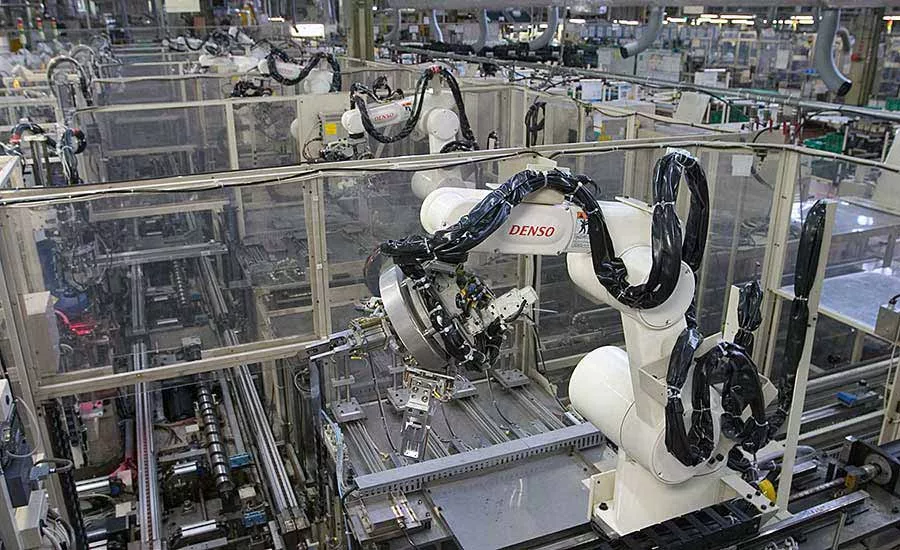
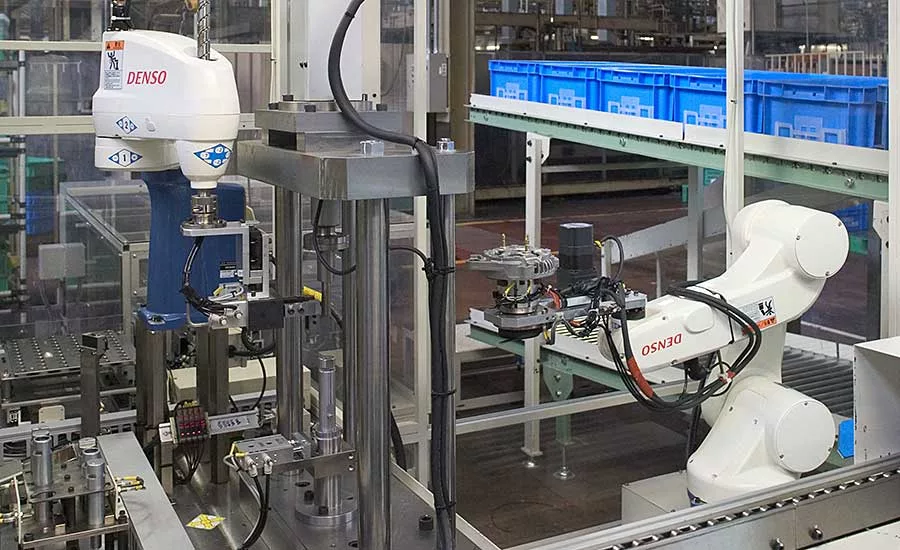
Small assembly robots are a class of robot arms consisting of four-axis (SCARA) and six-axis articulated robots with payload capacities up to 20 kg (44 pounds) and reaches up to 1,300 mm (51 inches). Larger robots have different cost of-ownership considerations.

Comparing apples-to-apples costs means understanding which items are included in the initial price quote and which are add-ons.

Robot and controller: Some manufacturers sell the robot arm and controller as a set, while others do not include the controller in the base price. The motor and encoder cable, power cable and electrical connectors may also cost extra.

Controller features: With some manufacturers, the controller comes with all features activated. Other manufacturers have software and firmware licenses, with additional post-sale charges required to activate individual features such as palletizing, singularity avoidance and collision detect. Additional charges may also be required to extend the I/O configuration, or obtain updates and license renewals.

End-of-arm tooling and vision system: Besides the hardware costs of end-of-arm tooling, as well as a vision system, if required, it is important to determine how easy it will be to integrate these with the robot, which can add considerably to the overall cost.

Electrical wiring and air piping: Robots require electrical wiring and air piping that deliver electricity and air to the end-of-arm tooling. If these are installed internally, there is no additional charge; otherwise they may cost extra.

Mounting-configuration firmware: If the robot is to be mounted in a horizontal or inverted position, it may need special firmware, often at an extra cost.

Looking for quick answers on assembly and manufacturing topics? Try Ask ASM, our new smart AI search tool. Ask ASM →

Software: Some manufacturers offer programming-software packages with a low base price, but charge extra for individual features such as 3-D simulation. Other manufacturers include these features as standard.

Training: Most manufacturers offer free training. The cost to the customer, however — in both non-productive employee time and travel expenses — can vary considerably, depending on the length of the training and the distance of the training center from the customer’s facility.

Maintenance: Robots differ greatly in their maintenance requirements. In addition to the cost of the maintenance itself, downtime due to overly frequent maintenance procedures can significantly increase the cost of ownership.

Obsolescence: Some manufacturers introduce new robot and controller models every few years, and quickly stop supporting older ones. Having to replace a robot due to premature obsolescence can be a major factor in cost of ownership. Other manufacturers offer support and upgrades for older robot models for up to 10 years after they are discontinued.

Speed and productivity: All other factors being equal, robot speed counts. A robot that completes more cycles per hour over a given working lifetime will have a lower cost of ownership than another robot that costs less initially, but has lower performance levels.

Energy consumption: Lightweight, efficiently designed robot arms require less power, so their motors draw less electrical current, resulting in significant long-term cost savings.

5 Things to Look for When Choosing a Robot

1. Expertise of the manufacturer: Small, high-speed, high-inertia robots have their own unique design challenges. A manufacturer that specializes in such robots is likely to have expertise that others do not.

2. Type of manufacturer: Robot manufacturers fall into two categories: (1) those whose primary business is selling robots and (2) those whose primary business is producing and selling other types of products, which they manufacture with robots they design and build themselves.

Manufacturers in the second category depend on their robots to keep their products competitive in the marketplace. As a result, they are likely to design robots that have the highest productivity levels, longest working lifetimes and lowest maintenance requirements.

3. High maximum allowable moment of inertia: The higher this figure, the more easily the robot can lift and move a given payload, putting less strain on its motors and resulting in a longer working life.

4. Continuous-duty cycle time: When comparing robot cycle times, ask whether the figures given are for continuous duty or only shorter bursts of an hour or less. If the latter, the robot will normally have to operate at a slower speed, reducing productivity.

5. Compact, efficient robot design: A compact robot design with a small footprint makes integration easier and saves valuable factory floor space.

DENSO Robotics
    3900 Via Oro Avenue
    Long Beach, CA 90810
    888-4-ROBOTX (888-476-2689)
    info@densorobotics.com
    www.densorobotics.com

Share This Story

Looking for a reprint of this article?
From high-res PDFs to custom plaques, order your copy today!

Recommended Content

JOIN TODAY
To unlock your recommendations.

Already have an account? Sign In

  • Made in the U.S.A.

    Consumer Products Manufacturing: Made in the USA

    Supply chain lessons learned during the coronavirus...
    Automated Assembly Systems
    By: Austin Weber
  • Best Practices for Press-Fit Assembly

    Best Practices for Press-Fit Assembly

    In manufacturing, ironclad formulas for success are hard...
    Assembly Presses
    By: Jim Camillo
  • aem0523leader-tesla1.jpg

    Tesla Rethinks the Assembly Line

    Engineers at Tesla Inc. have developed a new process that...
    Industries
    By: Austin Weber
Manage My Account
  • eMagazine Subscription
  • Assembly Newsletters
  • Online Registration
  • Subscription Customer Service
  • Manage My Preferences

More Videos

Sponsored Content

Sponsored Content is a special paid section where industry companies provide high quality, objective, non-commercial content around topics of interest to the ASSEMBLY audience. All Sponsored Content is supplied by the advertising company and any opinions expressed in this article are those of the author and not necessarily reflect the views of ASSEMBLY or its parent company, BNP Media. Interested in participating in our Sponsored Content section? Contact your local rep!

close
  • ultrasonic welding
    Sponsored bySonobond Ultrasonics

    Engineering Efficiency in High-Performance Assembly: How Ultrasonic Welding Enhances Throughput, Reliability and Quality

  • UV curing system
    Sponsored byDymax

    Why UV Intensity Alone Doesn’t Define Curing Performance

  • wooden pallets
    Sponsored byLEAN Manufacturing Products

    Eliminating Waste on the Shop Floor: Applying Lean Principles to Improve Manufacturing Efficiency

Popular Stories

ASSEMBLY News Now, episode-30: Volvo Redesigns EV Manufacturing

Volvo Redesigns EV Manufacturing

Boeing CEO Kelly Ortberg announces 1 billion investment

Boeing Plans $1 Billion Wichita Investment, Workforce Training Center

GE Appliances Worker on Line

GE Appliances Expands Factory AI With 800 Gemini Enterprise Agents

Watch the latest episode of ANN now!

Events

July 24, 2025

From Shop Floor to CFO: How Manufacturers Are Closing the Loop Between Operations and Finance

On Demand Learn how manufacturers are bridging the gap between the shop floor and ERP systems to gain real-time visibility, streamline operations, and kick-start digital transformation—without waiting years.

Sponsored by:

PicoStratusGreen
July 30, 2025

Buffer Analysis and Design Fundamentals for Manufacturing Excellence

On Demand In this presentation, Dr. Herman Tang shares practical insights from his industry experience and research on buffer management in manufacturing operations.

View All Submit An Event

Poll

Difficult Assembly Processes

Which assembly process gives you the most difficulty?
View Results Poll Archive

Products

Manufacturing Cost Policy Deployment (MCPD) Profitability Scenarios: Systematic and Systemic Improvement of Manufacturing Costs

Manufacturing Cost Policy Deployment (MCPD) Profitability Scenarios: Systematic and Systemic Improvement of Manufacturing Costs

See More Products
Register for webinar - Modernizing Automotive Assembly: Why Upgrading Legacy MES is a Business Imperative

Related Articles

  • New SCARA competes with linear axes, lowers cost of ownership

    New SCARA competes with linear axes, lowers cost of ownership

    See More
  • moser

    A Deeper Dive into Total Cost of Ownership: Part 2

    See More
  • moser

    A deeper dive into Total Cost of Ownership (TCO): Part 1

    See More

Related Products

See More Products
  • leaner

    Leaner Manufacturing: How to Make the Lean Production Process Easier, Faster, and More Cost-Effective

  • pocket.jpg

    How To Implement Lean Manufacturing, Second Edition

  • 9781138498730.jpg

    Manufacturing Cost Policy Deployment (MCPD) Profitability Scenarios: Systematic and Systemic Improvement of Manufacturing Costs

See More Products

Related Directories

  • HowToRobot

×

Never miss the latest news and trends driving the manufacturing industry

Stay in the know on the latest assembly trends.

JOIN TODAY!
  • RESOURCES
    • Advertise
    • Contact Us
    • Directories
    • Manufacturing Division
    • Store
    • Want More?
  • SIGN UP TODAY
    • Create Account
    • eMagazine
    • Newsletters
    • Customer Service
    • Manage Preferences
  • SERVICES
    • Marketing Services
    • Reprints
    • Market Research
    • List Rental
    • Survey/Respondent Access
  • STAY CONNECTED
    • LinkedIn
    • Facebook
    • Instagram
    • YouTube
    • X (Twitter)
  • PRIVACY
    • PRIVACY POLICY
    • TERMS & CONDITIONS
    • DO NOT SELL MY PERSONAL INFORMATION
    • PRIVACY REQUEST
    • ACCESSIBILITY

Copyright ©2026. All Rights Reserved BNP Media, Inc. and BNP Media II, LLC.

Design, CMS, Hosting & Web Development :: ePublishing