Lean Manufacturing Helps LED Lighting Company Compete
Continuous improvement helps Jarvis Lighting compete against low-cost rivals.
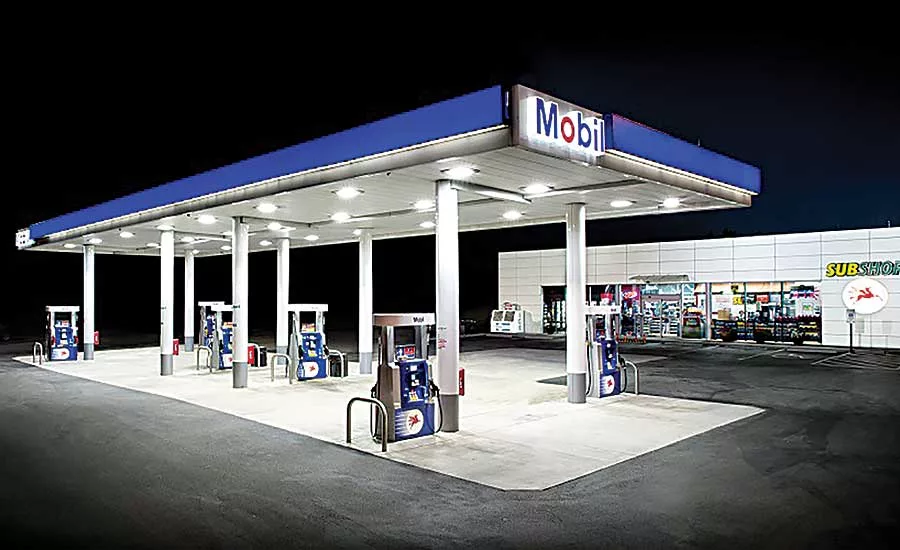
LED lighting technology is becoming increasingly popular, because it uses only 75 percent of the electricity required by incandescent bulbs, but it lasts 300 times longer and generates 90 percent less heat. Photo courtesy Jarvis Lighting
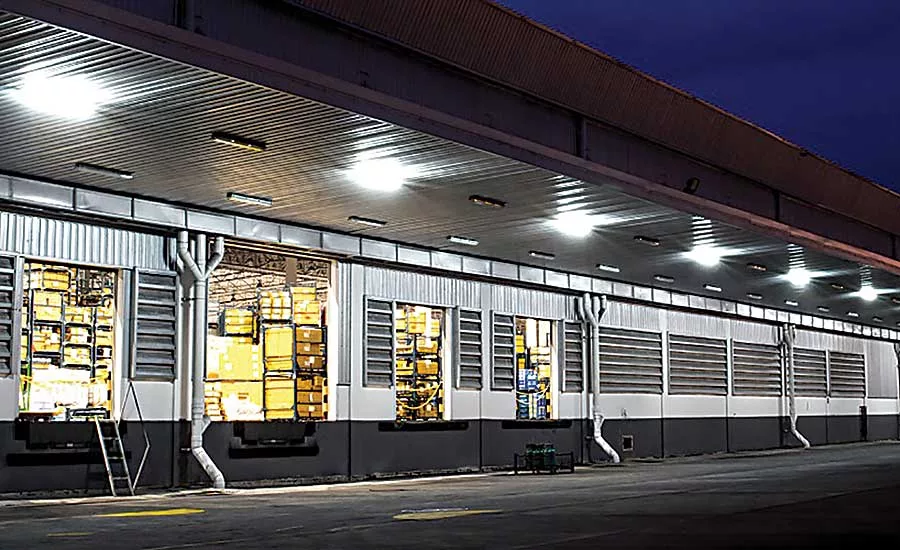
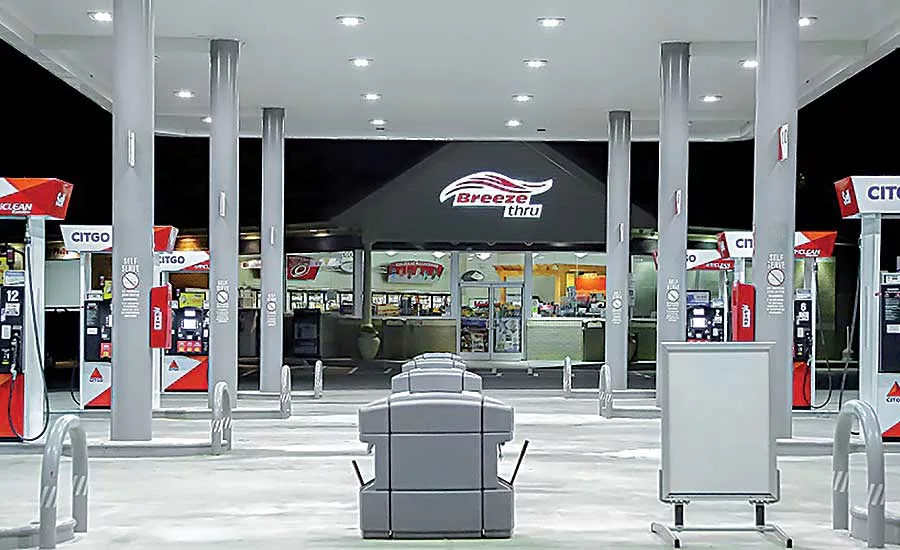
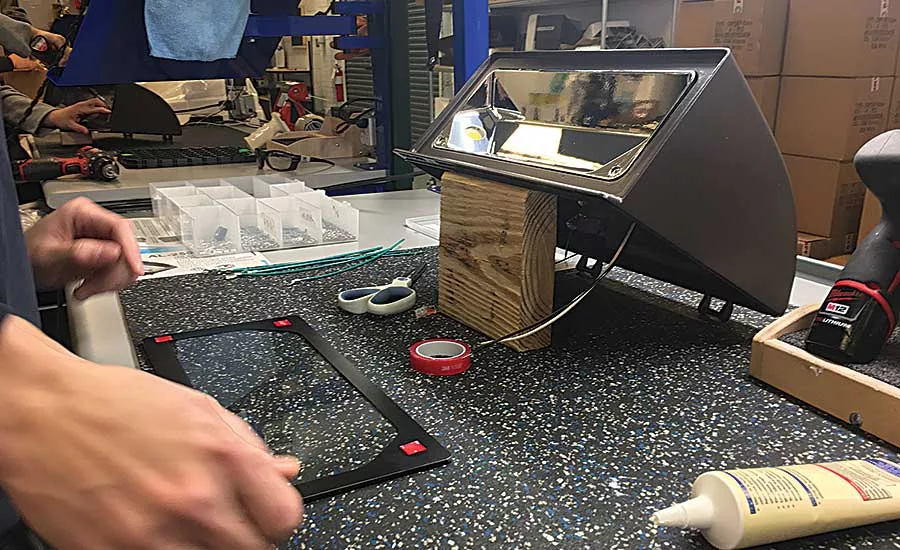
By leveraging lean production principles, Jarvis Lighting is building products in the United States while many of its competitors import. Photo courtesy Jarvis Lighting
Light-emitting diode (LED) lighting is one of the hottest segments in the electrical equipment industry today. And, as more consumers seek energy-efficient alternatives to traditional incandescent and fluorescent products, global shipments of LED fixtures, luminaires and modules are expected to grow more than 12 percent annually over the next five years.
Despite the increasingly competitive LED market, a small commercial light fixture manufacturer located near Chicago has carved out a profitable niche. By leveraging lean production principles, Jarvis Lighting is building products in the United States while many of its competitors import. The company’s motto is “Bright Done Right.”
“In the LED lighting industry, where many competitive fixtures are available from China for a fraction of the price, much has to be done to keep costs low,” says Kirby Corkill, president of Jarvis Lighting. “For us, cost reduction goes beyond component pricing.
“While we have utilized a variety of manufacturers for our components to keep costs low, we believe that our greatest money savings is in continuous improvement,” adds Corkill, who founded the company several years ago. “Even a two-second savings over the course of time is important. By increasing the efficiency of our plant, we have been able to save time and [reduce] cost.”
Many small LED lighting manufacturers are either being taken over by larger companies or being run out of business by cheap, imported competition. However, Jarvis Lighting continues to experience consistent growth. In fact, the company is currently renting its current facility, because it expects to expand into a bigger plant in the near future.
The startup company evolved from a business incubator located on the Near West Side of Chicago. Last year, after it outgrew its 2,700-square-foot loft space, Jarvis Lighting moved to a 20,000-square-foot facility in Elk Grove Village, IL.
The company previously operated out of five scattered locations at the incubator, which houses multiple startups in a variety of industries. Today, all operations are under one roof. The new low-volume, high-mix plant also allows for increased production while maintaining strict quality control.
Looking for quick answers on assembly and manufacturing topics? Try Ask ASM, our new smart AI search tool. Ask ASM
“At Jarvis, we believe that one of the biggest wastes of manufacturing is untapped employee potential and creative genius,” says Adam Broda, production manager. “We make sure that everyone is encouraged and able to contribute to continuous improvement.
“We keep everyone involved in discussions about improvements and try our best to implement improvements submitted by everyone,” explains Broda. “By investing in our employees, we ensure that [they] are invested in us, which leads to improvements every day.”
Popular Products
Solid-state lighting technology is becoming increasingly popular, because it uses only 75 percent of the electricity required by incandescent bulbs, but it lasts 300 times longer and generates 90 percent less heat.
Instead of lamps and ballasts, LED lights use diodes and drivers. Instead of a filament, they use a chip, and instead of ballast a driver regulates power.
A small electronic chip is the key component behind the technology. But, instead of processing information, it gives off light. Whenever a current is passed through it, the electrons in the chip become excited and emit the energy as light.
Jarvis Lighting produces a diverse array of commercial LED products. They’re typically used in applications such as gas stations, indoor parking garages and outdoor parking lots. However, the company also makes light fixtures that are used in commercial coolers, freezers and refrigerators.
In addition, Jarvis produces a line of products that can be used to retrofit old lighting fixtures. They provide a simple, cost-effective way to upgrade existing lights to LED technology.
Two of Jarvis’s most popular products are canopy lights and wall packs. The rugged products are often used in outdoor environments and can be mounted on ceilings, poles or walls.
Canopy lights are typically found at gas stations and convenience stores. They illuminate service islands that house gas pumps, making them bright and secure at night.
LED technology is becoming popular with gas station owners, because it’s more economical to operate vs. traditional sources of illumination, such as metal halide, high-pressure sodium, high-intensity discharge or compact fluorescent lighting.
Wall packs are used as area lights, flood lights or billboard lights. Typical applications include security lighting near entry doors of hotels and office buildings.
Wall packs are often equipped with optional features that help conserve electricity, such as motion sensors or dusk-dawn photo sensors. High-impact resistant polycarbonate prismatic lenses help spread the light over large areas. The models are available in multiple variations ranging from 120- to 277-volts, and in three types of finishes.
Jarvis’s made-in the-USA production philosophy sets the company apart from many of its competitors. That’s because up to 90 percent of all wall-pack units are assembled in China and other low-cost nations.
“We have found that our main competitive advantage against bigger, more well-known companies’ products is our unparalleled communication with customers and short lead times,” says Lauren Strandberg, product engineer. “While we are great with return customers, it is often difficult to get a potential customer to try a new product as opposed to something they’re familiar with.
“Short lead times are often what convinces first-time customers to try our products,” explains Strandberg. “Our lead times have been brought down to a maximum of one day for almost all products because of the effort everyone puts in to continuously improve.”
Ever since Jarvis Lighting moved from multiple dorm-room-like small units in Chicago to one cohesive building in the northwest suburbs, each part of the production process has been evaluated for efficiency.
“From reorganizing the layout of the plant to minimize transportation of material to setting up workstations to minimize employee motion, we are consistently increasing output without increasing effort,” says Strandberg.
“In the year that we have spent at the new facility, every part of it has been improved in some way, without affecting our production numbers and lead times,” Strandberg points out. “[The management team] has been enthusiastic, which has inspired [employees to contribute] process analysis and improvements.”
Lean Plant Floor
Each work day begins with 30 minutes of 5S and process improvement time. Everyone in the factory, including assemblers, engineers and management, spend half an hour finding some process they can improve and developing a plan of action. At the end of this period is an all-company meeting, where at least one person gets to “show and tell” what they’ve done.
“Often, bringing people together and encouraging discussion also leads to further improvements,” says Broda. “On an individual level, there are process improvement suggestion sheets available to each employee. Everyone is encouraged to submit at least one a day.
“Any time someone notices a problem or inefficiency in a process, they are asked to submit it—even if they don’t have a solution for it yet—and identify what type of waste it is on paper,” adds Broda. “Then, it can be addressed the next morning. Every single person is important and their input is valued. Making it easy to contribute engages everyone.”
Key components used in LED light fixtures include drivers, circuit boards, wires, connectors, end plates, diffusers, heat sinks, die-cast aluminum housings and glass covers, in addition to brackets, screws and other mounting hardware.
LED light fixtures often feature optics to control the light. This can be accomplished through lenses, reflectors or a combination of the two. Both options have advantages for specific situations. Jarvis Lighting uses a combination of both, depending on the product’s intended application.
That multiple product variation requires flexible assembly lines that can easily handle short production runs.
The assembly processes at Jarvis Lighting vary slightly depending on what type of light fixture is being built. Usually, the process consists of screwdriving components together, functionality testing, safety testing (including high potential and dielectric withstand tests), adhesive bonding, and packaging the finished product. On occasion, hand soldering is also part of the process.
“By moving away from a linear assembly line style of manufacturing toward cellular workstations, we have drastically reduced move time and queue time,” says Corkill. “Each workstation is specialized for the specific product being built at it. Components are rarely restocked and things rarely have to be moved.
“By keeping track of assembly time by both product and person, we have been able to accurately predict lead times for all our products with very few delays,” claims Corkill. “By keeping track of products from the point of order placement to arrival at the customer’s door, we consistently have significantly shorter lead times than our competitors.”
“Because our operations are mostly manual, much of the technology we’ve implemented consists of devices, not machines, specialized for our processes,” adds Broda.
Assemblers use a variety of simple tools, such as:
- Retractable cables for any wires that are only used once for each product to ensure that they aren’t left in the way.
- Magnetic boards to keep track of frequently used drill bits.
- Tool holders, built in-house, to reduce motion and the time it takes to lift cordless screwdrivers, drills and other power tools.
- Adjustable benches and platforms that raise and lower to reduce motion and excessive bending when retrieving components.
“We also use specially made setups to quickly and efficiently accomplish small, monotonous tasks, such as putting four screws in a bag which is then included to install a fixture,” Broda points out.
“We are committed to ensuring quality of all products and have assemblers check each other’s work before packing it up to ship,” adds Broda. “This is both a functional and cosmetic inspection. On a deeper level, by educating everyone about what they are doing and why, we ensure that people are aware of not only creating quality products, but what level of quality we maintain.
Looking for a reprint of this article?
From high-res PDFs to custom plaques, order your copy today!