Four Sources of Inaccuracy in Sensor Measurements
Electromagnetic signal interference and other factors can adversely affect the measurement accuracy of sensors
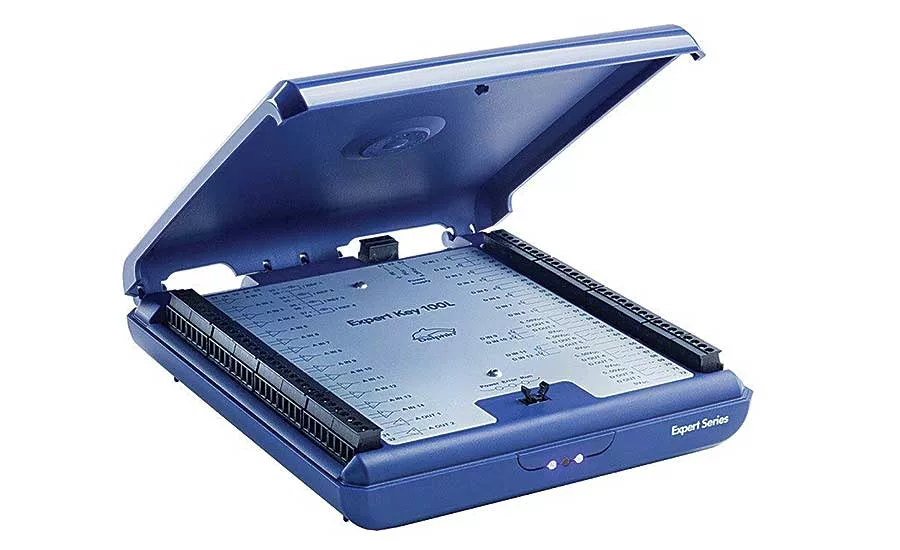
Expert Key devices are for PC-based measurement data acquisition and testing technology. The devices can be connected to PCs via USB or LAN interfaces. Photo courtesy Delphin Technology AG
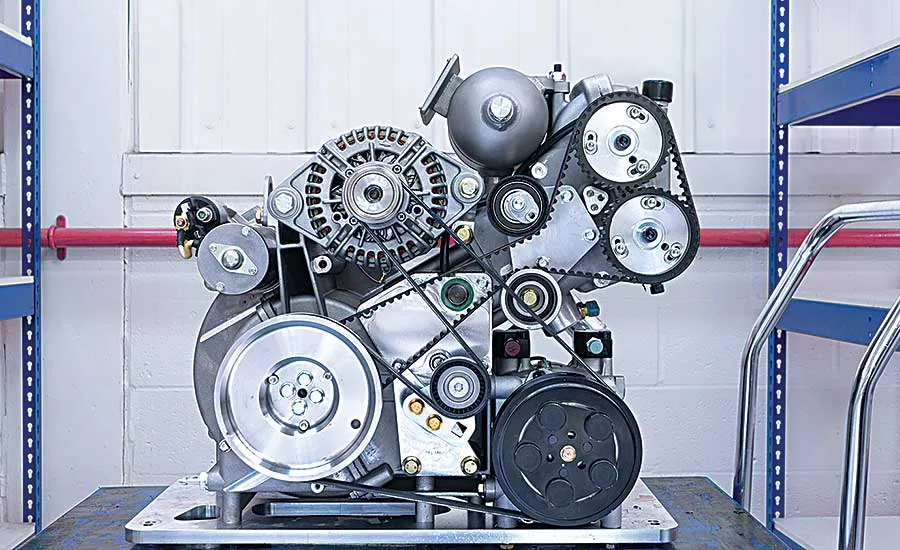
This piston engine is driven by the expansion of liquid nitrogen or liquid air. Photo courtesy Dearman
Connecting a sensor, such as a thermocouple, to a data acquisition system to obtain accurate measurements involves some forethought. For example, electromagnetic signal interference (also known as signal noise) and other factors can combine to negatively affect measurement accuracy—or possibly even damage the equipment. Understanding these factors is crucial to obtaining meaningful measurements.
This article addresses the four most common causes of measurement accuracy issues. These issues regularly occur when a data acquisition system collects data in typical industrial process applications.
Signal Noise
A leading cause of measurement errors, signal noise is caused by multiplexers in PC-based data acquisition systems, allowing cross-channel interference due to their capacitance. Multiplexer inputs store a charge proportional to their measurement system’s sample, or data collection, rate. This is why a high sample rate and the resultant data exchange can dramatically increase signal noise.
There are several ways to lessen the effects of signal noise:
Connect an isolation amplifier’s output to the data acquisition system’s multiplexer input, especially when using high sampling rates. Some measurement systems have built-in isolation amplifiers for every channel.
Using cable shielding is a simple way to reduce signal noise.
Using twisted wire pairs further reduces signal interference.
A signal conditioning amplifier presents a low resistance and small, uniform capacitance to the system multiplexer. This can decrease inaccuracy.
Looking for quick answers on assembly and manufacturing topics? Try Ask ASM, our new smart AI search tool. Ask ASM
Damaging Voltage
High voltage can cause serious damage to data loggers and PC-based data acquisition systems. Equipment housed in an enclosure isn’t necessarily safe either—the culprit could be faulty wiring or another installation mistake. Even a small amount of excessive voltage can cause your system’s channels to produce data errors.
To help prevent the likelihood of system damage, choose an instrument with galvanic isolation. This precaution ensures that the vulnerable parts of your system will be protected from high-voltage hazards. The system’s I/O, channels, power sources, and sensors can all be isolated.
Likewise, an intrinsically safe isolation barrier and an insulated enclosure can add further protection.
Be sure to check your system’s maximum input voltage specification. This is the manufacturer’s rating for the safest voltage level the device can be exposed to without a risk of damage.
Signal conditioning modules use varying amounts of isolation to eliminate ground loop problems and induced field noise. As with signal noise, using a signal conditioning amplifier will protect your system from damage due to voltage outside its specified tolerance.
Common Mode Voltage
When a data acquisition system takes measurements in the presence of a common-mode voltage (CMV), its measurement accuracy will suffer. Users can learn the extent of this inaccuracy by checking their system’s common mode rejection (CMR) specification as listed by the manufacturer.
CMR is a noise-reducing phenomenon that occurs when a signal common to two lines which are opposed in polarity gets cancelled at the receiving end. CMR is usually listed as a ratio expressed in decibels, with higher ratings being more effective. This common mode rejection ratio (CMRR) rating shows you how much of the common-mode signal will adversely affect your system’s measurement accuracy.
A measurement system featuring a differential input can reject CMV to a degree determined by its CMRR.
If your measurements are being affected by AC or DC common-mode voltage, you can use a signal conditioning amplifier to reduce noise. The amplifier’s isolation barrier will reject the CMV. However, the amplifier’s own CMRR may be affected in the case of AC applications, which often give you greater difficulty in obtaining accurate measurements. A common example is when you have to deal with electromagnetic noise in the area.
Wide Measurement Ranges
If you’re working in an industrial application or another wide-range task, your measurement system may be at risk from inadequate input protection. For example, occasionally users try to measure high voltages while their system is still set for lower ranges, which causes the system to exceed its own max range value. Without input protection, this can cause inaccuracies or even permanently damage the system.
Many devices are available to protect your system’s inputs. While none of them are perfect, they can help ensure that your system will more safely handle higher-input signals. Depending on your application, you may also want to select products rated to protect against high common-mode voltages and transient events.
For more information on data acquisition systems, call 800-956-4437 or visit www.dataloggerinc.com.
Data Logger Aids in Testing Engine Powered by Liquid Nitrogen
Electrochemical batteries are the most common way to store energy. Sometimes, however, it’s more effective to store energy as cold—in the form of liquid air. That is the central idea behind an innovative new zero-emission piston engine being developed by UK technology startup Dearman.
Liquid air can be kept safely in insulated, but unpressurized, tanks. When exposed to heat, liquid air will instantly re-gasify and expand 700-fold in volume. This expansion drives the pistons of Dearman’s innovative new engine. The engine operates like a high-pressure steam engine, but the low boiling temperature of liquid air means that ambient heat can be used as a heat source, eliminating the need for traditional fuel.
A unique feature of the engine is the use of warm water as heat-exchange fluid. When the water mixes with the extremely cold liquid air, the gas expands at a near-constant rate, which significantly increases the engine’s efficiency. The only emission from the engine is air. It does not emit nitrous oxide, carbon dioxide or particulates.
As a bonus, producing liquid air may not necessarily require much additional energy. Because liquid air is simply air that has been cooled to -196 C, it can be produced by recycling the huge amounts of cold energy that are typically wasted when liquid natural gas is re-gasified at import terminals around the world.
The first application for the engine is a zero-emission transport refrigeration system. To see how the engine would perform in the real world, Dearman engineers wanted to collect a slew of data on the engine’s performance and durability. A Rebel CT vehicle data logger from Influx Technology is doing just that.
The data logger remotely monitors the engine’s pressure, temperature and other variables. Due to its compact size and robustness, the data logger is uniquely suited for use in the field. The device can be discretely fitted inside a customer’s vehicle.
The unit records a variety of data, such as temperature, speed and pressure. Setup is easy, with no need to write complex scripts. Engineers can start monitoring in minutes. For CANbus applications, the data logger can be used to collect raw CAN messages in a “listen only” mode. Additionally, most on-board diagnostic data can be acquired without the need for other instrumentation.
“The Influx Rebel CT continues to be an important part of our refrigerated transport application development program,” says Nick Owen, chief technology officer at Dearman. “We are bringing zero-emission power and cooling technology to market in a compressed time frame, and the Influx Rebel CT has supported our intensive application performance and durability testing program with outstanding reliability.”
The logger has three CAN bus inputs, a K-line input, four digital I/O channels, and four analog input channels. This enables reliable collection of data from several sources, without any user interaction, for extended periods. The unit is also equipped for Ethernet communication and supports data storage on SDHC cards. It is packaged in an IP68 enclosure and can be expanded to include GPS, accelerometer, WiFi and 3G. Options include a 1-kilohertz, internal XYZ accelerometer, a K-box and a dash display.This piston engine is driven by the expansion of liquid nitrogen or liquid air.
Looking for a reprint of this article?
From high-res PDFs to custom plaques, order your copy today!