Manufacturing Execution Systems Meet the Cloud
MES are essential to digital production initiatives.

Harnessing cloud capabilities to harvest data from manufacturing processes can save money, optimize production and speed up project implementations. Photo courtesy 42Q
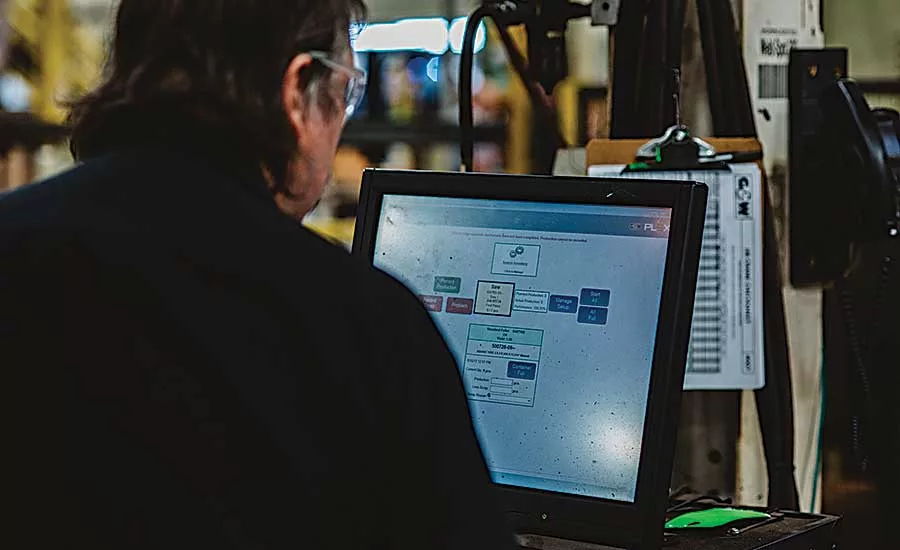
The advent of cloud-based computing has revolutionized the amount and type of data that’s available to engineers. Photo courtesy Plex Systems Inc.
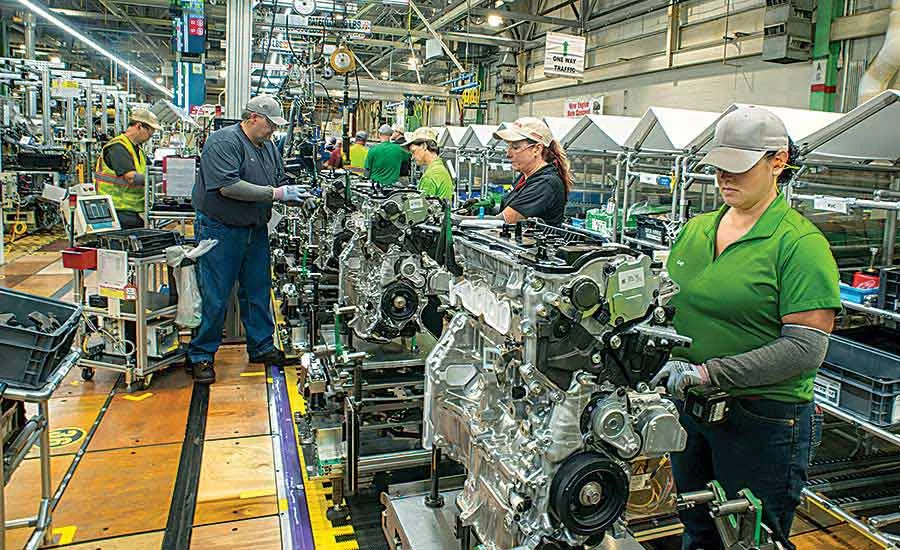
A cloud-based MES platform can help guarantee that all parts are at the specific assembly operation at the right time. Photo courtesy Toyota Motor Corp.
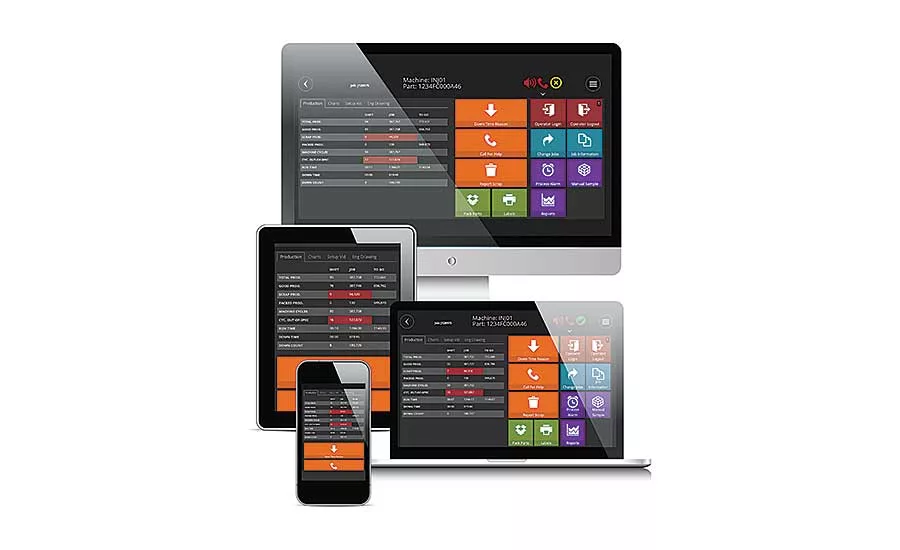
Many of the components of a manufacturing execution system can now reside in the cloud. Photo courtesy Epicor Software Corp.
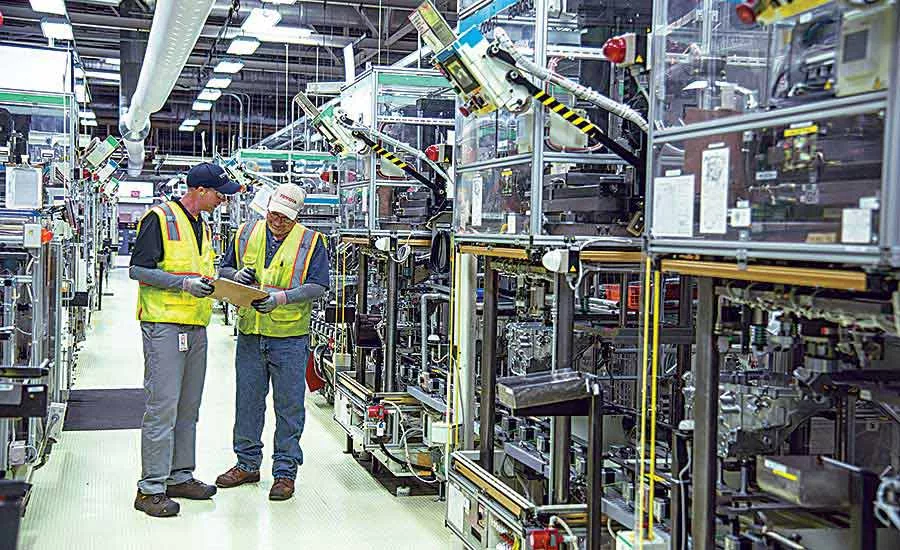
Manufacturers in a wide variety of industry have implemented cloud-based MES technology. Photo courtesy Toyota Motor Corp.
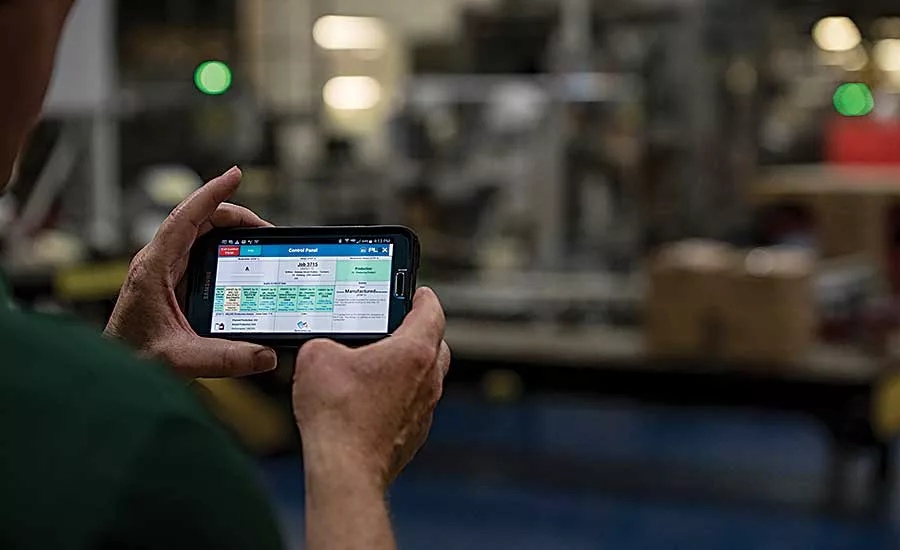
Cloud-based MES is the platform that catapults manufacturers into Industry 4.0. Photo courtesy Plex Systems Inc.
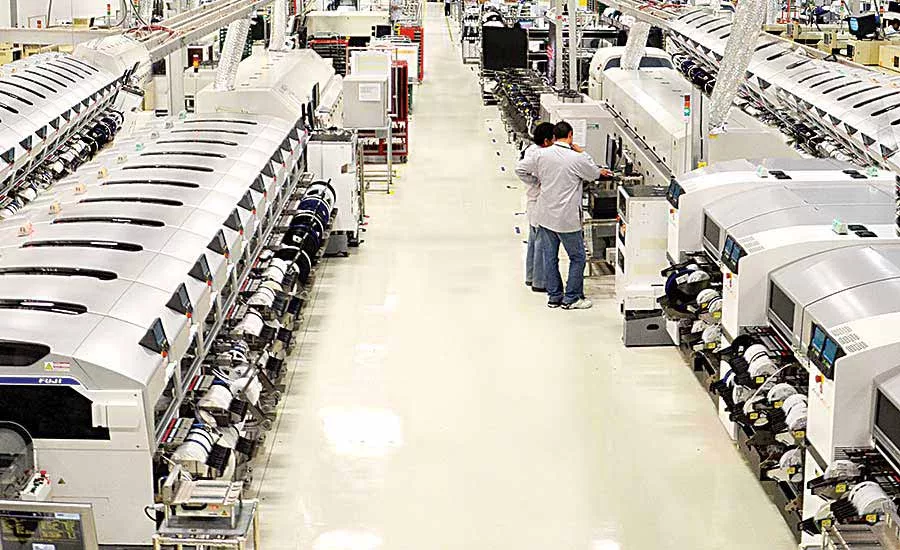
The next generation of MES and automation are some of the most important drivers behind digital manufacturing and Industry 4.0. Photo courtesy 42Q
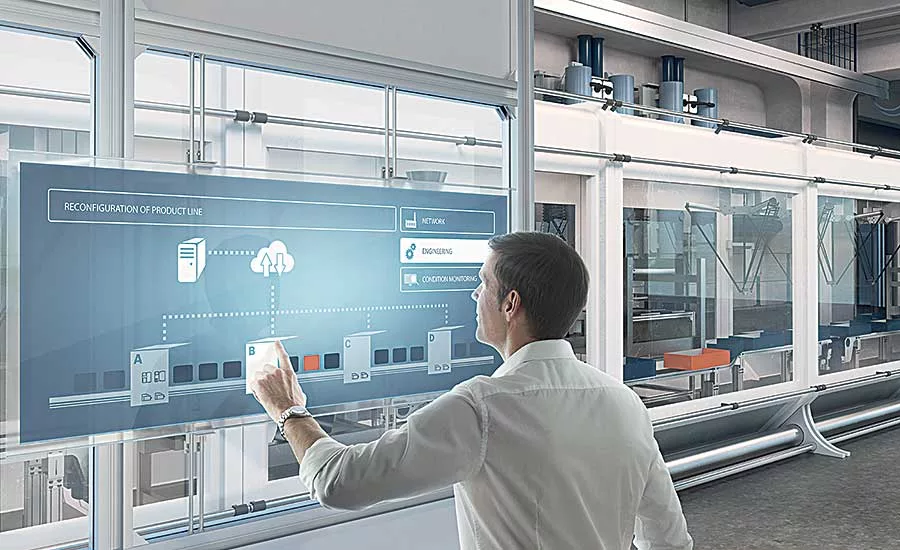
Manufacturers in a wide variety of industries have implemented cloudbased MES technology. Photo courtesy Bosch Rexroth Corp.
Manufacturing execution systems (MES) are critical elements of Industry 4.0. When all production processes are linked and synchronized with the overall operation, manufacturers have a strategic tool that enables them to improve productivity, streamline costs, boost quality and reduce time to market.
An MES comprises detailed plant-floor data and activities, typically operating between an enterprise resource planning system and manufacturing equipment. It captures all real-time production activity and tracks inventory for traceability.
The advent of cloud-based computing has revolutionized the amount and type of data that’s available to engineers. It enables them to extract and analyze vast quantities of information that optimizes the performance of assembly lines.
The National Institute of Standards and Technology defines cloud computing as “a model for enabling convenient, on-demand network access to a shared pool of configurable computing resources that can be rapidly provisioned and released with minimal management effort or service provider interaction.”
According to the Manufacturing Enterprise Solutions Association, harnessing cloud capabilities to harvest data from manufacturing processes is a powerful tool that can save money, optimize production processes, speed up project implementations, and enhance safety and security.
“Cloud-based systems bring functionality, such as mobile and overall connectedness, that can be accessed anywhere instantly without internal development,” says Bob Argyle, chief customer officer at Leading2Lean LLC, a software company that markets a lean execution system that works across existing legacy systems.
“Rather than developing internally to have the connectedness of machines, people, systems and plants, the cloud makes it much simpler and allows you to leverage tools that are already available,” claims Argyle. “The days of having a software company embedded in your operations are coming to an end. Solutions are advancing so fast that providers will be able to provide cutting-edge capabilities much better than [manufacturers can] internally.”
Looking for quick answers on assembly and manufacturing topics? Try Ask ASM, our new smart AI search tool. Ask ASM
Cloud MES Defined
A cloud-based MES system is accessed through an Internet browser. As a result, it does not require expensive hardware, IT personnel or a lengthy implementation process.
Compared to traditional on-premise MES systems that typically require complex installations, a cloud-based system is easy to implement and is less expensive overall.
“Conceptually, cloud-based MES is no different from traditional MES,” says Rick Franzosa, research director for supply chain technology at Gartner Inc., a leading technology research firm. “They both have the same task, which is management and control of the manufacturing process in near real time.”
However, Franzosa says several core functions must exist within any MES system, including data collection, data visibility, dispatching, order execution, procedural enforcement, reporting and analytics, and tracking.
“The best MES systems deliver a real-time production ecosystem that guides, error-proofs and reports shop floor activities as they occur in order to achieve optimized, responsive plant operations and processes,” notes Michael Hart, senior product manager at Plex Systems Inc., a leading supplier of MES software. “Such a unified production environment will support a single version of plant data and intelligence connected to a corporate-wide master data platform.
“The cloud is an ideal platform for MES because it is inherently connective, making it easy to link machines, people, systems, devices and materials to the platform,” explains Hart. “The richness of those connections then enables better process automation, better traceability and quality management, as well as the opportunity for analytic applications tapping into the master data.”
“Traditionally, MES has run on-premise where both the server, human-machine interface and any sensors that might be used to collect data from a machine all were physically located in a plant,” adds Andrew Robling, principal product manager at Epicor Software Corp., a leading MES software supplier. “With the increased bandwidth and stability that have now become the norm, this has allowed MES to untether itself from having to be physically located at the plant.
“Many of the components of an MES can now reside in the cloud,” claims Robling. “This means that in a manufacturing environment with modern OPC-compliant PLCs, all the components of MES can reside in the cloud and communicate through either the public cloud or private cloud to the machines.”
In an environment with older equipment, Robling says a hybrid-cloud deployment can still be possible, with the MES server and analytics all residing in the cloud. However, any hardware that is needed to collect data from machines would be on-premise.
Cloud MES in Action
Manufacturers in a wide variety of industries have implemented cloud-based MES. And, despite misperceptions, the technology is not something that’s just for large companies.
“Cloud-based based MES is more applicable to medium and small manufacturers, due to the lack of IT infrastructure and resources found in those companies,” says Tom Muth, industry and roles portfolio director at Dassault Systemes’ DELMIA. “This interest is based on lower total cost of ownership, minimal IT footprint and relatively rapid deployment.
“Small manufacturers are able to focus on their core business rather than on managing an IT infrastructure,” explains Muth. “That allows companies to dedicate their IT resources to support their strategic objectives.”
“Cloud is actually making sophisticated MES solutions available to smaller and midsized organizations in a way that wasn’t conceivable just a few years ago,” adds Hart. “Companies no longer require a huge IT staff or expensive hardware and systems integration expertise.
“Cloud-based systems also eliminate the need for big customization projects by allowing customers to configure settings and processes to fit their individual needs, greatly reducing both initial and ongoing expenses,” Hart points out. “And, because cloud systems run a common code line across all customers, you get the latest version of the solution every day.”
Sanmina Corp., a leading contract manufacturer that specializes in electronics, is a good example of a company that has harnessed cloud-based MES to drive its Industry 4.0 strategy. The company has already connected more than 25,000 pieces of production equipment to the cloud.
Sanmina uses cloud MES for real-time manufacturing visibility, process control and quality control across its operations. It serves as the backbone for the company’s Internet of Things and manufacturing automation initiatives.
Cloud-based MES is currently deployed in more than 50 Sanmina factories in 15 countries worldwide, including full integration with highly complex surface mount production and fully automated production lines. The cloud MES is also connected to the company’s global, multi-tiered supply chain.
Sanmina engineers reconfigure their assembly lines daily and manage a large number of scheduling changes each week. Work in process, production rates and yields are monitored in real-time.
Text alerts are automatically sent to engineers when key business indicators fall below a programmed threshold. For some production lines, raw material levels are continuously monitored by cloud MES and automated guided vehicles deliver components from automated warehouses to replenish workstations.
“Leveraging cloud-based MES to connect automated production lines, supply chain systems and the plant floor has led to dramatic improvements in our business operations,” says Manesh Patel, chief information officer at Sanmina. “Teams now make decisions more quickly, based upon real-time data.
“Our manufacturing teams are automatically notified of any production parameters running below target,” adds Patel. “Quality personnel have confidence in production lines that use forced routings and components that are scanned and verified. The system can also verify the electronic training records for production staff when they badge scan or log into their workstations.”
Another manufacturer that’s benefitting from cloud MES is Autoliv Inc., a Tier One supplier of automotive safety systems. It’s currently using the technology at 82 facilities in 27 countries.
“Cloud-based technology enables better communication and sharing of ideas across the network,” claims Phil Anderson, global director of MES at Autoliv. “A focus on quality is our top priority. We have seen faster response to problems, more accountability and greater efficiency across our plant network.”
Results have included a 30 percent improvement in response time to maintenance issues, a 5 percent improvement in operational availability and a 12 percent reduction in the cost of spare parts.
Important Technology
As manufacturers migrate toward Industry 4.0 and implement fully digital factories, cloud-based MES will play a key role.
“The first fully digital factories have been implemented by companies that have integrated software platforms that link all aspects of manufacturing, from initial product design to factory layout and manufacturing process optimization to customer feedback after delivery,” says Srivats Ramaswami, chief technology officer at 42Q, a leading supplier of cloud-based MES technology.
“This integration ties together each aspect of the manufacturing process, including computer-aided manufacturing, computer-integrated manufacturing and shop floor data collection systems, with MES providing the backbone for all of this data,” explains Ramaswami.
“These software systems do more than trade data,” Ramaswami points out. “They eliminate much of the mistake-prone human intervention that goes with managing production. The next generation of MES and automation are some of the most important drivers behind digital manufacturing and Industry 4.0, along with data analytics and artificial intelligence.”
According to Ramaswami, business advantages of cloud-based MES include:
Increased competitiveness. “For an industry that has relied heavily on low-wage regions for manufacturing cost reduction, investments in digital technology like cloud MES enable higher wage countries to compete with offshore manufacturing hubs for the first time in a generation,” claims Ramaswami. “This will enable manufacturers to select production locations according to technical capabilities and proximity to consumer demand, rather than decisions driven primarily by wages.”
Increased productivity. “An MES system that seamlessly integrates with advanced automation, including artificial intelligence systems, can monitor critical manufacturing key performance indicators (KPIs) such as yield, throughput and work-in-process levels,” explains Ramaswami. “In one example of a factory embracing digitization and Industry 4.0 principles, a complex operation that at one time required 17 full-time operators was reduced to just six, with zero loss in output and an increase in quality metrics.”
Manufacturing process optimization. “Real-time process control, enabled by cloud MES is one of the drivers to streamline processes,” says Ramaswami. “At the same time, machine-to-machine communications and integrated systems will drive opportunities for greater collaboration among producers, suppliers and other stakeholders along the value chain.”
Seamless record-keeping and traceability. “The seamless record-keeping enabled by cloud MES will speed traceability while limiting liabilities, warranty costs, quarantines and recalls,” claims Ramaswami.
In the past, MES technology only applied to the physical production of materials, including molding, stamping and machining.
“That definition of MES is obsolete,” says Ramaswami. “Modern cloud MES solutions integrate with all systems within a factory, including warehouse and material handling systems, inventory management, and even shipping and receiving systems.
“For assembly line operations, a cloud-based MES platform can help guarantee that all parts are at the specific [workstation] at the right time, that the work instructions for the assembly operation are always up to date, and that post-assembly test results are recorded accurately with the assembly serial number and all subcomponent serial numbers for track and trace capabilities,” Ramaswami points out.
The Road to Industry 4.0
One of the biggest benefits of cloud-based MES is manufacturing collaboration. Traditional MES was focused on plant optimization, plant performance and plant KPIs.
Cloud-based MES allows engineers to analyze the performance of their entire manufacturing network, not just for comparison purposes, but for better flexibility and agility.
“Currently, 70 percent of data collected in production never leaves the factory floor,” claims Gartner’s Franzosa. “Cloud-based MES can help make all of this data available for display, analysis and better decision making.
“The main tenets of Industry 4.0 and smart manufacturing revolve around key technologies like big data, social networks and analytics, all of which are made more achievable by cloud-hosting,” says Franzosa. “While the question comes up whether or not MES ‘fits’ or will be replaced by machine learning, Industrial IoT and smart manufacturing, the fact is, regardless of what the future solution is called, there will always be a need for managing the execution of manufacturing.”
According to Plex Systems’s Hart, cloud-based MES is the platform that catapults manufacturers into Industry 4.0. “It all starts with connectivity,” he points out. “Because modern cloud solutions are designed from the outset to connect to equipment, devices and other systems, it really moves organizations into a place where they can use connectivity as a competitive advantage.
“As we see things like jet engine manufacturers selling thrust hours or new cars getting software updates in the field, it becomes imperative to connect the entire manufacturing operation—from suppliers and raw materials all the way to the performance of a finished product in the field,” adds Hart.
“Connected manufacturing with cloud MES also makes it possible for organizations to look deeper into their own operations for efficiency by collecting and analyzing more machine data or tracking the movement of parts through a facility,” says Hart. “All of that becomes possible and, more importantly, cost effective with the cloud.”
Looking for a reprint of this article?
From high-res PDFs to custom plaques, order your copy today!