Assembly Magazine logo
search
Ask ASSEMBLY AI
cart
facebook twitter linkedin youtube
  • Sign In
  • Create Account
  • Sign Out
  • My Account
Assembly Magazine logo
  • TRENDS
    • Ask ASSEMBLY AI
    • Trends
    • News
    • New Products
  • INDUSTRIES
    • Aerospace
    • Appliance
    • DFMA Assembly
    • Medical Devices
    • Green Manufacturing
    • Lean Manufacturing
    • Machinery Assembly
    • Electronics Assembly
    • Automotive
  • TECHNOLOGIES
    • Adhesives & Dispensing
    • Assembly Presses
    • Automated Assembly Systems
    • Manufacturing Management
    • Manufacturing Software
    • Motion Control
    • Screwdriving & Riveting
    • Robotics
    • Test & Inspection
    • Plastics & Metal Welding
    • Wire Processing
    • Workstations
  • AUTONOMOUS & ELECTRIC MOBILITY
    • AEM Magazine Archives
    • Autonomy
    • Electrification
    • Mobility Services
    • Assembly & Testing
    • AV/EM News
  • MEDIA
    • Ask ASSEMBLY AI
    • Podcasts
    • Assembly News Now
    • Assembly TV
    • Webinars
    • eBooks
  • EVENTS
    • Calendar
    • The ASSEMBLY Show
  • MORE
    • Exclusives >
      • Plant of the Year
      • Capital Spending
    • Buyers Guide >
      • Supplier Insights
    • Classifieds
    • Featured Products
    • Newsletters
    • Store
    • White Papers
    • Columns
    • Sponsor Insights
  • INFOCENTER
    • Assembly & Test Solutions
  • EMAGAZINE
    • eMagazine
    • Archive Issues
    • Advertise
    • Contact Us
    • Sign Up

advertisement

How To Conduct a Risk Assessment
atc

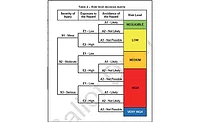
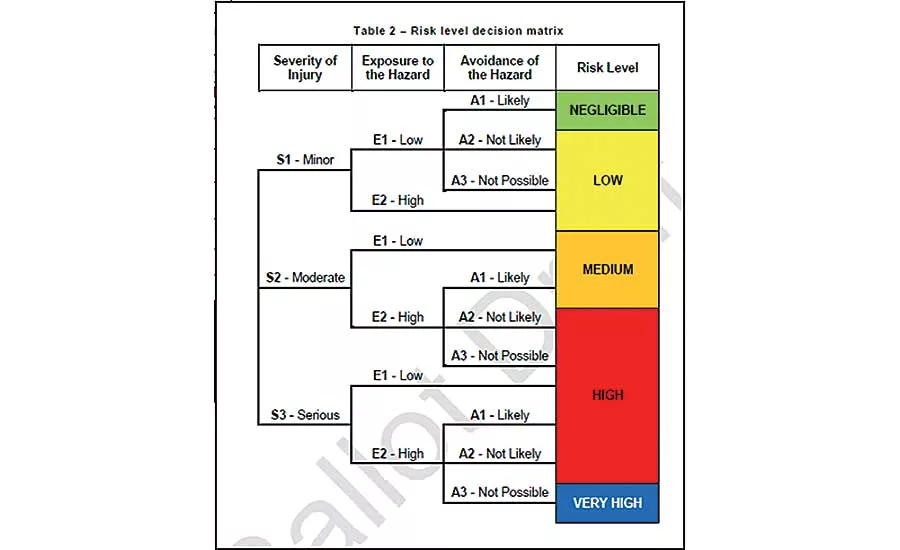
Figure 1: Initially risk is calculated by using the 3-2-3 rule to quantify hazards from RIA TR R15.306.
atc

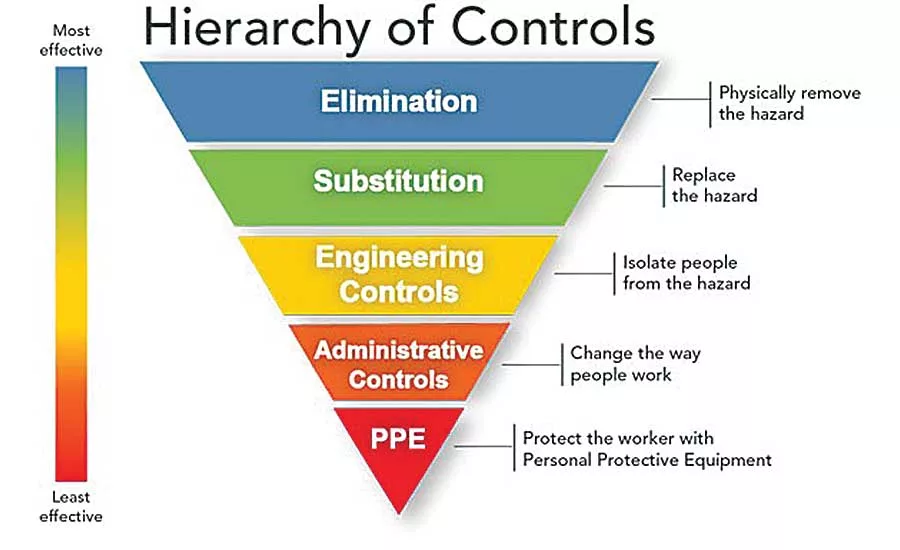
Figure 2: ISO 12100 and ANSI B11.0 indicate that not all hazard mitigation is created equal.
atc
atc
atc
atc
March 1, 2018

Risk assessments are live documents that follow machinery from its infancy until it is put out of commission. They help owners understand and maintain suitable, safe environments for their employees. So, it is important that risk assessments are not only thorough, but easy to create and follow. The process of designing and maintaining safety systems for automated equipment may seem daunting, but it can be broken down into 5 simple steps.

  • Identifying Hazards
  • Assessing Initial Risk
  • Risk Reduction
  • Assessing Residual Risk
  • Validating Solutions.


Step 1: Identifying Hazards.

The best risk assessments start out as lists made by machine designers before the machine is released for fabrication. A small team of knowledgeable personnel should step through the process steps to identify all the hazards that exist on a machine before safe guarding is implemented. Those designers are not just considering operators, they are considering everyone who could reasonably be harmed from the hazard. For example, a UV cure light will harm the operator standing at the machine, but have the technicians who are walking by the machine to lunch been considered? How about the maintenance personnel working on the valve manifold or in the electrical cabinet? It is important to consider all parties when conducting a risk assessment.

Step 2: Assessing Initial Risk

In order to understand the magnitude of risk for each hazard on the machine, the risk must be quantified. There are three qualities to quantify: Severity of Injury, Frequency of Exposure, and Probability of Avoidance. The 3-2-3 convention (Figure 1) may be used to calculate a risk value that represents the level of risk to personnel before safe guards are considered. This method is recognized in RIA TR R15.306 Table 2 as an accepted way to quantify risk.

Step 3: Risk Reduction

After all machine hazards have been appropriately identified and quantified, risk reduction measures should be taken. Not all risk reduction measures are made equal, however. The hierarchy of hazard mitigation, also called the hierarchy of controls, organizes mitigation principles by effectiveness. This cornerstone of risk reduction is seen in some capacity in both ISO 12100 and ANSI B11.0 standards.

Looking for quick answers on assembly and manufacturing topics? Try Ask ASM, our new smart AI search tool. Ask ASM →

Consider a pinch point that exists between a moving palate and weldment in the initial design. If the designer systematically moves through his design and catches the pinch point before the machine is released, he may choose to move the weldment backseveral inches, eliminating the hazard all together. Consider a second example: If laser marking is an operation of the machine, the operator may be given a hood that protects him from harm, but what is in place to ensure he is wearing it? What about bystanders?  Instead, it is safer for the PLC to not allow the laser to begin marking until the safety doors have been shut (interlock switches have been met).

Step 4: Assessing residual risk

When all hazards have been recorded and most effective risk reduction measures planned, they should all be rated again to identify residual risk. All machines after safety controls have an element of “residual risk”. It is up to the risk assessors to determine if that residual risk is acceptable or not.

Step 5: Validate Solutions

After safety measures are in place, they must be proven effective. Recording proof, or validating, safety controls is the final step to completing a risk assessment.  For example, the documentation of stop time measurements, ensuring light curtains are installed at the appropriate distance away from the closest hazard, is validation. Maintaining certifications of light tight boxes is validation. It is not enough to implement safety controls: safety controls must be implemented correctly.

If completed with thought and genuine effort, Risk Assessments are an essential tool that help designers and end-users create and maintain safe machinery. 

ATC Automation

(931) 528-5417

www.atcautomation.com

Share This Story

Looking for a reprint of this article?
From high-res PDFs to custom plaques, order your copy today!

Recommended Content

JOIN TODAY
To unlock your recommendations.

Already have an account? Sign In

  • Made in the U.S.A.

    Consumer Products Manufacturing: Made in the USA

    Supply chain lessons learned during the coronavirus...
    Automated Assembly Systems
    By: Austin Weber
  • Best Practices for Press-Fit Assembly

    Best Practices for Press-Fit Assembly

    In manufacturing, ironclad formulas for success are hard...
    Assembly Presses
    By: Jim Camillo
  • aem0523leader-tesla1.jpg

    Tesla Rethinks the Assembly Line

    Engineers at Tesla Inc. have developed a new process that...
    Assembly and Testing
    By: Austin Weber
Manage My Account
  • eMagazine Subscription
  • Assembly Newsletters
  • Online Registration
  • Subscription Customer Service
  • Manage My Preferences

More Videos

Sponsored Content

Sponsored Content is a special paid section where industry companies provide high quality, objective, non-commercial content around topics of interest to the ASSEMBLY audience. All Sponsored Content is supplied by the advertising company and any opinions expressed in this article are those of the author and not necessarily reflect the views of ASSEMBLY or its parent company, BNP Media. Interested in participating in our Sponsored Content section? Contact your local rep!

close
  • ultrasonic welding
    Sponsored bySonobond Ultrasonics

    Engineering Efficiency in High-Performance Assembly: How Ultrasonic Welding Enhances Throughput, Reliability and Quality

  • UV curing system
    Sponsored byDymax

    Why UV Intensity Alone Doesn’t Define Curing Performance

  • wooden pallets
    Sponsored byLEAN Manufacturing Products

    Eliminating Waste on the Shop Floor: Applying Lean Principles to Improve Manufacturing Efficiency

Popular Stories

ASSEMBLY News Now, episode-30: Volvo Redesigns EV Manufacturing

Volvo Redesigns EV Manufacturing

Boeing CEO Kelly Ortberg announces 1 billion investment

Boeing Plans $1 Billion Wichita Investment, Workforce Training Center

automated consumer goods assembly system

Best Practices for Cycle Time Optimization

Watch the latest episode of ANN now!

Events

July 24, 2025

From Shop Floor to CFO: How Manufacturers Are Closing the Loop Between Operations and Finance

On Demand Learn how manufacturers are bridging the gap between the shop floor and ERP systems to gain real-time visibility, streamline operations, and kick-start digital transformation—without waiting years.

Sponsored by:

PicoStratusGreen
July 30, 2025

Buffer Analysis and Design Fundamentals for Manufacturing Excellence

On Demand In this presentation, Dr. Herman Tang shares practical insights from his industry experience and research on buffer management in manufacturing operations.

View All Submit An Event

Poll

Difficult Assembly Processes

Which assembly process gives you the most difficulty?
View Results Poll Archive

Products

Manufacturing Cost Policy Deployment (MCPD) Profitability Scenarios: Systematic and Systemic Improvement of Manufacturing Costs

Manufacturing Cost Policy Deployment (MCPD) Profitability Scenarios: Systematic and Systemic Improvement of Manufacturing Costs

See More Products
Register for webinar - Modernizing Automotive Assembly: Why Upgrading Legacy MES is a Business Imperative

Related Articles

  • atc

    How To Conduct a Risk Assessment

    See More
  • asb0922risk5.jpg

    How to Conduct a Robot Risk Assessment

    See More

Related Products

See More Products
  • pocket.jpg

    How To Implement Lean Manufacturing, Second Edition

  • leaner

    Leaner Manufacturing: How to Make the Lean Production Process Easier, Faster, and More Cost-Effective

  • risk management.jpg

    Risk Management

See More Products

Related Directories

  • HowToRobot

×

Never miss the latest news and trends driving the manufacturing industry

Stay in the know on the latest assembly trends.

JOIN TODAY!
  • RESOURCES
    • Advertise
    • Contact Us
    • Directories
    • Manufacturing Division
    • Store
    • Want More?
  • SIGN UP TODAY
    • Create Account
    • eMagazine
    • Newsletters
    • Customer Service
    • Manage Preferences
  • SERVICES
    • Marketing Services
    • Reprints
    • Market Research
    • List Rental
    • Survey/Respondent Access
  • STAY CONNECTED
    • LinkedIn
    • Facebook
    • Instagram
    • YouTube
    • X (Twitter)
  • PRIVACY
    • PRIVACY POLICY
    • TERMS & CONDITIONS
    • DO NOT SELL MY PERSONAL INFORMATION
    • PRIVACY REQUEST
    • ACCESSIBILITY

Copyright ©2026. All Rights Reserved BNP Media, Inc. and BNP Media II, LLC.

Design, CMS, Hosting & Web Development :: ePublishing