Daily Walking Is a Healthy Activity in Lean Plants
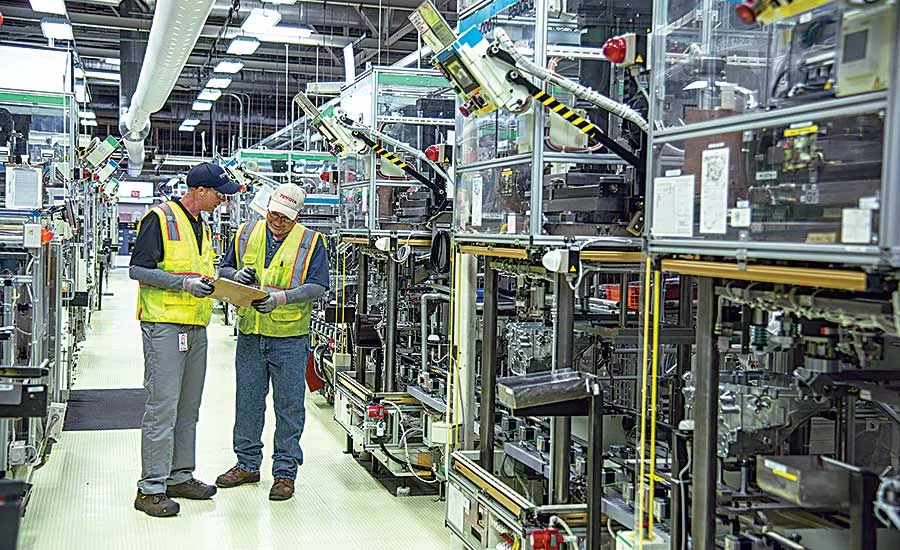
Continuous improvement requires direct observation of current conditions. Photo courtesy Toyota Motor Corp.
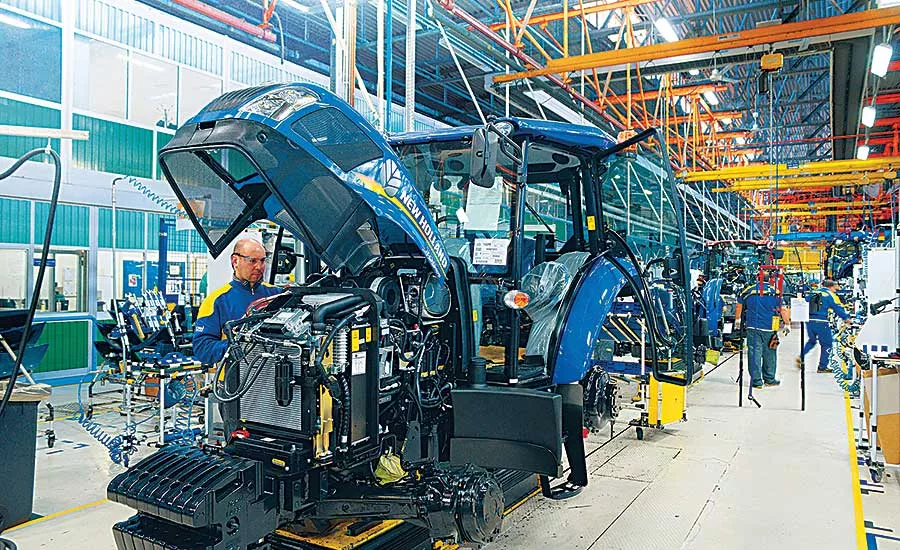
Regular walks can help engineers and plant managers to get a feel for what’s happening on the assembly line. Photo courtesy CNH Industrial
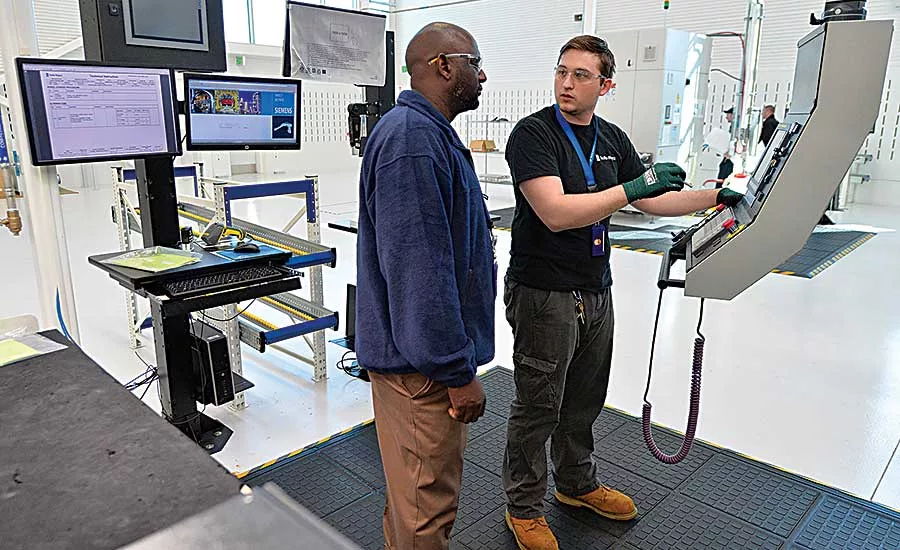
It’s always important to define the purpose of a gemba walk. Photo courtesy Siemens AG
According to most doctors, walking is one of the best forms of exercise that people can do. Among other things, it helps lower blood pressure, improves mental health and reduces the risk of cardiovascular disease.
Walking is also important in manufacturing. Regular walks enable engineers and plant managers to get a feel for what’s happening on the assembly line. It provides a pulse that you can’t get by sitting in a meeting or staring into a computer screen.
In lean manufacturing, this is referred to as gemba, a Japanese term for “actual place.” It’s used to stress the fact that continuous improvement requires direct observation of current conditions where assembly work is done.
Gemba is foundational to all lean processes. Standardized work and other key principles cannot be written at a desk in the engineering office; they must be defined and revised on regular plant floor walks.
Gemba Defined
The term gemba is derived from a Japanese word called genba, which is composed of two kanji characters. Gen refers to “actual” and “ba” means place. In English, it sounds like gemba, but is actually more correctly spelled with an “n.”
“I think of it as the point where people, product and process intersect to perform work,” says Art Smalley, president of the Art of Lean Inc., and a former engineer at Toyota Motor Corp. “There are lots of other interesting words in Japanese that start with the same gen prefix, such as genchi [local], genbutsu [the actual thing] and genjitsu [the actual situation].
“All the gen words are important in lean manufacturing, because they focus on actual instead of verbal opinion or internal thoughts,” explains Smalley. “To ascertain what is occurring, you have to dig in and get the actual facts, actual details, actual times, actual materials and talk to actual people. Otherwise, you are just speculating.”
Looking for quick answers on assembly and manufacturing topics? Try Ask ASM, our new smart AI search tool. Ask ASM
Just like a police detective has to go to the actual scene of a crime, a lean practitioner should always visit the actual work site and get the facts at the source. To be successful, kaizen or any improvement routine requires study of the current situation, root causes and alternative methods of work.
“If you don’t compare before and after using actual information and data from the actual source, you can’t really state if you have improved or not,” warns Smalley.
“The term ‘gemba’ is used very appropriately in the movie industry in Japan,” adds Sammy Obara, president of Honsha Associates. “When the scene must be realistic, instead of creating a studio setting, they go to genba: the place where reality happens in its entirety.
“In the house of the Toyota Way, genchi genbutsu is placed as the foundational stone, right at the center—one of the first things you need when building a house,” explains Obara, who spent three years studying lean manufacturing principles in Toyota City, Japan, and another 10 years applying it at Toyota assembly plants in Brazil, Venezuela and the United States.
“I thought that was the natural way organizations worked and I never realized it was a big deal up until I left Toyota and immigrated to the United States,” says Obara. “Only then I noticed how much we here make decisions without understanding all the facts. We solve problems without seeing the point of cause. We have meetings filled with gut feelings and emotional hunches.”
According to Obara, a gemba walk is the best and most natural opportunity to show you care. And, he believes that it’s an essential element of all kaizen and continuous improvement efforts.
“My former sensei at Toyota used to say ‘If you don’t wash your hands 10 times a day, you are not a good engineer,’” recalls Obara. “What he meant to say was, go to the floor every hour, put your hands on a problem, then come back and design your next kaizen to that problem.”
“We all have assumptions and beliefs about how things work,” adds Michael Bremer, president of the Cumberland Group and author of How to Do a Gemba Walk. “Usually, our assumptions are partly true. So, when we look from a distance, we see those things that fit with our beliefs.
“Gemba is important to continuous improvement, because when I go see, there is an opportunity for me to learn which of my beliefs are inappropriate or perhaps totally wrong,” Bremer points out. “Beliefs can mean myriad things. For instance, I can believe people completely know how to do their work. When I actually go to the gemba, I can see how those beliefs might not be totally correct.”
Gemba in Action
Defining gemba is one thing. Actually putting it into action is another.
“I doubt you’ll find two parties who can agree upon what it is in detail,” says Smalley. “Some will say it is just observing the shop floor. Some will say it is a structured process audit. Some will say it is talking with operators of the process. Some will say it is follow up on specific assignments.
“Generally, gemba is used loosely by different organizations to indicate the need to visit the shop floor and not just stay in the office area,” explains Smalley. “For example, think of a hospital. Doctors and nurses have to make the rounds and visit patients to check in on them and get the most recent information on actual conditions.”
There are no definitive rules for when or how often gemba walks should occur.
“A plant manager might walk around one area of the factory a day,” says Dave Logozzo, a senior advisor at the Lean Enterprise Institute. “On the other hand, a team leader would probably be walking around an assembly line at least once every 30 minutes, once an hour or even once per takt time.
“The most important thing is to go when the work is being done,” adds Logozzo, who holds a mechanical engineering degree and previously worked at General Motors and Delphi Corp. “I suggest walking around at the beginning of a shift one day, then the middle or end of a shift on another day.
“Also, there’s no set time limit for conducting a gemba,” Logozzo points out. “But, each walk shouldn’t last more than 30 or 45 minutes. Remember, you’re not trying to cover the entire plant each time—just a small portion of the operation. To embrace the true spirit of a gemba walk, you should follow three basic rules: go see, ask why and show respect.”
There are many different types of gemba walks. A plant manager would probably cover more ground than a manufacturing engineer. A first-line supervisor might do multiple walks on a daily basis. And, there could be multiple purposes for those walks.
“One walk might focus on standard work practices to find out if they are they being followed and are understood,” says Bremer. “A second walk might primarily be a coaching walk where questions are asked and there is a discussion with associates. A third walk might focus on issues that arose in previous weeks and see how they are being addressed.
“It’s important to define the purpose of a gemba,” Bremer points out. “A Monday, Wednesday and Friday walk can all be different. For instance, a Monday morning walk might focus on nonvalue-added waste, while a Wednesday afternoon walk could focus on standard work practices and a Friday morning walk could look at look at safety.
“Gemba walks provide a wonderful opportunity to learn if people inside the organization have a deep understanding of why they are doing their work activities and why this work is necessary,” says Bremer.
“A gemba doesn’t aim to go from point A to point B, or to see how well the operation is running, or to meet and greet team members,” adds Obara. “At Toyota, a manager would take his time to visit the floor, watch the processes, share thoughts, contemplate the metrics, question posted procedures and have a reflection session at the end. That ritual alone keeps people alert and aligned.”
How to Gemba
Anyone who needs to get the actual facts about the shop floor should visit the actual site, view the actual objects and speak with actual people.
“It is hard to solve problems or conduct kaizen in general,” says Smalley. “However, it’s even harder (if not impossible) to do it solely from the confines of your desk based upon opinion.”
Taiichi Ohno, the legendary guru of lean manufacturing and father of the Toyota Production System, often walked alone on the plant floor during his career. He would stop, draw a circle, stand in it and observe what was happening around him.
“When needed, he got groups together to go and observe something in particular and he’d issue his guidance, raise problem awareness or scold people,” notes Smalley. “There was no one particular standard.
“Today, however, I [believe] all visits to the shop floor need a purpose,” says Smalley. “Management by walking around was a fad in America before lean became well known and it did not do any harm, but it rarely stuck in place.
“It’s always a good idea to set a purpose for the walk, have a basic agenda, and be specific about what you are checking in terms of people, process and product,” suggests Smalley. “That is a solid starting point.”
“You can’t look for everything on one walk,” warns Drew Locher, president of Change Management Associates and a former engineer at General Electric. “It’s a skill that has to be developed.
“Never walk alone,” Locher advises. “On the other hand, you don’t want to walk in a group either. I suggest taking one other person with you when you embark on a gemba. Another set of eyes is important. Plus, it’s a good training and development opportunity for the person you take with you.”
Locher suggests walking the flow of an order and looking for interruptions or problems that might occur. For instance, walk downstream from order taking to shipping. On another day, walk upstream to gain a different perspective on the order flow.
According to Locher, it’s a good idea once in a while to adapt Taiichi Ohno’s stop-and-watch approach. “Standing still and observing will give you a totally different perspective from walking,” he points out.
One of the biggest mistakes made with gemba is to just wander aimlessly about the plant floor on a meet-and-greet session, handing out pats on the back or empty praise to employees.
“Sometimes, a gemba will focus on who, not why,” says Ron Pereira, a partner with the Gemba Academy LLC. “You should always focus on the process, not people.
“If you’re doing a gemba, there shouldn’t be fear in the air,” adds Pereira. “Employees should be excited to share their improvement ideas.
“When you go on a walk, you should know whether you’re winning or losing at any moment,” explains Pereira. “If you ask employees at a workstation ‘are you winning or losing today?’ they should be able to immediately answer the question. And, they should be able to point to any specific problems that they’re experiencing.”
Looking for a reprint of this article?
From high-res PDFs to custom plaques, order your copy today!