Assembly Magazine logo
search
Ask ASSEMBLY AI
cart
facebook twitter linkedin youtube
  • Sign In
  • Create Account
  • Sign Out
  • My Account
Assembly Magazine logo
  • TRENDS
    • Ask ASSEMBLY AI
    • Trends
    • News
    • New Products
  • INDUSTRIES
    • Aerospace
    • Appliance
    • DFMA Assembly
    • Medical Devices
    • Green Manufacturing
    • Lean Manufacturing
    • Machinery Assembly
    • Electronics Assembly
    • Automotive
  • TECHNOLOGIES
    • Adhesives & Dispensing
    • Assembly Presses
    • Automated Assembly Systems
    • Manufacturing Management
    • Manufacturing Software
    • Motion Control
    • Screwdriving & Riveting
    • Robotics
    • Test & Inspection
    • Plastics & Metal Welding
    • Wire Processing
    • Workstations
  • AUTONOMOUS & ELECTRIC MOBILITY
    • AEM Magazine Archives
    • Autonomy
    • Electrification
    • Mobility Services
    • Assembly & Testing
    • AV/EM News
  • MEDIA
    • Ask ASSEMBLY AI
    • Podcasts
    • Assembly News Now
    • Assembly TV
    • Webinars
    • eBooks
  • EVENTS
    • Calendar
    • The ASSEMBLY Show
  • MORE
    • Exclusives >
      • Plant of the Year
      • Capital Spending
    • Buyers Guide >
      • Supplier Insights
    • Classifieds
    • Featured Products
    • Newsletters
    • Store
    • White Papers
    • Columns
    • Sponsor Insights
  • INFOCENTER
    • Assembly & Test Solutions
  • EMAGAZINE
    • eMagazine
    • Archive Issues
    • Advertise
    • Contact Us
    • Sign Up
IndustriesAppliance AssemblyAdhesives & Dispensing Assembly

Appliance Makers Keep It Together With PSAs

Pressure-sensitive adhesives are helping appliance assemblers enhance aesthetics, performance and reliability
By Michael G. Price II
Appliance Makers Keep It Together With PSAs
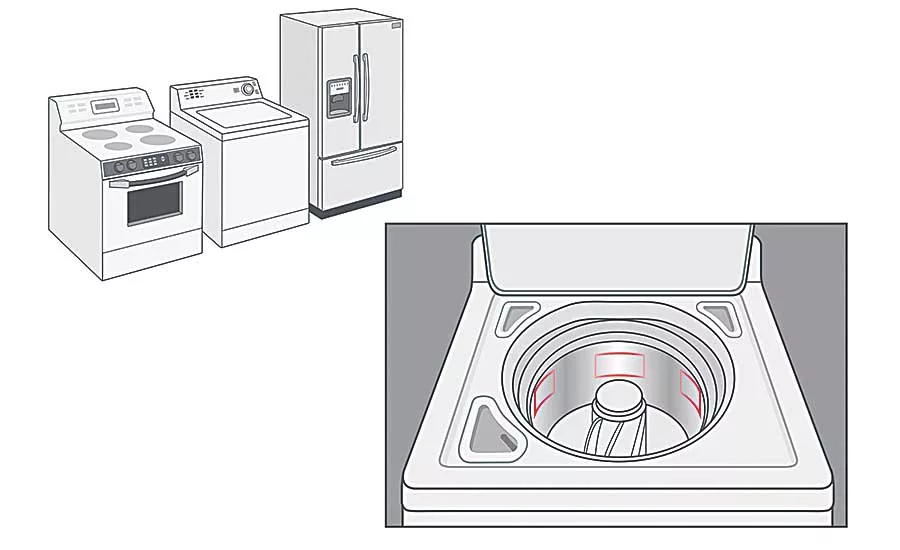
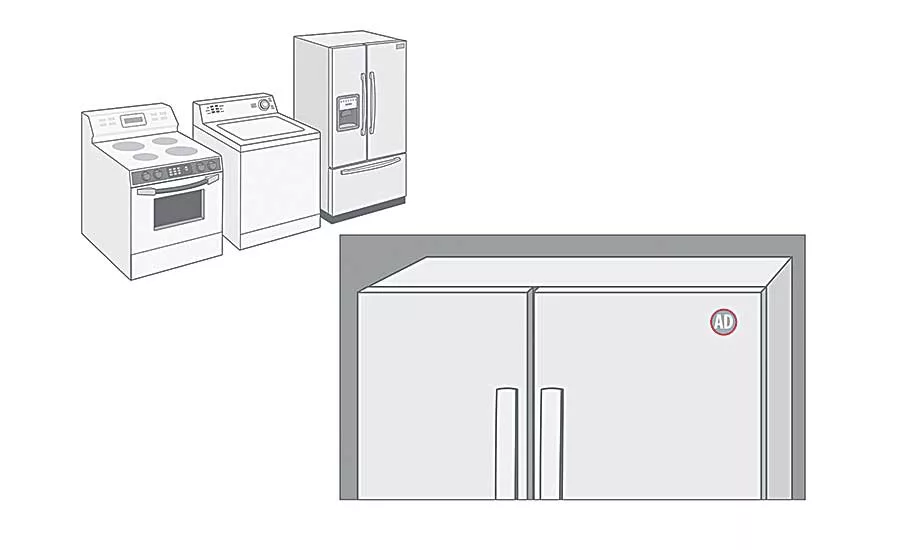
Acrylic foam bonding tapes can be used to bond brand badges and decorative trim to appliances. Photo courtesy Avery Dennison Performance Tapes
Appliance Makers Keep It Together With PSAs
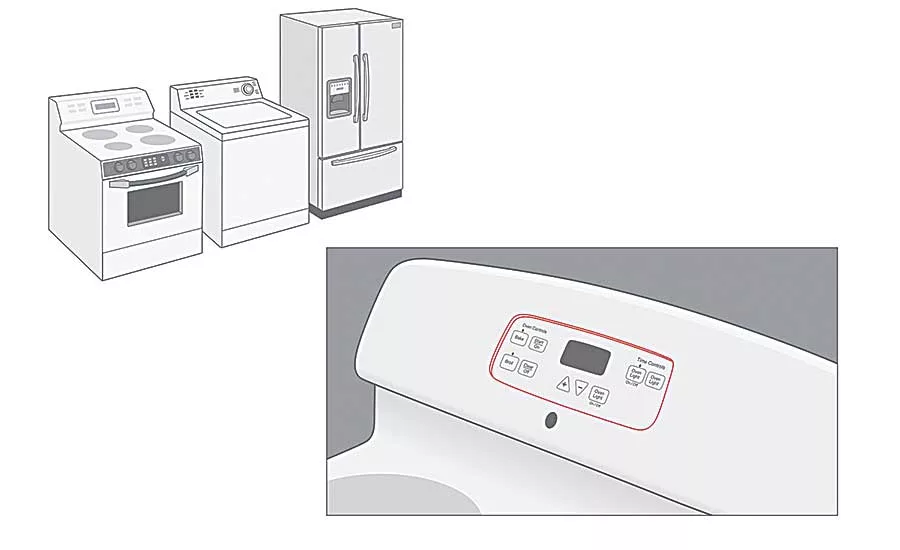
Flock tapes or high-performance acrylic tapes enable assemblers to securely attach digital control panels to appliances. Photo courtesy Avery Dennison Performance Tapes
Appliance Makers Keep It Together With PSAs
Aluminum-foil based acrylic tapes can reduce noise, vibration and stress fatigue by damping vibrations. Photo courtesy Avery Dennison Performance Tapes
Appliance Makers Keep It Together With PSAs
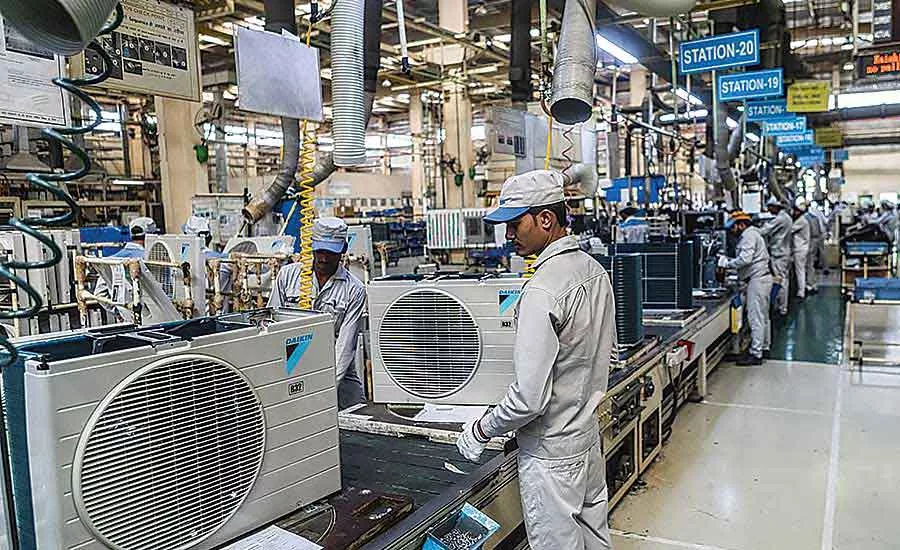
PSAs bond best to materials with high surface energy, such as ABS and polycarbonate. Low surface energy materials, such as polyethylene and polypropylene, can be hard to bond. Photo courtesy Daikin Industries Ltd.
Appliance Makers Keep It Together With PSAs
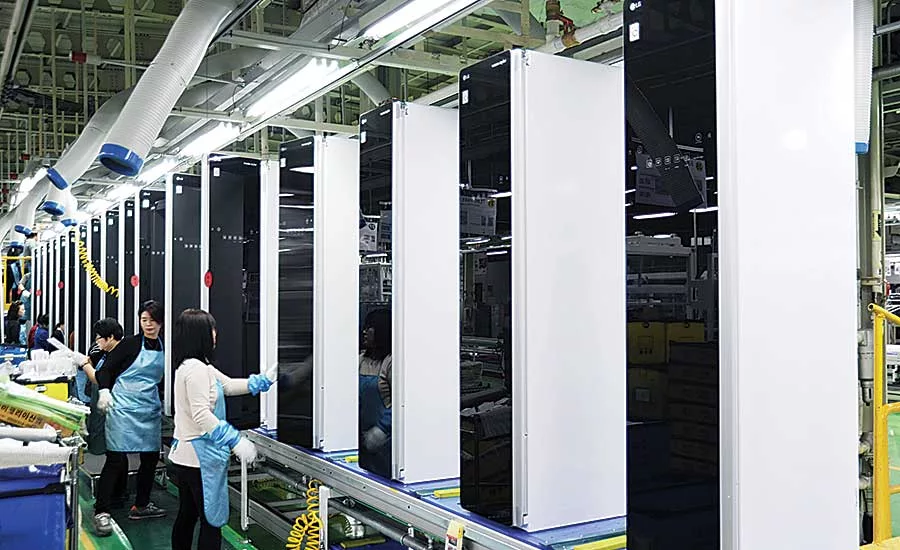
Acrylic foam bonding tapes can provide shock dissipation for appliance doors, which are constantly opening and closing. Photo courtesy LG Electronics Inc.
Appliance Makers Keep It Together With PSAs
April 8, 2020

Pressure-sensitive adhesives (PSAs) have become a game-changer for demanding assembly applications in a wide range of industrial applications. When it comes to large domestic appliances (LDAs), virtually any place a fastener can be used, a PSA (typically a tape) can perform the same task, offering performance equal to or better than that of a fastener and often with increased reliability and service life.

In every assembly application, selecting the right PSA depends on two primary considerations—the materials being bonded and the environment in which that bond will perform. Manufacturing and design engineers work together with converters and OEMs in the design process to make this determination.

Surface energy—a measurement of a surface that indicates how something will bond to it—affects an adhesive’s ability to bond to that substrate. Using the wrong PSA tape on the wrong surface will cause it to slide right off.

High surface energy (HSE) materials include most metals. But, painted or powder-coated metals—basic appliance components—are low surface energy (LSE) materials. Plastics such as acrylonitrile butadiene styrene and polycarbonate are HSE materials. Plastics such as polyethylene and polypropylene are LSE materials. These are more challenging to bond with PSAs.

Generally, the more textured a substrate, the more difficult it is to bond. An adhesive that is too thin or has low flow won’t bond to enough surface area. This type of substrate requires a tackier adhesive with a higher coat weight, providing more flow. Rubber- or acrylic-based adhesives modified with tackifiers bond well to LSE appliance surfaces.

Environment is the next issue, with temperature and humidity as key considerations. An adhesive that is a good choice for an oven may not be the best choice for a refrigerator or freezer. Rubber-based adhesives are generally a good choice for temperatures below 150 F; acrylic-based adhesives can generally resist temperatures around 350 F. High-performance acrylic (HPA) and silicone adhesives can be used for higher temperature ranges, which often require testing or existing application data to help support a proper recommendation.

Other environmental conditions—indoor-outdoor use; contact with solvents, chemicals or fuels; and direct or indirect exposure to ultraviolet radiation—must be considered. Generally, acrylic-based adhesives offer better adhesion performance to these conditions compared with rubber-based adhesives. However, if the specific application has an extremely high exposure to these conditions, technical support is recommended to provide a specific adhesive.

Looking for quick answers on assembly and manufacturing topics? Try Ask ASM, our new smart AI search tool. Ask ASM →


PSAs in Appliances

LDA manufacturers worldwide are taking advantage of advances in PSAs to enhance product aesthetics, performance and reliability.

While some PSAs may initially be more expensive than the fasteners they replace, brand owners can more than make up for the differential through enhanced manufacturing repeatability, precision and performance over the life of the product. The use of tapes also eliminates the need to drill holes or assemble using traditional methods.

Particularly in LDAs, such as washing machines and dryers, where noise and vibration are constant, tapes provide a more consistent, lighter weight joining method. Fasteners, over time, can break from the back-and-forth motion, leading to consumer dissatisfaction and costly repairs.

Today’s smart appliances are equipped with touch screens just like smart phones and tablet computers. These portable electronics aren’t held together with nuts and bolts, but PSAs. So, too, are the interactive screens on LDAs. PSAs deliver excellent shock absorption and impact resistance properties for these screens.

Another factor—lightweighting—is a major concern in many industries. Adhesive tapes can replace perhaps 30 to 60 screws, washers and nuts on an appliance, which can help reduce weight. This may measure in ounces, not pounds, on each appliance. Lighter weight, however, translates to savings when a manufacturer is shipping thousands of refrigerators, dryers or washers every year.


Specific Applications

PSAs for appliances—many of which must be UL-certified—cover a wide variety of applications. For a PSA to be viable for appliance assembly, manufacturers need to be assured of a reliable bond in a manner that is easier to apply than traditional joining methods.

Aesthetic applications. Since brand consistency and presentation are key to a product’s branding, nearly every appliance carries a brand badge or emblem, and many have decorative trim or bumper rails for product protection. Durable acrylic foam bonding (AFB) tapes are an affordable option for these applications, providing excellent tack, adhesion and cohesion performance. These also add shock dissipation for appliances where doors are constantly opening and slamming shut, allowing the component to withstand such shocks over the life of the appliance. AFB tapes are also excellent choices for joining metal frames to glass cooktops, providing reliable adhesion while adding thickness to absorb the shocks that may be created by pots and pans being placed on the surface.

Critical joining applications. During refrigerator and freezer assembly, it’s critical to prevent movement of components while foam insulation is pumped into wall and door cavities. For this application, high-performance acrylic (HPA) tape provides long-term adhesion with high temperature performance and excellent environmental resistance. It offers high holding power and reliable performance on high-, medium- and low-energy substrates, including a variety of engineered plastics. Foil-based tapes are also an excellent option for attaching refrigerator coils, helping to prevent the coil from moving over the product’s life span.

Noise and vibration damping. Appliance assemblers are increasingly using thin-gauge sheet metal in washers, dryers and dishwashers to cut costs and save weight. These thin materials can increase noise and vibration and decrease the product’s working life due to metal fatigue over time. Aluminum-foil based acrylic tapes can reduce noise, vibration and stress fatigue by damping vibrations. They also provide excellent resistance to heat and humidity. This type of application typically requires a PSA that is customized to meet the specific damping, heat and humidity requirements of the application. There’s no one-size-fits-all product.

Control panels. Depending on the application, flock tapes or HPA tapes allow assemblers to securely attach digital control panels to appliances, providing a tight seal that protects against varying temperature and humidity. To provide the proper PSA, a full understanding of the substrates being joined is key.


Start at the Design Phase

While it’s certainly possible to use PSAs in place of fasteners in existing appliance designs, the best time to develop bonding applications is early in the design phase, well before production begins. Design engineers can bring to bear the expertise of the tape converter and tape manufacturer to prove out bonding applications. Early consultation with these experts is the key to PSA assembly success.

For more information on pressure-sensitive adhesives, call 866-462-8379 or visit https://tapes.averydennison.com.   

KEYWORDS: adhesive tape pressure-sensitive adhesives

Share This Story

Looking for a reprint of this article?
From high-res PDFs to custom plaques, order your copy today!

Michael G. Price II // Design and Applications Engineer // Avery Dennison Performance Tapes // Painesville, OH

Recommended Content

JOIN TODAY
To unlock your recommendations.

Already have an account? Sign In

  • Made in the U.S.A.

    Consumer Products Manufacturing: Made in the USA

    Supply chain lessons learned during the coronavirus...
    Automated Assembly Systems
    By: Austin Weber
  • Best Practices for Press-Fit Assembly

    Best Practices for Press-Fit Assembly

    In manufacturing, ironclad formulas for success are hard...
    Assembly Presses
    By: Jim Camillo
  • aem0523leader-tesla1.jpg

    Tesla Rethinks the Assembly Line

    Engineers at Tesla Inc. have developed a new process that...
    Industries
    By: Austin Weber
Manage My Account
  • eMagazine Subscription
  • Assembly Newsletters
  • Online Registration
  • Subscription Customer Service
  • Manage My Preferences

More Videos

Sponsored Content

Sponsored Content is a special paid section where industry companies provide high quality, objective, non-commercial content around topics of interest to the ASSEMBLY audience. All Sponsored Content is supplied by the advertising company and any opinions expressed in this article are those of the author and not necessarily reflect the views of ASSEMBLY or its parent company, BNP Media. Interested in participating in our Sponsored Content section? Contact your local rep!

close
  • ultrasonic welding
    Sponsored bySonobond Ultrasonics

    Engineering Efficiency in High-Performance Assembly: How Ultrasonic Welding Enhances Throughput, Reliability and Quality

  • UV curing system
    Sponsored byDymax

    Why UV Intensity Alone Doesn’t Define Curing Performance

  • wooden pallets
    Sponsored byLEAN Manufacturing Products

    Eliminating Waste on the Shop Floor: Applying Lean Principles to Improve Manufacturing Efficiency

Popular Stories

ASSEMBLY News Now, episode-30: Volvo Redesigns EV Manufacturing

Volvo Redesigns EV Manufacturing

Boeing CEO Kelly Ortberg announces 1 billion investment

Boeing Plans $1 Billion Wichita Investment, Workforce Training Center

GE Appliances Worker on Line

GE Appliances Expands Factory AI With 800 Gemini Enterprise Agents

Watch the latest episode of ANN now!

Events

July 24, 2025

From Shop Floor to CFO: How Manufacturers Are Closing the Loop Between Operations and Finance

On Demand Learn how manufacturers are bridging the gap between the shop floor and ERP systems to gain real-time visibility, streamline operations, and kick-start digital transformation—without waiting years.

Sponsored by:

PicoStratusGreen
July 30, 2025

Buffer Analysis and Design Fundamentals for Manufacturing Excellence

On Demand In this presentation, Dr. Herman Tang shares practical insights from his industry experience and research on buffer management in manufacturing operations.

View All Submit An Event

Poll

Difficult Assembly Processes

Which assembly process gives you the most difficulty?
View Results Poll Archive

Products

Manufacturing Cost Policy Deployment (MCPD) Profitability Scenarios: Systematic and Systemic Improvement of Manufacturing Costs

Manufacturing Cost Policy Deployment (MCPD) Profitability Scenarios: Systematic and Systemic Improvement of Manufacturing Costs

See More Products
Register for webinar - Modernizing Automotive Assembly: Why Upgrading Legacy MES is a Business Imperative

Related Articles

  • Airbus A321XLR

    American Airlines Takes Delivery of First A321XLR But Supply Chain Issues Keep It Grounded

    See More
  • Medical Assembly: Keep it Clean

    See More
  • Putting It All Together in the Northeast

    See More

Related Products

See More Products
  • Designing with Plastics

  • reducing.jpg

    Reducing Process Costs with Lean, Six Sigma, and Value Engineering Techniques

  • integration.jpg

    Integration of Mechanical and Manufacturing Engineering with IoT: A Digital Transformation

See More Products

Events

View AllSubmit An Event
  • August 20, 2025

    K.I.S.S. MES (Keep It Simple, Stupid): Why Modern Manufacturers Are Choosing Modular MES with Real Shop Floor Control

    On Demand If you’re tired of MES that overpromises and underdelivers, it’s time to simplify. Learn how a modular approach gives you control where it counts—without the baggage.Sponsored by:
  • May 20, 2026

    Stop the Shortages: Inventory Strategies That Keep Production Moving

    On Demand Join this webinar to discover how manufacturers can achieve optimal inventory levels, preventing assembly line shutdowns due to missing parts.
View AllSubmit An Event
×

Never miss the latest news and trends driving the manufacturing industry

Stay in the know on the latest assembly trends.

JOIN TODAY!
  • RESOURCES
    • Advertise
    • Contact Us
    • Directories
    • Manufacturing Division
    • Store
    • Want More?
  • SIGN UP TODAY
    • Create Account
    • eMagazine
    • Newsletters
    • Customer Service
    • Manage Preferences
  • SERVICES
    • Marketing Services
    • Reprints
    • Market Research
    • List Rental
    • Survey/Respondent Access
  • STAY CONNECTED
    • LinkedIn
    • Facebook
    • Instagram
    • YouTube
    • X (Twitter)
  • PRIVACY
    • PRIVACY POLICY
    • TERMS & CONDITIONS
    • DO NOT SELL MY PERSONAL INFORMATION
    • PRIVACY REQUEST
    • ACCESSIBILITY

Copyright ©2026. All Rights Reserved BNP Media, Inc. and BNP Media II, LLC.

Design, CMS, Hosting & Web Development :: ePublishing