Assembly Magazine logo
search
Ask ASSEMBLY AI
cart
facebook twitter linkedin youtube
  • Sign In
  • Create Account
  • Sign Out
  • My Account
Assembly Magazine logo
  • TRENDS
    • Ask ASSEMBLY AI
    • Trends
    • News
    • New Products
  • INDUSTRIES
    • Aerospace
    • Appliance
    • DFMA Assembly
    • Medical Devices
    • Green Manufacturing
    • Lean Manufacturing
    • Machinery Assembly
    • Electronics Assembly
    • Automotive
  • TECHNOLOGIES
    • Adhesives & Dispensing
    • Assembly Presses
    • Automated Assembly Systems
    • Manufacturing Management
    • Manufacturing Software
    • Motion Control
    • Screwdriving & Riveting
    • Robotics
    • Test & Inspection
    • Plastics & Metal Welding
    • Wire Processing
    • Workstations
  • AUTONOMOUS & ELECTRIC MOBILITY
    • AEM Magazine Archives
    • Autonomy
    • Electrification
    • Mobility Services
    • Assembly & Testing
    • AV/EM News
  • MEDIA
    • Ask ASSEMBLY AI
    • Podcasts
    • Assembly News Now
    • Assembly TV
    • Webinars
    • eBooks
  • EVENTS
    • Calendar
    • The ASSEMBLY Show
  • MORE
    • Exclusives >
      • Plant of the Year
      • Capital Spending
    • Buyers Guide >
      • Supplier Insights
    • Classifieds
    • Featured Products
    • Newsletters
    • Store
    • White Papers
    • Columns
    • Sponsor Insights
  • INFOCENTER
    • Assembly & Test Solutions
  • EMAGAZINE
    • eMagazine
    • Archive Issues
    • Advertise
    • Contact Us
    • Sign Up
IndustriesAerospace AssemblyAdhesives & Dispensing Assembly

PSAs for Aerospace Assembly

There are numerous applications for pressure-sensitive adhesives in aerospace assembly.
By Scott Krusinski
PSAs for Aerospace Assembly
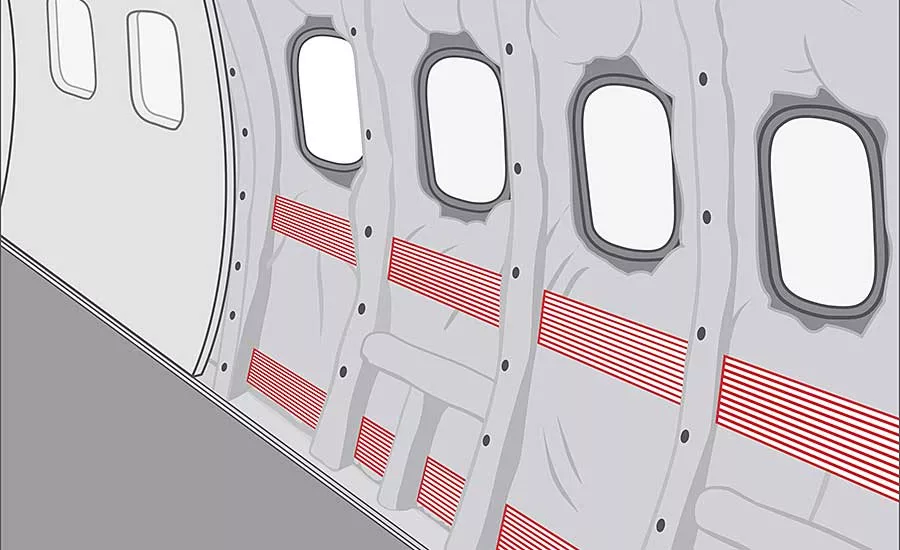
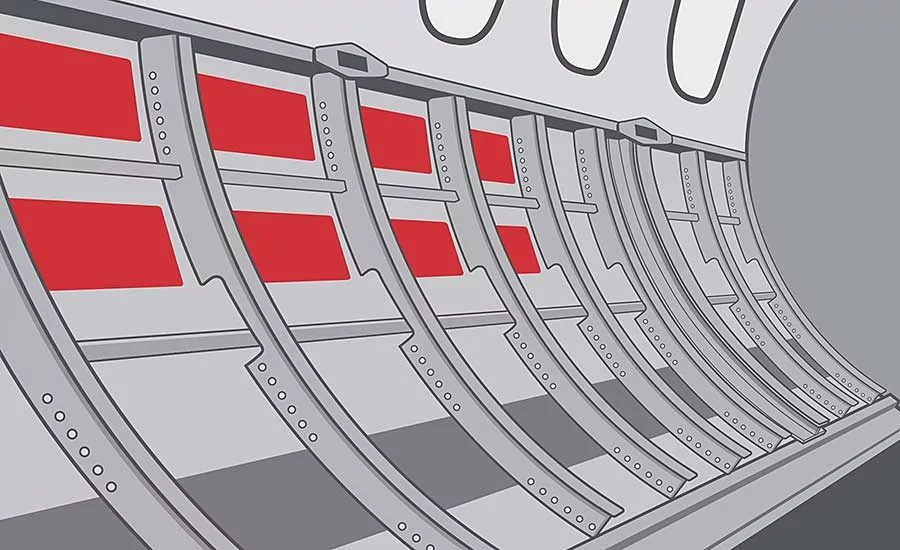
The body of an aircraft vibrates from the turbulent layer of air moving along the fuselage. To reduce this vibration and noise, damping tiles are bonded directly against the inside of the fuselage skin. Photo courtesy Avery Dennison
PSAs for Aerospace Assembly
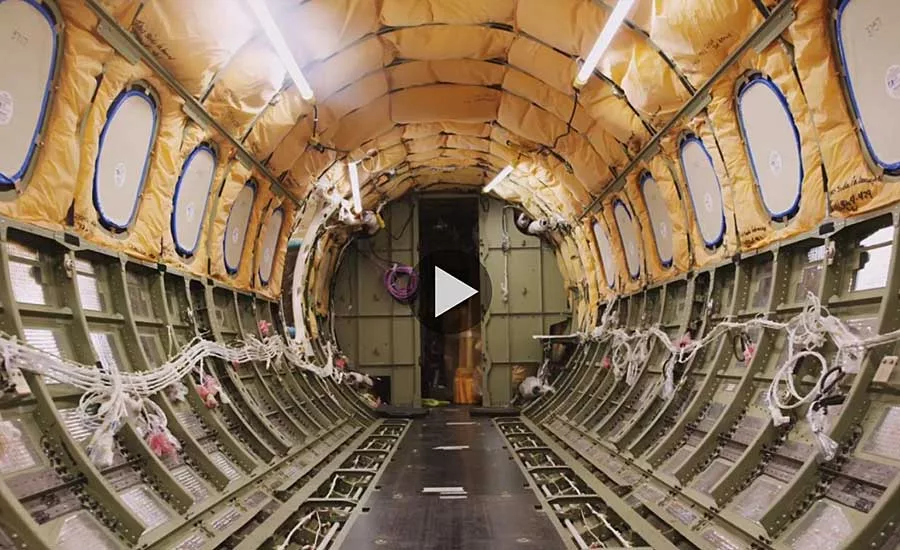
PSAs are used to seam the thermal insulation materials together before placing the insulation between the plastic structure of the cabin and the aluminum frame of the fuselage. Photo courtesy Avery Dennison
PSAs for Aerospace Assembly
The most suitable way to seal off acoustic insulation is with a single-coated tape with a face-stock similar to the material that encapsulates the fibers. Photo courtesy Avery Dennison
PSAs for Aerospace Assembly
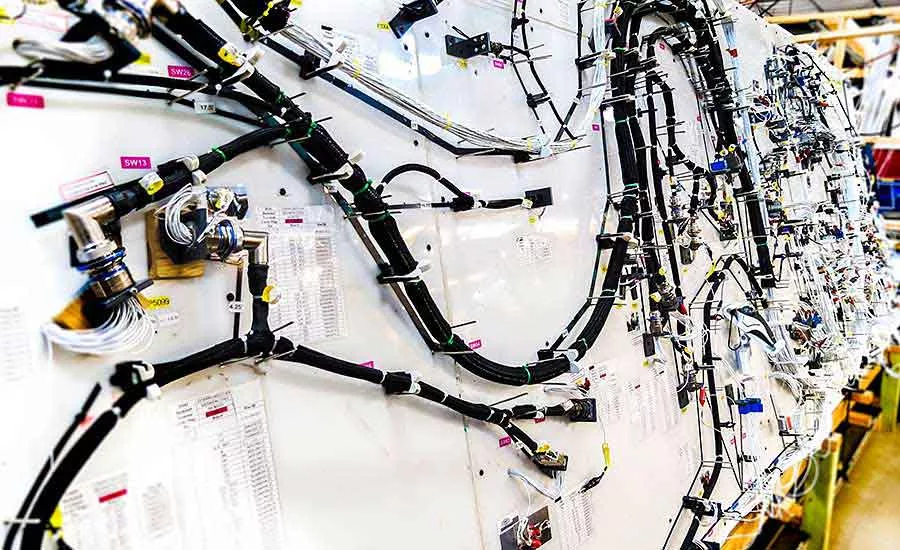
Aircraft wire harnesses are wrapped in a single-sided tape to shield them from abrasions and high temperatures and to limit motion of the harness. Photo courtesy American Precision Avionics
PSAs for Aerospace Assembly
April 14, 2021

Pressure-sensitive adhesives (PSAs) offer numerous advantages for aerospace assembly. PSAs enable assembly of dissimilar materials with a continuous bond area. PSAs more uniformly distribute stresses and strains. PSAs preserve the strength and integrity of the materials to be joined, because they do not require holes to be punched or drilled in the substrates. Since PSAs do not require curing time, they are faster than liquid adhesives. And finally, with no rivet or screw heads protruding from the surface of the substrate, PSAs improve aesthetics.

There are a variety of applications for PSAs in aerospace assembly.

For example, the inside of the passenger cabin is lined with a flexible plastic film, such as polyvinyl fluoride (PVF), polyamide and PEEK. These films are known for their flame retardancy and resistance to abrasions, chemicals and ultraviolet radiation. Securing these flexible films to rigid substrates with mechanical fasteners is not an option, but PSAs can do the job easily. PSAs can be formulated to bond to aluminum, painted surfaces, and substrates with differing surface energies.

Carpeting is another application for PSAs. Airliners require carpets that meet FAA specifications for flammability, smoke production and toxicity. PSAs keep the carpet in place. For this application, the tape is applied to the flooring material, the liner is removed, and the carpet is laid down on top of the tape. The tape must be lightweight, yet strong enough to secure the carpet at all times. The tape is also required to self-extinguish, according to federal aviation requirements 25.853 and 25.855. This is achieved by including flame-retardant additives into the adhesive.

Carpet is traditionally secured to honeycomb panels. However, not all PSAs will bond to with such panels, because of their low surface energy. Aerospace assemblers typically use a 2-inch wide strip of tape that spans the entire length of the plane. This strip is repeated approximately every 3 feet. The carpet is then rolled out on top of it.

Planes go through maintenance, repair and overhaul (MRO) every 400 to 600 flight-hours, depending on the aircraft. Besides safety checks, this process often includes replacing the carpet, and that requires more tape. That’s why removability is an important feature for many aerospace PSAs. One side of the tape is formulated to create a permanent bond with the carpet, while the other side is designed to removed cleanly from the honeycomb panel.


Insulation and Damping

Thermal insulation is wrapped around the inside of the fuselage. PSAs are used to seam the insulation materials together before placing the insulation between the plastic structure of the cabin and the aluminum frame of the fuselage. A single-coated tape is also used in the cargo pit along the plastic panels to seal cargo compartment liners, bonding to the plastics and not the insulation material.

Looking for quick answers on assembly and manufacturing topics? Try Ask ASM, our new smart AI search tool. Ask ASM →

Acoustic insulation is also used in the fuselage, between the plastic structure of the cabin and the aluminum frame of the fuselage. This insulation muffles the sound of the jet engines and the wind streaming past the fuselage. It consists of tough materials, such as glass, polyester or nylon fibers. These are in turn sealed up in films that are often made of metalized polyester, such as PEEK or PVF. The most suitable way to seal off these films is with tape. Sealing off the insulation is accomplished with a single-coated tape with a face-stock similar to the material that encapsulates the fibers.

A related application is structural damping. The body of an aircraft vibrates from the turbulent layer of air moving along the fuselage. To reduce this vibration and noise, damping tiles are bonded directly against the inside of the fuselage skin. Damping tiles consist of a PSA, an elastomeric material and a foil. The adhesive layer can be specifically for mounting the damping tile to the fuselage, or it can be formulated for specific rheological properties to aid in the damping of the vibrations.


Wire Harnesses and Other Applications

Aircraft wire harnesses are wrapped in a single-sided tape to shield them from abrasions and high temperatures and to limit motion of the harness. The tapes encapsulating these fibers are often laminated with a scrim to provide puncture resistance against structures and piping. Metalized-glass cloth acts as a thermal barrier.

Throughout the production and MRO of planes, tapes are used to protect the windows while the outer skin is painted, coated or sandblasted. These are single-coated foil tapes that require an adhesion that can resist high temperatures and chemicals, but still be cleanly removed. Structures inside the plane, such as floor panels, demand a film and adhesive to prevent moisture from collecting on it and causing corrosion.

Graphic overlays are yet another application for PSAs. “No smoking” signs are usually made of polycarbonate that gets laminated to a transfer tape and then bonded to the cabin substrates. Graphic overlays are also used in the cockpit for directions or labeling around buttons


Requirements for Tape Selection

To be a fit for the aerospace industry, tapes and adhesives must meet several criteria. These include:

Temperature resistance. Temperatures can exceed 500 F near the jet engine. On the other extreme, flying temperatures can plunge to a low of up to -40 F. Adhesives exposed to these conditions must resist these extreme temperatures for long durations.

Chemical resistance. Tapes may be exposed to hydraulic fluid and other chemicals. Adhesives must be able to resist these chemicals.

Strong, resilient bond for permanent applications. Insulation, cargo pit seaming and other applications require a permanent bond. OEMs have established adhesion specifications for each bonding application. PSAs are subjected to environmental and temperature testing to ensure they meet peel strength requirements.

Flame retardancy: Many applications within a plane require the adhesive to have a level of flame retardancy.

KEYWORDS: pressure-sensitive adhesives

Share This Story

Looking for a reprint of this article?
From high-res PDFs to custom plaques, order your copy today!

Scott Krusinski // Product Manager for Aerospace, Automotive and Transportation // Avery Dennison Corp., Performance Tapes Division // Painesville, OH

Recommended Content

JOIN TODAY
To unlock your recommendations.

Already have an account? Sign In

  • Made in the U.S.A.

    Consumer Products Manufacturing: Made in the USA

    Supply chain lessons learned during the coronavirus...
    Automated Assembly Systems
    By: Austin Weber
  • Best Practices for Press-Fit Assembly

    Best Practices for Press-Fit Assembly

    In manufacturing, ironclad formulas for success are hard...
    Assembly Presses
    By: Jim Camillo
  • aem0523leader-tesla1.jpg

    Tesla Rethinks the Assembly Line

    Engineers at Tesla Inc. have developed a new process that...
    Industries
    By: Austin Weber
Manage My Account
  • eMagazine Subscription
  • Assembly Newsletters
  • Online Registration
  • Subscription Customer Service
  • Manage My Preferences

More Videos

Sponsored Content

Sponsored Content is a special paid section where industry companies provide high quality, objective, non-commercial content around topics of interest to the ASSEMBLY audience. All Sponsored Content is supplied by the advertising company and any opinions expressed in this article are those of the author and not necessarily reflect the views of ASSEMBLY or its parent company, BNP Media. Interested in participating in our Sponsored Content section? Contact your local rep!

close
  • ultrasonic welding
    Sponsored bySonobond Ultrasonics

    Engineering Efficiency in High-Performance Assembly: How Ultrasonic Welding Enhances Throughput, Reliability and Quality

  • UV curing system
    Sponsored byDymax

    Why UV Intensity Alone Doesn’t Define Curing Performance

  • wooden pallets
    Sponsored byLEAN Manufacturing Products

    Eliminating Waste on the Shop Floor: Applying Lean Principles to Improve Manufacturing Efficiency

Popular Stories

ASSEMBLY News Now, episode-30: Volvo Redesigns EV Manufacturing

Volvo Redesigns EV Manufacturing

Boeing CEO Kelly Ortberg announces 1 billion investment

Boeing Plans $1 Billion Wichita Investment, Workforce Training Center

automated consumer goods assembly system

Best Practices for Cycle Time Optimization

Watch the latest episode of ANN now!

Events

July 24, 2025

From Shop Floor to CFO: How Manufacturers Are Closing the Loop Between Operations and Finance

On Demand Learn how manufacturers are bridging the gap between the shop floor and ERP systems to gain real-time visibility, streamline operations, and kick-start digital transformation—without waiting years.

Sponsored by:

PicoStratusGreen
July 30, 2025

Buffer Analysis and Design Fundamentals for Manufacturing Excellence

On Demand In this presentation, Dr. Herman Tang shares practical insights from his industry experience and research on buffer management in manufacturing operations.

View All Submit An Event

Poll

Difficult Assembly Processes

Which assembly process gives you the most difficulty?
View Results Poll Archive

Products

Manufacturing Cost Policy Deployment (MCPD) Profitability Scenarios: Systematic and Systemic Improvement of Manufacturing Costs

Manufacturing Cost Policy Deployment (MCPD) Profitability Scenarios: Systematic and Systemic Improvement of Manufacturing Costs

See More Products
Register for webinar - Modernizing Automotive Assembly: Why Upgrading Legacy MES is a Business Imperative

Related Articles

  • The Skies Are Clearing for Aerospace Assembly

    See More
  • asb1122manip2.jpg

    Autonomous Mobile Manipulators for Aerospace Assembly

    See More
  • six-axis robots rivet nut plates onto a fuselage component

    Robots Coordinate for Aerospace Assembly

    See More

Related Products

See More Products
  • 2020 feb assembly

    ASSEMBLY February 2020 Issue

  • Product Design for Manufacture and Assembly, Third Edition

See More Products

Related Directories

  • Ascent Aerospace

    Ascent Aerospace is a world renowned, single-source provider of production and automated assembly systems for the aerospace, defense and space industries. As an automation provider and production system integrator, Ascent works with customers to develop their project and see it through from process engineering, to build and installation.
  • Retrocausal - AI Copilots For Manufacturing Assembly Optimization

×

Never miss the latest news and trends driving the manufacturing industry

Stay in the know on the latest assembly trends.

JOIN TODAY!
  • RESOURCES
    • Advertise
    • Contact Us
    • Directories
    • Manufacturing Division
    • Store
    • Want More?
  • SIGN UP TODAY
    • Create Account
    • eMagazine
    • Newsletters
    • Customer Service
    • Manage Preferences
  • SERVICES
    • Marketing Services
    • Reprints
    • Market Research
    • List Rental
    • Survey/Respondent Access
  • STAY CONNECTED
    • LinkedIn
    • Facebook
    • Instagram
    • YouTube
    • X (Twitter)
  • PRIVACY
    • PRIVACY POLICY
    • TERMS & CONDITIONS
    • DO NOT SELL MY PERSONAL INFORMATION
    • PRIVACY REQUEST
    • ACCESSIBILITY

Copyright ©2026. All Rights Reserved BNP Media, Inc. and BNP Media II, LLC.

Design, CMS, Hosting & Web Development :: ePublishing