Manufacturers Shift to PPE Production to Fight COVID-19 Pandemic
For the past few months, countless manufacturers worldwide have retooled to make personal protective equipment (PPE) for healthcare workers and first responders in their battle against the COVID-19 pandemic. Here are some of their stories.
GM Produces Face Masks
In late March, Ford Motor Co. and General Motors Corp. shut down car production, and redeployed their Detroit factories and workers to produce ventilators. Ford was expected to achieve a production level of about 1,500 ventilators by the end of May. GM brought its first group of 100 project workers into training in early April, and is capable of producing 10,000 units per month.
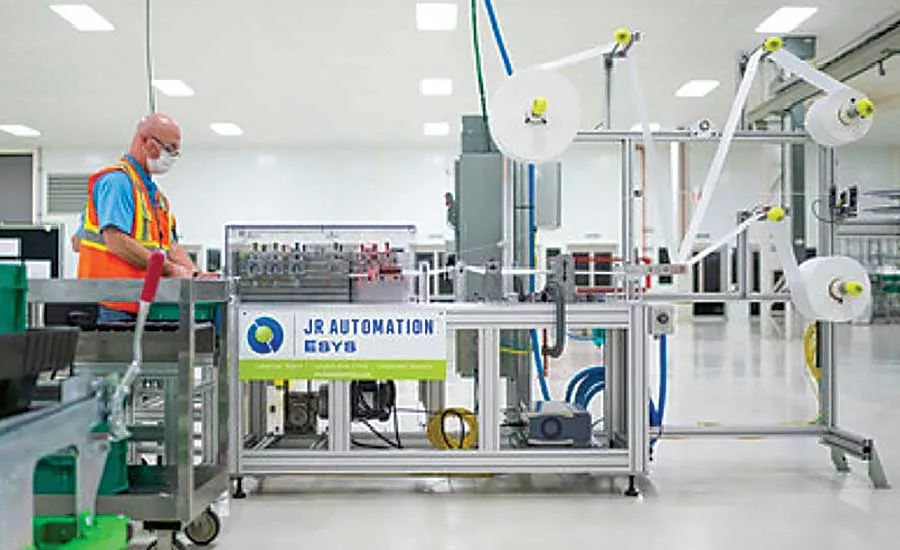
On March 21, GM approached Esys Automation, a JR Automation company, to help produce face masks to combat the COVID-19 outbreak. Based in Auburn Hills, MI, Esys specializes in vehicle applications such as power train, plastics, body assembly, paint, sealer, final assembly, and tire and wheel.
GM needed Esys to build an entire assembly line, and have it up and running in less than one week. In addition, the line must be able to produce up to 50,000 masks per day.
Within two days of meeting, the Esys leadership team carefully assessed GM’s request, created a plan based on readily available parts, and diligently worked across multiple fronts to implement the plan. The team also received input from JR Automation’s engineering and build teams in Nashville, TN, and Holland, MI, on this type of assembly line.
Separately, Esys called on Dukane on March 22 to supply several ultrasonic bonding systems to help produce the masks. That afternoon, the Dukane team came together to discuss the project and the ability to execute it in a short time period, according to Robert Pilgrim, sales engineer at Dukane.
The project presented several challenges, including modeling, making and testing custom tooling. A virtual 3D Design Review was also required, according to Pilgrim, and all of this work had to be completed in one day. The finished system was shipped the next day.
Looking for quick answers on assembly and manufacturing topics? Try Ask ASM, our new smart AI search tool. Ask ASM
In the meantime, JR Automation’s in-house machining and fabrication department designed and built custom machinery for the line. Its controls and mechanical engineering teams worked with the supply chain team to secure all the necessary components, despite the disruption of many supply chains due to the crisis.
Builders at Esys then worked around the clock to assemble the parts, while GM prepared a clean room at its Global Technical Center in Warren, MI, for installation. Esys and JR Automation requested two Dukane systems be delivered by March 25, and the supplier easily met this goal by shipping them on March 24.
Esys delivered all the assembly line equipment to GM throughout the morning of March 27. Three more Dukane systems arrived then as well. That afternoon, GM began producing masks.
3D Printing Face Shields
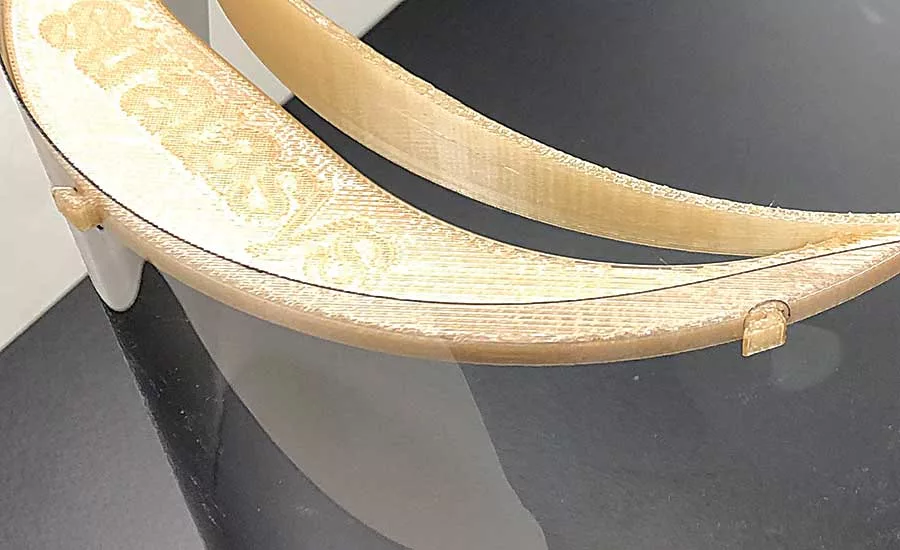
GM also started manufacturing protective face shields that evening in the Warren facility. This project was first discussed just four days before by GM’s Additive Manufacturing and Design Fabrication Operations teams.
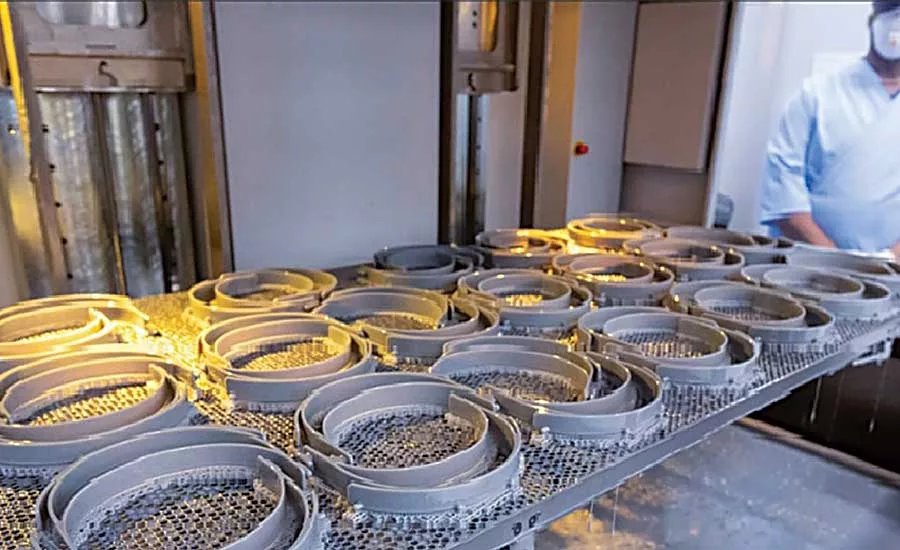
Various shield components are 3D printed at the Global Technical Center, at the Milford Proving Ground in Milford, MI, and at the North Hollywood Advanced Design Center in North Hollywood, CA. The parts are printed from either acrylonitrile styrene acrylate (FDM printers), DuraForm PA polyamide nylon (SLS printers) or Accura Xtreme Gray (SLA printers).
Key suppliers to the project are Summit Polymers of Kalamazoo, MI, and Argent International of Plymouth, MI.
“We worked with a local shop, S&K Tool & Die, to rapidly design and develop the mold to make the visors that hold the shields in place,” says Jody Flinton, general manager of Summit Polymers Plant 18.
Summit has donated a P20 steel injection mold that enables GM to achieve production of 25,000 units per week. GM purchased a second injection mold to help increase production up to 50,000 units per week.
The actual shields are made from polyethylene terephthalate by Argent International, which also makes the 12-inch elastic bands that hold the shields in place. All assembled face shields are shipped to high-priority hospitals in Metro Detroit in cases of 100, as directed by the State of Michigan’s PPE list.
Grippers Enable Assembly of Safety Visors
Somtech Technologies SL, based in Valencia, Spain, recently changed its product focus from automotive, rail and packaging industries to safety visors. It then altered how it produces all visor parts, from 3D printing to injection molding.
To start production immediately after setting up the molding equipment, the company needed to install a robotic part-removal system with a suitable gripper. Piab turned out to be the only supplier that could quickly provide the right gripper on such short notice.
The gripper automatically unloads just-molded parts so they can be transferred to the next workstation for assembly. Somtech’s injection molding machine produces enough parts for 56,000 visors per week.
“We approached all possible manufacturers of gripping components over the weekend to obtain them at the beginning of the following week,” explains Mariano Sebastiá Ramirez, COO of Somtech. “The Piab experts immediately sprang into action, even on a Sunday night. This allowed us to define the necessary parts and have the order ready by Monday morning. Within 48 hours, the Piab components reached our factory, allowing us to immediately ramp up the process and start high-volume production of the visors.”
Piab offers more than 1,500 vacuum-based automation systems for gripping and moving a wide variety of products. Customers include companies in the automotive, food, plastic injection molding and metalworking industries. Modular systems from the supplier may be equipped with low-maintenance or high-end grippers, custom robot hands and pneumatic cutting tongs.
From Airplanes to Face Shields
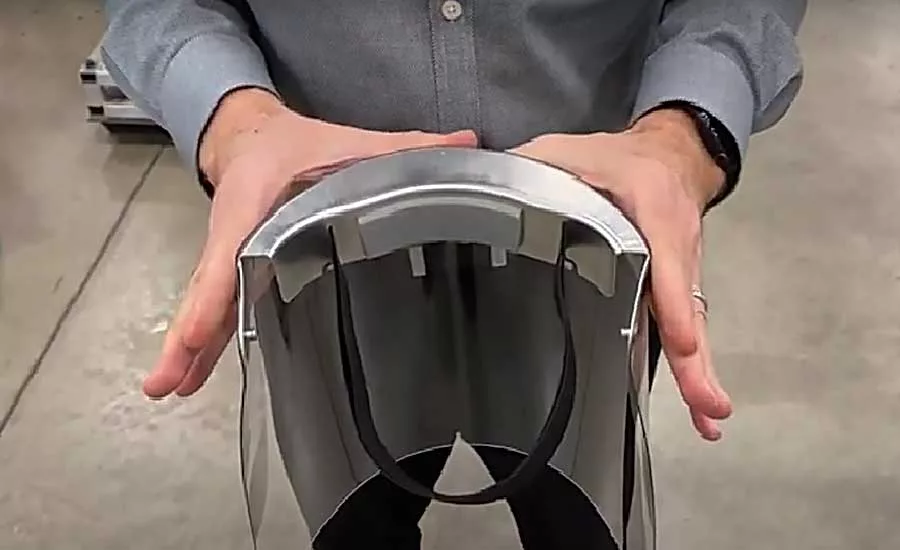
Boeing has been 3D printing face shields for healthcare workers since early April. Each shield consists of a 3D-printed frame with an adjustable headband that allows a clear plastic shield to be easily snapped onto the frame.
The company’s extensive Boeing Additive Manufacturing (BAM) network includes facilities in Puget Sound (WA), Alabama, Arizona, California, Missouri, Oregon, Pennsylvania, South Carolina, Texas and Utah. Depending on the size of the Stratasys Ltd. 3D printer being used, up to 24 frames can be printed each day. On April 10, the company shipped its first 2,300 shields to the Department of Health and Human Services.
Shield design involved experts from three divisions of Boeing, as well as Design That Matters, a nonprofit group based in Redmond, WA. The participating groups at Boeing include BAM; Boeing Research & Technology; and Boeing Defense, Space & Security.
Solvay Specialty Polymers is providing the clear sheets of plastic that snap onto the frames. Another longtime supplier, Trelleborg Sealing Solutions, is donating the straps needed for the headband.
Jeff Hrivnak, healthcare global business development manager at Solvay, says that Boeing approached the company because of its experience in the use of advanced composite and adhesive materials on multiple commercial and defense programs.
The thermoplastic film used in the shields is manufactured using Solvay’s medical-grade Radel polyphenylsulfone or Udel polysulfone transparent polymers. Both polymers are widely used for medical devices because of their ability to be sterilized and withstand aggressive disinfectants.
Straps and Headbands
The Czech company Prusa Research manufactures open-source FDM 3D printers. Recently, the company placed online a 3D-printing design for a plastic strap that a healthcare worker can use to hold a plastic face shield in place. The design is downloadable for free.
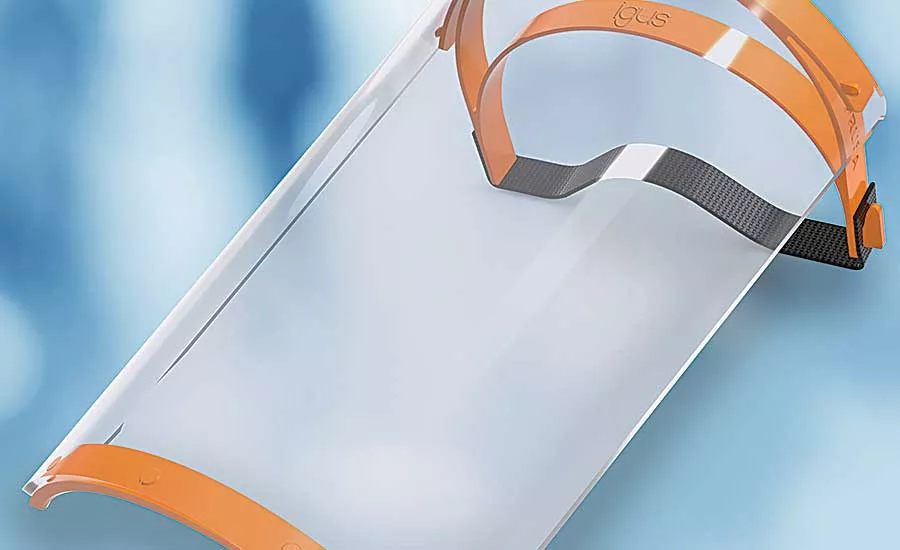
Igus, the Cologne, Germany-based motion plastics manufacturer, is assisting the effort by donating 100,000 injection-molded headbands that help hold the shields in place while workers assist patients. The Prusa design recommends that the shield be worn in conjunction with a face mask for optimum worker protection.
“Several [shield] makers asked us whether we, as a tribo-filament manufacturer, could provide them with material,” says Tom Krause, head of business unit additive manufacturing at igus. “But that doesn’t solve the real problem, which is that, if a 3D printer is used, production of the headband as a central component is comparatively expensive and takes more than two hours. This means that only a few parts can be made per day.”
As a result, igus decided to injection mold the headbands and use material recycled from the company’s iglide A200 bearings. Thilo Schultes, Ph.D., general manager of toolmaking at igus, says this approach enables the company to quickly mass-produce the headbands at a considerably lower cost. More than 10,000 headbands are manufactured and shipped from the Cologne factory every week.
3D Printing Nasal Swabs
Another maker of 3D printers, Markforged, has partnered with Neurophotometrics Ltd. (NPM) to produce Fiberflex Rayon, a 3D-printed nasopharyngeal swab used in diagnostic testing for COVID-19. Markforged machines 3D-print parts made of metal and carbon fiber. NPM is a scientist-run company that provides optical equipment for both academic and industrial research applications.
The swab, which takes just minutes to make, successfully detects the virus in all of the patients. Commercial swabs, in contrast, often report false negatives. NPM is currently 3D-printing 10,000 swabs per day, with plans to scale to 100,000 per day.
“Identifying COVID-19 patients is the best way to slow down the spread of the disease, but we’re seeing a lot of issues with wide-scale testing,” says Greg Mark, CEO and founder of Markforged. “There are massive shortages of nasal swabs. To make matters worse, hospitals are reporting false negatives with the current swabs on the market.”
As part of the San Diego COVID Research Enterprise Network (SCREEN) Initiative, NPM worked with Rady Children’s Hospital-San Diego, the Scripps Research Institute and the University of California San Diego to design the swabs and test them on 50 volunteers. Patients that were confirmed to be positive for coronavirus were retested 3 to 14 days later with both a commercial swab and the 3D-printed swab.
Testing with the commercial swab detected the virus in most, but not all, of the patients. However, all of the 3D-printed swabs came back positive, suggesting that they may be more efficient at collecting viral particles and reduce the rate of false negatives.
NPM’s swab design couples a 3D-printed nylon base with a wrapped rayon tip to gather viral specimens. The swab is flexible enough to enter the nasal cavity and strong enough to withstand significant mechanical force or torsion without breaking or shearing. In addition, the swab meets the mechanical demands of clinical use and is comparable to the mechanical performance of commercial swabs.
“[We all] collaborated to scale this 3D-printed swab at a rapid pace,” says Sage Aronson, CEO and founder of NPM. “Markforged [printers] enabled us to test more than 50 prototypes in 36 hours. And in [a] two-week [period], we turned an idea into a viable product that’s going to save lives.”
Clinical validation of the 3D-printed swabs was completed in early April by the institutional review board at Rady Children’s Hospital and the University of California San Diego. The hospital has since ordered 30,000 swabs from NPM to test patients within its facility.
“When early tests came back positive on the new design and manufacturing process, we needed to figure out how to scale [production] to provide this solution to as many people as possible,” says Justin Ryan, Ph.D., director and research scientist at the 3D Innovations Lab at Rady Children’s. “Scaling the swabs to millions will help save lives and further flatten the curve. Innovation and 3D printing are saving lives.”
Producing Parts for Test Kits
Rapid prototyping firm Protolabs is working with NeuMoDx Molecular to expedite the production of tens of thousands of components for COVID-19 test kits that are being distributed to various testing centers worldwide. NeuMoDx designs and develops sample-to-result molecular diagnostic solutions for hospital and clinical reference laboratories.
In late March, the U.S. Food and Drug Administration issued an Emergency Use Authorization for the NeuMoDx SARS-CoV-2 Assay to be implemented on its automated NeuMoDx 288 and 96 molecular systems. The Assay is an in-vitro RT-PCR diagnostic test for the direct detection of SARS-CoV-2 Coronavirus RNA from nasopharyngeal, oropharyngeal and nasal swab specimens.
These swabs are only used on individuals with signs and symptoms of coronavirus infection. Test results are obtained in as little as 80 minutes from primary collection or daughter tubes.
The Assay is multiplexed and uses different fluorophores to detect highly conserved regions of two SARS-Cov-2 genes: the Nsp2 gene and N gene. At this point, only Clinical Laboratory Improvement Amendments certified hospitals and reference laboratories with experience performing high-complexity may use the assay.
Optics for Diagnostic Equipment
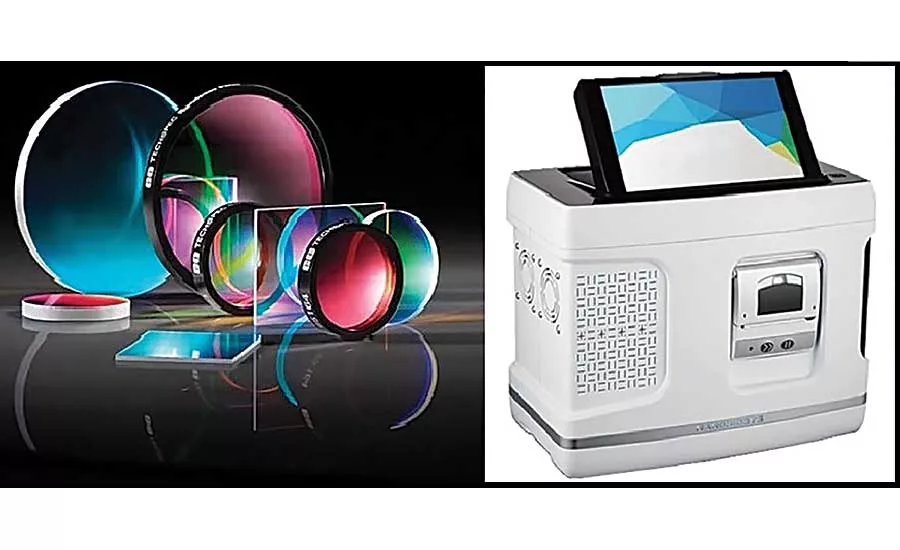
Edmund Optics is supplying optical components for the molecular diagnostic device VERI-Q PCR 316, which detects coronavirus within one hour. Made by the South Korean healthcare diagnostics company MiCo BioMed, the device is portable, highly sensitive and being used in many countries, including Poland, Hungary, Romania, Ecuador, Bangladesh, Senegal and Brazil.
The device uses optical filters, beam splitters, lenses and mirrors in a real-time reverse transcription polymerase chain reaction (rRT-PCR) test, in which a small sample of DNA is amplified and studied in detail. The U.S. Centers for Disease Control has approved rRT-PCR tests for combating the spread of COVID-19.
Michigan Manufacturers Respond
Albion, MI-based Caster Concepts Inc., a global manufacturer of industrial casters and wheels, has partnered with Jackson, MI-based metal fabricator Technique Inc. to make headbands for face shields. Up to 5,000 shields are produced daily and shipped to local Michigan hospitals.
“These supplies are going to the true heroes in this story: our healthcare professionals who are caring for people around the clock,” says Caster Concepts CEO Bill Dobbins. “We want to make sure they’re well-equipped to do their job and be safe while they’re doing it.”
Caster Concepts continues to produce its line of ergonomic casters, wheels and tread, ensuring the nation’s supply chain of essential materials remains functioning. Only essential staff members remain at the company’s plant in Albion, and all efforts are being taken to ensure their safety. The company has instituted a strict cleaning protocol, sanitizing and cleaning commonly used areas by spraying working surfaces three times a day with a 70 percent isopropyl alcohol solution.
Fabricator Makes Cots
Pioneer Equipment Inc., a family-owned designer and fabricator of agricultural equipment since 1978, is producing field hospital cots. Over a two-week period, from late March to early April, the company designed the cots, began building them and sent more than 1,000 to the Stony Brook University Hospital in Long Island, NY, and the Greater Columbus Convention Center in Columbus, OH.
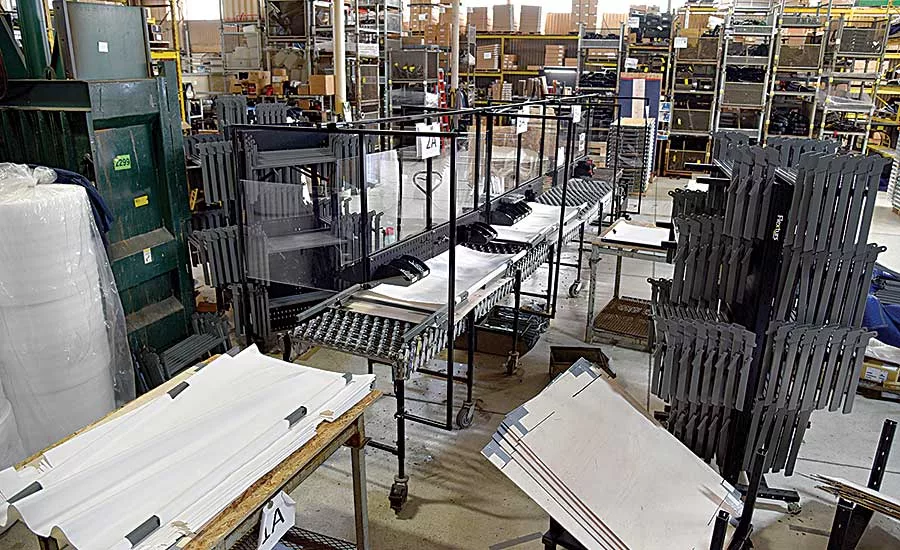
According to Eddie Wengerd, general manager of Pioneer, the company retooled its manufacturing facility and set up new lean assembly lines to mass produce the cots. More than 2,000 additional cots are scheduled to be produced for similar facilities in Maryland, Colorado, California, North Carolina, Utah and Arkansas.
Wengerd says the company’s goal is to be able to produce up to 1,000 beds a day, if needed. This is made possible by using Pioneer’s Gridlok panels on its Flexturs workstations and rolling shelf.
“We approached other local businesses for project assistance—specifically those with expertise in other areas, like fabrics,” says Wengerd. “Those connections, and our talented team of committed employees, formed a spirited collaboration to make it happen very quickly.”
Brent Nussbaum, CEO of Miller Weldmaster, played a huge part in the project from day one, producing prototypes and connecting Pioneer with Seaman Corp. and several other companies. These are Arise Tents, Zentru Home Furnishing, Weaver Leather and Snyder Manufacturing.
A key helper for cot distribution is Lyon Group from Chicago. Wengerd met up with the Lyon Group at the MODEX trade show in Atlanta in March.
Several companies in Pioneer’s supply chain have also assisted, including Ryerson, Alro Steel, Metal Dynamics, Mt. Eaton Pallet and Hentzen Coatings. Helping with logistics are John Masters Trucking, CRW Trucking and Simms Global.
“We believe in standing together in times of adversity,” says Daniel Wengerd, CEO of Pioneer. “In difficult times, we have an opportunity to pull together and seek ways to make a difference. It is simply our duty to help our fellow man in a time of need.”
Furniture Company Flips Production for Frontline Workers
Transformations Furniture, based in Fort Wayne, IN, is holding true to its name–by pivoting from producing furniture to producing high-grade PPE for those who are working with COVID-19 patients. The furniture maker has shifted production lines to use their materials to create hoods and surgical gowns of the highest grade protection that hospitals desparately need.
Transformations has the capability to seal the seams of surgical gowns, meaning they can produce Level 3 and 4 gowns. They are also working with a team of local engineers to produce the fabric portion of Personal Air-Purifying Respirator (PAPR) hoods.
This hood provides positive airflow with filtered air to avoid contamination. Transformations can make 2,000 hoods a day. It awaits contracts for surgical gown production.
Interlink Electronics Steps up to Reduce Ventilator Failure and Contamination
Since early April, Interlink Electronics has quadrupled its output of components used in the making of lifesaving equipment in support of the relief effort against the COVID-19 pandemic. This includes Interlink’s patented Ring Sensor, a touch-operated, wheel-shaped sensor used in noninvasive ventilators that assist COVID-19 patients experiencing respiratory distress.
The sensors are designed to be operated by users wearing gloves, and can also withstand quick deep cleanings. This, in turn, reduces equipment failure and contamination so healthcare workers can focus on saving lives.
Looking for a reprint of this article?
From high-res PDFs to custom plaques, order your copy today!