Assembly Magazine logo
search
Ask ASSEMBLY AI
cart
facebook twitter linkedin youtube
  • Sign In
  • Create Account
  • Sign Out
  • My Account
Assembly Magazine logo
  • TRENDS
    • Ask ASSEMBLY AI
    • Trends
    • News
    • New Products
  • INDUSTRIES
    • Aerospace
    • Appliance
    • DFMA Assembly
    • Medical Devices
    • Green Manufacturing
    • Lean Manufacturing
    • Machinery Assembly
    • Electronics Assembly
    • Automotive
  • TECHNOLOGIES
    • Adhesives & Dispensing
    • Assembly Presses
    • Automated Assembly Systems
    • Manufacturing Management
    • Manufacturing Software
    • Motion Control
    • Screwdriving & Riveting
    • Robotics
    • Test & Inspection
    • Plastics & Metal Welding
    • Wire Processing
    • Workstations
  • AUTONOMOUS & ELECTRIC MOBILITY
    • AEM Magazine Archives
    • Autonomy
    • Electrification
    • Mobility Services
    • Assembly & Testing
    • AV/EM News
  • MEDIA
    • Ask ASSEMBLY AI
    • Podcasts
    • Assembly News Now
    • Assembly TV
    • Webinars
    • eBooks
  • EVENTS
    • Calendar
    • The ASSEMBLY Show
  • MORE
    • Exclusives >
      • Plant of the Year
      • Capital Spending
    • Buyers Guide >
      • Supplier Insights
    • Classifieds
    • Featured Products
    • Newsletters
    • Store
    • White Papers
    • Columns
    • Sponsor Insights
  • INFOCENTER
    • Assembly & Test Solutions
  • EMAGAZINE
    • eMagazine
    • Archive Issues
    • Advertise
    • Contact Us
    • Sign Up
Test and Inspection Assembly

Access Control With RFID

By Chris Randle
Access Control With RFID
This diagram shows a system for authentication and access control of industrial automation software using an RFID reader combined with a network interface module. Illustration courtesy ELATEC Inc.
Access Control With RFID
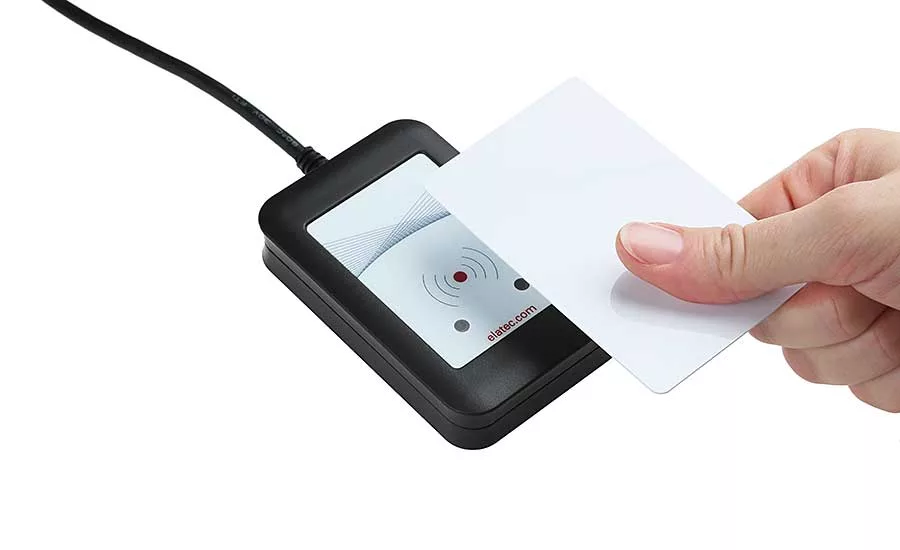
RFID cards are touchless; the user only has to wave the card within a few inches of the reader to be read. Photo courtesy ELATEC Inc.
Access Control With RFID
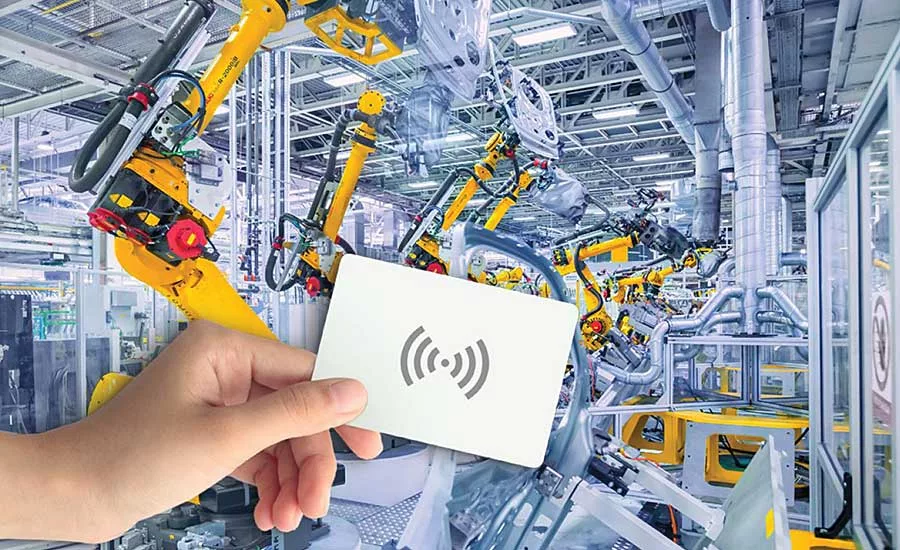
With automation systems becoming increasingly interconnected, limiting access to controllers and HMI software is crucial. Photo courtesy ELATEC Inc.
Access Control With RFID
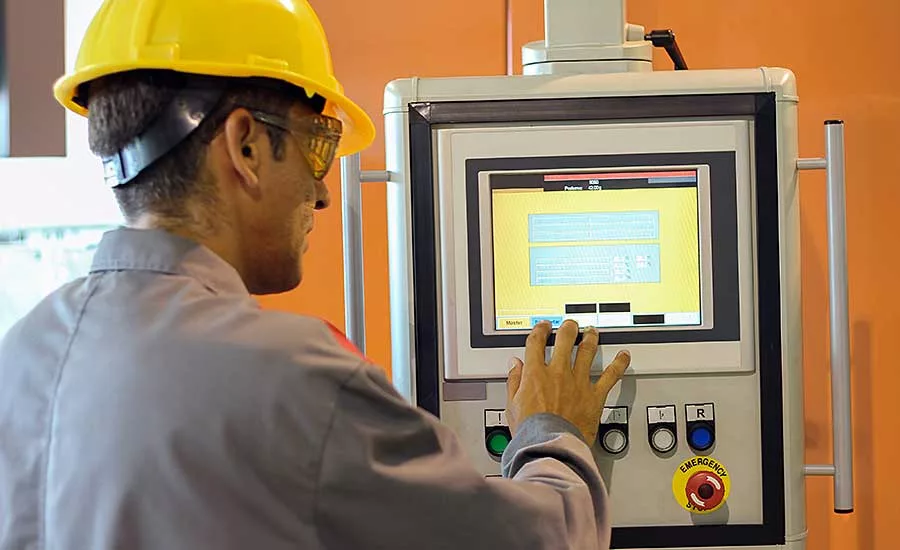
To prevent unauthorized software updates, a user authentication system should be installed on or near the operator station, requiring the physical presence of the person authorized to update or change the software. Photo courtesy ELATEC Inc.
Access Control With RFID
May 19, 2021

RFID technology can help manufacturers control access to critical hardware and software.

What’s the best way to ensure product quality and production uptime in industrial automation? Make sure that only trained and authorized people can access the programmable controllers.

A typical assembly plant is equipped with an assortment of machinery and robots to fabricate and assemble various products. These machines are often driven by programmable controllers (PLCs or industrial PCs) and use a human-machine interface (HMI) for configuration, notifications and routine control. The controllers have software that perform specific tasks in a logical order to drive the machine or process. With automation systems growing in number and increasingly interconnected, limiting access to controllers and HMI software is crucial.

Automation controllers are usually connected through plantwide Ethernet networks to IT servers that include databases for collecting information to manage things like employee identity and authorization to run and support plant manufacturing processes. The names of plant personnel who are authorized to change or update controller and HMI software are stored on IT servers. The data lists whether employees have the proper skill sets and whether they are trained and certified to access the manufacturing system hardware and software. It also shows whether employees are authorized to enter a hazardous area to perform maintenance or other activities.

Plant IT servers typically store copies of the controller and HMI software for backup, change control and disaster recovery purposes. To prevent unauthorized software updates, a user authentication system should be installed on or near the operator station, requiring the physical presence of the person authorized to update or change the software. This added authentication and authorization requirement protects the manufacturing system, engineers, machine operators and maintenance personnel.


Controlling Access

Working with the IT department, plant control engineers are usually responsible for authorization to access controller and HMI software. Authorized personnel typically include plant engineers, maintenance electricians and IT personnel who can access software running specific processes. The level of access varies according to the individual’s function in the plant. Engineers usually have full access to upload, download and change controller and HMI software. IT personnel are usually only able to upload or download software for backup and disaster recovery purposes. Plant maintenance electricians typically have limited access to change software and only for process troubleshooting. The specific authorization may vary from plant to plant, but identification of who accessed the software, who made changes and when is logged in a database to track changes for review when necessary.

There are many reasons for engineers to implement systems that log and track software changes to controllers and HMIs. The primary reason is that unauthorized changes can cause serious harm, including long startup times, downtime, quality problems, unsafe operating conditions, and software losses. In addition, engineers, operators and maintenance personnel on different shifts may be unaware of changes, who made them, or when.

Looking for quick answers on assembly and manufacturing topics? Try Ask ASM, our new smart AI search tool. Ask ASM →

For authentication and authorization systems to work, they must be easy to use, flexible, durable, secure, and stand up well to environmental elements. Radio frequency identification (RFID) technology addresses these requirements better than magnetic stripe cards, chip cards and PIN pads. RFID cards are the most widely used form of authentication and access control today.

One of the benefits of RFID authentication and access control is that it is easy and convenient for users. RFID cards are touchless; the user only has to wave the card within a few inches of the reader to be read.

RFID readers can be implemented throughout a factory for multipurpose authentication using existing employee building-entry ID cards. Functionality such as time-based access control, access to manufacturing processes, access to controller and HMI software and hazardous areas can be added. Additionally, RFID readers can often read and write to more than one type of card. Should plant requirements change, cards can be updated without issuing a new card.

When connected to plantwide networks, readers can use various protocols, such as gigabit Ethernet, to communicate with IT systems and automation applications like programmable controllers, HMIs and robots.

Since they are touchless, both cards and readers experience less wear and tear than in systems requiring the card to contact the reader, such as in magnetic stripe cards and chip card systems. Over time, this can minimize the replacement cost of both cards and readers.

RFID card systems are more secure than other card-based identification technologies. Data transfer between cards and readers and message traffic between card readers and plant networks can be encrypted.

RFID readers and cards can also execute a kill command if the card is lost or stolen. Since the kill command deactivates the card, it prevents unauthorized access to sensitive data, hardware and software that controls industrial manufacturing processes and hazardous areas in the plant.

Finally, given industrial settings, RFID cards and readers are more durable in harsh plant floor environments. They resist dust, heat, dirt and general wear and tear better than other authentication and access control technologies.

RFID is a secure, flexible, reliable, and easy-to-use technology for authentication and access control of industrial hardware and software. There are multiple RFID reader technologies on the market, but they are not all created equal. Choosing a comprehensive platform that offers a wide range of options can help your organization implement a system that will meet your needs now and in the future.

KEYWORDS: Auto ID factory automation RFID

Share This Story

Looking for a reprint of this article?
From high-res PDFs to custom plaques, order your copy today!

Chris Randle // Vice President of Industry Solutions // ELATEC Inc. // Palm City, FL

Recommended Content

JOIN TODAY
To unlock your recommendations.

Already have an account? Sign In

  • Made in the U.S.A.

    Consumer Products Manufacturing: Made in the USA

    Supply chain lessons learned during the coronavirus...
    Automated Assembly Systems
    By: Austin Weber
  • Best Practices for Press-Fit Assembly

    Best Practices for Press-Fit Assembly

    In manufacturing, ironclad formulas for success are hard...
    Assembly Presses
    By: Jim Camillo
  • aem0523leader-tesla1.jpg

    Tesla Rethinks the Assembly Line

    Engineers at Tesla Inc. have developed a new process that...
    Electrification
    By: Austin Weber
Manage My Account
  • eMagazine Subscription
  • Assembly Newsletters
  • Online Registration
  • Subscription Customer Service
  • Manage My Preferences

More Videos

Sponsored Content

Sponsored Content is a special paid section where industry companies provide high quality, objective, non-commercial content around topics of interest to the ASSEMBLY audience. All Sponsored Content is supplied by the advertising company and any opinions expressed in this article are those of the author and not necessarily reflect the views of ASSEMBLY or its parent company, BNP Media. Interested in participating in our Sponsored Content section? Contact your local rep!

close
  • ultrasonic welding
    Sponsored bySonobond Ultrasonics

    Engineering Efficiency in High-Performance Assembly: How Ultrasonic Welding Enhances Throughput, Reliability and Quality

  • UV curing system
    Sponsored byDymax

    Why UV Intensity Alone Doesn’t Define Curing Performance

  • wooden pallets
    Sponsored byLEAN Manufacturing Products

    Eliminating Waste on the Shop Floor: Applying Lean Principles to Improve Manufacturing Efficiency

Popular Stories

ASSEMBLY News Now, episode-30: Volvo Redesigns EV Manufacturing

Volvo Redesigns EV Manufacturing

Robots working at Toyota Plant in Japan

Toyota Deploys Geekplus Robots for Factory Material Handling

can of soda pop

The “Diet Coke Problem” as Manufacturers Face Experts Retiring

Watch the latest episode of ANN now!

Events

July 24, 2025

From Shop Floor to CFO: How Manufacturers Are Closing the Loop Between Operations and Finance

On Demand Learn how manufacturers are bridging the gap between the shop floor and ERP systems to gain real-time visibility, streamline operations, and kick-start digital transformation—without waiting years.

Sponsored by:

PicoStratusGreen
July 30, 2025

Buffer Analysis and Design Fundamentals for Manufacturing Excellence

On Demand In this presentation, Dr. Herman Tang shares practical insights from his industry experience and research on buffer management in manufacturing operations.

View All Submit An Event

Poll

Difficult Assembly Processes

Which assembly process gives you the most difficulty?
View Results Poll Archive

Products

Manufacturing Cost Policy Deployment (MCPD) Profitability Scenarios: Systematic and Systemic Improvement of Manufacturing Costs

Manufacturing Cost Policy Deployment (MCPD) Profitability Scenarios: Systematic and Systemic Improvement of Manufacturing Costs

See More Products
ebook

Related Articles

  • What’s New With RFID

    What’s New With RFID

    See More
  • Tractor Manufacturer Tracks WIP With RFID

    See More

Related Products

See More Products
  • Designing with Plastics

  • reducing.jpg

    Reducing Process Costs with Lean, Six Sigma, and Value Engineering Techniques

  • integration.jpg

    Integration of Mechanical and Manufacturing Engineering with IoT: A Digital Transformation

See More Products

Events

View AllSubmit An Event
  • August 20, 2025

    K.I.S.S. MES (Keep It Simple, Stupid): Why Modern Manufacturers Are Choosing Modular MES with Real Shop Floor Control

    On Demand If you’re tired of MES that overpromises and underdelivers, it’s time to simplify. Learn how a modular approach gives you control where it counts—without the baggage.Sponsored by:
View AllSubmit An Event

Related Directories

  • RFID Inc.

  • FineLine Technologies

    FineLine Technologies offers advanced barcode and RFID solutions for complex markets including retail, automotive, industrial manufacturing, healthcare and entertainment. We provide high-quality RFID tags and labels, and Transparency by Amazon packaging to enhance brand protection and supply chain efficiency. Our unique identification barcoding and RFID solutions will power your supply chain's efficiency, omnichannel fulfillment, traceability, Transparency by Amazon, POS, access control, and consumer engagement along with custom labeling and tagging services for precise product identification. Check out our identification solutions today to upgrade your operations. Find out more about RFID labels, Amazon Transparency labels, custom branded packaging, and other integrated RFID packaging solutions on our website!
×

Never miss the latest news and trends driving the manufacturing industry

Stay in the know on the latest assembly trends.

JOIN TODAY!
  • RESOURCES
    • Advertise
    • Contact Us
    • Directories
    • Manufacturing Division
    • Store
    • Want More?
  • SIGN UP TODAY
    • Create Account
    • eMagazine
    • Newsletters
    • Customer Service
    • Manage Preferences
  • SERVICES
    • Marketing Services
    • Reprints
    • Market Research
    • List Rental
    • Survey/Respondent Access
  • STAY CONNECTED
    • LinkedIn
    • Facebook
    • Instagram
    • YouTube
    • X (Twitter)
  • PRIVACY
    • PRIVACY POLICY
    • TERMS & CONDITIONS
    • DO NOT SELL MY PERSONAL INFORMATION
    • PRIVACY REQUEST
    • ACCESSIBILITY

Copyright ©2026. All Rights Reserved BNP Media, Inc. and BNP Media II, LLC.

Design, CMS, Hosting & Web Development :: ePublishing