What’s New With RFID
RFID technology has become critical for assembling cars, appliances and other high-value, high-mix products.
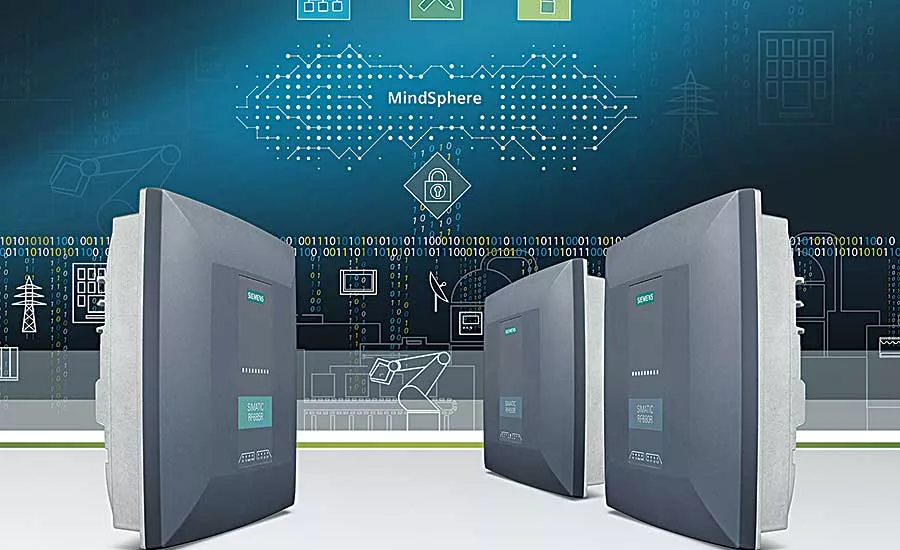
The Simatic RF600 RFID system now supports the open interface OPC UA. The new firmware allows devices to be connected to Siemens’ cloudbased open Internet of Things operating system, MindSphere. Photo courtesy Siemens Industry
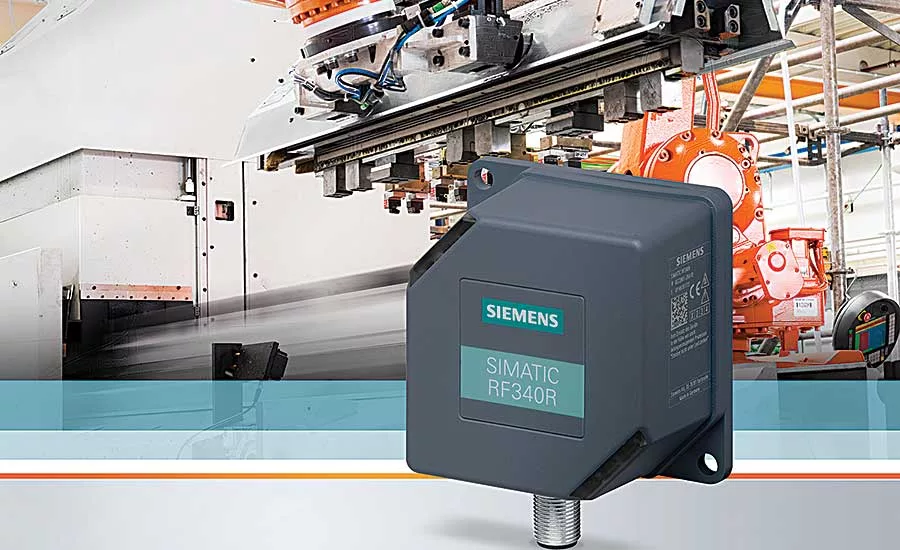
Siemens’ compact Simatic RF300 RFID system is designed for controlling and optimizing material flow in closely packed assembly lines. Photo courtesy Siemens Industry
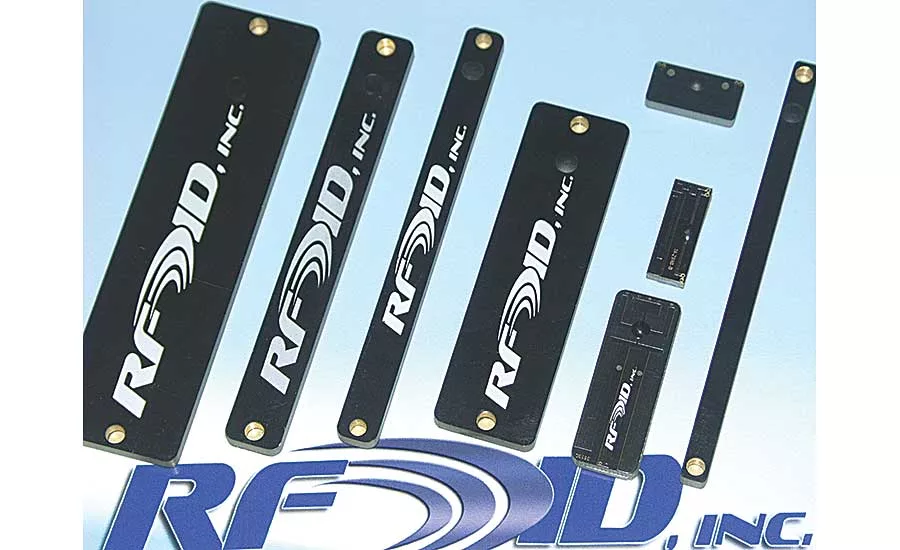
Available in a variety of sizes, these FR4 RFID pallet tags can withstand a temperature of more than 200 C. Photo courtesy RFID Inc.
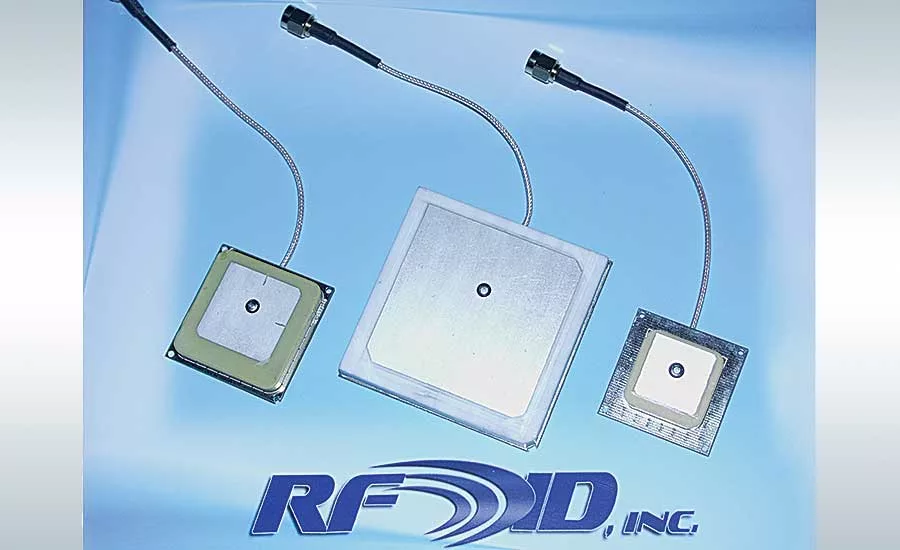
These ceramic UHF RFID antennas come in an array of sizes and power. The smallest is 25 millimeters square. The largest is 80 millimeters square. Photo courtesy RFID Inc.
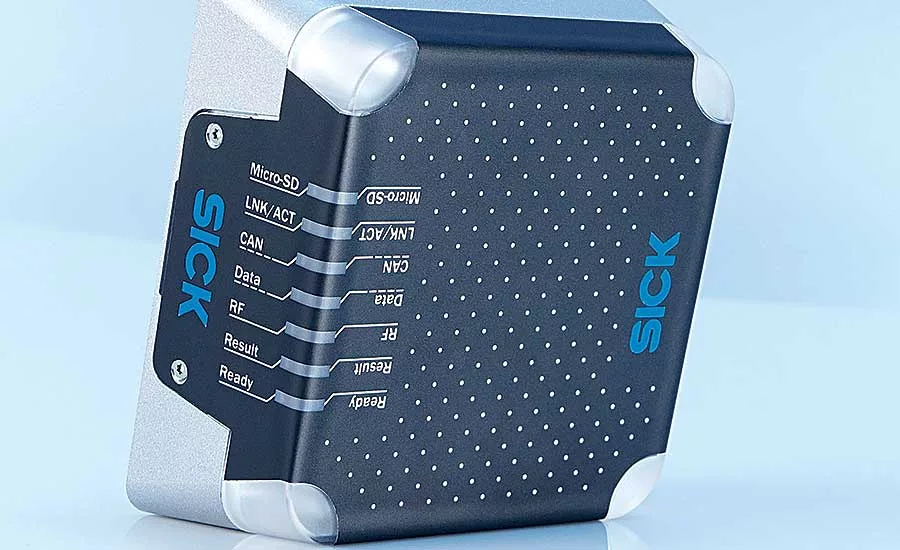
The RFU620 read-write device from SICK Inc. is optimized for applications in which UHF tags must be reliably identified at medium ranges and in close physical proximity to one another. Photo courtesy SICK Inc.
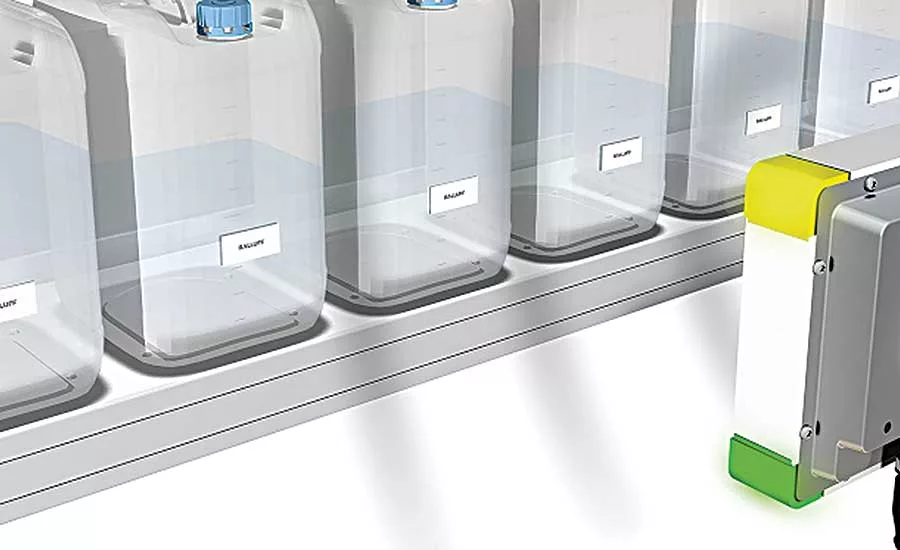
The compact BIS VU-320 write-read head from Balluff Inc. has function and status LED indicators that can be easily seen from any direction. With a typical reading range of 1 meter, the UHF system is especially suited for use in assembly plants. Photo courtesy Balluff Inc.
Manufacturers of complex products, such as engines and transmissions, have long been using radio frequency identification (RFID) technology to error-proof their processes, document quality, and deal with high-mix production.
The product moves down the assembly line on a pallet equipped with an RFID tag. When the pallet stops at a station, a reader (attached to the conveyor) interrogates the tag and relays information about the product to a PLC. The PLC, in turn, tells an assembler or automated machine what to do.
Over time, manufacturers transitioned from low-frequency RFID technology (125 kilohertz, 4-inch maximum read range, expensive tags, relatively immune to radio interference) to high-frequency technology (13.56 megahertz, 40-inch maximum read range, relatively expensive tags, moderate sensitivity to interference).
“When I first got into the RFID business 30 years ago, if you wanted a read range of 3 feet or more, you were dreaming,” says James Heurich, president of RFID Inc.
Now, a new technology, ultra-high frequency RFID, offers the possibility of long read ranges (40 feet or more) and inexpensive tags (less than $0.10 each). Although UHF technology has been around for more than a decade, it has really come to the fore within the past five years. Retailers and distributors are embracing the technology to get instant, real-time information about incoming and outgoing goods.
“In the past, when a retailer wanted to do an inventory, it locked a bunch of people in the store and the job took all night,” says Heurich. “Now, one person can just walk around the facility with a handheld scanner and do the job in 30 minutes.”
UHF RFID systems operate at a frequency of 915 megahertz. That gives readers greater range, but also makes the system more prone to interference.
Looking for quick answers on assembly and manufacturing topics? Try Ask ASM, our new smart AI search tool. Ask ASM
“Some companies claim a range of 8 to 12 meters from antenna to tag,” says Jeffrey Snyder, product manager for industrial identification at Siemens Industry. “That might be achievable in an open auditorium, but assembly plants are not big open spaces. They tend to have a lot of large metal objects, like robots and fork trucks. UHF systems can be highly affected by their environment. The radio waves tend to reflect off metal surfaces.”
Manufacturers that are considering UHF RFID technology are well-advised to do a proof of concept before committing. “Set up some equipment in the area where you’d like to do the application,” suggests Snyder. “Test some antennas, test some tags, and see what’s going to work best. It’s challenging to fully design a UHF RFID system sitting at your desk. You typically need to do live in-plant testing.”
UHF tags are so inexpensive because they have a very small amount of memory. Whereas a high-frequency RFID tag commonly has 2 kilobytes of memory, a typical, low-cost UHF tag has only 64 bytes of memory—just enough to store a serial number. Data associated with that serial number is stored in a database that is accessible over the Internet.
“In UHF applications, the tag is almost always used like a license plate, a way to identify an object,” explains Snyder. “If you need specific information about what to do with that object, you have to communicate that serial number over a factory network to a device that knows what to do.”
The low cost of the tag makes them essentially disposable. “UHF allows you to attach the tag directly to the widget, whether it’s a pair of jeans or a tire or a sink,” says Heurich. “Now, that tag can walk out the door, and you don’t care because it’s only 10 cents.”
Snyder cautions engineers that inexpensive tags used for tracking cardboard boxes in retail and warehousing applications may not be appropriate for use in an assembly plant. They won’t survive a paint oven or a robotic welding line. More robust UHF tags will be more expensive.
Some manufacturers are also introducing UHF tags with more memory. “Siemens has one with just under 4 kilobytes of memory,” says Snyder. “There are some tags on the market with up to 8 kilobytes of memory. That gives you more room to store data beyond just a serial number. However, those tags may cost $15 to $20 or more, so you’re not using them willy-nilly.”
Better Readers
Whether for high frequency or UHF systems, readers have improved in recent years. Whereas readers for warehouse applications are typically equipped to communicate with a PC, readers for assembly applications usually connect with PLCs. As a result, readers can be set up to work with any industrial network, including Ethernet IP, Profinet, Modbus, CANopen or IO-Link.
Readers can also be equipped to handle more than one antenna. Some can handle up to 16 antennas. That can help reduce overall implementation costs.
“In the end, it can be less expensive, because now you have multiple read points coming back to one PLC, and PLCs are not inexpensive,” says Heurich. “More antennas give you the ability to cover a larger space, say a dock door. You can surround the dock door with four antennas, so you can read multiple tags much more quickly than you could with one antenna.”
Readers have also become easier to set up. “You can’t see radio waves, which makes aiming the antenna a challenge,” says Snyder. “In the past, that’s always been trial and error. There was not a lot data to help you position the antenna. Siemens UHF readers have a feature, called received signal strength indication, that puts a numerical value on signal strength from the tags. That number is displayed on a Web-based system manager, so all you have to do is adjust the antenna to maximize that number.”
Another common setup challenge is deciding how much power to send out of the antenna. “As engineers, we always think, more power is better,” says Snyder. “But that usually gets you into trouble. You’ll be creating a bunch of reflections that you didn’t need to worry about. Our reader has a mode in which it incrementally increases power until it ‘sees’ a tag. In my experience, the recommended power level is always a fraction of what I thought it would be.”
RFID Checklist
First-time users can find the process of specifying and implementing an RFID system a bit overwhelming.
“Many engineers think an RFID reader is somehow responsible for knowing all their business rules and objectives,” says Jeffrey Snyder, product manager for industrial identification at Siemens Industry. “RFID can gather a lot of data on your operation, but what you do with that data is up to you. Often, engineers don’t understand that, and that’s where a lot of the cost and complexity come in.”
Before contacting an RFID supplier, assemblers should answer the following questions:
- What problem are you trying to solve?
- What will be identified? The product itself? A pallet? A tote?
- How is the item currently being identified?
- What type of environment will the RFID system be in? Will there be electrical noise, temperature extremes, high humidity or harsh chemicals?
- How many read stations will be needed?
- How many tags will be needed?
- How fast will the tags be moving?
- How far apart will the tags be?
- Will the RFID system be reporting to a PC or a PLC?
- What communications protocol will be used?
- What read range is needed?
- How much information will be transferred to and from the tags?
- How often will the tags be read and written to?
- Will more than one tag need to be read at the same time?
- Is there a size limitation to the tag?
Looking for a reprint of this article?
From high-res PDFs to custom plaques, order your copy today!