Assembly Magazine logo
search
Ask ASSEMBLY AI
cart
facebook twitter linkedin youtube
  • Sign In
  • Create Account
  • Sign Out
  • My Account
Assembly Magazine logo
  • TRENDS
    • Ask ASSEMBLY AI
    • Trends
    • News
    • New Products
  • INDUSTRIES
    • Aerospace
    • Appliance
    • DFMA Assembly
    • Medical Devices
    • Green Manufacturing
    • Lean Manufacturing
    • Machinery Assembly
    • Electronics Assembly
    • Automotive
  • TECHNOLOGIES
    • Adhesives & Dispensing
    • Assembly Presses
    • Automated Assembly Systems
    • Manufacturing Management
    • Manufacturing Software
    • Motion Control
    • Screwdriving & Riveting
    • Robotics
    • Test & Inspection
    • Plastics & Metal Welding
    • Wire Processing
    • Workstations
  • AUTONOMOUS & ELECTRIC MOBILITY
    • AEM Magazine Archives
    • Autonomy
    • Electrification
    • Mobility Services
    • Assembly & Testing
    • AV/EM News
  • MEDIA
    • Ask ASSEMBLY AI
    • Podcasts
    • Assembly News Now
    • Assembly TV
    • Webinars
    • eBooks
  • EVENTS
    • Calendar
    • The ASSEMBLY Show
  • MORE
    • Exclusives >
      • Plant of the Year
      • Capital Spending
    • Buyers Guide >
      • Supplier Insights
    • Classifieds
    • Featured Products
    • Newsletters
    • Store
    • White Papers
    • Columns
    • Sponsor Insights
  • INFOCENTER
    • Assembly & Test Solutions
  • EMAGAZINE
    • eMagazine
    • Archive Issues
    • Advertise
    • Contact Us
    • Sign Up
IndustriesAppliance AssemblyMedical Devices AssemblyMotion Control

What to Consider When Choosing an Electric Motor

Speed, torque and accuracy are among the factors to consider when choosing an electric motor for an application.
By Dave Beckstoffer
What to Consider When Choosing an Electric Motor
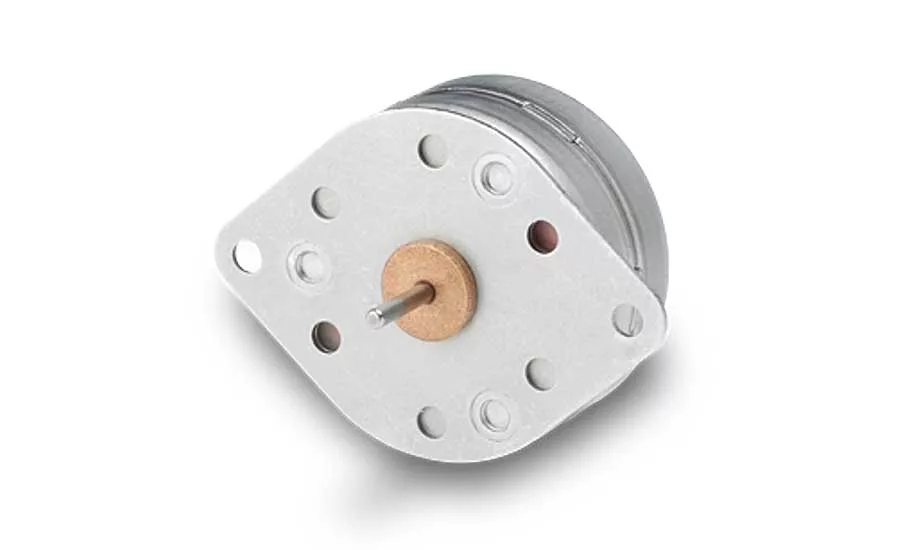
Various motor technologies might meet your requirements for speed and torque, but will they fit in your work envelope? This can-stack motor is designed to fit in tight spaces. Photo courtesy Portescap
What to Consider When Choosing an Electric Motor
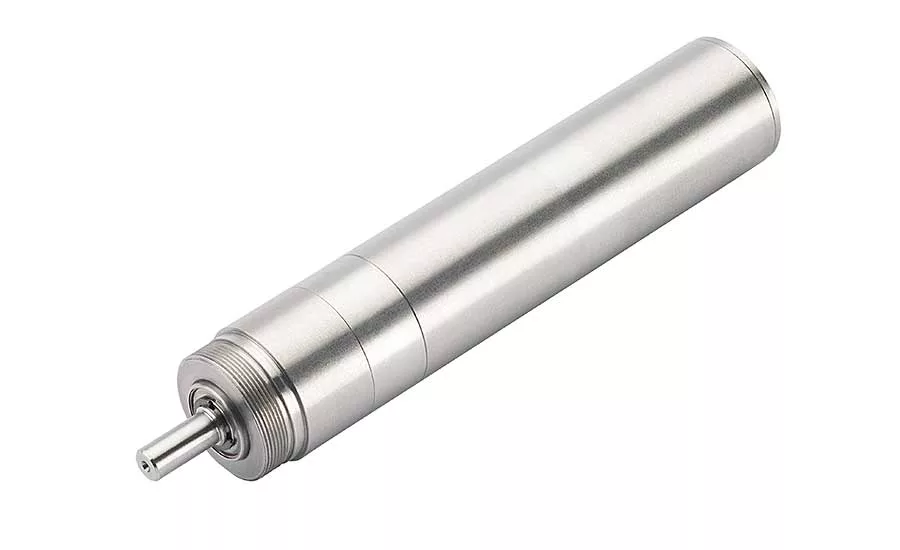
Brushless DC motors are well-suited for high-speed operation. Photo courtesy Portescap
What to Consider When Choosing an Electric Motor
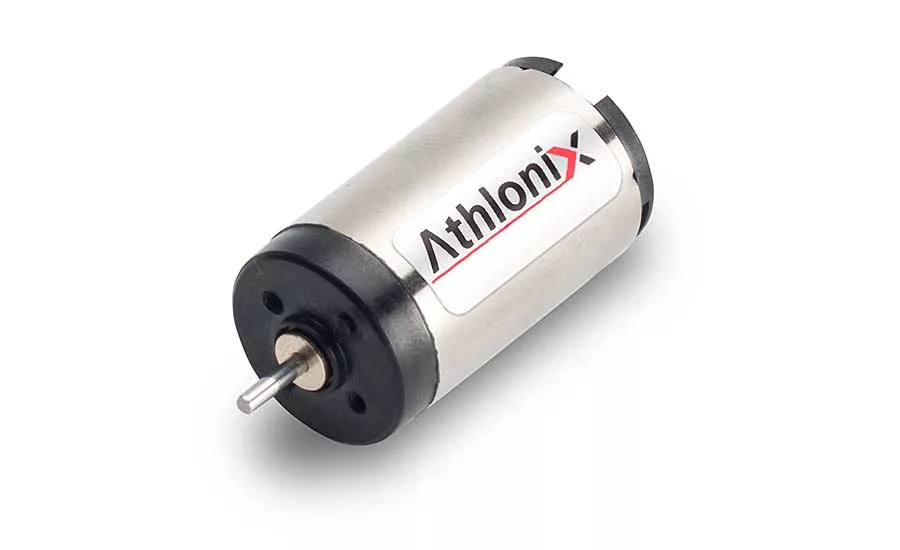
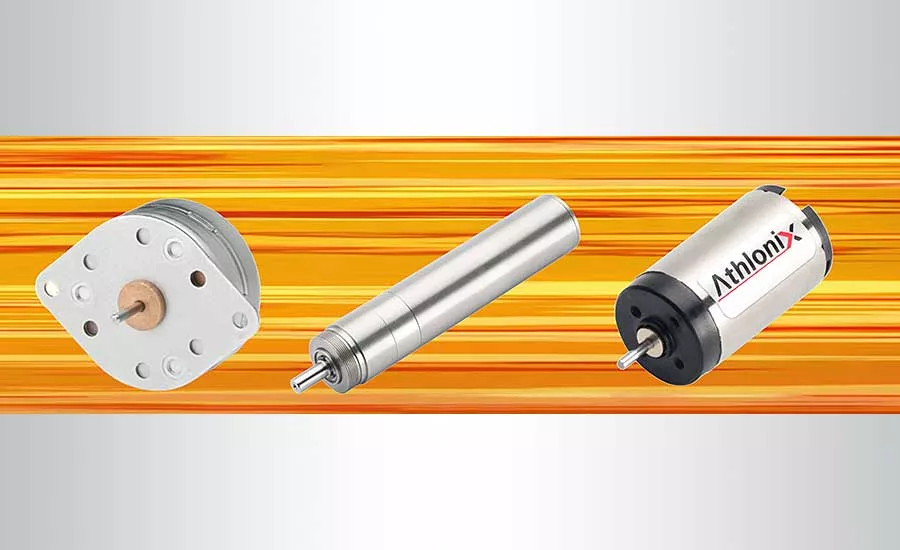
Althlonix DC motors have an energy-efficient coreless design to provide high power density and good balance. Photo courtesy Portescap
What to Consider When Choosing an Electric Motor
August 6, 2021

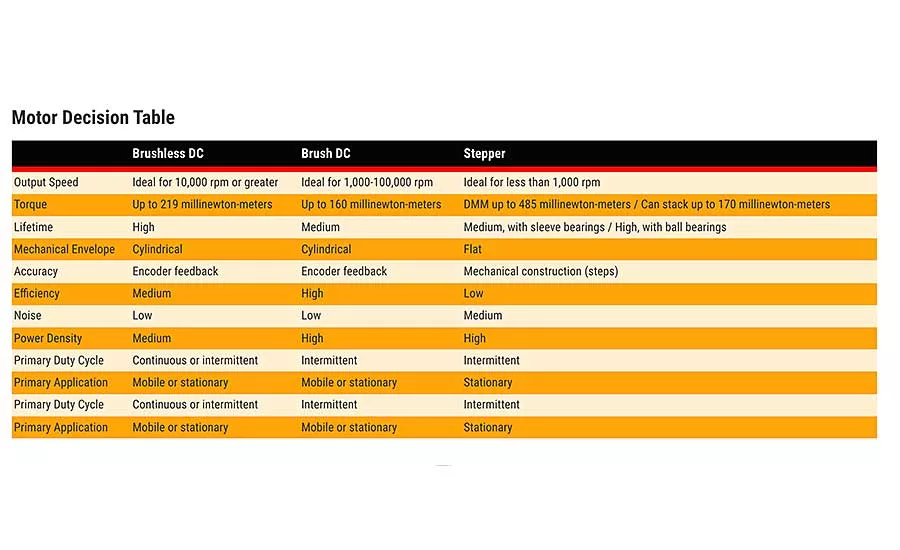
Although motors are a fundamental part of any motion system, selecting the right motor for an application is rarely an easy decision. There are various motor technologies to consider, and each has characteristics that can affect the design in different ways. Factors such as speed, torque, lifetime, mechanical envelope, accuracy and duty cycle will determine whether you choose a brushless DC, coreless DC or stepper motor.


Speed and Torque

Your motion system’s output speed requirement should be one of the first factors to consider when selecting your motor. Brushless DC motors are well-suited for higher speed operation. Coreless DC motors work well at moderate speeds. Higher speeds cause the brushes to wear, which can lead to a shorter lifetime. Stepper motors are electronically commutated, but their higher number of pole pairs makes them suitable to run at lower speeds.

Another factor to consider is the output torque requirement of your motion system. Engineers should focus on both the continuous torque for the application and the peak torque for a limited time during operation. Different motor technologies are characterized by different maximum continuous output torque capabilities. However, depending on the application, all three motor types may be capable of delivering the required output torque. Additionally, you may add a gearbox to increase your motion system’s output torque capability. Note that there is a corresponding reduction in output speed, according to the gear ratio.


Operating Lifetime

The motion system’s work is typically defined in a number of cycles per day and time per cycle, or hours of operation per day and duty cycle. With this information, you can determine the maximum number of hours the motion system needs to operate over the anticipated product life. This prediction will influence your motor selection. Brushed DC motors have a mechanical commutation system that wears over time, limiting their lifetime, while brushless DC and stepper motors are electronically commutated and do not have any of the associated wear, giving them a longer expected lifetime.

Bearings also influence the lifetime of a motion system. Sleeve bearings will provide a few thousand hours of life, while ball bearings will generally provide more than 10,000 hours of life. Of course, the radial and axial loads applied to the motion system’s shaft must fall within specified design limits. Additionally, increased heat inside the system may adversely affect the lifetime of the lubricants.


Mechanical Envelope and System Accuracy

To achieve your required mechanical envelope, you must first confirm that the motor technology you choose is available in a diameter and length that will fit in its intended space. While speed and torque requirements can often be met by one or more motor types, and even by variations within a given technology, you must also be certain that the motor’s power capabilities are sufficient for the application.

With respect to system accuracy, both brushed and brushless DC motors require an encoder to track and control the position of the rotor. Standard encoders offer a range of resolutions within the same package size to meet varying application requirements. You can also increase resolution by adding a gearbox to the front of the motor. The resolution is multiplied by the gear ratio, so you can achieve precise positioning by combining the encoder and gearbox multipliers.

Looking for quick answers on assembly and manufacturing topics? Try Ask ASM, our new smart AI search tool. Ask ASM →

Stepper motors are constructed to provide positioning accuracy. The number of poles on the rotor will dictate the number of steps per revolution, producing a step angle for each pulse given to the motor. Drivers typically can increase this resolution via half-stepping or micro-stepping, creating intermediate electrical steps between mechanical steps. An optional gearbox may also provide additional resolution based on the gear ratio.


Duty Cycle

Typically, the motor does not run continuously in an application. It usually operates for a period and rests for a period. When it comes to duty cycle, pay attention to the motor’s temperature rise. All motors have a maximum rated temperature. Operating the motor above that temperature can damage its internal components. The amount of current the motor draws will influence the temperature rise; the higher the current, the faster the temperature will increase.

Since current is proportional to the torque output of the motor, you may be inclined to increase the current to increase the torque, keeping the motor’s overall size as small as possible. Keep in mind, however, that the on-time requirements for the cycle have to be balanced so the current drawn doesn’t cause the motor to exceed its maximum operating temperature.

Finally, don’t forget about environmental factors that may affect duty cycle. Will the motor be mounted to a base that can conduct heat away? Is there enough air flow around the motor to help keep it cool? Will the motor be housed inside an enclosure among heat-generating components that will raise the ambient temperature?


Stationary vs. Portable

If the product will be in a fixed location, you’ll have greater flexibility in regard to a motor’s size and weight. You can focus more on the performance characteristics you need for your application. For battery-powered mobile or ambulatory products, the motor’s current draw is critical. The lower the current draw—while the motor meets its performance requirements—the longer the battery can run between charges. Be sure to prioritize motor size and weight for battery-powered devices.

Every application presents many factors to consider during motor selection. When determining the most suitable motor technology for your application, you must carefully weigh all the factors and decide how they will affect motor performance so you can develop an optimal product.

For more information visit www.portescap.com.

KEYWORDS: motors servomotors

Share This Story

Looking for a reprint of this article?
From high-res PDFs to custom plaques, order your copy today!

Dave Beckstoffer // Business Development Manager // Portescap // West Chester, PA

Recommended Content

JOIN TODAY
To unlock your recommendations.

Already have an account? Sign In

  • Made in the U.S.A.

    Consumer Products Manufacturing: Made in the USA

    Supply chain lessons learned during the coronavirus...
    Automated Assembly Systems
    By: Austin Weber
  • Best Practices for Press-Fit Assembly

    Best Practices for Press-Fit Assembly

    In manufacturing, ironclad formulas for success are hard...
    Assembly Presses
    By: Jim Camillo
  • aem0523leader-tesla1.jpg

    Tesla Rethinks the Assembly Line

    Engineers at Tesla Inc. have developed a new process that...
    Assembly and Testing
    By: Austin Weber
Manage My Account
  • eMagazine Subscription
  • Assembly Newsletters
  • Online Registration
  • Subscription Customer Service
  • Manage My Preferences

More Videos

Sponsored Content

Sponsored Content is a special paid section where industry companies provide high quality, objective, non-commercial content around topics of interest to the ASSEMBLY audience. All Sponsored Content is supplied by the advertising company and any opinions expressed in this article are those of the author and not necessarily reflect the views of ASSEMBLY or its parent company, BNP Media. Interested in participating in our Sponsored Content section? Contact your local rep!

close
  • ultrasonic welding
    Sponsored bySonobond Ultrasonics

    Engineering Efficiency in High-Performance Assembly: How Ultrasonic Welding Enhances Throughput, Reliability and Quality

  • UV curing system
    Sponsored byDymax

    Why UV Intensity Alone Doesn’t Define Curing Performance

  • wooden pallets
    Sponsored byLEAN Manufacturing Products

    Eliminating Waste on the Shop Floor: Applying Lean Principles to Improve Manufacturing Efficiency

Popular Stories

ASSEMBLY News Now, episode-30: Volvo Redesigns EV Manufacturing

Volvo Redesigns EV Manufacturing

Boeing CEO Kelly Ortberg announces 1 billion investment

Boeing Plans $1 Billion Wichita Investment, Workforce Training Center

GE Appliances Worker on Line

GE Appliances Expands Factory AI With 800 Gemini Enterprise Agents

Watch the latest episode of ANN now!

Events

July 24, 2025

From Shop Floor to CFO: How Manufacturers Are Closing the Loop Between Operations and Finance

On Demand Learn how manufacturers are bridging the gap between the shop floor and ERP systems to gain real-time visibility, streamline operations, and kick-start digital transformation—without waiting years.

Sponsored by:

PicoStratusGreen
July 30, 2025

Buffer Analysis and Design Fundamentals for Manufacturing Excellence

On Demand In this presentation, Dr. Herman Tang shares practical insights from his industry experience and research on buffer management in manufacturing operations.

View All Submit An Event

Poll

Difficult Assembly Processes

Which assembly process gives you the most difficulty?
View Results Poll Archive

Products

Manufacturing Cost Policy Deployment (MCPD) Profitability Scenarios: Systematic and Systemic Improvement of Manufacturing Costs

Manufacturing Cost Policy Deployment (MCPD) Profitability Scenarios: Systematic and Systemic Improvement of Manufacturing Costs

See More Products
Register for webinar - Modernizing Automotive Assembly: Why Upgrading Legacy MES is a Business Imperative

Related Articles

  • GM to Build $246 Million Electric Motor Factory

    See More
  • ZF.jpg

    ZF Unveils Compact Magnet-Free Electric Motor

    See More

Related Products

See More Products
  • 4 perspective.jpg

    Handbook of Manufacturing Systems and Design: An Industry 4.0 Perspective

  • building a sus.jpg

    Building a Sustainable Lean Culture An Implementation Guide

  • strong.jpg

    Strong Supply Chains Through Resilient Operations: Five Principles for Leaders to Win in a Volatile World

See More Products

Events

View AllSubmit An Event
  • November 6, 2025

    Designing Fastened Parts for Automation: What You Need to Know

    On Demand Designing parts with automation in mind is crucial for efficient production and cost-effective manufacturing.Sponsored by:
View AllSubmit An Event

Related Directories

  • HowToRobot

  • Proplanner, an Advantive Co.

×

Never miss the latest news and trends driving the manufacturing industry

Stay in the know on the latest assembly trends.

JOIN TODAY!
  • RESOURCES
    • Advertise
    • Contact Us
    • Directories
    • Manufacturing Division
    • Store
    • Want More?
  • SIGN UP TODAY
    • Create Account
    • eMagazine
    • Newsletters
    • Customer Service
    • Manage Preferences
  • SERVICES
    • Marketing Services
    • Reprints
    • Market Research
    • List Rental
    • Survey/Respondent Access
  • STAY CONNECTED
    • LinkedIn
    • Facebook
    • Instagram
    • YouTube
    • X (Twitter)
  • PRIVACY
    • PRIVACY POLICY
    • TERMS & CONDITIONS
    • DO NOT SELL MY PERSONAL INFORMATION
    • PRIVACY REQUEST
    • ACCESSIBILITY

Copyright ©2026. All Rights Reserved BNP Media, Inc. and BNP Media II, LLC.

Design, CMS, Hosting & Web Development :: ePublishing