Five Things: Sustainable Manufacturing

Mining Vehicle Made of Steel Produced Without Fossil Fuels
In October, the Volvo Group unveiled the world’s first vehicle—a load carrier used in mining and quarrying—that is made from steel produced without fossil fuels.
The steel was made by SSAB, a steel producer based in Stockholm. The company’s new HYBRIT steel-making process—a contraction of hydrogen breakthrough iron-making technology—replaces fossil fuels both in the production of iron pellets that are the key ingredient of steel, and in the removal of oxygen from the iron by replacing carbon and coke with green hydrogen.
The load carrier is the first of several concept vehicles and components that Volvo will introduce next year to demonstrate the viability of the new green steel.
Volvo is aiming to achieve net zero value chain greenhouse gas emissions by 2040. Along with the electrification of its vehicles and machines, Volvo hopes to reduce the carbon footprint of its entire supply chain.
Steelmaking is estimated to be responsible for 7 to 9 percent of global emissions of carbon dioxide. Making 1 ton of steel produces about 1.8 tons of carbon dioxide. The bulk of these emissions come from the process in which coal is used as the source of carbon that removes oxygen from iron ore.
SSAB aims to deliver fossil-free steel to the market at a commercial scale in 2026 and then gradually convert all its operations and become a fossil-free company latest in 2045.
Looking for quick answers on assembly and manufacturing topics? Try Ask ASM, our new smart AI search tool. Ask ASM
In September, SSAB announced that it is working with global Tier 1 supplier Faurecia to explore the development of fossil-fuel-free advanced high-strength steel for automotive seating. Cargotec, a manufacturer of forklifts and other cargo-handling equipment, is also looking into integrating SSAB’s green steel into its products.
Apple Searches for Sustainable Semiconductors
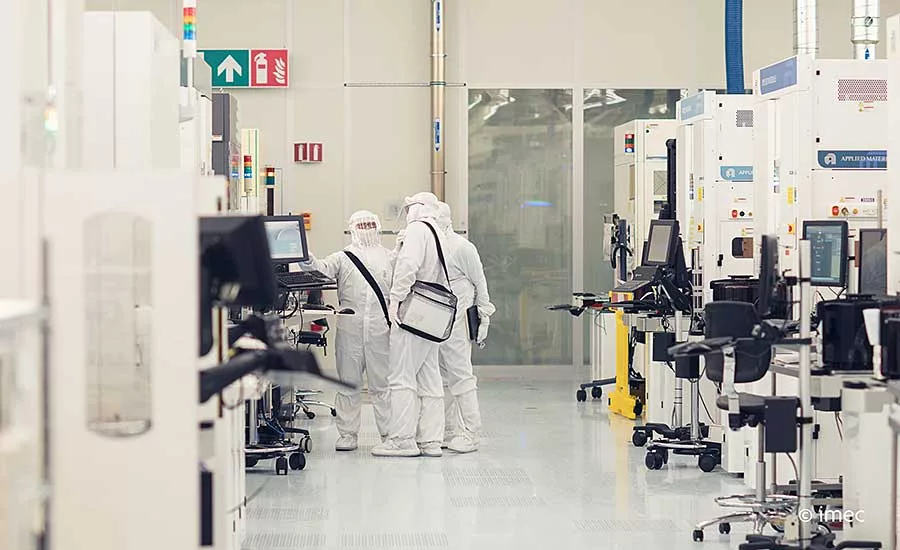
In October, Apple Inc. announced that it has joined Sustainable Semiconductor Technologies and Systems (SSTS), a new research program launched by the Belgian R&D organization Interuniversity Microelectronics Centre (IMEC), to reduce the environmental impact of the semiconductor manufacturing process.
SSTS will use models and greenhouse gas footprint analyses to help the integrated circuit (IC) industry cut back on its ecological footprint as part of the global fight against climate change, resources depletion and pollution.
Research has shown that close to 75 percent of a mobile device’s carbon footprint, for example, can be attributed to its manufacture, with almost half of that resulting from the processes needed to make the device’s ICs.
SSTS will aim to inform partners of the environmental impact of certain early-stage choices, drawing on IMEC’s research on infrastructure and machinery. Founded in 1984, IMEC employs a team of 5,000 and conducts R&D in semiconductor and system scaling, silicon photonics, artificial intelligence, wireless communications and sensing technologies.
Apple has separately committed to becoming carbon neutral by 2030.
“Many systems companies are carbon neutral today for their corporate footprints and have expressed the ambition to have their entire carbon footprint to net zero by 2030. They are very committed to achieving that goal, yet often lack the data to [assess the impact of their] IC parts from end-to-end. That is where IMEC comes in,” says IMEC CEO Luc Van den hove. “We have that data, and we are ready to support the industry with all necessary insights, tools, instruments and numbers.”
A recent paper by Harvard researchers showed that information and computing technology could account for as much as 20 percent of global energy demand by 2030, with chip manufacturing responsible for the bulk of that footprint. In 2019, Intel’s chip fabrication plants used more than three times as much water as Ford plants and created more than twice as much hazardous waste. Similarly, Taiwanese chip manufacturer TSMC is expected to consume more than 7 percent of all the electricity produced in Taiwan annually within the next few years.
Carbon Dioxide Used in Sustainable Polyurethane Production
Researchers at the Fraunhofer Institute in Germany have used carbon dioxide and recycled material to make polyurethane in a more sustainable way. The new process also avoids the use of toxic materials known as isocyanates, enabling safer production and biocompatibility.
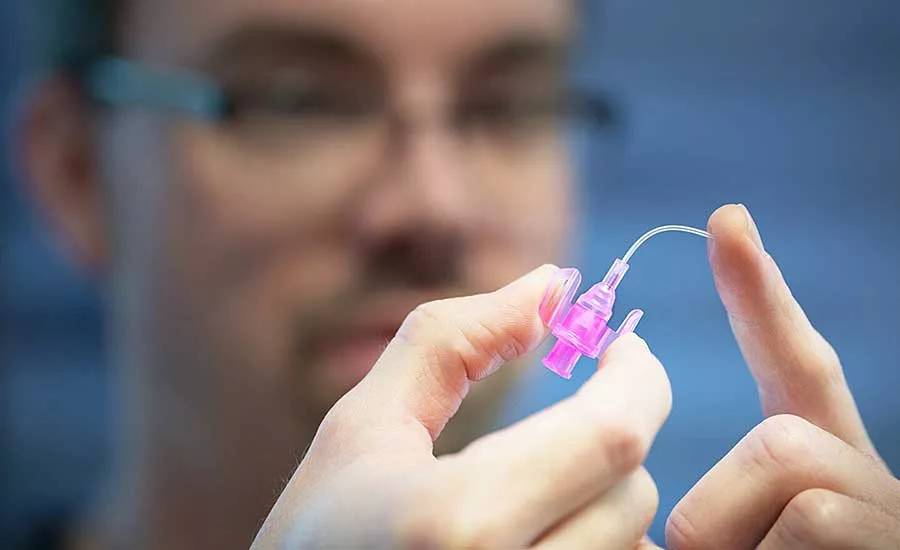
Polyurethane is used in a wide variety of products, including mattress foam, packaging, elastic material for sporting goods, sealants, paints, adhesives, construction foam and intravenous catheters.
Instead of using fossil fuels, such as oil or natural gas as a carbon source, the researchers used carbon dioxide and polyurethane recyclates.
“This way, we can recycle the carbon and ensure that a lower amount of damaging carbon dioxide is released into the atmosphere,” says project coordinator Christoph Herfurth, Ph.D.
The team replaced isocyanates, which are normally used alongside chain extenders and polyols, with dicarbamate. “The polyurethane we produce in this way can also be certified as biocompatible,” says Herfurth.
The process, which is already being used, requires high pressures and temperatures. The researchers are working on ways to optimize the technique to make it more efficient and industrially feasible. The team is also working on more sustainable agents for foaming the polyurethanes.
GM Set to Reach 100 Percent Renewable Energy in the US Five Years Ahead of Schedule
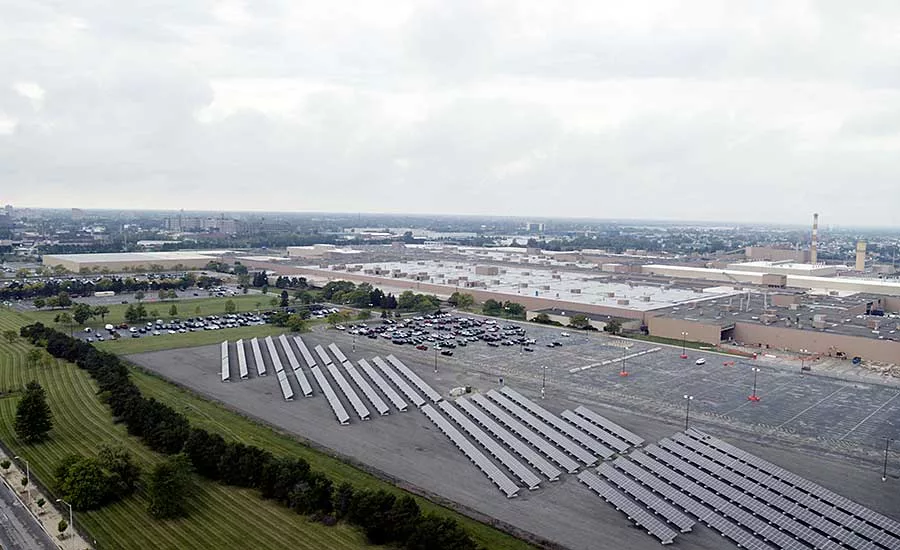
In September, General Motors announced that it plans to source 100 percent renewable energy to power its U.S. sites by 2025—five years earlier than previously announced and 25 years ahead of its initial target, which was set in 2016. By accelerating its renewable energy goal, GM aims to avoid 1 million metric tons of carbon emissions that would have been produced between 2025 and 2030.
“We know climate action is a priority and every company must push itself to decarbonize further and faster,” says GM Chief Sustainability Officer Kristen Siemen. “That’s what we are doing by aiming to achieve 100 percent renewable energy five years earlier in the U.S.”
Earlier this year, GM announced its science-based targets, as well as plans to become carbon neutral in its global products and operations by 2040, aligned with the aspiration to eliminate tailpipe emissions from new light-duty vehicles by 2035. The company has committed to invest $35 billion in electric and autonomous vehicles and plans to introduce more than 30 electric vehicle models globally by 2025.
Sourcing renewable energy is a critical component of GM’s plans to decarbonize its portfolio. As it works toward fulfilling its climate commitments, the company is focusing its renewable energy efforts on four pillars:
Increasing energy efficiency. GM’s energy goals begin with reducing energy consumption by improving energy efficiency. For 10 years, GM has been awarded the EPA Energy Star Sustained Excellence Award for its energy efficiency efforts.
Sourcing renewables. While it works to minimize the amount of energy required to run its facilities, GM also sources renewable energy through direct investment, green tariffs and power purchase agreements. This is the main avenue through which GM will achieve its renewable energy goal.
Addressing intermittency. GM is creating technology to store renewable energy over the medium and long term, so its power consumption is not disrupted by external fluctuations.
Policy advocacy. Policy efforts are essential to expand transmission, create microgrids that help deploy renewable energy, and enable markets to price this energy effectively.
Additionally, GM announced that it is collaborating with PJM Interconnection, a regional transmission organization, and Timber Rock, a technology-enabled energy company, to track the real-time carbon emissions at GM’s facilities associated with electricity use.
This carbon tracking initiative enables GM to make strategic decisions about its energy consumption based on the carbon output of the grid at a given time. When the power being supplied consists mostly of that produced via fossil fuels, GM can make informed decisions about tapping into stored renewable energy or reduce the amount of power being consumed.
The initiative is expected to eventually expand to include the carbon emissions associated with customers’ electric vehicles, allowing GM to understand the fuller scope of the emissions it aims to address and helping the company decide where to invest renewable energy efforts to achieve the greatest impact beyond its own operations.
$9.3 Billion
In October, the U.S. Department of Energy (DOE) released an update on the progress of its Better Buildings, Better Plants program. The report highlights more than 250 manufacturers and water utilities that have introduced energy efficiency and decarbonization measures, cumulatively saving $9.3 billion in energy costs and 1.9 quadrillion British thermal units (BTUs)—more energy than the state of Wisconsin consumes in a year. Some 3,5000 manufacturing facilities nationwide are part of the DOE’s Better Plants program, including Ford, Nissan, Toyota and Ingersoll-Rand.
Looking for a reprint of this article?
From high-res PDFs to custom plaques, order your copy today!