Assembly Magazine logo
search
Ask ASSEMBLY AI
cart
facebook twitter linkedin youtube
  • Sign In
  • Create Account
  • Sign Out
  • My Account
Assembly Magazine logo
  • TRENDS
    • Ask ASSEMBLY AI
    • Trends
    • News
    • New Products
  • INDUSTRIES
    • Aerospace
    • Appliance
    • DFMA Assembly
    • Medical Devices
    • Green Manufacturing
    • Lean Manufacturing
    • Machinery Assembly
    • Electronics Assembly
    • Automotive
  • TECHNOLOGIES
    • Adhesives & Dispensing
    • Assembly Presses
    • Automated Assembly Systems
    • Manufacturing Management
    • Manufacturing Software
    • Motion Control
    • Screwdriving & Riveting
    • Robotics
    • Test & Inspection
    • Plastics & Metal Welding
    • Wire Processing
    • Workstations
  • AUTONOMOUS & ELECTRIC MOBILITY
    • AEM Magazine Archives
    • Autonomy
    • Electrification
    • Mobility Services
    • Assembly & Testing
    • AV/EM News
  • MEDIA
    • Ask ASSEMBLY AI
    • Podcasts
    • Assembly News Now
    • Assembly TV
    • Webinars
    • eBooks
  • EVENTS
    • Calendar
    • The ASSEMBLY Show
  • MORE
    • Exclusives >
      • Plant of the Year
      • Capital Spending
    • Buyers Guide >
      • Supplier Insights
    • Classifieds
    • Featured Products
    • Newsletters
    • Store
    • White Papers
    • Columns
    • Sponsor Insights
  • INFOCENTER
    • Assembly & Test Solutions
  • EMAGAZINE
    • eMagazine
    • Archive Issues
    • Advertise
    • Contact Us
    • Sign Up
ColumnsMoser on Manufacturing

Reshoring and China’s Overcapacity Surge
By Harry Moser
clean energy projects

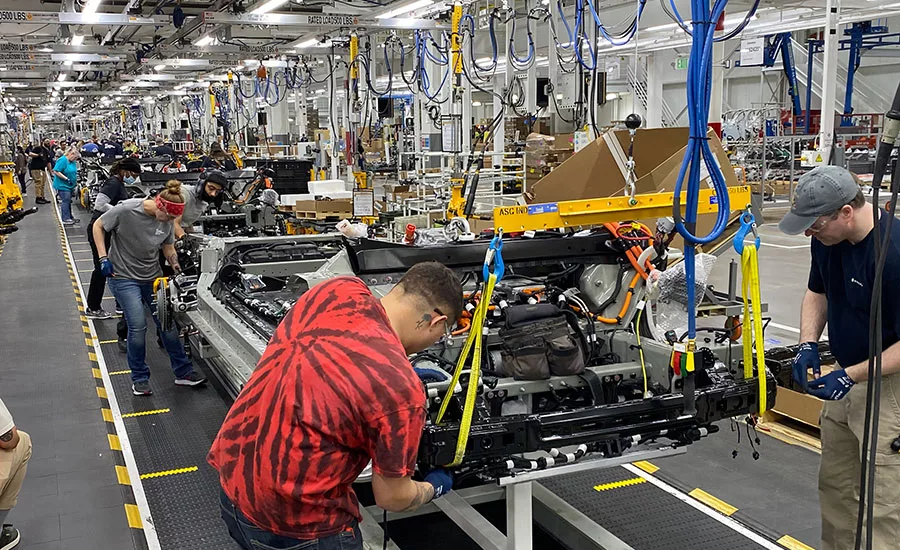
Companies have invested upwards of $124 billion in U.S. clean energy projects since the passage of the Inflation Reduction Act. Photo courtesy Rivian Automotive Inc.
Beijing manufacturing plant

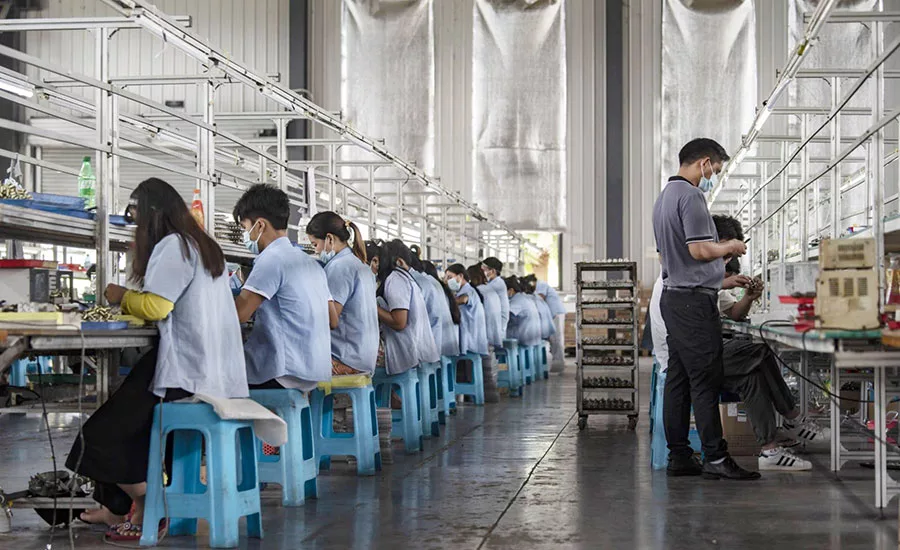
To engineer an economic turnaround, Beijing is doubling-down on investments in industrial overcapacity and flooding global markets with low-priced high-tech exports. Photo courtesy Shanghai Electronic Components

clean energy projects
Beijing manufacturing plant
August 12, 2024

China’s economic growth rate slumped to a three decade low in 2023 (5.2 percent). The International Monetary Fund expects China’s economy to slow to 4.5 percent in 2025, and decelerate further to 3.3 percent by 2029. The projections are grounded in China’s structural weaknesses, including demographics, debt, drought and decoupling.

China’s real estate market plunge, steep local government debt, and deflationary pressure continue to weigh heavily on its economy. To engineer an economic turnaround, Beijing is doubling-down on investments in industrial overcapacity and flooding global markets with low-priced high-tech exports. China’s excessive investments will not be a small wave, but rather a $450 billion tsunami over the next three years.

Fortunately, reshoring can thwart China’s overcapacity deluge. Let’s dive in.

China’s unfair trade practices were already threatening U.S. businesses and workers. China’s new overcapacity surge will depress global prices and, if left undeterred, will inhibit development of U.S. high-tech industries, enabling China to capture those sectors.

China’s low cost and high productivity are partially due to its continual over-investment for the past two decades. The first “China shock” (2000 to 2012) decimated industries worldwide, costing the U.S. alone millions of manufacturing jobs.

China’s current overcapacity push is ushering in a sequel to the first China shock, delivering a new blow of unfair Chinese competition. This can especially be seen in high-value industries such as clean energy, batteries and electric vehicles (EVs). Extreme control by China over key industries or components for key industries could undermine our national security, as demonstrated by our overdependence on essential goods from China during the pandemic.

The world is not interested in experiencing China shock 2.0.

Looking for quick answers on assembly and manufacturing topics? Try Ask ASM, our new smart AI search tool. Ask ASM →


Productivity Impact

Most Chinese factories are, on average, much newer than those in the United States. China’s rapid industrial growth and government subsidized export growth have driven heavy investments. The resulting capacity and productivity undercut U.S. pricing, capacity utilization and investment, reducing U.S. market-based innovation, investment and supply chain resilience. Largely as a result, U.S. manufacturing labor productivity has increased at less than 0.5 percent per year while China’s is reported to have grown 6 percent per year.

Beijing’s export-driven policy is putting China on a collision course with national self-interests around the world. China could wind up with massive underutilization of its expanded industrial capacity. Fitch Ratings Inc., one of the big three credit rating agencies, cut China’s ratings outlook to negative in April 2024, citing public finance risks based on increasing economic uncertainty as China shifts to these new growth initiatives. 

Tech behemoth Apple, is a case in point. Up until last year, China produced more than 95 percent of Apple’s products. But Apple has been urging its suppliers to shift supply chains outside of China due to that country’s human rights policies and geopolitical risk from escalating tensions between China and the U.S. 


Rerouting Trade

China’s recent flood of foreign direct investment (FDI) into Mexico is largely in manufacturing facilities in regions that export to the U.S., thus representing a rerouting of trade from China through Mexico. Chinese products are being shipped to Mexico to be finalized and exported to the U.S. in an effort to take advantage of USMCA export waivers and skate around Section 301 tariffs. For example, the value of auto parts made by Chinese factories in Mexico and exported to the U.S. jumped 15 percent from 2022, to reach $1.1 billion in 2023.

Section 301 tariffs have been extended and somewhat increased and broadened. The Biden administration increased tariffs on a range of goods originating from China, including EVs, EV batteries, battery parts, semiconductors, solar cells, and other high-tech Chinese goods. 

U.S. tariffs on Chinese imports

TABLE 1: New U.S. Tariffs on Chinese Imports Source: White House Fact Sheet The Biden administration has increased tariffs on a range of goods originating from China.

The EU’s decision to impose tariffs of up to 38.1 percent on EVs made by Chinese automakers shows that there is widespread global concern regarding heavily subsidized Chinese companies and overcapacity. 

However, the U.S. still needs to find a way to avoid the rerouting of trade from China through Mexico.

Reshoring high-tech manufacturing ecosystems reduces offshore dependence and secures high-value supply chains that are vital to U.S. economic and national security. The new tariffs supplement a range of other U.S. policies that have created favorable conditions for reshoring and FDI.

The reshoring trend is being driven by U.S. policy, geopolitical risk, and by the total cost of ownership (TCO) equation. The Infrastructure Investment and Jobs Act, Inflation Reduction Act (IRA), and CHIPS and Science Act each provide funding and tax incentives to spur domestic manufacturing in industries where the U.S. has an excess dependence on imports. Companies have invested upwards of $124 billion in U.S. clean energy projects since the passage of the IRA.

Are you thinking about reshoring? For help, contact me at 847-867-1144 or email me at harry.moser@reshorenow.org. Our main mission is to get companies to do the math correctly using our free online TCO Estimator. Making sourcing decisions via TCO instead of price makes 20 to 30 percent of imports economically reshorable. By using TCO, companies can better evaluate sourcing alternatives and even make a case when selling against China shock 2.0.

KEYWORDS: Chinese manufacturing reshoring tariffs

Share This Story

Looking for a reprint of this article?
From high-res PDFs to custom plaques, order your copy today!

Harry Moser is the president of the Reshoring Initiative. His column will appear every other month, alternating with Austin Weber’s “On Campus.” Has your company reshored production? Are you thinking about it? We’d like to hear of your success or help you achieve it. With your approval, we would love to report on your successes or opportunities in future issues. Contact harry.moser@reshorenow.org.

Recommended Content

JOIN TODAY
To unlock your recommendations.

Already have an account? Sign In

  • Made in the U.S.A.

    Consumer Products Manufacturing: Made in the USA

    Supply chain lessons learned during the coronavirus...
    Automated Assembly Systems
    By: Austin Weber
  • Best Practices for Press-Fit Assembly

    Best Practices for Press-Fit Assembly

    In manufacturing, ironclad formulas for success are hard...
    Assembly Presses
    By: Jim Camillo
  • aem0523leader-tesla1.jpg

    Tesla Rethinks the Assembly Line

    Engineers at Tesla Inc. have developed a new process that...
    Assembly and Testing
    By: Austin Weber
Manage My Account
  • eMagazine Subscription
  • Assembly Newsletters
  • Online Registration
  • Subscription Customer Service
  • Manage My Preferences

More Videos

Sponsored Content

Sponsored Content is a special paid section where industry companies provide high quality, objective, non-commercial content around topics of interest to the ASSEMBLY audience. All Sponsored Content is supplied by the advertising company and any opinions expressed in this article are those of the author and not necessarily reflect the views of ASSEMBLY or its parent company, BNP Media. Interested in participating in our Sponsored Content section? Contact your local rep!

close
  • ultrasonic welding
    Sponsored bySonobond Ultrasonics

    Engineering Efficiency in High-Performance Assembly: How Ultrasonic Welding Enhances Throughput, Reliability and Quality

  • UV curing system
    Sponsored byDymax

    Why UV Intensity Alone Doesn’t Define Curing Performance

  • wooden pallets
    Sponsored byLEAN Manufacturing Products

    Eliminating Waste on the Shop Floor: Applying Lean Principles to Improve Manufacturing Efficiency

Popular Stories

ASSEMBLY News Now, episode 30: Volvo Redesigns EV Manufacturing

Volvo Redesigns EV Manufacturing

ASSEMBLY News Now, Episode 29: Mercedes-Benz to Invest $4 billion in Alabama Assembly Plant

Mercedes-Benz to Invest $4 billion in Alabama Assembly Plant

Boeing CEO Kelly Ortberg announces 1 billion investment

Boeing Plans $1 Billion Wichita Investment, Workforce Training Center

Watch the latest episode of ANN now!

Events

July 24, 2025

From Shop Floor to CFO: How Manufacturers Are Closing the Loop Between Operations and Finance

On Demand Learn how manufacturers are bridging the gap between the shop floor and ERP systems to gain real-time visibility, streamline operations, and kick-start digital transformation—without waiting years.

Sponsored by:

PicoStratusGreen
July 30, 2025

Buffer Analysis and Design Fundamentals for Manufacturing Excellence

On Demand In this presentation, Dr. Herman Tang shares practical insights from his industry experience and research on buffer management in manufacturing operations.

View All Submit An Event

Poll

Difficult Assembly Processes

Which assembly process gives you the most difficulty?
View Results Poll Archive

Products

Manufacturing Cost Policy Deployment (MCPD) Profitability Scenarios: Systematic and Systemic Improvement of Manufacturing Costs

Manufacturing Cost Policy Deployment (MCPD) Profitability Scenarios: Systematic and Systemic Improvement of Manufacturing Costs

See More Products
Register for webinar - Modernizing Automotive Assembly: Why Upgrading Legacy MES is a Business Imperative

Related Articles

  • Assembly Operations Contribute to Reshoring Surge

    Assembly Operations Contribute to Reshoring Surge

    See More
  • A technician uses a tablet with eFactoryPro

    Enabling the Reshoring Surge: Best Practices for Strengthening the U.S. Workforce

    See More
  • Moser on Manufacturing

    Reshoring Unpacked: A Transformational Shift From Global To Local

    See More

Related Products

See More Products
  • strong.jpg

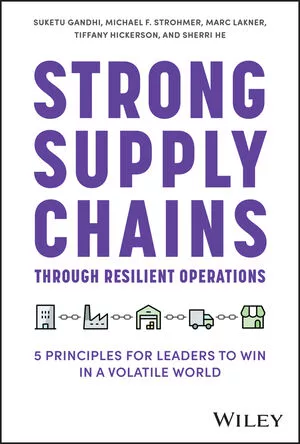
    Strong Supply Chains Through Resilient Operations: Five Principles for Leaders to Win in a Volatile World

  • 0001346.jpeg

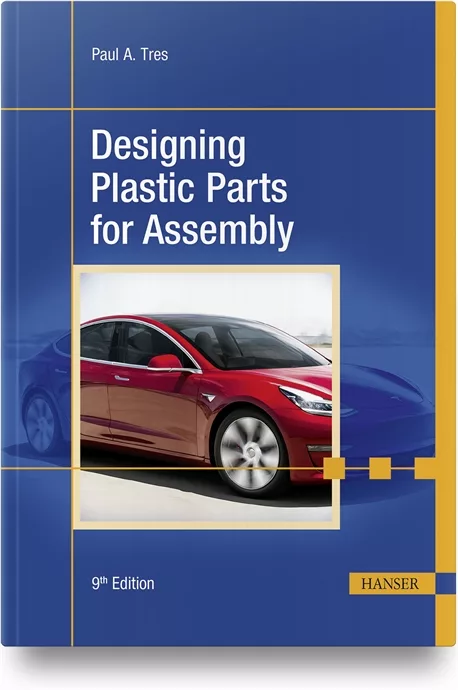
    Designing Plastic Parts for Assembly 9E

  • Collaborative Product Assembly Design and Assembly Planning, 1st Edition

See More Products

Events

View AllSubmit An Event
  • November 24, 2026

    AutoSens China and InCabin China

    Meet the world's leading technology providers, start-ups with the latest developments and every company in between at AutoSens and InCabin.
View AllSubmit An Event
×

Never miss the latest news and trends driving the manufacturing industry

Stay in the know on the latest assembly trends.

JOIN TODAY!
  • RESOURCES
    • Advertise
    • Contact Us
    • Directories
    • Manufacturing Division
    • Store
    • Want More?
  • SIGN UP TODAY
    • Create Account
    • eMagazine
    • Newsletters
    • Customer Service
    • Manage Preferences
  • SERVICES
    • Marketing Services
    • Reprints
    • Market Research
    • List Rental
    • Survey/Respondent Access
  • STAY CONNECTED
    • LinkedIn
    • Facebook
    • Instagram
    • YouTube
    • X (Twitter)
  • PRIVACY
    • PRIVACY POLICY
    • TERMS & CONDITIONS
    • DO NOT SELL MY PERSONAL INFORMATION
    • PRIVACY REQUEST
    • ACCESSIBILITY

Copyright ©2026. All Rights Reserved BNP Media, Inc. and BNP Media II, LLC.

Design, CMS, Hosting & Web Development :: ePublishing