Assembly Magazine logo
search
Ask ASSEMBLY AI
cart
facebook twitter linkedin youtube
  • Sign In
  • Create Account
  • Sign Out
  • My Account
Assembly Magazine logo
  • TRENDS
    • Ask ASSEMBLY AI
    • Trends
    • News
    • New Products
  • INDUSTRIES
    • Aerospace
    • Appliance
    • DFMA Assembly
    • Medical Devices
    • Green Manufacturing
    • Lean Manufacturing
    • Machinery Assembly
    • Electronics Assembly
    • Automotive
  • TECHNOLOGIES
    • Adhesives & Dispensing
    • Assembly Presses
    • Automated Assembly Systems
    • Manufacturing Management
    • Manufacturing Software
    • Motion Control
    • Screwdriving & Riveting
    • Robotics
    • Test & Inspection
    • Plastics & Metal Welding
    • Wire Processing
    • Workstations
  • AUTONOMOUS & ELECTRIC MOBILITY
    • AEM Magazine Archives
    • Autonomy
    • Electrification
    • Mobility Services
    • Assembly & Testing
    • AV/EM News
  • MEDIA
    • Ask ASSEMBLY AI
    • Podcasts
    • Assembly News Now
    • Assembly TV
    • Webinars
    • eBooks
  • EVENTS
    • Calendar
    • The ASSEMBLY Show
  • MORE
    • Exclusives >
      • Plant of the Year
      • Capital Spending
    • Buyers Guide >
      • Supplier Insights
    • Classifieds
    • Featured Products
    • Newsletters
    • Store
    • White Papers
    • Columns
    • Sponsor Insights
  • INFOCENTER
    • Assembly & Test Solutions
  • EMAGAZINE
    • eMagazine
    • Archive Issues
    • Advertise
    • Contact Us
    • Sign Up
Assembly Presses

Common Mistakes With Presses

Here’s a look at the most common mistakes made with presses—and how to avoid them.
By John Sprovieri
presses1.jpg

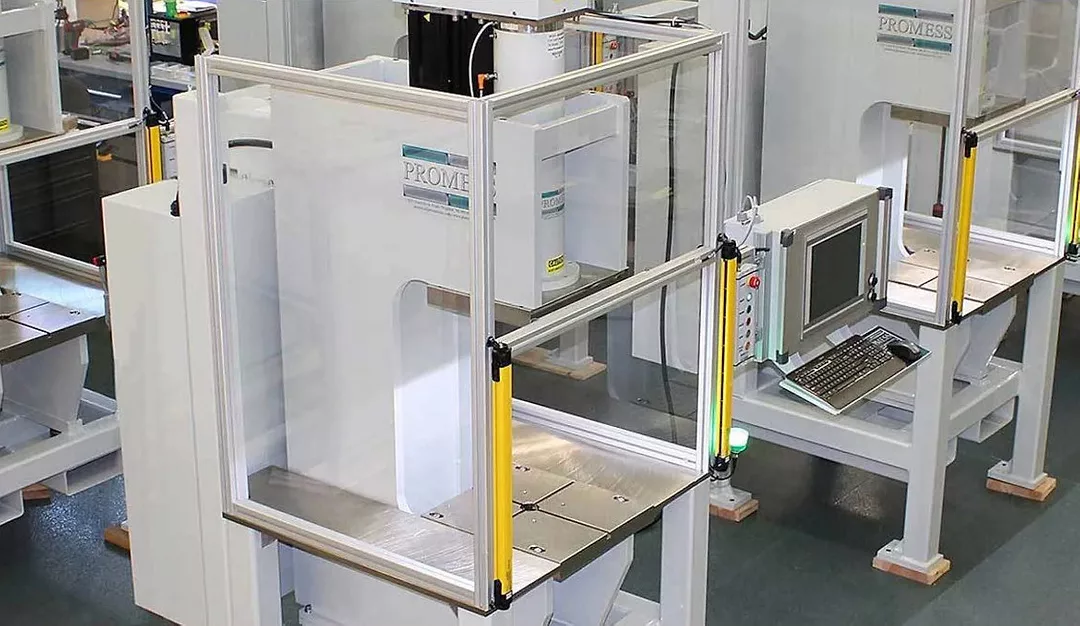
Engineers should not trust equations to provide guidance on how much force is needed for a particular application, especially for press-fit assembly. The only way to know how much force is necessary is to test sample parts. Photo courtesy Promess Inc.

24_ASM_0922presses2.jpg

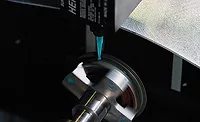
To avoid side-loading, align the ram to where maximum force is applied, rather than the physical center of a part. Photo courtesy TOX-Pressotechnik LLC
24_ASM_0922presses3.jpg

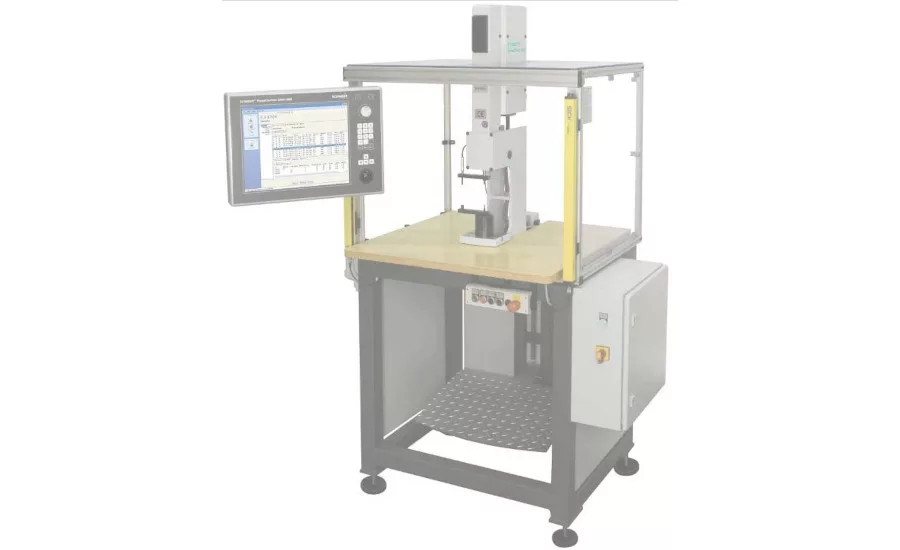
A common misconception is that a servo press is necessary for force and distance monitoring. However, there’s a difference between process monitoring and process control. Photo courtesy Schmidt Technology
24_ASM_0922presses4.jpg

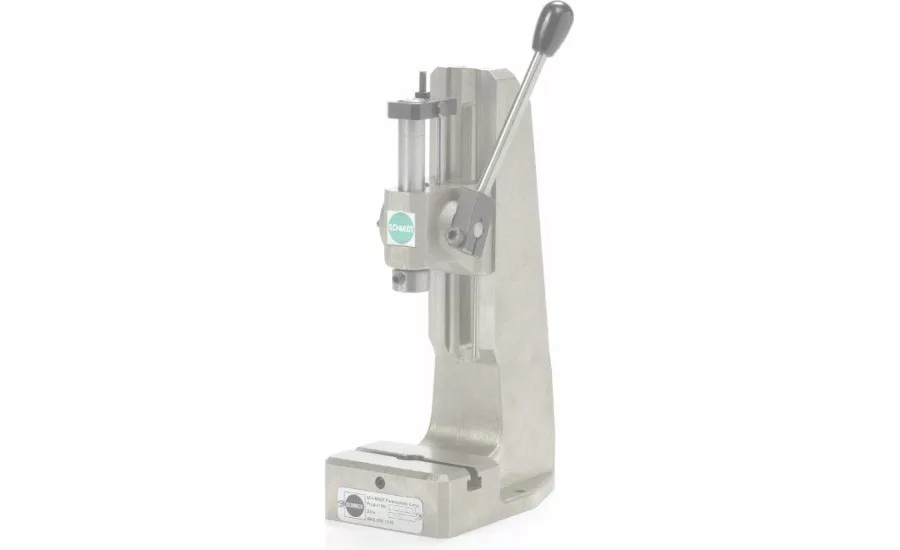
When selecting a press, engineers often look solely at the machine’s force capacity without considering how it actually delivers that force.  Photo courtesy Schmidt Technology
presses1.jpg
24_ASM_0922presses2.jpg
24_ASM_0922presses3.jpg
24_ASM_0922presses4.jpg
September 8, 2022

At first glance, press-fit assembly would seem to be much simpler than, say, welding or installing threaded fasteners. However, there’s a lot more to the process than simply jamming one part into another part. As with welding and fastening, assemblers must pick the right tool for the job; dial in the process parameters; and use the equipment correctly.

Dave Zabrosky, North American sales manager for Schmidt Technology, says a common misconception is that a servo press is necessary for force and distance monitoring.

“There’s a difference between process monitoring and process control,” he explains. “We do process monitoring on manual presses, hydraulic presses, pneumatic presses and servo presses. Monitoring measures what happens during the pressing operation. But, you look at the data after the fact.

“Servo presses are about control. They monitor the process, but they use that data as feedback to control the motion of the ram. A lot of times, that’s not what our customers need.

“For the most part, they want process monitoring for quality control. They want to be able to put tolerances on a force and distance curve to ensure that every part they produce is the same and to detect parts that are out of that range.”

Another common mistake, particularly with manual presses, is to choose the wrong type of press for the application, says Zabrosky. When selecting a press, engineers often look solely at the machine’s force capacity without considering how it actually delivers that force.

For example, a manual toggle press is a better option for crimping, staking and swaging applications, because it produces little force at the start of the stroke, but delivers maximum force at the end. A rank-and-pinion press produces constant force over the entire length of the stroke, so it’s a better option for pressing pins.

Looking for quick answers on assembly and manufacturing topics? Try Ask ASM, our new smart AI search tool. Ask ASM →

Similarly, a hydropneumatic press is a better choice for a punching operation over direct-acting pneumatic press, because a hydropneumatic press provides slower, smoother motion. A pneumatic press tends to punch through material hard and fast.

A third common mistake is trusting equations to provide guidance on how much force is needed for a particular application, especially for press-fit assembly.

“Calculations for blanking and other operations are pretty good, but for press-fit insertion…there are just too many variables that can influence the force requirement, such as surface finish, temperature changes and lubrication,” says Zabrosky. “The only way to know how much force is necessary is to test sample parts.”

Fortunately, most press suppliers are more than willing to help customers determine the parameters of their pressing application. All that’s needed are five or six sets of production-ready parts and, ideally, the tooling for the assembly, in case it has an influence on the operation.

“We help customers test their parts all the time,” says Zabrosky. “I have boxes of parts to test on my desk right now. And, unless we have to make custom tooling, we don’t charge to do testing.”

Glenn Nausley, president of Promess Inc., reiterates the importance of testing. Most mistakes with presses, he argues, begin before production even starts. Assemblers are well-advised to involve press suppliers early in the design process.

“When people buy our presses, we walk them through station design,” he says. “Our customers bring their parts and tooling, and we work through the process on our floor. We don’t see a lot of problems with our presses, because we are heavily involved in the integration. How are the parts going to go together? What are the key parameters and measurements that must be made? How can you tell a good part from a bad part? What data do you need to collect and how are you going to handle it?”

Nausley says a common mistake he sees is that assemblers don’t take maximize the capabilities of servo presses. “When manufacturers get a servo press for the first time, they often use it in the same way as a hydraulic or pneumatic press,” he explains. “They don’t take full advantage of the flexibility and capabilities of the press. With a servo system, you have force and position feedback. They’re tremendously accurate. You don’t need hard stops. You can have the ram come down at a high speed but then slow down for the pressing operation. You can get the part aligned and then speed up. They don’t realize that if they just added, say, a linear measurement probe, they could do the application in a much better way.”


Pressing the Right Way

Of course, even the best equipment and the best-designed parts and processes will come to naught if they’re not run and maintained properly. 

Troy Waldherr, vice president sales and operations at TOX-Pressotechnik LLC, says the most common mistakes he sees concern presses that are already on the line. He points out the following:

Zabrosky echoes the latter two points. “A common mistake is to assume that what you have is what you need,” he says. “Don’t try to use a 6-ton press to insert a pin just because you happen to have one on the shop floor. You also want to match the load cell to the application. The accuracy and resolution of a load cell is based on its capacity. A load cell that is oversized or undersized will not provide accurate readings.”

Users removing or overriding safety devices, creating injury risk.

Aligning the press ram to the physical center of a part instead of to where the maximum force is applied. “These are not always the same,” he explains. “Misalignment can cause side-loading, which can damage the press or the parts, and create a safety hazard.”

Overtaxing a press: turning up the power to drive a press over its rated capacity. This could damage the press and create a safety hazard.

Using an existing, oversized press to assemble small parts instead of buying a smaller press that is better matched to the application. An oversized press can damage the parts and tooling.

KEYWORDS: manual press pneumatic presses servo press

Share This Story

Looking for a reprint of this article?
From high-res PDFs to custom plaques, order your copy today!

John has been with ASSEMBLY magazine since February 1997. John was formerly with a national medical news magazine, and has written for Pathology Today and the Green Bay Press-Gazette. John holds a B.A. in journalism from Northwestern University, Medill School of Journalism.

Recommended Content

JOIN TODAY
To unlock your recommendations.

Already have an account? Sign In

  • Made in the U.S.A.

    Consumer Products Manufacturing: Made in the USA

    Supply chain lessons learned during the coronavirus...
    Automated Assembly Systems
    By: Austin Weber
  • Best Practices for Press-Fit Assembly

    Best Practices for Press-Fit Assembly

    In manufacturing, ironclad formulas for success are hard...
    Assembly Presses
    By: Jim Camillo
  • aem0523leader-tesla1.jpg

    Tesla Rethinks the Assembly Line

    Engineers at Tesla Inc. have developed a new process that...
    Industries
    By: Austin Weber
Manage My Account
  • eMagazine Subscription
  • Assembly Newsletters
  • Online Registration
  • Subscription Customer Service
  • Manage My Preferences

More Videos

Sponsored Content

Sponsored Content is a special paid section where industry companies provide high quality, objective, non-commercial content around topics of interest to the ASSEMBLY audience. All Sponsored Content is supplied by the advertising company and any opinions expressed in this article are those of the author and not necessarily reflect the views of ASSEMBLY or its parent company, BNP Media. Interested in participating in our Sponsored Content section? Contact your local rep!

close
  • ultrasonic welding
    Sponsored bySonobond Ultrasonics

    Engineering Efficiency in High-Performance Assembly: How Ultrasonic Welding Enhances Throughput, Reliability and Quality

  • UV curing system
    Sponsored byDymax

    Why UV Intensity Alone Doesn’t Define Curing Performance

  • wooden pallets
    Sponsored byLEAN Manufacturing Products

    Eliminating Waste on the Shop Floor: Applying Lean Principles to Improve Manufacturing Efficiency

Popular Stories

ASSEMBLY News Now, episode-30: Volvo Redesigns EV Manufacturing

Volvo Redesigns EV Manufacturing

Boeing CEO Kelly Ortberg announces 1 billion investment

Boeing Plans $1 Billion Wichita Investment, Workforce Training Center

automated consumer goods assembly system

Best Practices for Cycle Time Optimization

Watch the latest episode of ANN now!

Events

July 24, 2025

From Shop Floor to CFO: How Manufacturers Are Closing the Loop Between Operations and Finance

On Demand Learn how manufacturers are bridging the gap between the shop floor and ERP systems to gain real-time visibility, streamline operations, and kick-start digital transformation—without waiting years.

Sponsored by:

PicoStratusGreen
July 30, 2025

Buffer Analysis and Design Fundamentals for Manufacturing Excellence

On Demand In this presentation, Dr. Herman Tang shares practical insights from his industry experience and research on buffer management in manufacturing operations.

View All Submit An Event

Poll

Difficult Assembly Processes

Which assembly process gives you the most difficulty?
View Results Poll Archive

Products

Manufacturing Cost Policy Deployment (MCPD) Profitability Scenarios: Systematic and Systemic Improvement of Manufacturing Costs

Manufacturing Cost Policy Deployment (MCPD) Profitability Scenarios: Systematic and Systemic Improvement of Manufacturing Costs

See More Products
Register for webinar - Modernizing Automotive Assembly: Why Upgrading Legacy MES is a Business Imperative

Related Articles

  • Common Mistakes When Dispensing and Curing Light- Curing Adhesives

    Common Mistakes When Dispensing and Curing Light- Curing Adhesives

    See More
  • Avoid These Mistakes With Small Screws

    See More

Related Products

See More Products
  • Designing with Plastics

  • reducing.jpg

    Reducing Process Costs with Lean, Six Sigma, and Value Engineering Techniques

  • integration.jpg

    Integration of Mechanical and Manufacturing Engineering with IoT: A Digital Transformation

See More Products

Related Directories

  • Greenerd Press & Machine Co.

    Greenerd designs and builds custom hydraulic presses with automation solutions for a range of industries and applications. Greenerd's extensive line of hydraulic presses are available in a variety of styles ranging including gap frame, straight-side, gib-guided, 4-post, bench, OBI and more, with unlimited size and tonnage capabilities. Greenerd has a long tradition of designing, engineering and manufacturing customized hydraulic presses with product handling solutions.
  • Thermal Press Intl.

    Founded in 1976, Thermal Press International is a leading provider of plastic assembly equipment, specializing in heat staking, heat sealing, and film welding solutions. With a customer-centric approach, we deliver superior quality machines and manufacturing solutions resulting in enhanced productivity, minimized downtime, and increased peace of mind for our customers.
  • Beckwood Press Co.

×

Never miss the latest news and trends driving the manufacturing industry

Stay in the know on the latest assembly trends.

JOIN TODAY!
  • RESOURCES
    • Advertise
    • Contact Us
    • Directories
    • Manufacturing Division
    • Store
    • Want More?
  • SIGN UP TODAY
    • Create Account
    • eMagazine
    • Newsletters
    • Customer Service
    • Manage Preferences
  • SERVICES
    • Marketing Services
    • Reprints
    • Market Research
    • List Rental
    • Survey/Respondent Access
  • STAY CONNECTED
    • LinkedIn
    • Facebook
    • Instagram
    • YouTube
    • X (Twitter)
  • PRIVACY
    • PRIVACY POLICY
    • TERMS & CONDITIONS
    • DO NOT SELL MY PERSONAL INFORMATION
    • PRIVACY REQUEST
    • ACCESSIBILITY

Copyright ©2026. All Rights Reserved BNP Media, Inc. and BNP Media II, LLC.

Design, CMS, Hosting & Web Development :: ePublishing