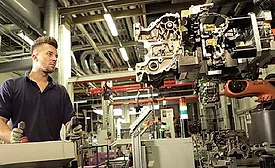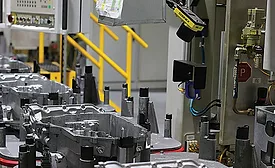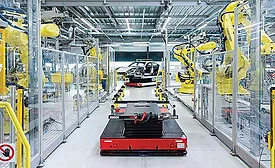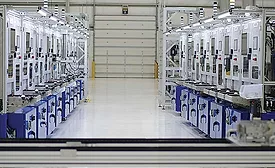
Two of the biggest trends in the auto industry today are flexible production systems and electric power. And while at first glance they may seem to have little in common, the truth is that the underlying technologies needed to implement both are, in many cases, identical.
In less than 15 years, cobots have come a long way. Not only have they gained acceptance in every major industry in manufacturing, but robot suppliers have significantly increased their cobot offerings.
The automotive industry experienced a record number of vehicle recalls in 2018, and this year's tally isn't far behind. Many of those issues have been caused by electronics or software glitches.
One of the main issues in the recent strike against General Motors revolved around the increasing electrification of automobiles. The shift to electric- and hybrid-powered vehicles is expected to radically alter the shape of the auto industry in the decade ahead. It will also change the look of assembly lines.
The automotive industry is at the threshold of a disruption not seen since the Brass Era of the 1900s. Electric vehicles, connectivity, mobility-as-a-service, and autonomous vehicles promise to change the future of transportation in the same way that the "horseless carriage" did a century ago.
Today’s manual torque wrenches and screwdrivers collect more data and transfer it wirelessly, providing greater assurance that each threaded fastener is accurately tightened
Whenever the 1920s are discussed in documentaries, they are first referred to as roaring and then as depressing. Too often, too little attention is paid to what happened in between these two extremes.
Drones have come a long way in a fairly short time, commercially speaking. In less than 20 years, these unmanned aerial vehicles (UAVs) have gone from being used by the CIA to attack the Taliban in Afghanistan, to soon being used by Amazon to deliver a wide range of packages to homes.
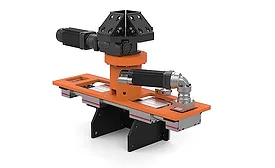
The lives of manufacturers would be so much easier if all their automation processes were homogeneous. Unfortunately, there are many that require customization to satisfy the unique requirements of an automated work-holding or material-handling application.
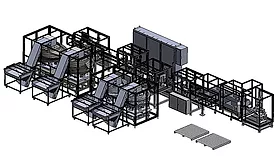
There's nothing quite like a multistation automated assembly system. Watching robots, actuators and indexers go about their carefully choreographed routines with little or no human intervention can seem nothing short of miraculous.
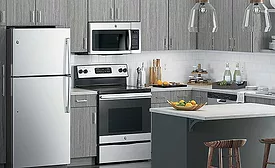
Refrigerators are one of the only appliances found in nearly every type of home, whether it's an apartment in suburban Atlanta, a high-rise condominium in downtown Chicago, a beach house in Hawaii or a trailer in Texas. The humble refrigerator is also the hardest working household appliance. Day and night, it's constantly running to keep all types of food and beverages cool, fresh or frozen.