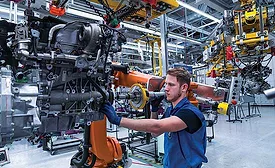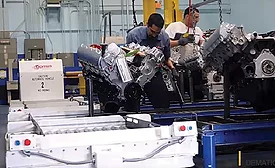
When a customer learns that his car's engine needs to be replaced, the shop mechanic typically mentions three options, new, rebuilt or remanufactured, with the latter two being much less expensive because they contain new and recycled parts.
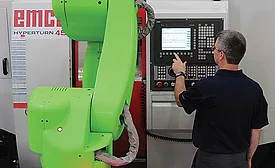
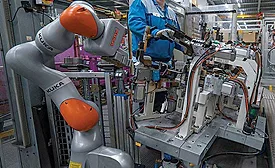
Collaborative robots are an exciting area of growth for automation and manufacturing. A potentially useful and cost-effective automated tool for manufacturing, "cobots" can work safely with people in a shared workspace, enhancing flexibility and reducing risk.
Advances in meter-mix technology, process monitoring and bead control are making automated dispensing technology a more viable option for aerospace assembly applications
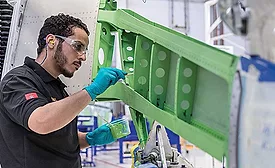
Adhesives are widely used throughout an aircraft. Jet engines contain structural adhesives, threadlockers, retaining compounds and thread sealants for hydraulic components.
Plastic injection molding, metal casting and metal stamping are age-old processes that form the backbone of manufacturing. Traditionally, there's no better way to mass-produce plastic or metal parts.
Although Kuopio, Finland-based Savonia University of Applied Sciences (SUAS) is a multidisciplinary school, its common theme amongst all areas of study is developing real-world solutions based on creative experiments.
Some automotive enthusiasts get their fix by building a car themselves. Others thoroughly enjoy watching the pros do it; i.e., assemblers on the production line.
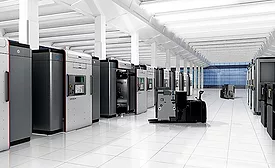
Factories of the future will feature advanced technology, such as additive manufacturing, artificial intelligence, augmented reality, data analytics and digital twins. While many manufacturers are still ramping up their Industry 4.0 initiatives, several assembly plants are already at the forefront. They are embracing the Fourth Industrial Revolution and reaping the benefits.
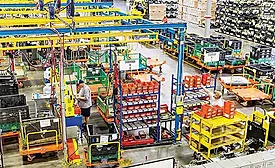
At the Components and Logistics facility in Gastonia, NC, Daimler Trucks fulfills orders and sub-assembly of thousands of parts. The plant provides parts for North American truck and school bus manufacturers, as well as auto parts stores.
KARLSRUHE, Germany—A group of engineers at the Karlsruhe Institute of Technology are using artificial intelligence (AI) technology to develop an agile production system that can autonomously adapt to changing product specifications.