A New Standard for Harness Assembly
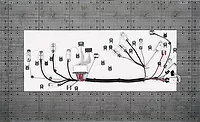
Since its debut in 2002, the IPC-WHMA-A-620 standard for the acceptance of cable and wire harness assemblies enjoyed almost immediate international acceptance, and it quickly became the most important process, materials and inspection document in the industry.
The standard was jointly developed by the Wiring Harness Manufacturers Association (WHMA) and the IPC—Association Connecting Electronics Industries. Revision A of the standard, published in July 2006, contained a number of refinements related to harness testing. Now, revision B is set to be released this summer.
This latest revision has been in the works for more than three years. It’s scheduled to be published in July or August, and training materials are expected to be available two to three months later.
In preparing revision B of the A-620 standard, WHMA and the IPC reviewed and resolved more than 400 user comments on revision A.
“No chapter has been untouched, from minor wording changes to major overhaul,” says Lyle Fahning, WHMA chairman and former president and CEO of Technical Services for Electronics Inc., a contract manufacturer of wire and cable assemblies based in Arlington, MN. “The new revision also contains more than 100 new or updated pictures and illustrations.”
The following describes some of the changes in the 265-page document:
Chapter 4, “Soldering to Terminals,” is now aligned with other IPC standards.
Chapter 5, “Crimping,” now has better documentation, and some parts have been expanded.
Looking for quick answers on assembly and manufacturing topics? Try Ask ASM, our new smart AI search tool. Ask ASM
Chapter 6, “Insulation Displacement Connectors,” includes information on pass-through connectors.
Chapter 8, “Soldering and Crimp Splices,” has been expanded, and all wording has been aligned between the various types of splices. Inline jiffy connection devices were added.
Chapter 13, “Connectorization,” contains new pictures and criteria, and new acceptance criteria for pin damage have been added.
Chapter 14, “Securing,” has new pictures and acceptance criteria.
Chapter 15, “Shielding,” has new pictures and acceptance criteria.
Chapter 17, “Finished Assembly Installation,” has a new section for clamping.
Chapter 19, “Testing,” includes changes and adjustments for clarification.
Revision B will also include an addendum—A-620AS—specifically for cables and wire harnesses used in satellites, rockets and other spacecraft. The goal of the addendum is to unify military and NASA standards. Indeed, some NASA standards will be rescinded in favor of the A-620AS addendum, says Fahning.
Because the requirements for space-related cables and harnesses are so much more rigorous and specific than those for more mundane wire assemblies, IPC and WHMA opted not to integrate them into the regular standard.
“Whenever we’ve revised the standard, we’ve tried to keep it as applicable as possible to a broad array of products and market needs,” says Fahning. “MIL standards can get very specific. [When faced with] myriad different standards, knowing which one applies to your product can be a real challenge. With A-620B, we’ve tried to ensure that the standard will work for computers, lawnmowers, off-road vehicles or medical devices.”
For details on specific changes to revision B, visit www.ipc.org/status and click on “IPC-WHMA-A-620B” under “Final Draft for Industry Review.” There, you can download the latest draft of revision B, the minutes from various committee meetings to revise the standard, and comments about the standard from industry experts. You can also leave your own comments, questions and concerns about the standard.
Widespread Use
The A-620 standard is being followed by harness assemblers in 42 countries and has been translated into seven languages: English, Chinese, German, Danish, French, Polish and Spanish. The standard will be available in additional languages pending the release of revision B.
Some 1,019 companies worldwide employ at least one person who is IPC-certified to train others in the use of the standard, and 1,098 companies employ at least one assembler who is certified in the use of the standard. Worldwide, more than 11,000 people are certified as either trainers or assemblers.
“In the past year, the number of certified trainers has grown by 18 percent domestically and 21 percent internationally,” says Fahning. “The number of certified [assemblers] has increased 29 percent domestically and 34 percent internationally.”
Trainers and assemblers who are currently certified will not need to get recertified when revision B is published. Their current certification will remain valid for the normal two-year period.
Of course, harness assemblers can still use the standard without having IPC-certified trainers or assemblers on staff, though the extra training certainly helps, says Fahning. The only exception to that policy applies to the A-620AS addendum. To assemble and test wire harnesses for space applications, technicians must be IPC-certified to A-620AS, and they must complete five days of hands-on assembly practice.
The latter includes assembling “two cables and a harness and properly securing them in a chassis or metal box with ties and clamps,” says Fahning. “Students will also solder several types of connector cups, form some insulation-displacement terminations, make several types of open- and closed-terminal crimps, assemble several RF connectors, and do some pull tests.”
Harness assemblers and OEMs are using the A-620 standard in several ways.
The first is as a workmanship standard for operators. The standard provides hundreds of photos, sketches and diagrams of good and bad parts.
“I have seen instances where an inspector will indicate that an assembly is acceptable, but that same assembly can be submitted to a different inspector who will reject it based on his own perception of what’s good and bad,” says Fahning. “Many times, drawings specify the components that go into an assembly, but they don’t tell you what is a good assembly or a bad assembly, or a marginally good or marginally bad one. The A-620 standard helps to differentiate variations that occur in normal processes. It eliminates opinions about what is good and what is bad.”
The standard can also be used to train employees to spot defects, even if they don’t perform that particular process. “In one company, I saw employees being trained on good and bad crimps or good and bad solder joints,” recalls Fahning. “These people were not trained or certified on how to crimp or solder, but in the process of doing their production work, these subassemblies were coming to them, and they were able to determine if a particular crimp or solder joint was acceptable. They could act as inline quality inspectors.”
The A-620 standard can be incorporated into assemblers’ quality management systems, supporting ISO and regulatory requirements. “Being able to document that your staff has been trained and certified to the A-620 standard gives you the ability to prove both personal and process effectiveness,” says Fahning.
The standard can help assemblers achieve operational excellence. The A-620 standard doesn’t just provide acceptance and defect criteria, it provides data, Fahning points out. “Certainly, you can use the criteria just to say that a part is good or bad,” he says. “But if you’re not collecting that data, you’re missing a valuable opportunity. Having consistent criteria enables you to categorize defects to monitor both your internal quality and your external quality. So, you can set goals for internal quality and track those results based on the defects you’re finding.”
Many harness shops use A-620 as a marketing tool. “One benefit that we overlook is the value of employee involvement and pride in their work,” says Fahning. “The ability of employees to find, solve and prevent problems really contributes to employee involvement and pride in workmanship.
“There are three things that are important to customers: quality, delivery and price. Quality is at the top of the list. If you use tools like the A-620 standard to enhance quality, it will have an impact on delivery and cost.”
Looking for a reprint of this article?
From high-res PDFs to custom plaques, order your copy today!