Assembly Magazine logo
search
Ask ASSEMBLY AI
cart
facebook twitter linkedin youtube
  • Sign In
  • Create Account
  • Sign Out
  • My Account
Assembly Magazine logo
  • TRENDS
    • Ask ASSEMBLY AI
    • Trends
    • News
    • New Products
  • INDUSTRIES
    • Aerospace
    • Appliance
    • DFMA Assembly
    • Medical Devices
    • Green Manufacturing
    • Lean Manufacturing
    • Machinery Assembly
    • Electronics Assembly
    • Automotive
  • TECHNOLOGIES
    • Adhesives & Dispensing
    • Assembly Presses
    • Automated Assembly Systems
    • Manufacturing Management
    • Manufacturing Software
    • Motion Control
    • Screwdriving & Riveting
    • Robotics
    • Test & Inspection
    • Plastics & Metal Welding
    • Wire Processing
    • Workstations
  • AUTONOMOUS & ELECTRIC MOBILITY
    • AEM Magazine Archives
    • Autonomy
    • Electrification
    • Mobility Services
    • Assembly & Testing
    • AV/EM News
  • MEDIA
    • Ask ASSEMBLY AI
    • Podcasts
    • Assembly News Now
    • Assembly TV
    • Webinars
    • eBooks
  • EVENTS
    • Calendar
    • The ASSEMBLY Show
  • MORE
    • Exclusives >
      • Plant of the Year
      • Capital Spending
    • Buyers Guide >
      • Supplier Insights
    • Classifieds
    • Featured Products
    • Newsletters
    • Store
    • White Papers
    • Columns
    • Sponsor Insights
  • INFOCENTER
    • Assembly & Test Solutions
  • EMAGAZINE
    • eMagazine
    • Archive Issues
    • Advertise
    • Contact Us
    • Sign Up
IndustriesAutomotive AssemblyElectronics AssemblyTest and Inspection Assembly

Miniature Force Sensors Aid in Testing Touchscreens and Consumer Electronics
By Stefan Schäfer
Miniature Force Sensors Aid in Testing Touchscreens and Consumer Electronics

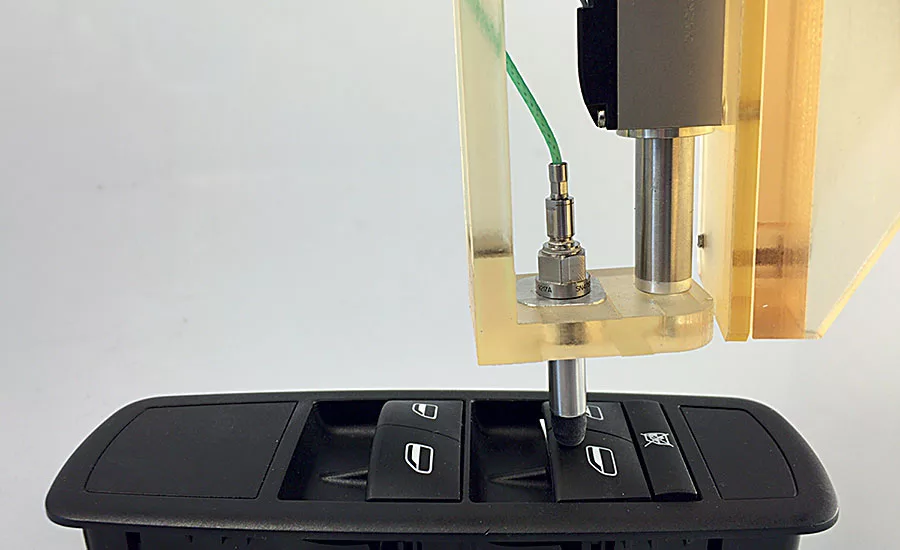
To ensure precise measurement and exclude measuring inaccuracies, the force application area at the sensor—and therefore the sensor itself—should be as small as possible. Photo courtesy Kistler Instrument Corp.
Miniature Force Sensors Aid in Testing Touchscreens and Consumer Electronics

The size of a force sensor is important to the overall design of an automated test system. There’s usually not much space available for the sensor to be installed. Photo courtesy Kistler Instrument Corp.
Miniature Force Sensors Aid in Testing Touchscreens and Consumer Electronics

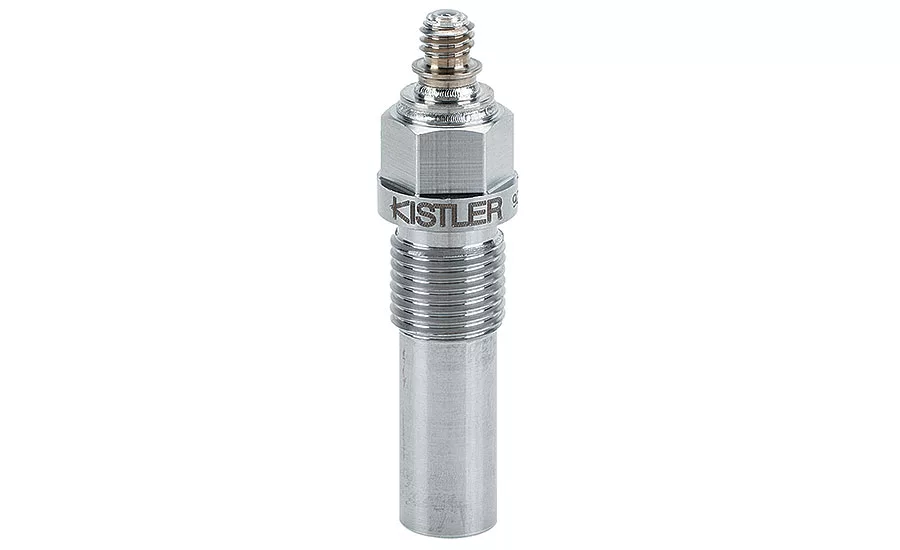
This piezoelectric sensor measures quasistatic and dynamic tensile and compression force, from a few millinewtons to several hundred newtons. Photo courtesy Kistler Instrument Corp.

Miniature Force Sensors Aid in Testing Touchscreens and Consumer Electronics
February 1, 2016

The great irony of our technological age is this: Electronic devices are getting smaller and smaller, but their functionality is increasing more and more.

This poses a significant challenge to electronics engineers, who must design reliable and intuitive control elements for these devices, as well as manufacturing engineers, who must ensure these products meet the highest possible quality standards.

Consider two examples: smartphones and automotive dashboards. Smartphones are our daily companions. Despite their compact and minimalistic designs, they offer high functionality. The same is true for dashboards. Granted, a dashboard is much bigger than a smartphone. Even so, modern dashboards feature an increasing number of displays and control elements with a wide variety of functions in a much smaller footprint. In both devices, haptics—the science of touch—plays a key role in ensuring successful operation and, ultimately, customer satisfaction.

The central element of a typical smartphone is the “home” button, which users employ to navigate through menus in a targeted and reliable way. Because there’s not a lot of real estate on a smartphone, the home button must be capable of executing multiple functions. One click might close an application. A double-click might open a new menu, while pressing and holding the button might launch a different function.

Similarly, drivers can activate myriad functions from a dashboard touchscreen—everything from climate control to guidance systems. One newer function is an electronic parking brake. Instead of pushing a pedal or pulling a lever to actuate the brake, the driver simply presses a digital button on a touchscreen. However, whereas a pedal or lever provides instant audible and tactile feedback that the brake has been engaged, pressing a touchscreen offers no such assurances. The driver must be able to trust that the system is working at all times.

In both cases, the malfunctioning of one small switch can easily result in economically damaging consequences for the manufacturer. For example, the technology giant Apple Inc. recently had to replace the “sleep-wake” button mechanism on some iPhone 5 models after a defect was detected.

It’s a Matter of Feel

When it comes to a satisfactory user experience, the haptics related to the activation of a device can be just as important as its functionality. The feeling of a product during use must meet the consumer’s expectations. It is not enough for a smartphone’s home button to simply operate properly—it must also signal to the user that it was successfully activated. That feeling comes as the result of haptic feedback, whether it’s a tactile, audible or visible response. This feedback tells the user that the functionality has been engaged.

Looking for quick answers on assembly and manufacturing topics? Try Ask ASM, our new smart AI search tool. Ask ASM →

It’s the same with a vehicle. Even though a vehicle may contain components from multiple suppliers, the driver still expects that all switches and mechanisms can be operated uniformly and that the effort needed to activate them will meet expectations. In fact, varying levels of effort can even help the driver identify the switch being activated. For example, it usually requires greater physical effort to operate the parking brake of a vehicle or to turn on the hazard lights than it does to activate the electric window or windshield wiper control.

Since anyone who activates a switch expects that the desired effect will follow, haptic and functionality testing are critical to customer satisfaction. Only a thorough check of each switch by the manufacturer can ensure that substandard or faulty parts are rejected at an early stage. During such testing, a sensor is used to measure the effort needed to activate the switch. A “good” or “bad” assessment is made based on a plot of force vs. distance.

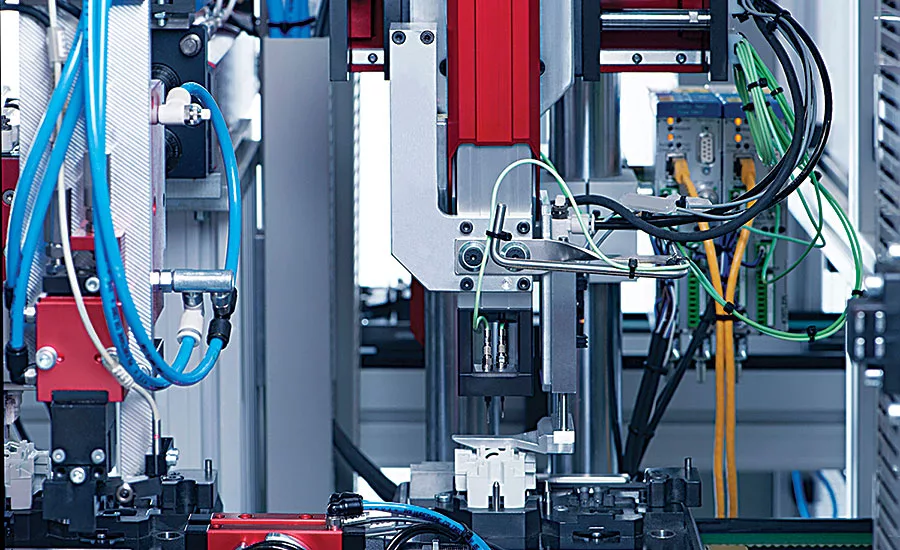
To ensure precise measurement and exclude measuring inaccuracies (for example, due to bending moments), the force application area at the sensor—and therefore the sensor itself—should be as small as possible. The size of the sensor is also important to the overall design of the automated test system. In most cases, there’s just not that much space available for the sensor to be installed.

High Performance Sensors

To meet the demands for testing ever-smaller switches and touchscreens, force sensors must be small enough to test buttons that are very close to each other. Accuracy and repeatability are vital. They also need protection against overload. Sensors that cannot resist a higher-than-expected load (as when a component is incorrectly inserted) could be damaged. Finally, they need to have a wide measuring range. While it doesn’t take much force to activate a button or touchscreen, the spread is wider than you might think, ranging from 0.1 to 500 newtons.

Miniature piezoelectric force sensors meet these requirements. These tiny instruments can take very precise measurements with the smallest force application areas. They offer excellent repeatability and high resolution, even when testing switches and keys. At the same time, the sensors are robust, durable and protected from overload.

The smallest such force sensor is 6.1 millimeters in diameter and 23.3 millimeters tall, but can measure forces from -20 to 200 newtons.

Piezoelectric sensors provide a superior price-to-performance ratio compared with strain-gauge technology. The latter must be integrated into the production line using adapters, while piezoelectric force sensors can be installed on a mounting plate directly through an external thread. Complicated and expensive recording elements are not required. In addition, this type of mounting makes it possible to arrange several sensors in tight spaces, making it possible to test a closely arranged row of keys in sequence.

The future is getting smaller. However, thanks to a new generation of highly developed electronic helpers, manufacturers are in a position to establish new standards even for the smallest applications.

KEYWORDS: sensors for automation smart phone manufacturing touch-screen manufacturing

Share This Story

Looking for a reprint of this article?
From high-res PDFs to custom plaques, order your copy today!

By Stefan Schäfer, Product Manager for Production Monitoring Technology Kistler Instrument Corp. Winterthur, Switzerland. stefan.schaefer@kistler.com

Recommended Content

JOIN TODAY
To unlock your recommendations.

Already have an account? Sign In

  • Made in the U.S.A.

    Consumer Products Manufacturing: Made in the USA

    Supply chain lessons learned during the coronavirus...
    Automated Assembly Systems
    By: Austin Weber
  • Best Practices for Press-Fit Assembly

    Best Practices for Press-Fit Assembly

    In manufacturing, ironclad formulas for success are hard...
    Assembly Presses
    By: Jim Camillo
  • aem0523leader-tesla1.jpg

    Tesla Rethinks the Assembly Line

    Engineers at Tesla Inc. have developed a new process that...
    Industries
    By: Austin Weber
Manage My Account
  • eMagazine Subscription
  • Assembly Newsletters
  • Online Registration
  • Subscription Customer Service
  • Manage My Preferences

More Videos

Sponsored Content

Sponsored Content is a special paid section where industry companies provide high quality, objective, non-commercial content around topics of interest to the ASSEMBLY audience. All Sponsored Content is supplied by the advertising company and any opinions expressed in this article are those of the author and not necessarily reflect the views of ASSEMBLY or its parent company, BNP Media. Interested in participating in our Sponsored Content section? Contact your local rep!

close
  • ultrasonic welding
    Sponsored bySonobond Ultrasonics

    Engineering Efficiency in High-Performance Assembly: How Ultrasonic Welding Enhances Throughput, Reliability and Quality

  • UV curing system
    Sponsored byDymax

    Why UV Intensity Alone Doesn’t Define Curing Performance

  • wooden pallets
    Sponsored byLEAN Manufacturing Products

    Eliminating Waste on the Shop Floor: Applying Lean Principles to Improve Manufacturing Efficiency

Popular Stories

ASSEMBLY News Now, episode-30: Volvo Redesigns EV Manufacturing

Volvo Redesigns EV Manufacturing

Boeing CEO Kelly Ortberg announces 1 billion investment

Boeing Plans $1 Billion Wichita Investment, Workforce Training Center

GE Appliances Worker on Line

GE Appliances Expands Factory AI With 800 Gemini Enterprise Agents

Watch the latest episode of ANN now!

Events

July 24, 2025

From Shop Floor to CFO: How Manufacturers Are Closing the Loop Between Operations and Finance

On Demand Learn how manufacturers are bridging the gap between the shop floor and ERP systems to gain real-time visibility, streamline operations, and kick-start digital transformation—without waiting years.

Sponsored by:

PicoStratusGreen
July 30, 2025

Buffer Analysis and Design Fundamentals for Manufacturing Excellence

On Demand In this presentation, Dr. Herman Tang shares practical insights from his industry experience and research on buffer management in manufacturing operations.

View All Submit An Event

Poll

Difficult Assembly Processes

Which assembly process gives you the most difficulty?
View Results Poll Archive

Products

Manufacturing Cost Policy Deployment (MCPD) Profitability Scenarios: Systematic and Systemic Improvement of Manufacturing Costs

Manufacturing Cost Policy Deployment (MCPD) Profitability Scenarios: Systematic and Systemic Improvement of Manufacturing Costs

See More Products
Register for webinar - Modernizing Automotive Assembly: Why Upgrading Legacy MES is a Business Imperative

Related Articles

  • Bosch Group Debuts Collaborative Robot at Consumer Electronics Show

    See More
  • Consumer Electronics

    See More
  • Volkswagen's Kassel assembly plant

    Sensors, Software Aid Testing of Transmissions at VW

    See More

Related Products

See More Products
  • characterization.jpg

    Characterization, Testing, Measurement, and Metrology

  • testing.jpg

    Testing Complex and Embedded Systems

  • Testing Adhesive Joints: Best Practices

See More Products
×

Never miss the latest news and trends driving the manufacturing industry

Stay in the know on the latest assembly trends.

JOIN TODAY!
  • RESOURCES
    • Advertise
    • Contact Us
    • Directories
    • Manufacturing Division
    • Store
    • Want More?
  • SIGN UP TODAY
    • Create Account
    • eMagazine
    • Newsletters
    • Customer Service
    • Manage Preferences
  • SERVICES
    • Marketing Services
    • Reprints
    • Market Research
    • List Rental
    • Survey/Respondent Access
  • STAY CONNECTED
    • LinkedIn
    • Facebook
    • Instagram
    • YouTube
    • X (Twitter)
  • PRIVACY
    • PRIVACY POLICY
    • TERMS & CONDITIONS
    • DO NOT SELL MY PERSONAL INFORMATION
    • PRIVACY REQUEST
    • ACCESSIBILITY

Copyright ©2026. All Rights Reserved BNP Media, Inc. and BNP Media II, LLC.

Design, CMS, Hosting & Web Development :: ePublishing