Assembly Magazine logo
search
Ask ASSEMBLY AI
cart
facebook twitter linkedin youtube
  • Sign In
  • Create Account
  • Sign Out
  • My Account
Assembly Magazine logo
  • TRENDS
    • Ask ASSEMBLY AI
    • Trends
    • News
    • New Products
  • INDUSTRIES
    • Aerospace
    • Appliance
    • DFMA Assembly
    • Medical Devices
    • Green Manufacturing
    • Lean Manufacturing
    • Machinery Assembly
    • Electronics Assembly
    • Automotive
  • TECHNOLOGIES
    • Adhesives & Dispensing
    • Assembly Presses
    • Automated Assembly Systems
    • Manufacturing Management
    • Manufacturing Software
    • Motion Control
    • Screwdriving & Riveting
    • Robotics
    • Test & Inspection
    • Plastics & Metal Welding
    • Wire Processing
    • Workstations
  • AUTONOMOUS & ELECTRIC MOBILITY
    • AEM Magazine Archives
    • Autonomy
    • Electrification
    • Mobility Services
    • Assembly & Testing
    • AV/EM News
  • MEDIA
    • Ask ASSEMBLY AI
    • Podcasts
    • Assembly News Now
    • Assembly TV
    • Webinars
    • eBooks
  • EVENTS
    • Calendar
    • The ASSEMBLY Show
  • MORE
    • Exclusives >
      • Plant of the Year
      • Capital Spending
    • Buyers Guide >
      • Supplier Insights
    • Classifieds
    • Featured Products
    • Newsletters
    • Store
    • White Papers
    • Columns
    • Sponsor Insights
  • INFOCENTER
    • Assembly & Test Solutions
  • EMAGAZINE
    • eMagazine
    • Archive Issues
    • Advertise
    • Contact Us
    • Sign Up

advertisement

How To Evaluate Your Screw Driving Application
Nitto Seiko America
Nitto Seiko America
Nitto Seiko America
Nitto Seiko America
Nitto Seiko America
Nitto Seiko America
Nitto Seiko America
Nitto Seiko America
Nitto Seiko America
Nitto Seiko America
March 1, 2020

Automating your screw driving processes can be a quick way to get a return on your investment and improve your manufacturing operations. There are many factors your equipment provider will need to know, in order to provide you your best solution. Evaluating this information ahead of time will let you understand your application better and make working with your equipment provider a smoother and more accurate process.

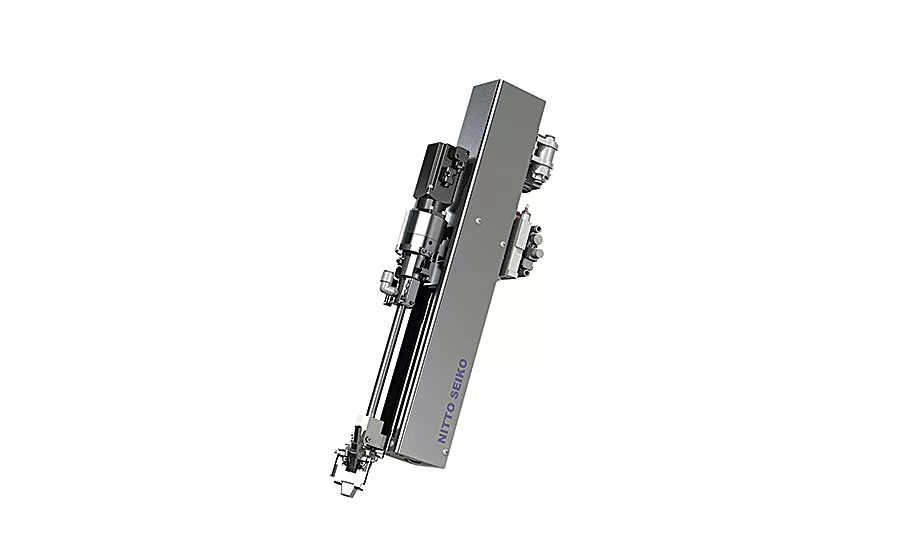
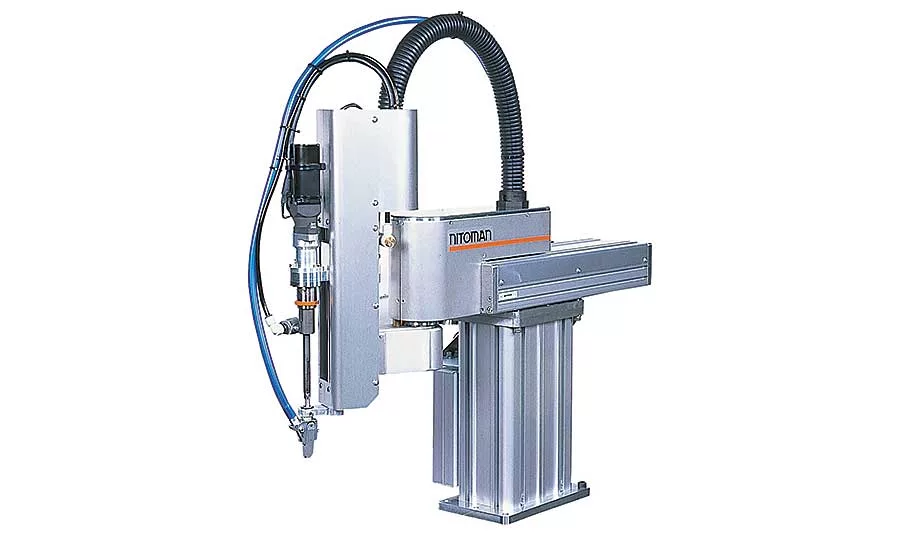
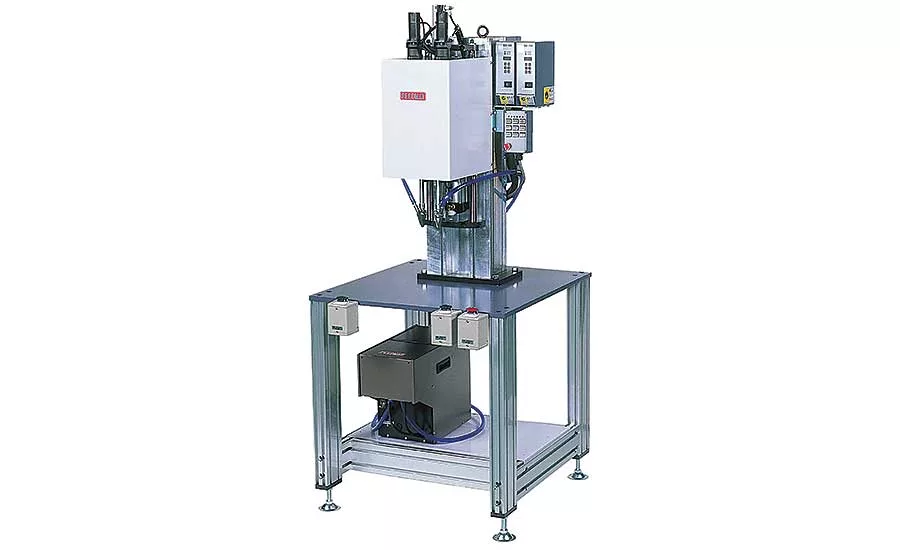
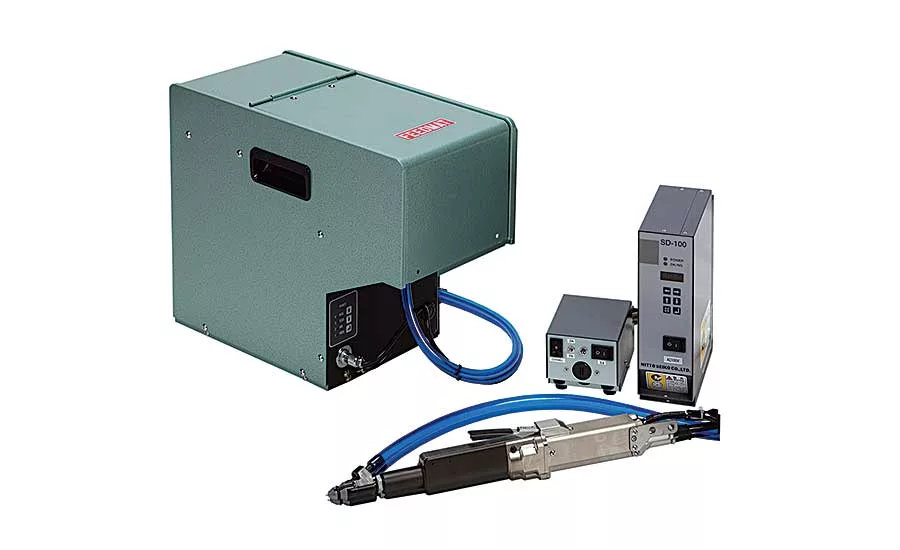
The first question to ask yourself is “Why do I want to automate this process?” The answer will steer you towards the equipment you will need. If you are looking for ergonomic benefits, you may just need a self-fed handheld driver. If you are looking to remove an operator from the process, a single spindle or robot might be your answer. If speed is the concern, a multi-spindle driver would deliver the highest rates. If you are looking for flexibility for many different products or models, a robot is your best bet. All of these can be coupled with a motor, from a pneumatic, up to an AC Servo motor with a transducer and waveform analysis, to match the level of quality needed.

Next comes the fastener. There are two ways to handle the fastener in automated fastening. First is blow feeding, second is pick and drive. Blow feeding the screw is always desired, if possible. Blow feeding is fast and the feed time can be buried by various methods, such as a high-speed chuck that allows you to feed while you are driving. For pick and drive, seconds are added to each cycle in order to move to the feeder, pick the screw, return and drive.

The geometry of the screw will determine the method to be used. If the ratio of the head diameter to length of screw is too small, the screw will tumble in the tube, or chuck, and can’t be orientated to the bit. A rule of thumb is anything larger than a 1.5 ratio (head diameter 10mm with length of 15mm, for instance) can be reliably fed. Under that, there are other factors that need to be considered. With an anti-tumble chuck, you can go down to 1.2, or even lower. Your equipment provider can evaluate the fastener for you.

Cycle time is an important requirement. It takes about 3 seconds per screw for a system to move to point, feed and drive. If you need 400mm in the Z-axis and using a pneumatic axis, you have to add a couple seconds. A servo axis is much faster and takes less time. If you only need 100mm (or less) and are using servo axis, you can subtract a second. Using pick and drive, you need to add a couple seconds. But using 3 seconds to start is safe and allows you to explore your options.

Your equipment provider will size your motor, based on the torque requirement. Generally, this will be around the 50% of the max torque of the motor, insuring the motor is not overworked or oversized. But electric motors generate heat and need to cool down. A fast duty cycle may not allow the motor enough time to cool down. For example, you drive 17 screws per part, with 15 seconds between the last drive and the first drive of the next part, with no problems. If that same application only has 3 seconds between the last screw and the first screw of the next part, it may not adequately cool. If the equipment provider has this information, they will size the motor larger, around 25% of the max torque. This larger motor will not heat as quickly in the higher duty cycle applicaiton.

The geometry of the part is going to determine the type of spindle, chuck, stroke and options needed. If all the screws are in one plane, a pneuatic axis should be sufficient. If they are in multiple planes, you will need a servo axis for programmable heights. If there are no obstructions near the screw, then a chuck-style driver may be best. Chuck style drivers need clearance around the hole for the chucks to open up. If there are obstructions, a vacuum driver is best. With a vacuum driver, the chuck is stationary and a vacuum tube sucks the screw to the bit, then advances through the chucks to the part. This type only needs a clearance 1mm greater then the head diameter of the screw, allowing access to tight spaces and deep recesses.

Looking for quick answers on assembly and manufacturing topics? Try Ask ASM, our new smart AI search tool. Ask ASM →

Stroke is next. You want to be as close as possible to the part to decrease cycle time, but you also need to move around the part safely. Calculate the distance between the lowest screw and highest feature. Thie driver will be as close as possibly, with no crash conditions.

Preparing this info is going to lessen chances something gets overlooked in your application.


Nitto Seiko America
Troy, MI
(248) 588-0133
sales@nittoseikoamerica.com
www.nittoseikoamerica.com

Share This Story

Looking for a reprint of this article?
From high-res PDFs to custom plaques, order your copy today!

Recommended Content

JOIN TODAY
To unlock your recommendations.

Already have an account? Sign In

  • Made in the U.S.A.

    Consumer Products Manufacturing: Made in the USA

    Supply chain lessons learned during the coronavirus...
    Automated Assembly Systems
    By: Austin Weber
  • Best Practices for Press-Fit Assembly

    Best Practices for Press-Fit Assembly

    In manufacturing, ironclad formulas for success are hard...
    Assembly Presses
    By: Jim Camillo
  • aem0523leader-tesla1.jpg

    Tesla Rethinks the Assembly Line

    Engineers at Tesla Inc. have developed a new process that...
    Assembly and Testing
    By: Austin Weber
Manage My Account
  • eMagazine Subscription
  • Assembly Newsletters
  • Online Registration
  • Subscription Customer Service
  • Manage My Preferences

More Videos

Sponsored Content

Sponsored Content is a special paid section where industry companies provide high quality, objective, non-commercial content around topics of interest to the ASSEMBLY audience. All Sponsored Content is supplied by the advertising company and any opinions expressed in this article are those of the author and not necessarily reflect the views of ASSEMBLY or its parent company, BNP Media. Interested in participating in our Sponsored Content section? Contact your local rep!

close
  • ultrasonic welding
    Sponsored bySonobond Ultrasonics

    Engineering Efficiency in High-Performance Assembly: How Ultrasonic Welding Enhances Throughput, Reliability and Quality

  • UV curing system
    Sponsored byDymax

    Why UV Intensity Alone Doesn’t Define Curing Performance

  • wooden pallets
    Sponsored byLEAN Manufacturing Products

    Eliminating Waste on the Shop Floor: Applying Lean Principles to Improve Manufacturing Efficiency

Popular Stories

ASSEMBLY News Now, episode-30: Volvo Redesigns EV Manufacturing

Volvo Redesigns EV Manufacturing

Boeing CEO Kelly Ortberg announces 1 billion investment

Boeing Plans $1 Billion Wichita Investment, Workforce Training Center

GE Appliances Worker on Line

GE Appliances Expands Factory AI With 800 Gemini Enterprise Agents

Watch the latest episode of ANN now!

Events

July 24, 2025

From Shop Floor to CFO: How Manufacturers Are Closing the Loop Between Operations and Finance

On Demand Learn how manufacturers are bridging the gap between the shop floor and ERP systems to gain real-time visibility, streamline operations, and kick-start digital transformation—without waiting years.

Sponsored by:

PicoStratusGreen
July 30, 2025

Buffer Analysis and Design Fundamentals for Manufacturing Excellence

On Demand In this presentation, Dr. Herman Tang shares practical insights from his industry experience and research on buffer management in manufacturing operations.

View All Submit An Event

Poll

Difficult Assembly Processes

Which assembly process gives you the most difficulty?
View Results Poll Archive

Products

Manufacturing Cost Policy Deployment (MCPD) Profitability Scenarios: Systematic and Systemic Improvement of Manufacturing Costs

Manufacturing Cost Policy Deployment (MCPD) Profitability Scenarios: Systematic and Systemic Improvement of Manufacturing Costs

See More Products
Register for webinar - Modernizing Automotive Assembly: Why Upgrading Legacy MES is a Business Imperative

Related Articles

  • press-fit assembly

    How to Evaluate a Press-Fit Curve

    See More

Related Products

See More Products
  • pocket.jpg

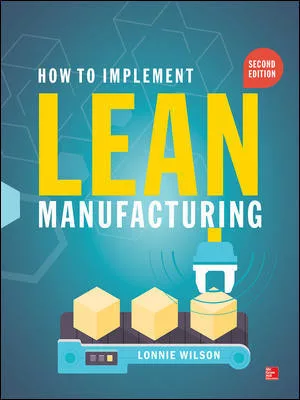
    How To Implement Lean Manufacturing, Second Edition

  • leaner

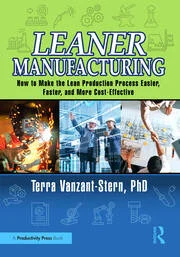
    Leaner Manufacturing: How to Make the Lean Production Process Easier, Faster, and More Cost-Effective

  • value stream.jpg

    Using Hoshin Kanri to Improve the Value Stream

See More Products

Related Directories

  • HowToRobot

  • Nitto Seiko America

    Nitto Seiko America is the North American branch of Nitto Seiko, Ltd. and a provider of industry leading screw driving equipment. We offer the full range of screw driving equipment - our own motors and controllers, hand-held drivers, single-spindle drivers, multi-spindle drivers, feeder and robots. This allows us to provide any all of the equipment you need from a single source, from stand-alone motors and controllers, all the way up to turn-key robotic screw driving system.
  • Visumatic Industrial Products

    Visumatic Industrial Products - the experts in automated fastening technology. Automatic feed and drive equipment to install screws, nuts, bolts, rings, pins, clips, rivets and specialty fasteners. Engineered products ranging from hand operated guns to machine builder robot EOAT, all robustly built for companies doing product assembly work.
×

Never miss the latest news and trends driving the manufacturing industry

Stay in the know on the latest assembly trends.

JOIN TODAY!
  • RESOURCES
    • Advertise
    • Contact Us
    • Directories
    • Manufacturing Division
    • Store
    • Want More?
  • SIGN UP TODAY
    • Create Account
    • eMagazine
    • Newsletters
    • Customer Service
    • Manage Preferences
  • SERVICES
    • Marketing Services
    • Reprints
    • Market Research
    • List Rental
    • Survey/Respondent Access
  • STAY CONNECTED
    • LinkedIn
    • Facebook
    • Instagram
    • YouTube
    • X (Twitter)
  • PRIVACY
    • PRIVACY POLICY
    • TERMS & CONDITIONS
    • DO NOT SELL MY PERSONAL INFORMATION
    • PRIVACY REQUEST
    • ACCESSIBILITY

Copyright ©2026. All Rights Reserved BNP Media, Inc. and BNP Media II, LLC.

Design, CMS, Hosting & Web Development :: ePublishing