Assembly Magazine logo
search
Ask ASSEMBLY AI
cart
facebook twitter linkedin youtube
  • Sign In
  • Create Account
  • Sign Out
  • My Account
Assembly Magazine logo
  • TRENDS
    • Ask ASSEMBLY AI
    • Trends
    • News
    • New Products
  • INDUSTRIES
    • Aerospace
    • Appliance
    • DFMA Assembly
    • Medical Devices
    • Green Manufacturing
    • Lean Manufacturing
    • Machinery Assembly
    • Electronics Assembly
    • Automotive
  • TECHNOLOGIES
    • Adhesives & Dispensing
    • Assembly Presses
    • Automated Assembly Systems
    • Manufacturing Management
    • Manufacturing Software
    • Motion Control
    • Screwdriving & Riveting
    • Robotics
    • Test & Inspection
    • Plastics & Metal Welding
    • Wire Processing
    • Workstations
  • AUTONOMOUS & ELECTRIC MOBILITY
    • AEM Magazine Archives
    • Autonomy
    • Electrification
    • Mobility Services
    • Assembly & Testing
    • AV/EM News
  • MEDIA
    • Ask ASSEMBLY AI
    • Podcasts
    • Assembly News Now
    • Assembly TV
    • Webinars
    • eBooks
  • EVENTS
    • Calendar
    • The ASSEMBLY Show
  • MORE
    • Exclusives >
      • Plant of the Year
      • Capital Spending
    • Buyers Guide >
      • Supplier Insights
    • Classifieds
    • Featured Products
    • Newsletters
    • Store
    • White Papers
    • Columns
    • Sponsor Insights
  • INFOCENTER
    • Assembly & Test Solutions
  • EMAGAZINE
    • eMagazine
    • Archive Issues
    • Advertise
    • Contact Us
    • Sign Up
IndustriesColumnsAutonomous & Electric MobilityAutomotive AssemblyOn CampusElectrification

Engineers Race to Develop Wireless Charging Technology
By Austin Weber
Engineers Race to Develop Wireless Charging Technology
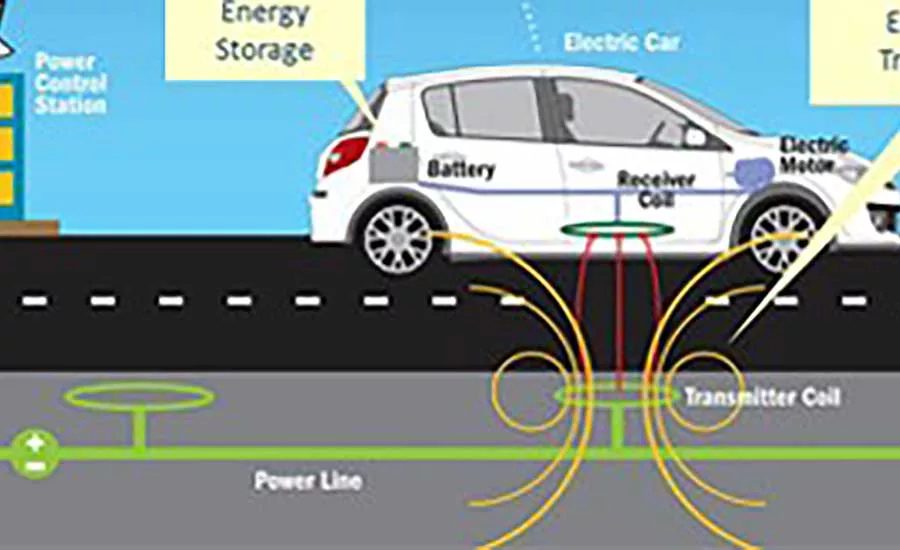
Engineers are developing wireless power transfer systems that can charge vehicles while they are in motion. Illustration courtesy Stanford University
Engineers Race to Develop Wireless Charging Technology
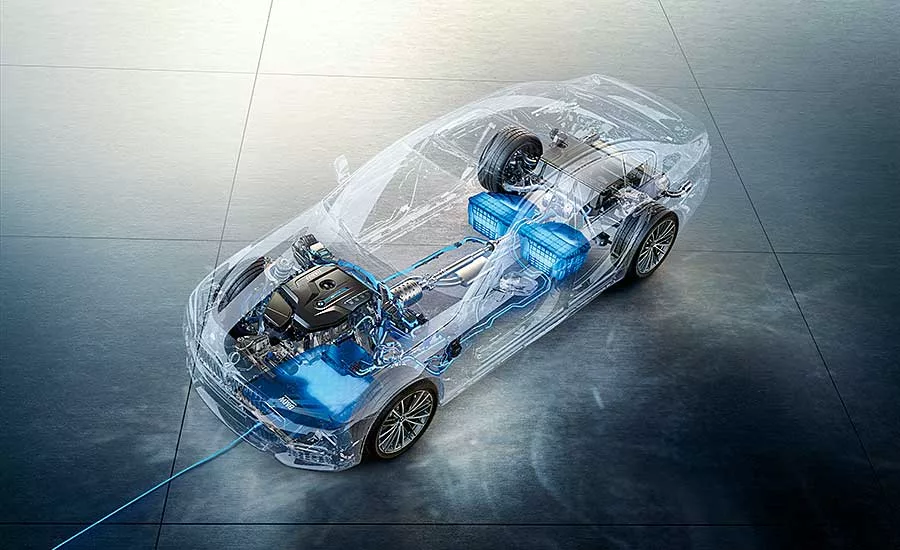
Wireless technology may soon make it possible to easily recharge electric vehicles. Illustration courtesy BMW
Engineers Race to Develop Wireless Charging Technology
January 11, 2021

One of the stumbling blocks to widespread acceptance of electric vehicles is lack of a recharging infrastructure that’s convenient, easy to use, fast and readily accessible. Engineers at Stanford University and Western Michigan University are developing wireless technology that addresses many of those constraints and challenges.

Although wireless charging pads already exist for smartphones, they only work if the phone is sitting still. For cars, that would be just as inconvenient as the current practice of plugging them in for an hour or two at charging stations.

Shanhui Fan, a professor of electrical engineering at Stanford, envisions a day in the not-too-distant future when electric cars recharge themselves as they speed along futuristic highways built to “refuel” vehicles wirelessly.

Traditional wireless chargers transmit electricity by creating a magnetic field that oscillates at a frequency that creates a resonating vibration in magnetic coils on the receiving device. The problem is that the resonant frequency changes if the distance between the source and receiver changes by even a small amount.

Fan and his colleagues developed a wireless charger that could transmit electricity even as the distance to the receiver changes. They did this by incorporating an amplifier and feedback resistor that allowed the system to automatically adjust its operating frequency as the distance between the charger and the moving object changed.

By replacing their original amplifier with a far more efficient switch mode amplifier, they boosted efficiency. The latest iteration can wirelessly transmit 10 watts of electricity over a distance of 2 or 3 feet.

Fan says there aren’t any fundamental obstacles to scaling up a system to transmit the tens or hundreds of kilowatts that a car would need. In fact, he claims the system is more than fast enough to resupply a speeding automobile.

Looking for quick answers on assembly and manufacturing topics? Try Ask ASM, our new smart AI search tool. Ask ASM →

The wireless transmission takes only a few milliseconds—a tiny fraction of the time it would take a car moving at 70 miles an hour to cross a four-foot charging zone. The only limiting factor will be how fast the car’s batteries can absorb all the power.

According to Fan, wireless chargers shouldn’t pose a health risk because even ones that are powerful enough for cars would produce magnetic fields that are well within established safety guidelines. He claims the magnetic fields can even transmit electricity through people without them feeling a thing.

Although it could be many years before wireless chargers become embedded in highways, the opportunities for robots and even aerial drones are more immediate. “It’s much less costly to embed chargers in floors or on rooftops than on long stretches of highway,” notes Fan. “Imagine a drone that could fly all day by swooping down occasionally and hovering around a roof for quick charges.”

In the nearer term, the system could soon make it practical to wirelessly recharge mobile robots and automated guided vehicles as they move around factories and warehouses, eliminating downtime and enabling the machines to work continuously.

Engineers at Western Michigan University’s Energy Efficient and Autonomous Vehicles Lab are also busy developing a wireless power transfer system that could charge EVs while they’re in motion.

“Right now, an electric vehicle takes a lot of time to charge,” says Zach Asher, Ph.D., an assistant professor of mechanical and aerospace engineering. “So, if you can make something like a grid line underneath the road, then we can transmit electricity to the car and it can run thousands of miles without even stopping.

“[One of our students recently] began intensive research into existing wireless energy transmission technologies, including magneto dynamic coupling and microwave power transfer, which appear most promising,” adds Asher. “Magneto dynamic coupling uses rotating magnetic rods to exert torque and generate electricity. Microwave power transfer uses short length radio waves to transfer energy and convert it to electric power.

“While the research was enough to create a potential prototype to demonstrate stationary wireless power transfer, he has high hopes to advance the project to a point of larger scale development of in-motion transfer and testing,” says Asher.

KEYWORDS: electric vehicles

Share This Story

Looking for a reprint of this article?
From high-res PDFs to custom plaques, order your copy today!

Austinweber headshot
Austin has been senior editor for ASSEMBLY Magazine since September 1999. He has more than 21 years of b-to-b publishing experience and has written about a wide variety of manufacturing and engineering topics. Austin is a graduate of the University of Michigan.

Recommended Content

JOIN TODAY
To unlock your recommendations.

Already have an account? Sign In

  • Made in the U.S.A.

    Consumer Products Manufacturing: Made in the USA

    Supply chain lessons learned during the coronavirus...
    Automated Assembly Systems
    By: Austin Weber
  • Best Practices for Press-Fit Assembly

    Best Practices for Press-Fit Assembly

    In manufacturing, ironclad formulas for success are hard...
    Assembly Presses
    By: Jim Camillo
  • aem0523leader-tesla1.jpg

    Tesla Rethinks the Assembly Line

    Engineers at Tesla Inc. have developed a new process that...
    Assembly and Testing
    By: Austin Weber
Manage My Account
  • eMagazine Subscription
  • Assembly Newsletters
  • Online Registration
  • Subscription Customer Service
  • Manage My Preferences

More Videos

Sponsored Content

Sponsored Content is a special paid section where industry companies provide high quality, objective, non-commercial content around topics of interest to the ASSEMBLY audience. All Sponsored Content is supplied by the advertising company and any opinions expressed in this article are those of the author and not necessarily reflect the views of ASSEMBLY or its parent company, BNP Media. Interested in participating in our Sponsored Content section? Contact your local rep!

close
  • ultrasonic welding
    Sponsored bySonobond Ultrasonics

    Engineering Efficiency in High-Performance Assembly: How Ultrasonic Welding Enhances Throughput, Reliability and Quality

  • UV curing system
    Sponsored byDymax

    Why UV Intensity Alone Doesn’t Define Curing Performance

  • wooden pallets
    Sponsored byLEAN Manufacturing Products

    Eliminating Waste on the Shop Floor: Applying Lean Principles to Improve Manufacturing Efficiency

Popular Stories

ASSEMBLY News Now, episode-30: Volvo Redesigns EV Manufacturing

Volvo Redesigns EV Manufacturing

Boeing CEO Kelly Ortberg announces 1 billion investment

Boeing Plans $1 Billion Wichita Investment, Workforce Training Center

automated consumer goods assembly system

Best Practices for Cycle Time Optimization

Watch the latest episode of ANN now!

Events

July 24, 2025

From Shop Floor to CFO: How Manufacturers Are Closing the Loop Between Operations and Finance

On Demand Learn how manufacturers are bridging the gap between the shop floor and ERP systems to gain real-time visibility, streamline operations, and kick-start digital transformation—without waiting years.

Sponsored by:

PicoStratusGreen
July 30, 2025

Buffer Analysis and Design Fundamentals for Manufacturing Excellence

On Demand In this presentation, Dr. Herman Tang shares practical insights from his industry experience and research on buffer management in manufacturing operations.

View All Submit An Event

Poll

Difficult Assembly Processes

Which assembly process gives you the most difficulty?
View Results Poll Archive

Products

Manufacturing Cost Policy Deployment (MCPD) Profitability Scenarios: Systematic and Systemic Improvement of Manufacturing Costs

Manufacturing Cost Policy Deployment (MCPD) Profitability Scenarios: Systematic and Systemic Improvement of Manufacturing Costs

See More Products
Register for webinar - Modernizing Automotive Assembly: Why Upgrading Legacy MES is a Business Imperative

Related Articles

  • Researchers Develop Wireless Charging System for Electric Vehicles

    See More
  • Porsche wireless charging system

    Porsche Debuts Wireless Charging System

    See More
  • Charging Technology Gets Smarter, Faster

    See More

Related Products

See More Products
  • Joining of Plastics 3e Handbook for Designers and Engineers

  • finite.jpg

    Finite Element Analysis for Engineers

  • advanced.jpg

    Advanced Manufacturing and Processing Technology

See More Products

Related Directories

  • SOLID Development Corp. dba Dream to Product

  • HowToRobot

×

Never miss the latest news and trends driving the manufacturing industry

Stay in the know on the latest assembly trends.

JOIN TODAY!
  • RESOURCES
    • Advertise
    • Contact Us
    • Directories
    • Manufacturing Division
    • Store
    • Want More?
  • SIGN UP TODAY
    • Create Account
    • eMagazine
    • Newsletters
    • Customer Service
    • Manage Preferences
  • SERVICES
    • Marketing Services
    • Reprints
    • Market Research
    • List Rental
    • Survey/Respondent Access
  • STAY CONNECTED
    • LinkedIn
    • Facebook
    • Instagram
    • YouTube
    • X (Twitter)
  • PRIVACY
    • PRIVACY POLICY
    • TERMS & CONDITIONS
    • DO NOT SELL MY PERSONAL INFORMATION
    • PRIVACY REQUEST
    • ACCESSIBILITY

Copyright ©2026. All Rights Reserved BNP Media, Inc. and BNP Media II, LLC.

Design, CMS, Hosting & Web Development :: ePublishing