Assembly Magazine logo
search
Ask ASSEMBLY AI
cart
facebook twitter linkedin youtube
  • Sign In
  • Create Account
  • Sign Out
  • My Account
Assembly Magazine logo
  • TRENDS
    • Ask ASSEMBLY AI
    • Trends
    • News
    • New Products
  • INDUSTRIES
    • Aerospace
    • Appliance
    • DFMA Assembly
    • Medical Devices
    • Green Manufacturing
    • Lean Manufacturing
    • Machinery Assembly
    • Electronics Assembly
    • Automotive
  • TECHNOLOGIES
    • Adhesives & Dispensing
    • Assembly Presses
    • Automated Assembly Systems
    • Manufacturing Management
    • Manufacturing Software
    • Motion Control
    • Screwdriving & Riveting
    • Robotics
    • Test & Inspection
    • Plastics & Metal Welding
    • Wire Processing
    • Workstations
  • AUTONOMOUS & ELECTRIC MOBILITY
    • AEM Magazine Archives
    • Autonomy
    • Electrification
    • Mobility Services
    • Assembly & Testing
    • AV/EM News
  • MEDIA
    • Ask ASSEMBLY AI
    • Podcasts
    • Assembly News Now
    • Assembly TV
    • Webinars
    • eBooks
  • EVENTS
    • Calendar
    • The ASSEMBLY Show
  • MORE
    • Exclusives >
      • Plant of the Year
      • Capital Spending
    • Buyers Guide >
      • Supplier Insights
    • Classifieds
    • Featured Products
    • Newsletters
    • Store
    • White Papers
    • Columns
    • Sponsor Insights
  • INFOCENTER
    • Assembly & Test Solutions
  • EMAGAZINE
    • eMagazine
    • Archive Issues
    • Advertise
    • Contact Us
    • Sign Up
IndustriesColumnsElectronics AssemblyMoser on Manufacturing

Further Review of Manufacturing Supply Chains
By Harry Moser
Further Review of Manufacturing Supply Chains
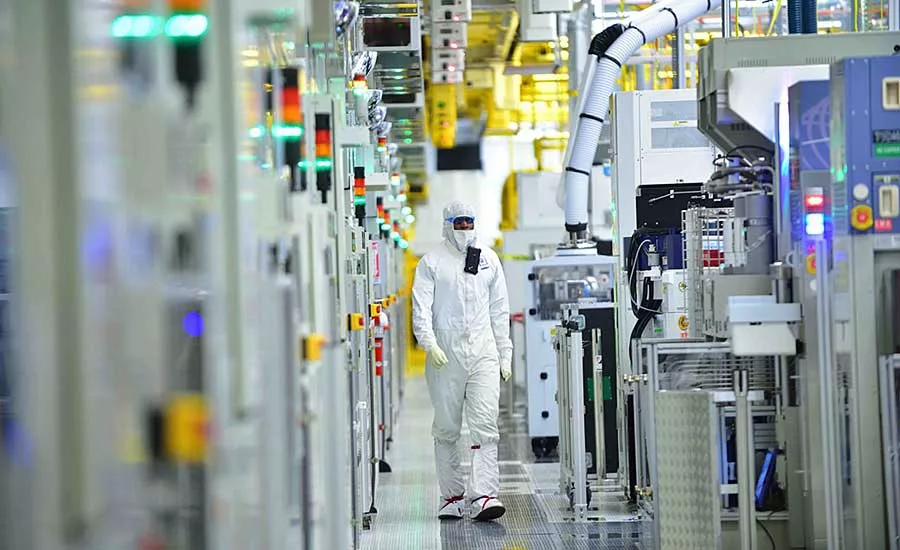
If we increase domestic chip production without similarly increasing production of electronics, we will go from being dependent on China and Taiwan for chips to being dependent on them for sales of our excess supply of chips. Photo courtesy Intel Corp.
Further Review of Manufacturing Supply Chains
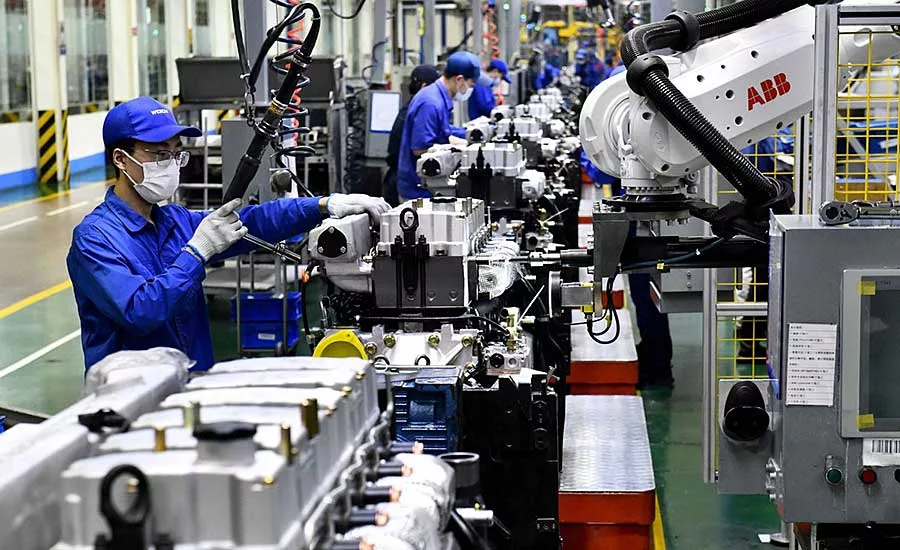
Some experts fear that China could completely “decouple” from the U.S., announcing an embargo on all shipments to this country. Photo courtesy Weichai Power Co. Ltd.
Further Review of Manufacturing Supply Chains
October 14, 2021

In his June 2021 editorial, ASSEMBLY’s editor in chief John Sprovieri discussed President Biden’s February executive order to review critical U.S. supply chains. I would like to build on John’s analysis and offer advice to the Biden administration.

John writes, “Last year’s shortages…opened a lot of eyes in board rooms and in Washington.” Indeed, they did. Reshoring by U.S. companies increased 167 percent in 2020 to set an all-time record of 109,000 jobs brought back to the U.S. From March to December 2020, about 60 percent of reshoring cases cited COVID as the primary reason. About half of the reshoring cases were directly rated to making personal protective equipment and other medical products. The rest were motivated to avoid the disruptions experienced by the medical industry.

John also quoted President Biden: “This is about making sure the United States can meet every challenge we face in the new era.” The Biden programs will help, but are really just tourniquets in response to 50 years of neglect of U.S. manufacturing. They do not deal with the root cause of our lack of self-sufficiency: uncompetitive manufacturing cost.

U.S. manufacturing cost is too often 40 percent higher than low-wage countries like China and 15 to 20 percent above other developed countries like Japan and Germany. The necessary solution is a combination of massive skilled workforce training like Germany’s, 20 to 30 percent lower USD, not raising the corporate tax rate, and creating a value-added tax. If we take those actions, companies will respond with innovation, hiring and investment.

John also quotes John Mitchell, president and CEO of IPC, a trade group representing U.S. electronics assemblers. “The U.S. printed circuit board industry, which once accounted for more than 30 percent of global production, today accounts for less than 5 percent. Only four of the top 20 electronics manufacturing services companies are based in the United States.”

If we subsidize chip foundries and dramatically increase our chip production, but do not increase our production of computers, auto infotainment systems, cell phones and other electronics, we will go from being dependent on China and Taiwan for chips to being dependent on them for sales of our excess supply of chips. We need a rising tide that lifts all or most industries.

Finally, John writes, “Beijing’s dominance of global supply chains for raw materials and critical products like medical masks has prompted concerns that its authoritarian government could cut off the United States, causing even bigger economic disruptions.”

Looking for quick answers on assembly and manufacturing topics? Try Ask ASM, our new smart AI search tool. Ask ASM →

There is increased discussion about the possibility of China “decoupling” from the U.S., announcing an embargo on all shipments. Factors driving China include Taiwan, the Uighurs, Hong Kong, the South China Sea, sanctions and tariffs. A good friend and noted China expert Eamon McKinney is convinced that China will decouple.

Ten or 20 years ago, China needed the U.S. more than vice versa. China has achieved unprecedented growth based largely on selling to the U.S. We are its No. 1 destination for exports, three times the No. 2 country, excluding Hong Kong. However, the Chinese middle class has grown enough and saves so much that China could divert production capacity to meeting domestic demand instead of exporting to the U.S. If that happened, the U.S. would be crippled by shortages across industries and product lines. Factories in the U.S. cannot keep up with current demand, despite the current surge in imports from China. U.S. imported $435 billion from China in 2020. Producing those goods here would require an increase in manufacturing employment of 3 million people. We already have about 800,000 unfilled manufacturing jobs.

My conclusion is that Biden’s piecemeal actions to boost the domestic supply chain of essential products are necessary, but not sufficient. The root cause is our lack of competitiveness. Biden must put equal effort on attacking the root cause.

The Reshoring Initiative’s tools and data can help OEMs make better sourcing decisions and help contract manufacturers sell against imports. Resources can be found on our website: www.ReshoreNow.org.

KEYWORDS: reshoring

Share This Story

Looking for a reprint of this article?
From high-res PDFs to custom plaques, order your copy today!

Harry Moser is the president of the Reshoring Initiative. His column will appear every other month, alternating with Austin Weber’s “On Campus.” Has your company reshored production? Are you thinking about it? We’d like to hear of your success or help you achieve it. With your approval, we would love to report on your successes or opportunities in future issues. Contact harry.moser@reshorenow.org.

Recommended Content

JOIN TODAY
To unlock your recommendations.

Already have an account? Sign In

  • Made in the U.S.A.

    Consumer Products Manufacturing: Made in the USA

    Supply chain lessons learned during the coronavirus...
    Automated Assembly Systems
    By: Austin Weber
  • Best Practices for Press-Fit Assembly

    Best Practices for Press-Fit Assembly

    In manufacturing, ironclad formulas for success are hard...
    Assembly Presses
    By: Jim Camillo
  • aem0523leader-tesla1.jpg

    Tesla Rethinks the Assembly Line

    Engineers at Tesla Inc. have developed a new process that...
    Assembly and Testing
    By: Austin Weber
Manage My Account
  • eMagazine Subscription
  • Assembly Newsletters
  • Online Registration
  • Subscription Customer Service
  • Manage My Preferences

More Videos

Sponsored Content

Sponsored Content is a special paid section where industry companies provide high quality, objective, non-commercial content around topics of interest to the ASSEMBLY audience. All Sponsored Content is supplied by the advertising company and any opinions expressed in this article are those of the author and not necessarily reflect the views of ASSEMBLY or its parent company, BNP Media. Interested in participating in our Sponsored Content section? Contact your local rep!

close
  • ultrasonic welding
    Sponsored bySonobond Ultrasonics

    Engineering Efficiency in High-Performance Assembly: How Ultrasonic Welding Enhances Throughput, Reliability and Quality

  • UV curing system
    Sponsored byDymax

    Why UV Intensity Alone Doesn’t Define Curing Performance

  • wooden pallets
    Sponsored byLEAN Manufacturing Products

    Eliminating Waste on the Shop Floor: Applying Lean Principles to Improve Manufacturing Efficiency

Popular Stories

ASSEMBLY News Now, episode-30: Volvo Redesigns EV Manufacturing

Volvo Redesigns EV Manufacturing

Boeing CEO Kelly Ortberg announces 1 billion investment

Boeing Plans $1 Billion Wichita Investment, Workforce Training Center

automated consumer goods assembly system

Best Practices for Cycle Time Optimization

Watch the latest episode of ANN now!

Events

July 24, 2025

From Shop Floor to CFO: How Manufacturers Are Closing the Loop Between Operations and Finance

On Demand Learn how manufacturers are bridging the gap between the shop floor and ERP systems to gain real-time visibility, streamline operations, and kick-start digital transformation—without waiting years.

Sponsored by:

PicoStratusGreen
July 30, 2025

Buffer Analysis and Design Fundamentals for Manufacturing Excellence

On Demand In this presentation, Dr. Herman Tang shares practical insights from his industry experience and research on buffer management in manufacturing operations.

View All Submit An Event

Poll

Difficult Assembly Processes

Which assembly process gives you the most difficulty?
View Results Poll Archive

Products

Manufacturing Cost Policy Deployment (MCPD) Profitability Scenarios: Systematic and Systemic Improvement of Manufacturing Costs

Manufacturing Cost Policy Deployment (MCPD) Profitability Scenarios: Systematic and Systemic Improvement of Manufacturing Costs

See More Products
Register for webinar - Modernizing Automotive Assembly: Why Upgrading Legacy MES is a Business Imperative

Related Articles

  • Pandemic Spurs Review of Manufacturing Supply Chains

    See More
  • New MEP Service Helps Manufacturers Optimize Supply Chains

    See More
  • Samsung manufacturing

    US Washer Tariffs Put Samsung, LG Supply Chains Through the Wringer

    See More

Related Products

See More Products
  • supply chain.jpg

    ERP Systems for Manufacturing Supply Chains

  • strong.jpg

    Strong Supply Chains Through Resilient Operations: Five Principles for Leaders to Win in a Volatile World

  • 9781138498730.jpg

    Manufacturing Cost Policy Deployment (MCPD) Profitability Scenarios: Systematic and Systemic Improvement of Manufacturing Costs

See More Products

Related Directories

  • INFICON

    INFICON electrolyte, refrigerant, hydrogen, and helium leak detectors are the worldwide leading brand for quality control at battery, automotive, refrigeration, air conditioner and appliance manufacturing facilities and their supply chains.
×

Never miss the latest news and trends driving the manufacturing industry

Stay in the know on the latest assembly trends.

JOIN TODAY!
  • RESOURCES
    • Advertise
    • Contact Us
    • Directories
    • Manufacturing Division
    • Store
    • Want More?
  • SIGN UP TODAY
    • Create Account
    • eMagazine
    • Newsletters
    • Customer Service
    • Manage Preferences
  • SERVICES
    • Marketing Services
    • Reprints
    • Market Research
    • List Rental
    • Survey/Respondent Access
  • STAY CONNECTED
    • LinkedIn
    • Facebook
    • Instagram
    • YouTube
    • X (Twitter)
  • PRIVACY
    • PRIVACY POLICY
    • TERMS & CONDITIONS
    • DO NOT SELL MY PERSONAL INFORMATION
    • PRIVACY REQUEST
    • ACCESSIBILITY

Copyright ©2026. All Rights Reserved BNP Media, Inc. and BNP Media II, LLC.

Design, CMS, Hosting & Web Development :: ePublishing