Assembly Magazine logo
search
Ask ASSEMBLY AI
cart
facebook twitter linkedin youtube
  • Sign In
  • Create Account
  • Sign Out
  • My Account
Assembly Magazine logo
  • TRENDS
    • Ask ASSEMBLY AI
    • Trends
    • News
    • New Products
  • INDUSTRIES
    • Aerospace
    • Appliance
    • DFMA Assembly
    • Medical Devices
    • Green Manufacturing
    • Lean Manufacturing
    • Machinery Assembly
    • Electronics Assembly
    • Automotive
  • TECHNOLOGIES
    • Adhesives & Dispensing
    • Assembly Presses
    • Automated Assembly Systems
    • Manufacturing Management
    • Manufacturing Software
    • Motion Control
    • Screwdriving & Riveting
    • Robotics
    • Test & Inspection
    • Plastics & Metal Welding
    • Wire Processing
    • Workstations
  • AUTONOMOUS & ELECTRIC MOBILITY
    • AEM Magazine Archives
    • Autonomy
    • Electrification
    • Mobility Services
    • Assembly & Testing
    • AV/EM News
  • MEDIA
    • Ask ASSEMBLY AI
    • Podcasts
    • Assembly News Now
    • Assembly TV
    • Webinars
    • eBooks
  • EVENTS
    • Calendar
    • The ASSEMBLY Show
  • MORE
    • Exclusives >
      • Plant of the Year
      • Capital Spending
    • Buyers Guide >
      • Supplier Insights
    • Classifieds
    • Featured Products
    • Newsletters
    • Store
    • White Papers
    • Columns
    • Sponsor Insights
  • INFOCENTER
    • Assembly & Test Solutions
  • EMAGAZINE
    • eMagazine
    • Archive Issues
    • Advertise
    • Contact Us
    • Sign Up
Adhesives & Dispensing Assembly

Handheld Dispensing Do’s and Don’ts

For optimal manual dispensing, it's important to match the settings and equipment to the application.
By Austin Weber
Handheld Dispensing Do’s and Don’ts
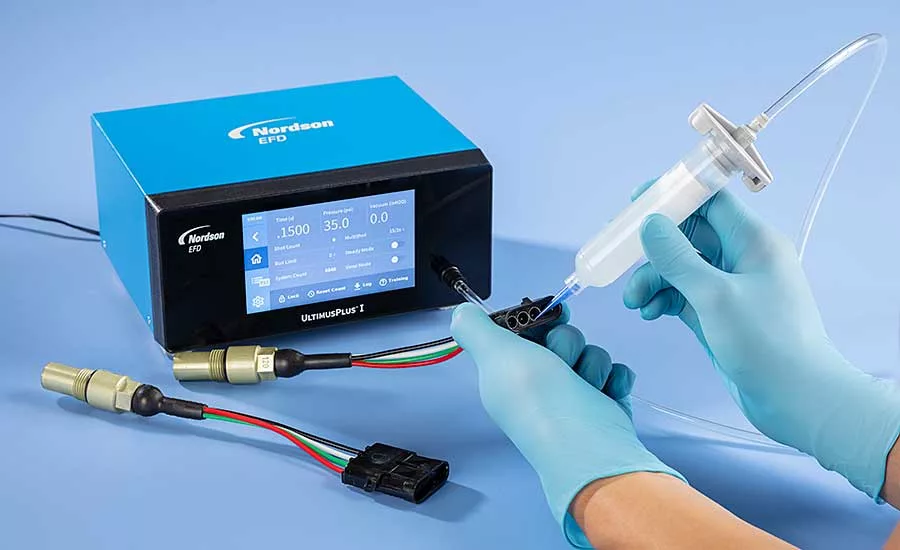
Handheld tools are ideal for dispensing adhesives, fluids and pastes on delicate parts that require a high degree of touch. Photo courtesy Nordson EFD
Handheld Dispensing Do’s and Don’ts
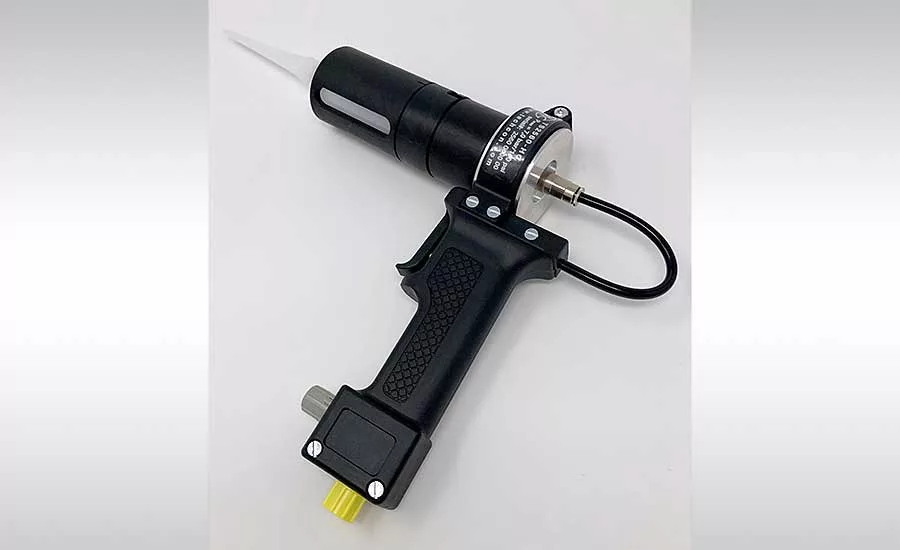
Some operators prefer the look and feel of pistol-grip dispensers. Photo courtesy Techcon Systems
Handheld Dispensing Do’s and Don’ts
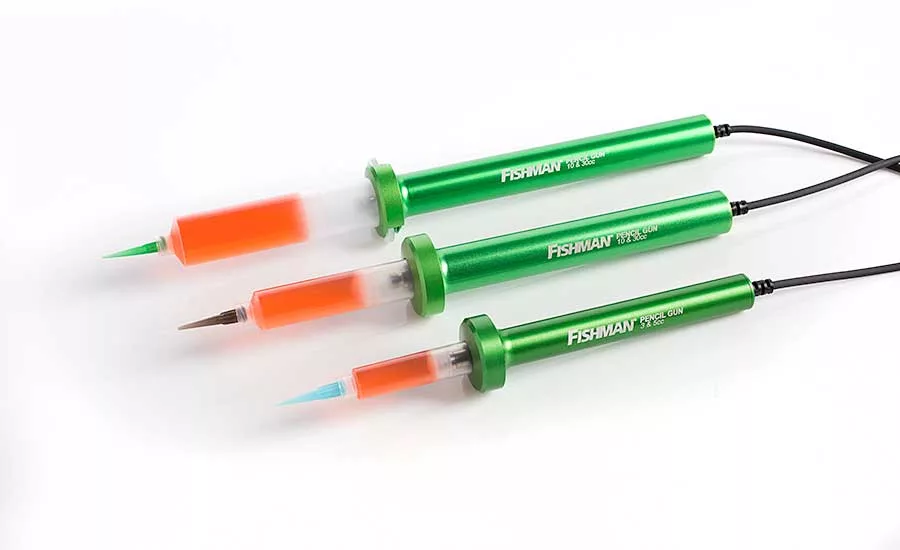
Dispensing pens are suitable for manually dispensing continuous beads or applying dots of low-viscosity fluids in noncritical applications. Photo courtesy Fishman Corp.
Handheld Dispensing Do’s and Don’ts
January 7, 2022

Robotic dispensing equipment is an ideal way to increase productivity, enhance quality and prevent rejects. However, these capabilities come at a cost that can’t always be justified. For low-volume production, and applications that don’t have critical dispensing specifications, handheld, powered dispensers provide the answer to many assemblers’ needs.

Some assembly applications simply demand manual dispensing equipment. That’s especially true for companies that make products such as airplanes, boats, furniture, medical devices, musical instruments, recreational vehicles, signs, speakers, tractors and truck trailers.

Handheld tools are ideal for dispensing adhesives, fluids and pastes on delicate parts that require a high degree of touch. Assemblers working in tight or confined spaces also rely on manual dispensing equipment.

Handheld dispensers are available in both palm and pistol-grip configurations. They range from basic, manual units that rely totally on the operator to control dispensing, to more sophisticated units that allow the user to program dispensing time and pressure settings.

Dispensing pens are suitable for manually dispensing continuous beads or applying dots of low-viscosity fluids, such as cyanoacrylates, in noncritical applications.

Air-powered dispensers are popular for most handheld applications, because operators can accurately control the amount of adhesive applied within a reasonable tolerance. Positive displacement dispensers are primarily used for fluids that can change viscosity over time, such as two-part epoxies.


Mistakes to Avoid

“Operators don’t always utilize all of the functions of a handheld dispenser,” says Tom Muccino, sales manager at Nordson EFD. “I’ve been in many different facilities where I walk along an assembly line and see all of the operators using dispensers set in the ‘manual’ mode vs. the ‘time’ mode.

Looking for quick answers on assembly and manufacturing topics? Try Ask ASM, our new smart AI search tool. Ask ASM →

“With the latter, you can set parameters such as pressure and dispense time,” explains Muccino. “With the former, the operator controls how much material they apply. Assemblers keep their foot on the pedal until they think they’ve dispensed enough fluid or paste. Essentially, it’s a glorified manual process similar to using a hand syringe, a squeeze bottle or a toothpick.

“When I inquire about this type of situation, the answer I usually get from supervisors is ‘our operators like to have control over how much they apply,’” notes Muccino. “However, if they don’t utilize all of the features that a dispenser has to offer, that’s actually counterintuitive. It defeats the reason why most manufacturers purchase a dispenser—to provide the precision and control necessary for an assembly application.

“The manual mode can lead to waste and excessive fluid application,” warns Muccino. “The more excess you apply, the longer it takes a joint to harden and cure, which can affect process time and throughput. It can also lead to quality issues due to rejected parts.”

According to Muccino, waste is one of the biggest challenges typically associated with manual dispensing. A common mistake operators make is applying excess material to each part.

More waste typically occurs with two-part adhesives, such as epoxies. Waste also occurs more frequently when bonding small parts that require less adhesive. Often, excessive waste can be avoided through operator training or by investing in automation.

Sometimes, assemblers simply use the wrong type of components for their application. For instance, choosing the correct tip can make a big difference.

“Using the right components can alleviate a lot of down time, due to issues such as clogged tips,” says Muccino. “Tips are one of the most important parts of a handheld dispensing system.

“To maximize the benefits of the equipment, you need to use the correct type of tip,” Muccino points out. “A tapered tip is better for thicker fluids, such as epoxies or soldering paste. On the other hand, a Teflon-lined tip is better for dispensing cyanoacrylates.”

“The type of valve used can also make a big difference,” adds Can La, product manager at Techcon Systems. “Using the wrong type of valve can result in accuracy and repeatability issues.

“Low-viscosity materials, such as cyanoacrylates or UV adhesives, work better with needle- or diaphragm-type valves,” explains La. “High viscosity materials, such as grease, silicones or solder paste, need a spool valve that can suck back excessive material from the needle.”

Another common mistake with handheld dispensing occurs when filling syringes. Traditional filling techniques often cause problems.

During the syringe filling process, most operators will fill through the large end of the syringe and then insert the piston. That forces them to vent the air trapped between the piston and fluid.

According to Omar Regalado, director of global sales at Fishman Corp., the problem with this approach is that assemblers either introduce a small bubble of air into the syringe or they go too far pushing fluid past the piston seal, which eventually allows fluid to leak past the piston.

An air pocket that passes through the dispense tip can “spit” and result in an incomplete dispense, which will result in a rejected part. Air pockets will cause a spring-like compression in the fluid forcing an extended stroke length that increases cycle time.

An alternative approach to syringe filling is to purchase syringes with the piston preplunged to the bottom of the syringe and filled through the Luer lock or the small end of the syringe. This way, a 90-degree Luer to Luer adapter can be attached to the syringe filling system.

KEYWORDS: factory automation time-pressure dispensing

Share This Story

Looking for a reprint of this article?
From high-res PDFs to custom plaques, order your copy today!

Austinweber headshot
Austin has been senior editor for ASSEMBLY Magazine since September 1999. He has more than 21 years of b-to-b publishing experience and has written about a wide variety of manufacturing and engineering topics. Austin is a graduate of the University of Michigan.

Recommended Content

JOIN TODAY
To unlock your recommendations.

Already have an account? Sign In

  • Made in the U.S.A.

    Consumer Products Manufacturing: Made in the USA

    Supply chain lessons learned during the coronavirus...
    Automated Assembly Systems
    By: Austin Weber
  • Best Practices for Press-Fit Assembly

    Best Practices for Press-Fit Assembly

    In manufacturing, ironclad formulas for success are hard...
    Assembly Presses
    By: Jim Camillo
  • aem0523leader-tesla1.jpg

    Tesla Rethinks the Assembly Line

    Engineers at Tesla Inc. have developed a new process that...
    Automotive Assembly
    By: Austin Weber
Manage My Account
  • eMagazine Subscription
  • Assembly Newsletters
  • Online Registration
  • Subscription Customer Service
  • Manage My Preferences

More Videos

Sponsored Content

Sponsored Content is a special paid section where industry companies provide high quality, objective, non-commercial content around topics of interest to the ASSEMBLY audience. All Sponsored Content is supplied by the advertising company and any opinions expressed in this article are those of the author and not necessarily reflect the views of ASSEMBLY or its parent company, BNP Media. Interested in participating in our Sponsored Content section? Contact your local rep!

close
  • ultrasonic welding
    Sponsored bySonobond Ultrasonics

    Engineering Efficiency in High-Performance Assembly: How Ultrasonic Welding Enhances Throughput, Reliability and Quality

  • UV curing system
    Sponsored byDymax

    Why UV Intensity Alone Doesn’t Define Curing Performance

  • wooden pallets
    Sponsored byLEAN Manufacturing Products

    Eliminating Waste on the Shop Floor: Applying Lean Principles to Improve Manufacturing Efficiency

Popular Stories

ASSEMBLY News Now, episode-30: Volvo Redesigns EV Manufacturing

Volvo Redesigns EV Manufacturing

Boeing CEO Kelly Ortberg announces 1 billion investment

Boeing Plans $1 Billion Wichita Investment, Workforce Training Center

GE Appliances Worker on Line

GE Appliances Expands Factory AI With 800 Gemini Enterprise Agents

Watch the latest episode of ANN now!

Events

July 24, 2025

From Shop Floor to CFO: How Manufacturers Are Closing the Loop Between Operations and Finance

On Demand Learn how manufacturers are bridging the gap between the shop floor and ERP systems to gain real-time visibility, streamline operations, and kick-start digital transformation—without waiting years.

Sponsored by:

PicoStratusGreen
July 30, 2025

Buffer Analysis and Design Fundamentals for Manufacturing Excellence

On Demand In this presentation, Dr. Herman Tang shares practical insights from his industry experience and research on buffer management in manufacturing operations.

View All Submit An Event

Poll

Difficult Assembly Processes

Which assembly process gives you the most difficulty?
View Results Poll Archive

Products

Manufacturing Cost Policy Deployment (MCPD) Profitability Scenarios: Systematic and Systemic Improvement of Manufacturing Costs

Manufacturing Cost Policy Deployment (MCPD) Profitability Scenarios: Systematic and Systemic Improvement of Manufacturing Costs

See More Products
Register for webinar - Modernizing Automotive Assembly: Why Upgrading Legacy MES is a Business Imperative

Related Articles

  • collaborative robots

    Collaborative Robot Do’s and Don’ts

    See More
  • Collaborative Robot Do’s and Don’ts

    Collaborative Robot Do’s and Don’ts

    See More
  • Harness Design Do's and Don'ts

    See More

Related Products

See More Products
  • 0001349.jpeg

    Adhesion and Adhesives Technology 4e

See More Products

Related Directories

  • EXACT Dispensing Systems

    DistributorsMAINEEXACT Dispensing Systems1130 Rt.1Newcastle,  ME(207) 563-2299  www.exactdispensing.commarketing@exactdispensing.com
  • Dispense Works Inc.

    Dispense Works Inc. is a full-service manufacturer specializing in robotic dispensing and automated assembly systems, including advanced robotic capping and filling machines. All of our products are proudly designed and manufactured in-house at our McHenry, Illinois facility. Made in the USA
×

Never miss the latest news and trends driving the manufacturing industry

Stay in the know on the latest assembly trends.

JOIN TODAY!
  • RESOURCES
    • Advertise
    • Contact Us
    • Directories
    • Manufacturing Division
    • Store
    • Want More?
  • SIGN UP TODAY
    • Create Account
    • eMagazine
    • Newsletters
    • Customer Service
    • Manage Preferences
  • SERVICES
    • Marketing Services
    • Reprints
    • Market Research
    • List Rental
    • Survey/Respondent Access
  • STAY CONNECTED
    • LinkedIn
    • Facebook
    • Instagram
    • YouTube
    • X (Twitter)
  • PRIVACY
    • PRIVACY POLICY
    • TERMS & CONDITIONS
    • DO NOT SELL MY PERSONAL INFORMATION
    • PRIVACY REQUEST
    • ACCESSIBILITY

Copyright ©2026. All Rights Reserved BNP Media, Inc. and BNP Media II, LLC.

Design, CMS, Hosting & Web Development :: ePublishing