Picking the Low-Hanging Fruit
Assemblers that are new to automation are well-advised to start with a simple project and grow from there.
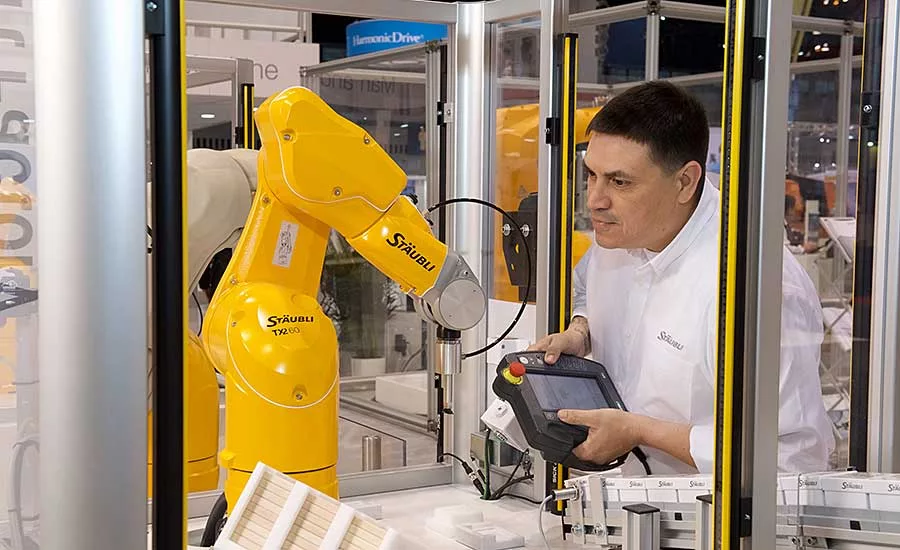
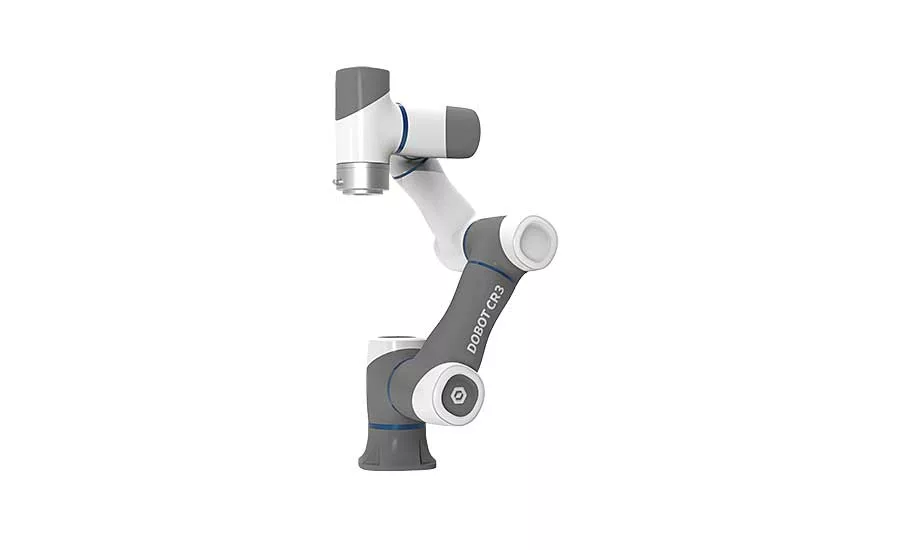
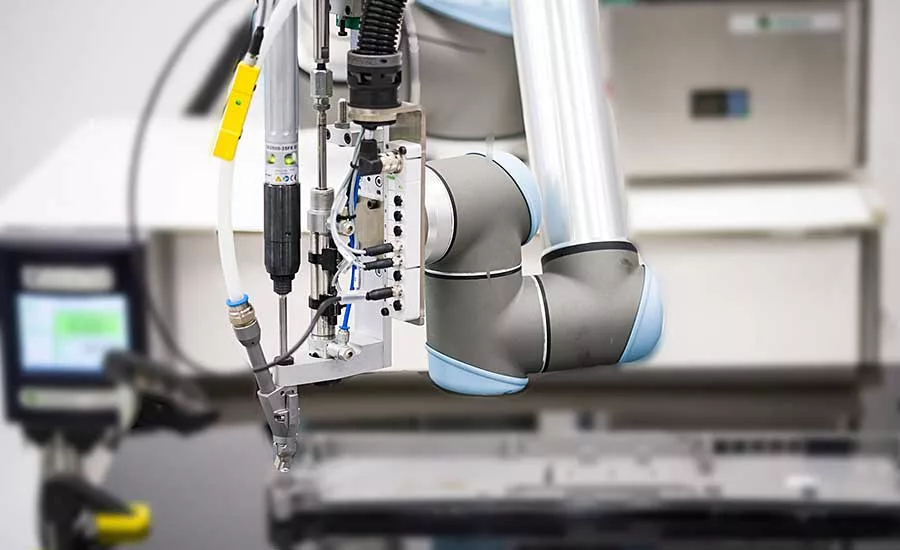
Does this sound familiar? Management envisions “a sea of robots” on the shop floor. They haven’t deployed robots before, and they don’t have a specific goal in mind. They just want “automation.” The next thing you know, there’s a collaborative robot on the loading dock. Your job: Find something to do with it.
You’ve already got two projects to work on—both of which are behind schedule—but never mind that, you’ll see what this beast can do. So, you set it up to perform an operation at one of your more troublesome manual workstations, figuring a rapid return on investment (ROI) in labor costs alone.
Unfortunately, the project is a disaster. The cobot can neither locate nor grip the parts reliably. After several frustrating days trying to get the application to work, you banish the machine to a store room, never to be seen again.
“Collaborative robots have been seriously oversold from the beginning,” says Zac Bogart, president of Productive Robotics Inc.—a supplier of collaborative robots. “When cobots first came on the scene, they were sold as a technology that could solve all your problems simply because they were easy to program. But, programming a robot has never been the problem. It has always been the application. The complexity in robotic applications lies in how to fixture and grasp the parts.”
Bogart says engineers often try to automate a manual process that has not been fully worked out. Then, when they apply a robot to the task, they discover that the process relied on human skill, dexterity and knowledge. “Each item being assembled is done a little differently,” he explains. “For example, the parts don’t always fit right, but a good assembler knows he can give the part a slight twist or a little extra force and it will go together. You will never succeed trying to automate a process like that.”
To avoid frustration, companies that are new to automation are well-advised to start with a simple project and grow from there. Successful automation projects, even on a small scale, breed success with larger projects later on and will lead to future buy-in at all levels of an organization.
“When you start with a simple project, there’s a lot less you need to get right,” Bogart points out. “If one or two issues come up, it’s not difficult to address each one and pretty soon, you’re off to the races. But, if there are 20 problems to fix, most engineers will just give up.
Looking for quick answers on assembly and manufacturing topics? Try Ask ASM, our new smart AI search tool. Ask ASM
“It’s important to build your knowledge. You can’t go into calculus before you finish algebra.”
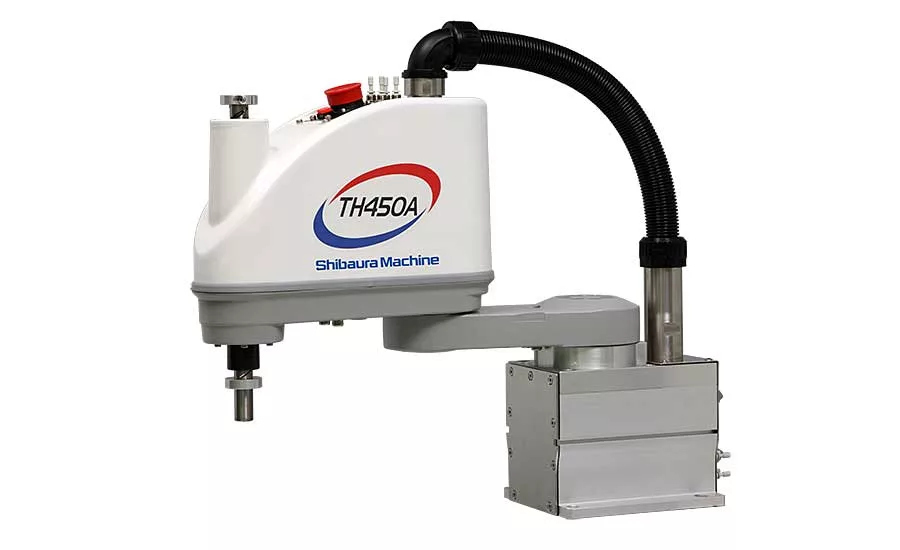
Doug Dalgliesh, business development manager for TM Robotics, has seen that firsthand. Years ago, his company provided a single SCARA robot to a manufacturer of automotive electronics. The company ran fixed automation systems in the past, but it had not employed robots before and it needed to be more flexible. The company did not have a specific application for the robot. It just wanted to “play around with it” for a few months to see what it could do, he recalls. The company did not want to hire an integrator; rather, it wanted to develop in-house expertise in robotics.
Eventually, the company deployed the robot in a simple pick-and-place operation. The machine would retrieve parts from a vibratory feeder bowl and load them onto a pallet. The application was an instant success. Today, that manufacturer is one of TM Robotics’ biggest customers, operating 300 to 400 of the company’s SCARA and six-axis robots at several factories worldwide.
“The key to that manufacturer’s success was starting out with a very low-risk application,” says Dalgliesh. “The worse thing a manufacturer can do is try to automate an entire assembly line from the start. It’s not going to work.”
Picking Projects
If simplicity is the key to success with first-time automation, then that begs the question, “what constitutes a simple project?”
Dalgliesh says ideal first projects involve low risk and low cost. That means simple motion, simple tooling and consistent, repeatable positioning. A project that needs machine vision to work is not a good application for automation rookies.
He remembers working with a small manufacturer to get a SCARA robot to install caps on small bottles of hardware. A dedicated bottle-capping machine was out of the question. The company is a high-mix, low-volume operation. On the other hand, employing several people simply to install bottle caps was also not very economical. A SCARA solved the problem.
The robot picks up a cap from a vibratory bowl feeder using an off-the-shelf vacuum cup, positions it over the bottle, and tightens the cap with a slight rotation of the Z axis. Simple motions, simple tooling, no integrator required.
“All totaled, that application cost the company maybe $20,000,” says Dalgliesh.
Gilles Le Quilleuc, head of business for general industry and food at Stäubli Corp., agrees. Certainly, a skilled integrator can figure out a way to automate a complex assembly task using machine vision and numerous sensors. But, the project will cost hundreds of thousands of dollars, and the ROI will be measured in years. With a simpler project, engineers can expect payback in months or even weeks.
The fact that robots have become relatively inexpensive and easy to program has put a variety of applications within the “easy” realm. “Comparing the old generation of robots with the robots of today is like comparing a rotary dial telephone to a smartphone,” says Le Quilleuc. “Twenty-five years ago, you had to be an engineer to program a robot. Today, anyone with simple training can do it. And, with simulation software, you can program the next application while the robot is running the current one. There’s no downtime. Our software is able to simulate things like inertia and cycle time, so when it’s time to run the new application, the robot performs perfectly.”
Applications to avoid are those that require complex tooling, complex motions or force feedback. “To gauge the ability of a robot to perform a task, close your eyes, put one arm behind your back, and try to do it. If you can, then a robot can probably do it fairly easily,” says Dalgliesh, who is also president of DB Cobots LLC.
Justifying Automation
There are more ways to justify investment in robotics and automation than simply reducing labor costs. Indeed, given the current labor shortage in manufacturing, automation is not about replacing workers, but rather more ably deploying a factory’s already limited workforce.
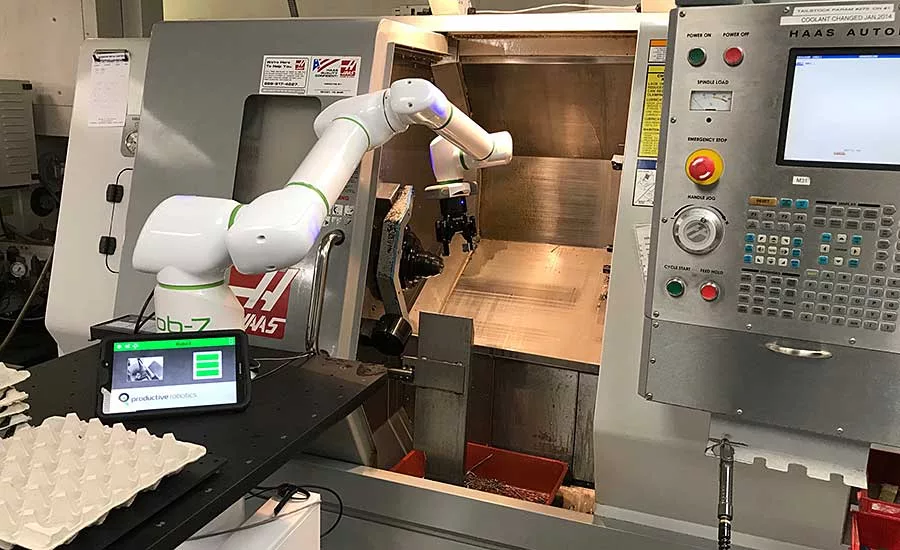
That makes a task such as machine tending a perfect first-time automation project. Cycle times are relatively slow, and the parts are picked and placed in consistent locations.
“We sell a lot of robots to machine shops that use them to load and unload CNC machines,” says Bogart. “That application is a slam dunk. They can get it up and running in a day. That application will pay for itself in less than a week.”
Quality improvement is another way to justify automation, which makes screwdriving a good target for first-time automation.
“It can be very easy for an operator’s mind to wander during the assembly process, especially after he’s driven more than 500 screws in the same manner for a few hours,” says Chris Emanuele, technical automation sales engineer with ASG, Division of Jergens Inc. “That leads to a missed screw or a screw that’s not fully torqued. So, quality improvement is a great way to justify investment in automation.”
Ergonomic improvement can also be used to justify investment in automated screwdriving. “Repetitive motion can lead to stress injuries, like carpel tunnel syndrome,” says Emanuele. “Of course, there are helpful ergonomic aids, but in the long term, the ‘health factor’ could also be used to justify investment in automated screwdriving.”
That said, Emanuele warns that high-mix, low-volume operations might not be the best candidates for a screwdriving robot, particularly if there are wide variations in fastening locations, the size and shape of the parts, or the number of fasteners to be installed. Modular fixtures, quick-change drivers and adjustable screw-feeding equipment can help, but people are ultimately more flexible in such situations.
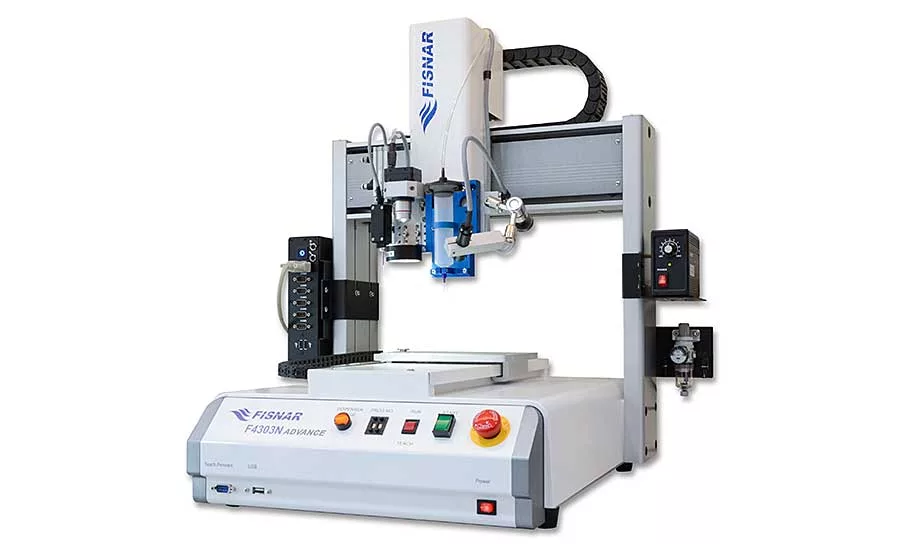
Adhesive dispensing is also a good application for first-time automation. For applications requiring hundreds or thousands of parts, rather than millions, a benchtop dispensing robot is ideal.
“The price of benchtop dispensing robots has come down so much in the past decade, they really are an attractive option for small and midsized manufacturers or contract manufacturers,” says Robert Campbell, global product manager at dispensing technology supplier Fisnar. “Basic benchtop dispensing robots start as low as $5,000. With that low price point, the ROI is very fast.”
A dispensing robot can decrease labor costs, improve quality and minimize wasted material. “An operator can’t dispense a dot of material in the exact same place every time, whereas a robot can,” says Campbell. “The same is true when dispensing beads or coatings. It’s very hard to move a handheld syringe along a path at the same linear rate of speed, whereas a robot can move at a constant linear rate so you get a consistent bead of material or an even coating.”
However, Campbell cautions engineers that dispensing robots are best for applications that don’t require a lot of dexterity. “Remember, the robot is trying to mimic the motion of a human arm and hand with just three axes of motion,” he says.
Looking for a reprint of this article?
From high-res PDFs to custom plaques, order your copy today!