Smart Technologies Aid Continuous Improvement Efforts
New technologies, such as smart vision systems, provide a single source of truth for continuous improvement projects.
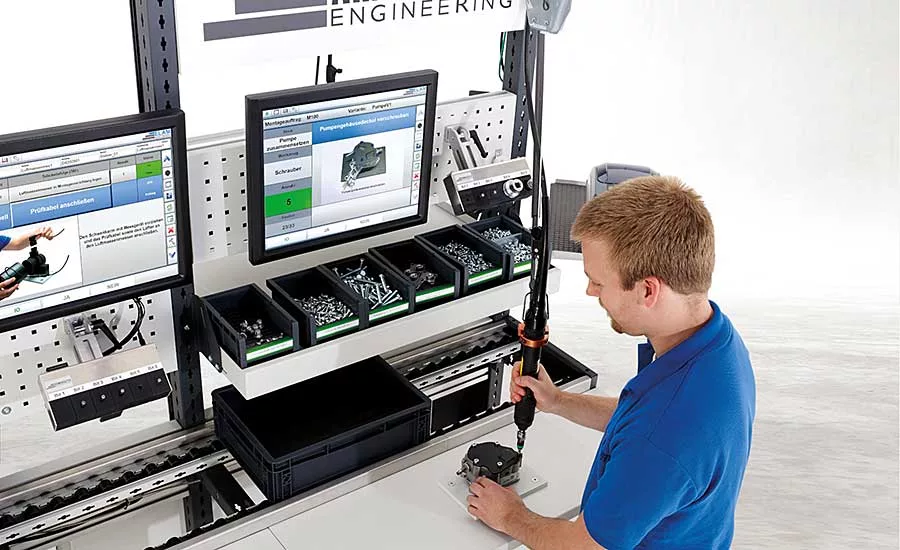
Engineers who have used continuous improvement methodologies such as Lean Six Sigma typically run into a major obstacle: the accuracy and robustness of the data used to drive improvements. Photo courtesy Armbruster Engineering
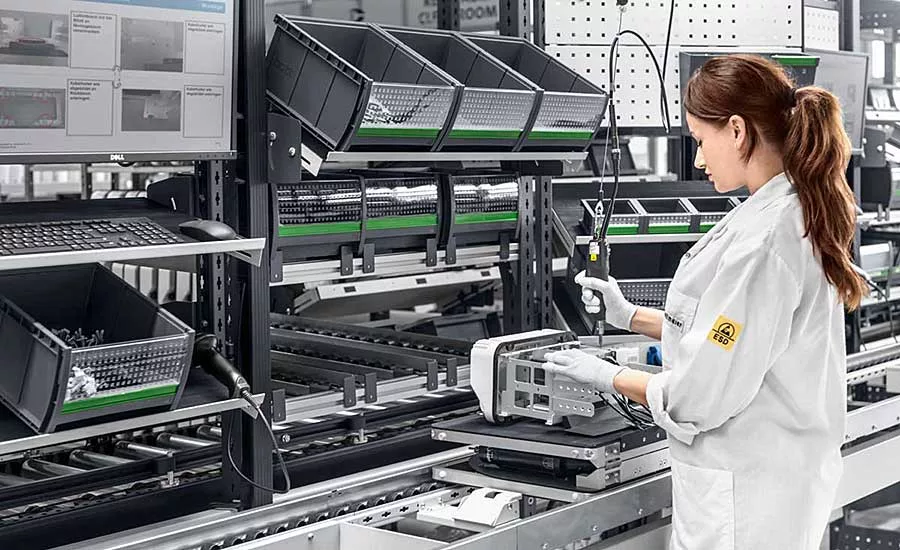
For complex, mission-critical problems, Six Sigma is a proven framework for data-driven problem solving in which the solution is not known, but the customer is well known. Photo courtesy Bott GmbH & Co.
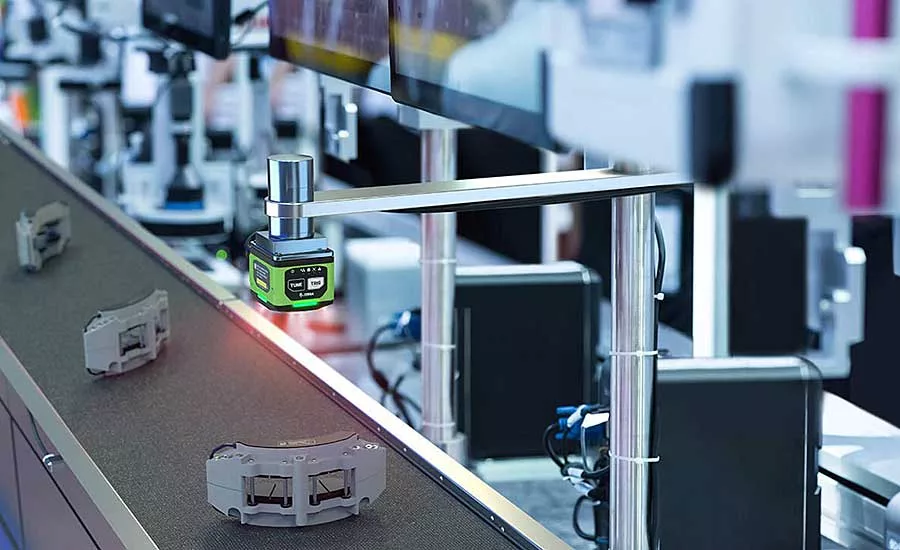
Vision systems have been a boon for quality control, and it can do even more with data analytics, edge computing and cloud computing. Photo courtesy Zebra Technologies
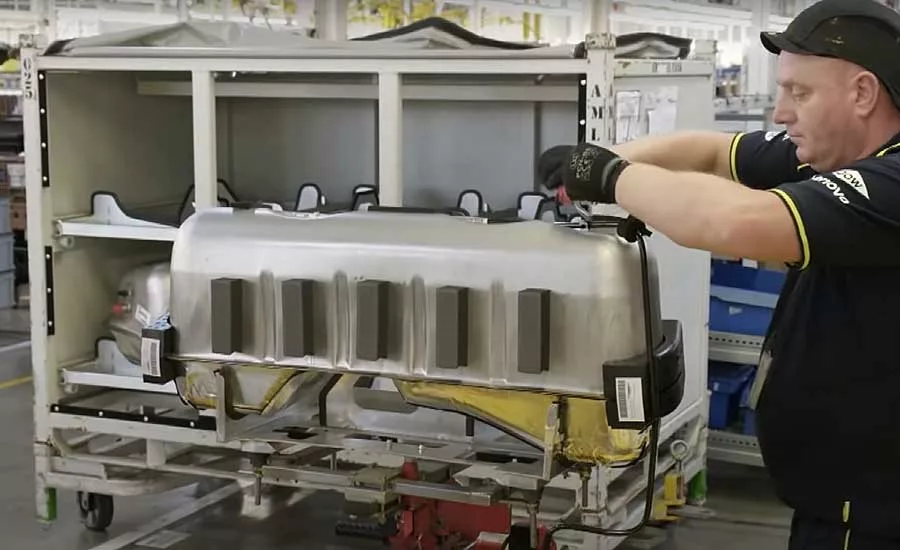
Kaizen is often associated with discrete improvement events lasting from two to five days. Photo courtesy Aston Martin
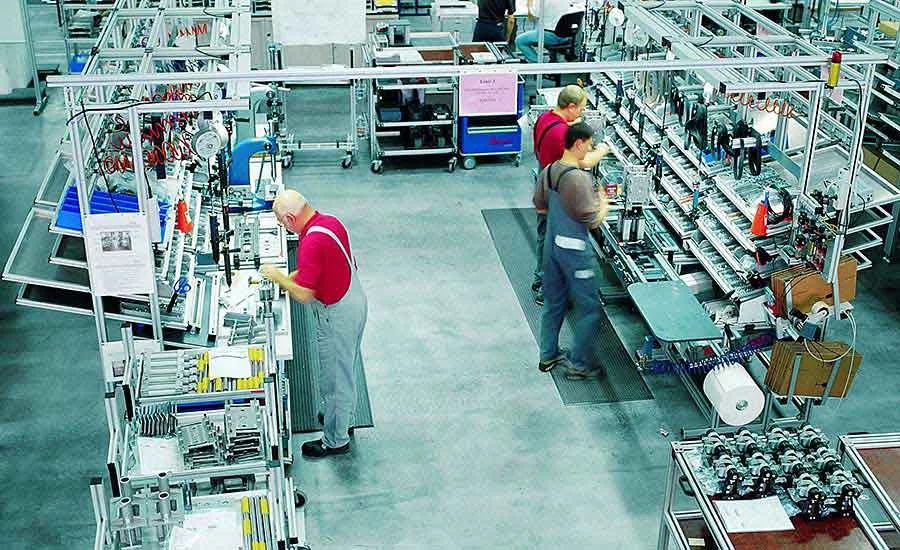
The kaizen way is to take small, commonsense steps forward in a never-ending process of saving money, improving quality, reducing accidents or increasing customer satisfaction. Photo courtesy Bosch Rexroth Corp.
Process improvement projects have traditionally struggled with obtaining accurate data quickly and easily. In many cases, various data sources provide competing sources of the truth. Smart technologies offer the means to provide a single source of the truth, without the time-consuming and labor-intensive efforts of the past.
There has been a tendency to brand all continuous improvement as kaizen. Kaizen is at the core of the Toyota Production System, which strives to eliminate waste of all types. All employees, regardless of their level in the organization, work collectively to achieve incremental improvements.
But, kaizen is only one tool for continuous improvement, and sometimes, manufacturers need to make changes that are larger than mere incremental improvement. The COVID-19 pandemic and the Russian invasion of Ukraine are the most recent examples of how major geo-political events can force manufacturers to dramatically change existing processes or procedures in a short time frame. That sort of change is typically beyond the scope of kaizen and other incremental improvement programs.
Continuous Improvement With Kaizen
Kaizen is the Japanese term for “change for the better,” or improvement. It was developed in Japan after World War II, based on the work of Walter Shewhart and W. Edwards Deming. Toyota helped to popularize the concept worldwide by making it one of the lynchpins the Toyota Production System.
As envisioned by Toyota, kaizen can be combined with other process improvement frameworks to drive continuous improvement. The kaizen way is to take small, commonsense steps forward in a never-ending process of saving money, improving quality, reducing accidents or increasing customer satisfaction.
Kaizen is not designed to drive major process improvement projects or radical changes. This is a major difference between Japanese and Western thinking. In the West, major and abrupt change is often the preferred method to drive big operational improvements. The problem comes in making them stick and avoiding backsliding.
Major change efforts also suffer from rapidly changing priorities. In my career, I have run or supported more than 30 process improvement projects. It was not unusual for me to be pulled out of one crisis-inspired project to take on the next crisis or grand idea to transform the organization. This came to be known internally as the “chasing the shiny ball syndrome.” Unfortunately, grand ideas and crisis-inspired projects do little to create a continuous improvement culture.
Looking for quick answers on assembly and manufacturing topics? Try Ask ASM, our new smart AI search tool. Ask ASM
Kaizen, with its philosophy of gradual improvement, does a much better job of that. Kaizen is often associated with discrete improvement events lasting from two to five days, similar to the “sprints” used in agile manufacturing projects. As a comparison, even low-level Lean Six Sigma projects are rarely completed in less than a few months, and major projects can take several months to complete.
Even so, there is a good argument for combining Six Sigma with kaizen. Six Sigma will teach kaizen leaders and participants the tools to define problems and solutions, the best metrics to measure improvements, and the basics of root cause analysis. Indeed, participating in a kaizen event is a great way for new Six Sigma practitioners to test the process improvement waters before taking on major Lean Six Sigma projects.
Solving Bigger Problems
While kaizen strives for gradual but continuous improvement, there are times when more immediate, intensive, and impactful change is needed. That is when some organizations turn to the kaizen blitz. The idea is to throw overwhelming and dedicated resources at a major problem. This necessitates cross-functional teams with members from all stakeholder disciplines: manufacturing, engineering, supply chain, finance, quality and product management. The key here is that the resources assigned are truly dedicated. They are removed from all other duties for the duration of the blitz, which is typically one week.
A kaizen blitz follows Six Sigma’s DMAIC methodology (define, measure, analyze, improve and control), but in a more simplified form of preparation, event and follow-up. The simpler framework is intended to fit the shorter timeframe.
For complex, mission-critical problems, Six Sigma is a proven framework for data-driven problem solving in which the solution is not known, but the customer is well known. Six Sigma became popular in the 1990s first at Motorola and then at GE with Jack Welch. (GE’s legendary former CEO was industry’s most vocal advocate for Six Sigma.)
While DMAIC is the most well-known framework for improving an existing process, it has limitations in designing a new process or fixing a process that is badly broken. In these situations, Design for Six Sigma or DMADV is a good option. DMADV stands for design, measure, analyze, design and verify. DMADV uses many of the same tools of DMAIC, but adds such design tools as Pugh matrix and quality function deployment.
Limitations of Traditional Approaches
All three methodologies for process improvement—kaizen, kaizen blitz, and Lean Six Sigma—have proven their effectiveness over decades, not just in manufacturing but in a wide range of industries. However, anyone who has used these methodologies typically runs into a major obstacle: the accuracy and robustness of the data used to drive improvements. Often, there are multiple sources of the truth, and stakeholders are typically unable to agree on one truth. Unfortunately, the result is that senior management often picks what source of the truth will be used. And that’s too bad. My experience in more than 35 years in manufacturing, supply chain and process improvement is that the folks closest to the process have the most accurate vision of the truth. Ironically, these are the floor supervisors and experienced shop-floor personnel whose views are often the softest voice in the room.
So-called smart manufacturing technologies, such as data analytics, have the power to solve this problem. Most of my experience in manufacturing has been in machine vision applications. Vision systems have been a boon for quality control, but the technology has had a limited impact without data analytics, edge computing and cloud computing.
I witnessed the power of machine vision to provide a single source of truth on one of my earliest deployments more than five years ago. It was at a luxury mattress manufacturer whose products were priced higher than its competitors, resulting in a loss of market share. The cost of goods sold was based on labor standards derived from data reported by the company’s manufacturing execution system (MES).
We wondered how accurate the MES was. So, we used intelligent machine vision to observe actual labor times on a 24-hour basis. The vision systems consistently showed that actual labor rates were lower than the standards output by the MES. Further investigation revealed lax reporting practices by employees.
As a result, we were able to lower the cost of goods sold, which enabled the manufacturer to reduce prices to a more competitive level, increasing sales. Regardless of how disciplined workers might be on labor reporting, machine vision can provide one irrefutable source of truth.
Sustainability is another benefit of smart technologies. Traditional process improvement programs often suffer from backsliding: the tendency of workers to revert back to their old ways of doing things once a project or initiative ends. This has resulted in many stakeholders judging their process improvement projects as failures over the years. The tendency to revert back is known as the Hawthorne effect, named after landmark studies in the 1950s that showed folks did better work when they were being observed, but reverted back to their traditional ways once observers departed. With smart technologies, such as computer vision, the observers never depart. They become imbedded in the process. If backsliding occurs, the deviations from the standard are flagged in real time, creating alerts.
We have come to expect a continuation of shocks to our fragile global supply chains, whether it is a national disaster, armed conflict, pandemic or financial crisis. These situations will require a rapid response and accurate decision making. Smart technologies can provide the single source of truth essential for making this happen while fostering kaizen’s more incremental improvements.
Editor’s note: A Six Sigma Master Black Belt, Anthony Tarantino holds certifications in project management and production and inventory management. He is the author of the new book Smart Manufacturing, The Lean Six Sigma Way, published in May by Wiley & Son’s. He will also be presenting webinar on July 20, titled “How Smart Technologies are Supercharging Continuous Improvement Programs.” Register for free here.
Looking for a reprint of this article?
From high-res PDFs to custom plaques, order your copy today!