Measuring the Value of Digital Transformation
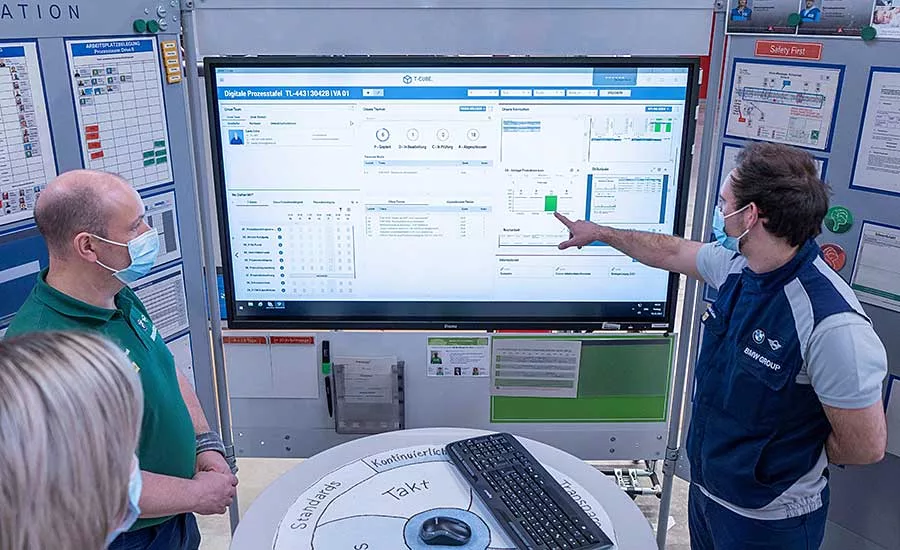
Successful digital transformations rely not only on getting the technology right, but also on empowering the right people to guide, interpret and leverage it. Photo courtesy BMW AG

A smart factory enables continuous monitoring of the production process through visualization of operational data. Illustration courtesy Siemens

Deere’s digital transformation starts at product design and continues all the way through customer service.
Photo courtesy Deere & Co.
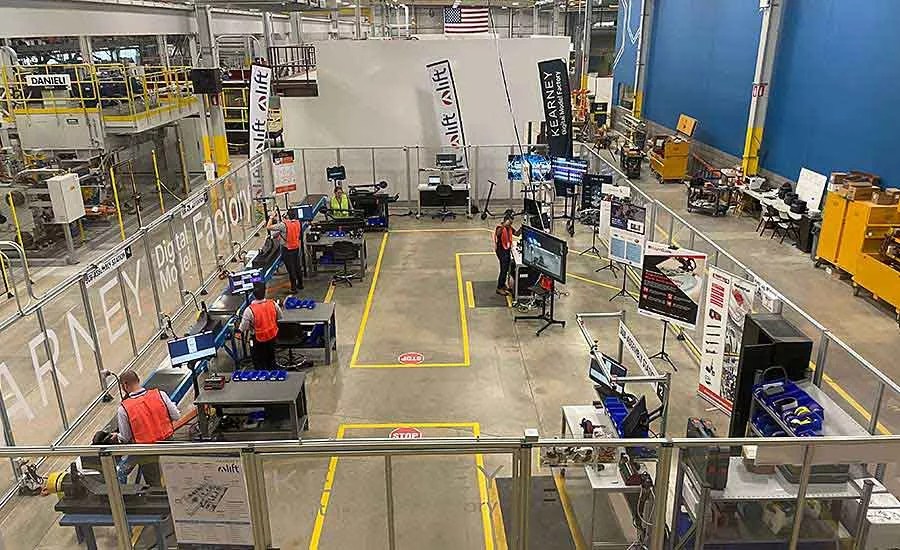
The Digital Model Factory features an assembly line equipped with state-of-the-art technology where companies can explore how to apply Industry 4.0 tools in their operations.
Illustration courtesy Kearney
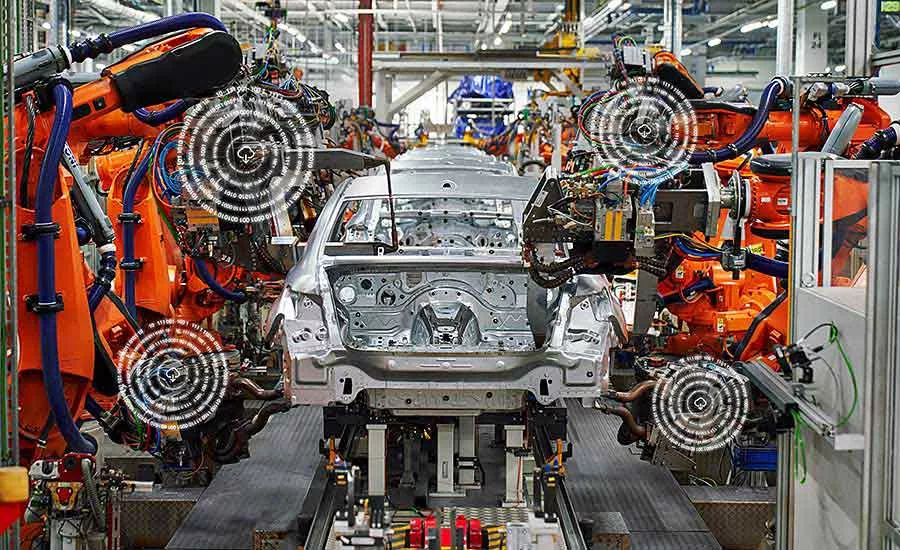
Despite knowing the importance of digital transformation, manufacturers often struggle to justify the investment needed to truly act on technology opportunities.
Photo courtesy BMW AG
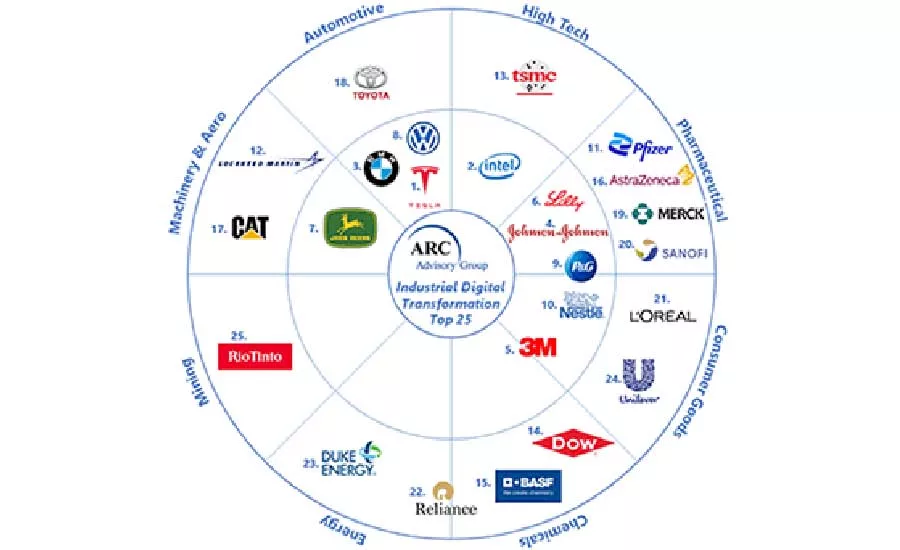
Automakers such as Tesla, BMW and Volkswagen are reaping the benefits of digital transformation initiatives. Illustration courtesy ARC Advisory Group
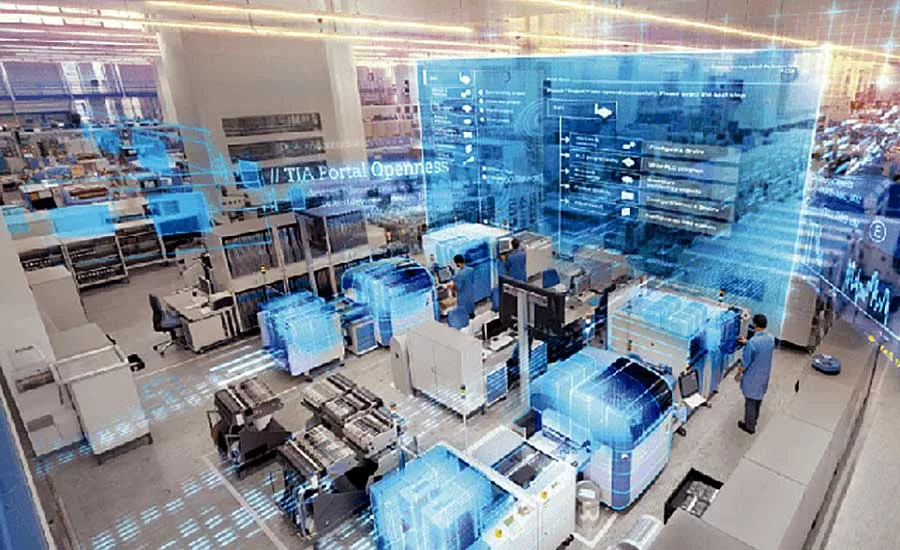
Digital transformation is key to helping manufacturers address current challenges and create value in the future. Illustration courtesy Siemens
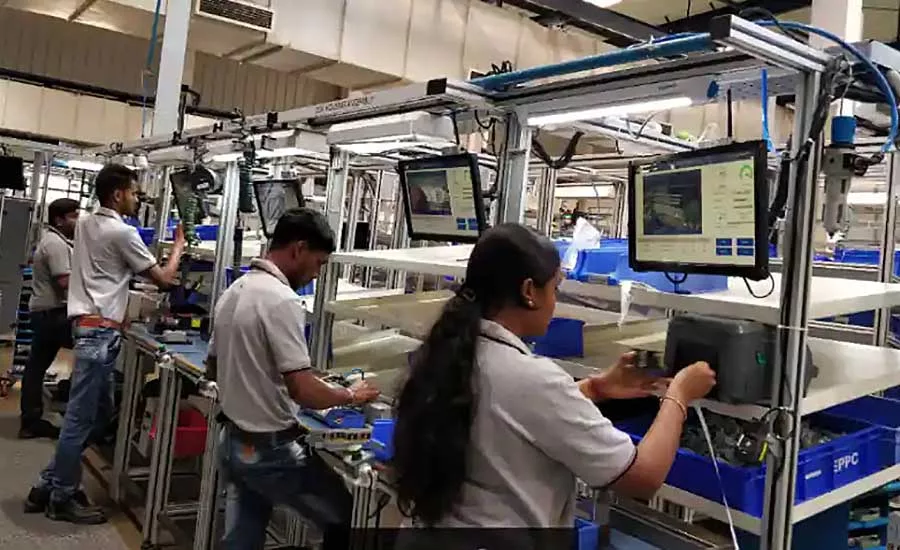
A smart production line can track and display operational performance parameters across the entire manufacturing chain in real time. Photo courtesy ABB
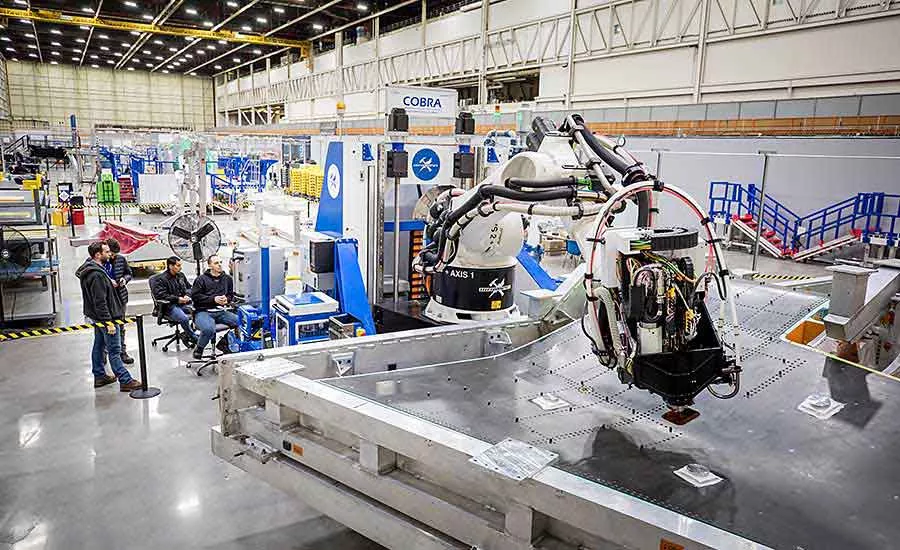
When it comes to digital transformation, Lockheed Martin is ahead of other aerospace manufacturers. Photo courtesy Lockheed Martin
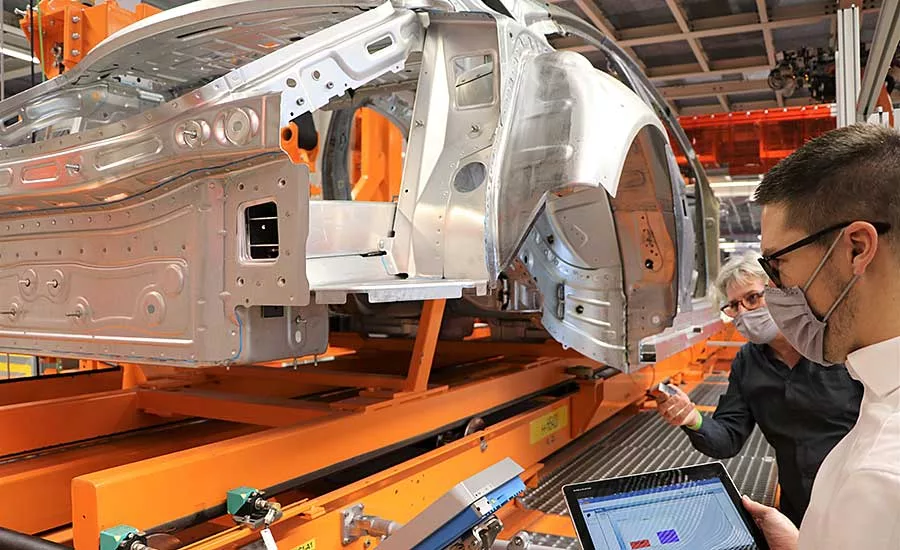
Digital transformation can be a competitive advantage for manufacturers. Photo courtesy Audi AG
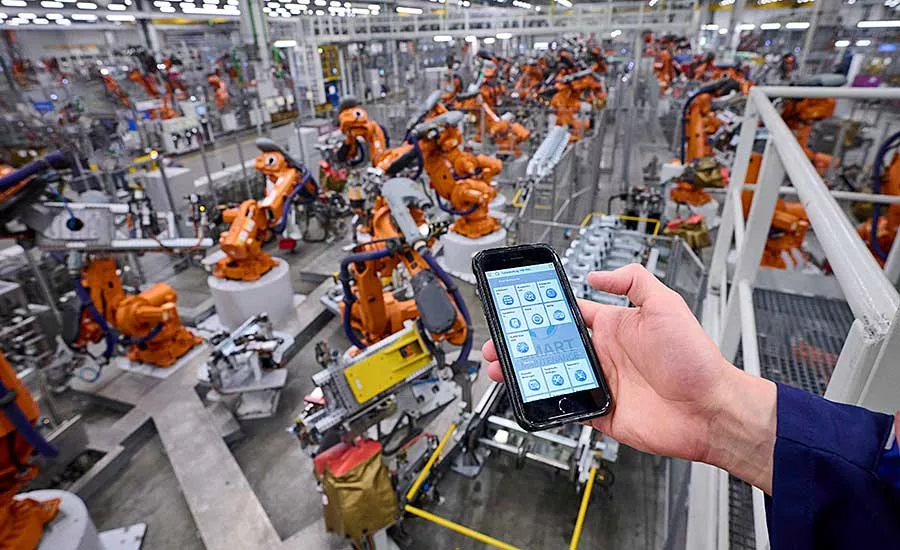
BMW has digitally transformed its factories to be productive and deliver value to customers. Photo courtesy BMW AG
Most manufacturers agree that digital transformation is necessary to remain competitive today and thrive tomorrow. Many large companies have already begun initiatives. But, when asked to quantify the impact of those initiatives on the bottom line, they often come up short.
Before attempting to justify investments in artificial intelligence, augmented reality, data analytics, digital twins and other state-of-the-art technology, engineers need to clearly define the term “digital transformation.”
Unfortunately, there’s a lot of confusion and misunderstanding, with terms such as Industry 4.0 and smart manufacturing often used interchangeably.
“We define digital transformation as the integration of digital technology into all areas of business, fundamentally changing the way companies operate and deliver value to customers,” says Greg Gorbach, vice president of digital transformation and operations management at ARC Advisory Group. “The organization is typically charged to innovate and improve across multiple dimensions, such as disruptive technologies, culture and leadership, operational agility, workforce engagement and customer experience.
“Digitalization in production, whether known as Industry 4.0, IIoT or smart manufacturing, plays a crucial role in opening new opportunities for flexible, fast and high-quality production systems,” explains Gorbach. “Such systems can fulfill orders to individual customer requirements.”
According to Gorbach, top companies know that “digital” can’t be bolted on. They must intimately weave digital transformation initiatives together with their internal and external processes. In addition, traditional organizational silos must be broken down, multifunctional teams must innovate around customers, processes and employees, and workforce hesitancy must be addressed head-on and overcome.
“In the simplest way, digital transformation in a manufacturing context is associated with connecting assets within factories and extracting meaningful data to make more informed business decisions and to monitor performance,” adds Azaz Faruki, a principal at Kearney who directs daily operations at its Digital Model Factory.
Looking for quick answers on assembly and manufacturing topics? Try Ask ASM, our new smart AI search tool. Ask ASM
The hands-on facility, located at the LIFT Manufacturing Institute in Detroit, features an assembly line equipped with state-of-the-art technology where companies can explore how to apply Industry 4.0 tools in their operations.
“A typical digital transformation in manufacturing would enable a company to have complete visibility into how assets are performing, where the potential bottlenecks are, product quality and utilization levels,” Faruki points out.
“Digital transformation is about overhauling the way we work to drive efficiency and unlock new opportunities enabled by technology,” says Matt Comte, operations transformation practice lead and partner at PwC. “It powers greater insights and rapid decision making, it creates new ways to solve age-old problems, and creates new opportunities to generate value and secure outcomes that were previously unobtainable or not cost efficient.
“This in turn requires new operating models to support the technology and new ways of working, including dedicated efforts to train and upskill staff to ensure adoption,” explains Comte. “Transformation is not a new concept. It just brings a new tool set to the ever-changing dynamic of competitive business.
“The rate of change and business disruption companies are facing is staggering,” warns Comte. “Manufacturers are simultaneously facing labor shortages, unprecedented supply chain challenges and pressure to keep up with competitors. When faced with several roadblocks, digital transformation is key to helping businesses not only address current challenges, but also look toward how they create value in the future.”
“In one form or another, software is key to digital transformation,” adds Gorbach. “For industrial companies, there is a correlation between investment in software and transformational technologies and corporate valuation. Software powers digital transformation, necessity drives innovation and the whole cycle accelerates year after year.
“Many leading companies have engaged in this process for some time, but the best organizations understand that a successful, ongoing transformation relies not only on getting the technology right, but also on empowering the right people to guide, interpret and leverage that technology,” notes Gorbach. “The workplace, work methods and workforce may all need to change. But, when done well, this can become a powerful source of competitive advantage.”
Slow, But Steady Progress
Compared to process industries, such as pharmaceuticals, initial progress and implementation of digital transformation has slowly evolved in the discrete manufacturing sector. With the exception of a few manufacturers, such as Tesla, BMW, Volkswagen and Deere, most companies have been cautious.
“Digital transformation has been slow to take off in manufacturing,” says Jon Van Wyck, managing director and partner at the Boston Consulting Group Inc. (BCG). “We’ve been talking about Industry 4.0 for a number of years, but many companies are still struggling with it. The good news is, 60 percent of companies are seeing value in it, according to a recent study that we conducted.
“However, only one-third of companies are satisfied with their progress,” Van Wyck points out. “The biggest challenge cited is underinvestment in change management. You can invest in the best digital tool in the world and hand it over to operators, but it’s useless if they don’t know how to use it and it’s not fully supported on the plant floor.”
“Most manufacturers are suspicious and are not typically fast followers with new technology,” claims PwC’s Comte. “There was a lot of hype around Industry4.0, with small-scale success stories achieved by some front runners, but the technology and the mindset of manufacturers were not quite there.”
According to Comte, that’s starting to change. In particular, four factors are accelerating adoption:
One of the key barriers to entry is the cost to deploy the core infrastructure required to enable digital systems in manufacturing plants. Initial small-scale use cases could not prove the necessary return on investment against the broader infrastructure investment. As core infrastructure investments have increased, each new use case or refinement of current solutions becomes cheaper to deploy.
Because consolidation across technology systems and vendors has begun, organizations can now acquire full-stack solutions and end-to-end services. Previously, manufacturers would have to research and bring together the individual components themselves.
There is greater acceptance that the IT organization needs to broaden its skillset and converge with operations technologists (OT) on the plant floor, providing a top-to-bottom architecture that drives end-to-end processes.
The Covid pandemic escalated digital transformation to the C-suite. Top management in many organizations now realizes that digitized manufacturing operations can become an accelerator for their business and not just a cost center.
Mistakes to Avoid
“There are a lot of gaps in the knowledge that most manufacturers have around digital transformation,” says Kearney’s Faruki. “Most companies are starting with point solutions to enable proof of concept and figure out how that particular [technology] can help them get better at certain things.
“While this approach is valid, where it gets really tricky is the scaling up of these pilots,” explains Faruki. “[Some] companies are getting stuck in the testing and piloting phase, and never really harnessing the true power of digital manufacturing. Often, there is a clear disconnect between the IT and operations people who are responsible for implementing these systems.”
One issue many manufacturers encounter involves power struggles between IT and OT.
“Unlike lean manufacturing initiatives in the past, which could be holistically owned by the manufacturing team, digital transformation requires support from organizations outside of manufacturing, such as IT,” says BCG’s Van Wyck. “The IT vs. OT divide is a unique challenge that didn’t exist back when companies were first deploying continuous improvement and six sigma initiatives several decades ago.
“In many organizations, there’s a gap between IT and OT that creates a big barrier,” Van Wyck points out. “That’s because they have different cultures and priorities. To have a successful digital transformation, they need to work together and become more integrated.
“There should be a C-level individual who can bridge the divide and encourage collaboration across functions,” suggests Van Wyck. “The head of IT needs to be sitting at the same table with the head of operations.”
“In the old days, IT almost always had to be involved, due to the complexity of hardware, software and networking issues,” adds Brad Newman, partner in the advanced manufacturing and mobility practice at EY. “Today, a lot of digital tools are easy to use and can be implemented independent of IT.
“But, digital transformation demands a partnership between IT and OT,” claims Newman. “It typically requires a heavy dose of IT at the front end to establish standards, set up security protocols and understand interoperability issues.”
Some engineers also get caught up in trendy technology, such as artificial intelligence and digital twins. It’s better to look at the overall set of business challenges your factory is facing and how technologies can be applied to provide a step-change in performance. That top-down approach is better than a bottoms-up approach.
“Companies that fall short of digital transformations often start from the wrong place,” says Christoph Kuntze, partner at McKinsey & Co. “They say ‘look at all the cool things that are out there that we can apply in our factories.’ It should be the other way around.
“You should avoid focusing on buzz words and chasing after shiny new toys,” warns Kuntze. “Instead, you should start with the business outcome or problem that you’re trying to address and then look backwards to see how technology can help you get there. It’s extremely important to always understand the targeted outcome and the end goal of a digital transformation initiative.”
Measuring the Value of Digital Transformation
Despite knowing the importance of digital transformation, manufacturers often struggle to justify the investment needed to truly act on technology opportunities. According to the 2022 PwC Digital Trends in Supply Chain Survey, nearly half of respondents listed budget constraints as one of their top three challenges related to digitization.
“To secure the budget needed to truly transform digital operations, it is important to clearly show the return on investment of these efforts,” says PwC’s Comte. “One common mistake companies make is looking at digital transformation as a one-off initiative and judging ROI based on a handful of initial micro use cases.
“Digital transformation is a continuous effort and mindset that should be integrated into the fabric of the business and embraced as part of the overall corporate strategy,” explains Comte. “It is imperative for companies to utilize digital transformation as a way to not only help prepare for the next disruption, but to also accelerate growth and edge out competitors.”
Just like any investment, Comte believes a clear business plan should be created, defining the problem and proposed solution, with detailed costs and realistic efficiency gains or benefits.
“Once solutions are implemented, benefits must be tracked diligently,” Comte points out. “Manufacturers face a mammoth challenge of isolating and proving the impact (positive or negative) of [digital transformation]. Tracking benefits at too high a level can be diluted or exaggerated due to other factors and initiatives.
“Value can come in many forms when exploring digital manufacturing,” notes Comte. “It could relate to cutting cost or increasing revenue, but it may also be of intangible value, such as providing momentum or agility for the broader supply chain. Again, it’s important to be focused on business benefits and outcomes, and align digital investments and returns based on these business expectations.
“Many companies are still in a state of decision paralysis, so committing to a small proof of concept can get the ball rolling and focus on doing more with what you have today,” says Comte. “It is understandable that everyone needs to see some success before they double down.
“However, for a manufacturer to be able to scale its digital transformation, it must be tied to a larger business outcome-focused smart factory strategy,” concludes Comte. “Understand where performance is poor in manufacturing and where manufacturing may be impeding the company’s bottom line.”
Looking for a reprint of this article?
From high-res PDFs to custom plaques, order your copy today!