Sensors for Industry 4.0
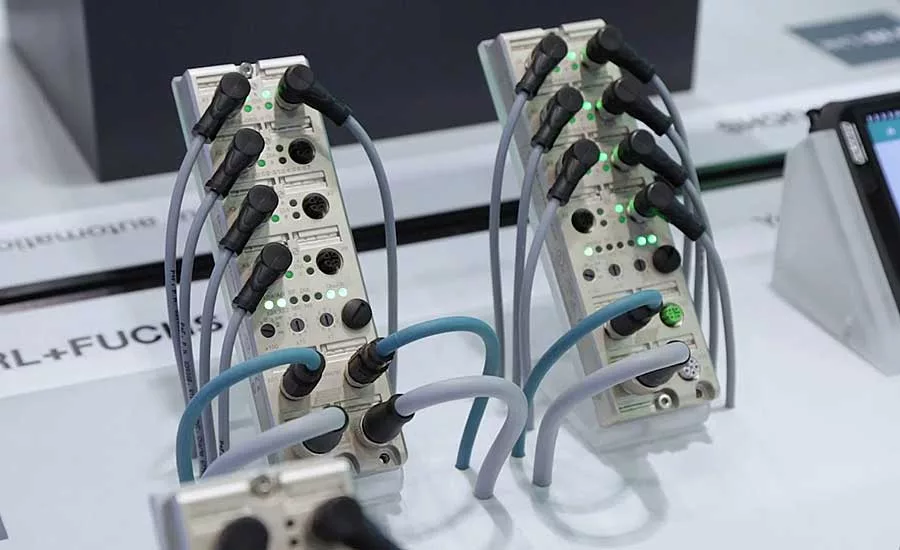
One way to connect sensors and collect data from them is with a fieldbus module equipped with an integrated IO-Link master. Photo courtesy Pepperl+Fuchs
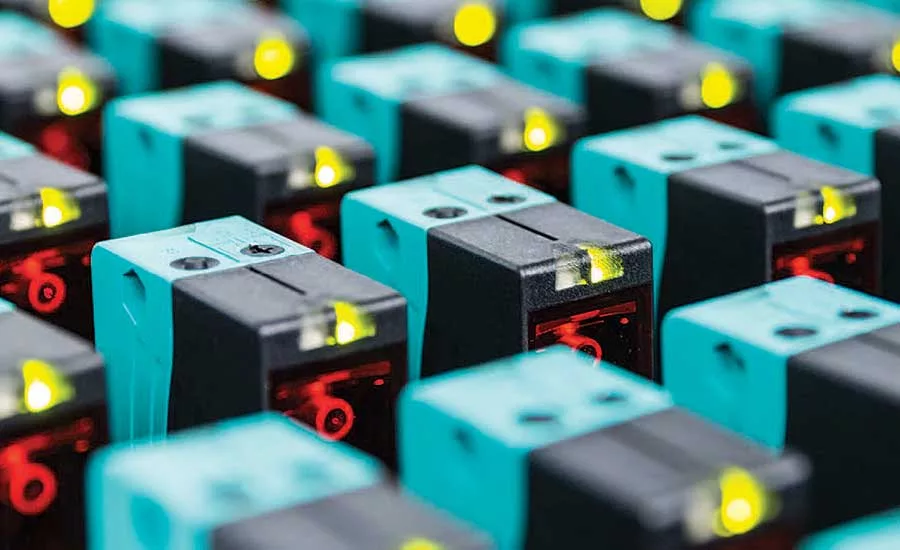
An automated assembly plant might contain thousands of sensors. In the factory of the future, many of them will be connected to the internet. Photo courtesy Pepperl+Fuchs
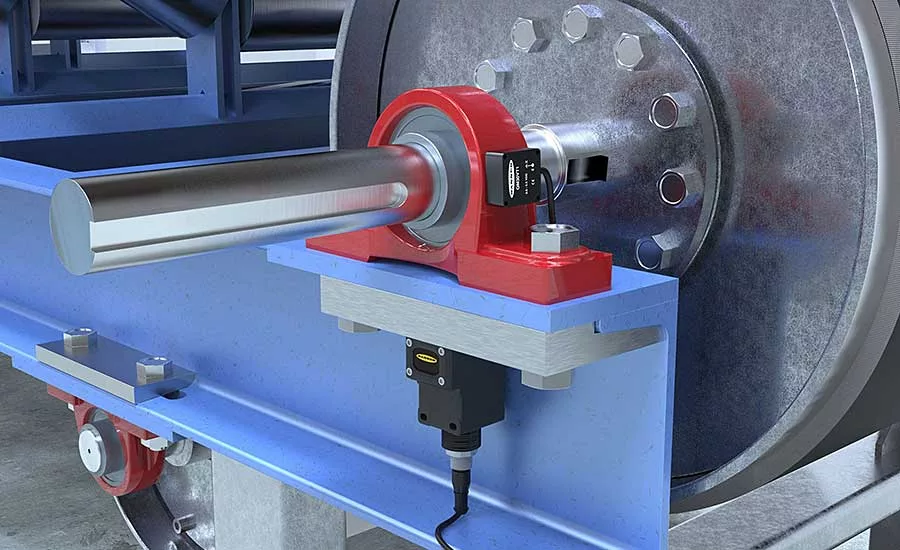
Vibration and temperature sensors detect potential problems on motors, fans, pumps and any machine with rotating motion or vibration. Photo courtesy Banner Engineering
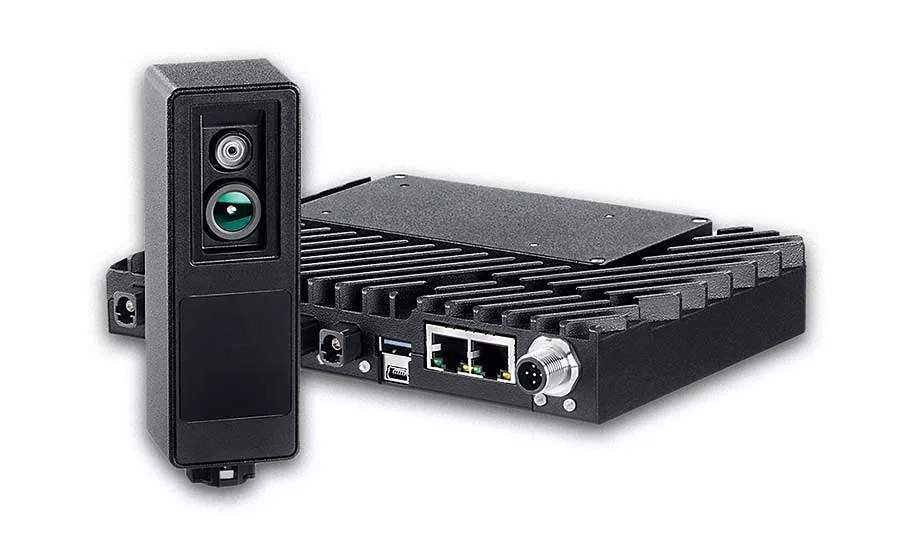
The O3R edge device can connect to up to six 3D cameras and numerous other sensors for neural networks and other AI applications. Photo courtesy IFM Efector Inc.
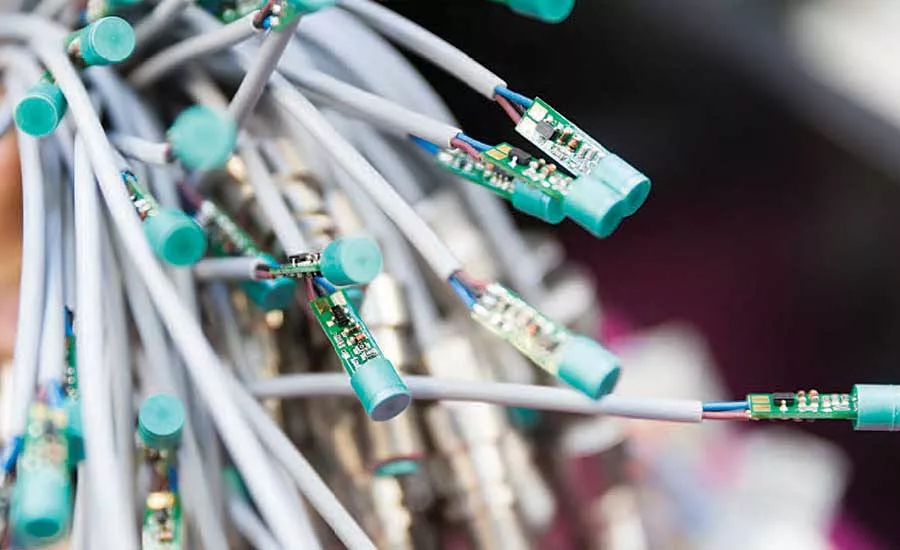
Not all sensor applications require IIoT connectivity. The key is whether engineers can benefit from analysis of the cumulative data or if quick and early notification of a potential problem is important. Photo courtesy Pepperl+Fuchs
Factories of the future are pulling data from a variety of sources, including sensors and vision systems. However, the inexpensive photoelectric sensors or force transducers that engineers might have deployed in their assembly systems 10 years ago are not necessarily going to work with the industrial internet of things (IIoT).
Conventional sensors are basically analog devices. They convert a physical element, such as stress, force or temperature, into an electrical signal. They don’t have built-in intelligence.
In contrast, IIoT sensors have onboard intelligence. Rather than simply send a signal to a PLC or a data logger, they have some analytics capabilities, such as data reduction and data bundling, and they can communicate with a computer. For example, engineers can use an intelligent IIoT pressure sensor, to create a limit switch. The sensor can turn off a pump when pressure gets above a certain level or turn it on when pressure dips below a threshold.
IIoT sensors also connect with various fieldbuses and communication standards, such as IO-Link and OPC UA, and they have the ability to self-identify on a network. That makes the task of deploying sensors and collecting data from them easier.
Preventing Downtime
Not all sensor applications require IIoT connectivity. The key is whether engineers can benefit from analysis of the cumulative data or if quick and early notification of a potential problem is important. For example, a photoelectric sensor monitoring the fill-level of a vibratory feeder bowl would not need connectivity, but you might deploy an IIoT-enabled pressure sensor to monitor the performance of a filter in a hydraulic or pneumatic power system. If the sensor detects an abnormal increase in pressure, it can notify maintenance personnel to change the filter.
Indeed, equipment monitoring is the leading application for IIoT sensors. Monitoring sensor output signals over time can offer insights into equipment failure. A change in vibration from a bearing or an increase in temperature from an electric motor could be signs of declining performance or an impending catastrophic failure. IIoT sensors can help engineers learn application-specific early warning signs and then keep an eye out for those signs 24/7.
A good example are the QM30VT vibration and temperature sensors from Banner Engineering, which detect potential problems on motors, fans, pumps, and any machine with rotating motion or vibration. The sensors have a low-profile design and rigid metal construction that reduces resonant interference and increases surface contact, enabling high levels of accuracy in calculating root mean square (RMS) of velocity and temperature measurements. They can detect even slight increases in machine vibration and temperature for early identification of potential problems. The sensors transmit data using a MultiHop Modbus Radio or 1-Wire Serial Node to a DXM Series wireless controller or gateway. They are available with a 316L stainless steel housing or a heavy-duty aluminum housing
Looking for quick answers on assembly and manufacturing topics? Try Ask ASM, our new smart AI search tool. Ask ASM
Connecting Sensors
With myriad sensors collecting information about machine performance, engineers need easy ways connect them and collect data from them. One way to do that is with a fieldbus module with an integrated IO-Link master.
IO-Link is an open standard communication protocol that allows for bidirectional exchange of data from compatible sensors, RFID equipment, actuators and other devices that are connected to the master. The master can transmit this data over various networks, fieldbuses or backplane buses, making the data accessible for immediate action or long-term analysis. An IO-Link master receives data from sensors and routes it to PLCs, HMIs, web servers, MES software, SCADA software, or cloud-based data analytics software.
The master can be located in a control panel or on the machine in a distributed control setup.
Pepperl+Fuchs offers Ethernet I/O modules with an integrated IO-Link master for optimal connection of IO-Link devices. The module can be used with IO-Link master devices from any manufacturer and makes full use of the intelligence of sensors. The modules support both PROFINET and Ethernet/IP, so they can be used with many standard controllers. To maximize the advantages of IO-Link, a large number of IO-Link I/O hubs are available alongside the modules for integrating binary sensor technology into the intelligent IO-Link system.
Because IO-Link provides for two-way communication between devices, engineers can receive continuous diagnostic information from the devices and transmit parameterization information from the control paneldown to them.
For brownfield applications where integration of new equipment within existing infrastructure is critical, Pepperl+Fuchs IO-Link masters support both Class 1 and Class 3 EtherNet/IP communication. Support for Class 3 means that engineers can maintain investments in older, but otherwise capable, legacy PLCs while benefiting from the new capabilities of IO-Link sensors. For applications that are not time-sensitive, Pepperl+Fuchs IO-Link masters even support stand-alone use for connecting sensors without a higher-level PLC.
Pepperl+Fuchs IO-Link masters are the only product on the market with MultiLink. This technology makes it possible to control time-critical processes with a PLC while simultaneously allowing cloud and SCADA systems to access all sensor data. Experienced PLC programmers and database experts can take maximum advantage of these products by setting clear access rights to outputs and parameters.
Another option for connecting sensors is with an IIoT gateway. For example, SICK has launched a new product called Monitoring Box, a web application that provides access to sensor data for cloud-based condition monitoring. The software enables visualization of internal device parameters to diagnose and monitor fault conditions. It consists of a browser application, server-side data management, an IIoT Gateway, and predefined sensor apps for simple connection of sensors.
The gateway is a bit of hardware that allows for short-term data storage, preprocessing of data, and secure data transmission. A cloud service provides for data security and long-term data backup. The Monitoring App also provides application-specific support for sensors and machinery. These are easy plug-and-play apps that are available as a subscription.
A dashboard provides an overview of status, name and location. It also includes job recommendations. Live status data is provided in real time. This includes device information and status, operating mode, and other data points that help to detect errors and malfunctions. In addition, historical data is available to understand past issues and better predict the future. Alert logs are also available and can be saved within a dedicated log, which provides an overview of past alerts and determine any irregularities within the device or process that can be detected and analyzed. The type of alerts can be customized based on the needs of the user.
Try It; You Might Like It
Are you interested in exploring the potential benefits of IIOT technology, but don’t want to dive in head first? Pepperl+Fuchs has you covered. With the company’s new IIoT starter kit, simple visualization and analysis of sensor data can become a reality.
The kit includes:
- Engineers can use the kit to connect to a software dashboard via OPC UA or MQTT for easy interpretation of real-time data and start the digital transformation of their plants.
- An IO-Link master, three IO-Link sensors, an Ethernet switch, a power supply, a high-frequency RFID read-write station, RFID tags and all the necessary cabling to get started.
- A quick start guide for connecting the IO-Link master and IO-Link devices.
- Software connection for various software platforms, such as AWS, PTC, AVEVA.
Looking for a reprint of this article?
From high-res PDFs to custom plaques, order your copy today!