sponsored content
How To: Build Intelligent Manufacturing Systems For An Electric Future

Two of the biggest trends in the auto industry today are flexible production systems and electric power. And while at first glance they may seem to have little in common, the truth is that the underlying technologies needed to implement both are, in many cases, identical. The key to success in both cases will be the application of intelligent manufacturing and assembly systems across the entire production process. The shape of that solution is already beginning to emerge in the world’s most advanced battery manufacturing facilities where intelligent assembly systems are enabling unprecedented levels of quality and productivity.
Building intelligent manufacturing systems for an electric future requires a combination of technology, strategy, and innovation. Here are the steps to building such systems:
- Analyze your current manufacturing process to identify areas that could be automated or optimized to improve efficiency and reduce waste.
- Adopt Industry 4.0 technologies.
- Implement predictive maintenance. This can help reduce downtime and improve overall efficiency.
- Implement supply chain optimization. This will help you reduce waste and improve your ability to meet customer demands.
- Invest in workforce training. Investing in training will help ensure a smooth transition and improved efficiency.
- Collaborate with suppliers, customers, and other stakeholders to build a more sustainable and efficient manufacturing process.
- Regularly monitor and evaluate the performance of your intelligent manufacturing system to identify areas for improvement and ensure that you are on track to meet your goals.
By following these steps, you can build an intelligent manufacturing system that is optimized for the electric future, improving your ability to meet customer demands while reducing waste and improving efficiency.
How-To Make “Perfect” Batteries
Lithium Ion batteries are the technology of choice for virtually all electric vehicles being produced today. Their production requires extremely precise control of an operation that presses powdered electrolyte in place on both sides of a metallic collector plate. The thickness and density of the electrolyte on each side of the collector must be as close to identical as possible to maximize battery capacity and service life.
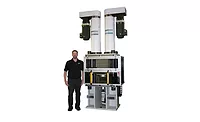
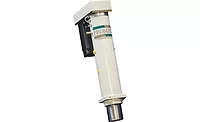
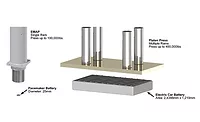
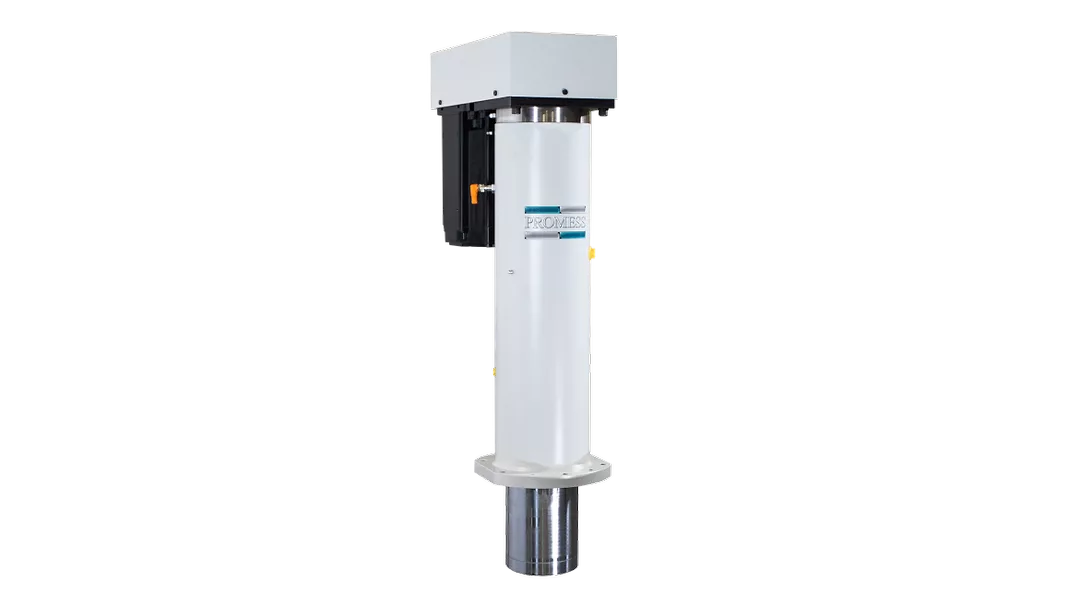
The precision, feedback and verification required in applications like this make fully electric servo press technology the right choice. Promess Inc., has been involved in a number of battery projects in which Electro-Mechanical Assembly Presses (EMAPs) with built-in force and positioning control technologies have replaced hydraulic press systems in both electrolyte pressing and subsequent assembly operations.
The EMAP is essentially a CNC press consisting of a ball-screw driven by a servomotor and equipped with an array of sensors to measure position, force, and any number of other process parameters. In what is rapidly emerging as a standard solution for automotive batteries, a pair of EMAPs equipped with integral force and position measuring instrumentation press a pair of electrolyte-filled die plates together simultaneously. The Promess UltraPRO multi-axis controller precisely synchronizes the motion of the EMAPs and monitors the amount of force being applied.
Once the specified force and location parameters are achieved the system holds that force level for a programmed time to allow the electrolyte to solidify. All of the data is stored to provide 100 percent traceability for every battery.
How-To Destroy “Perfect” Batteries (On Purpose)
Automotive propulsion batteries use highly reactive chemicals to store large amounts of energy that makes crashworthiness a critical design criteria. The only practical way to validate the design decisions built into those batteries is to test them to destruction under precisely controlled conditions that reliably produce results that mirror real-world data from actual crashes.
Looking for quick answers on assembly and manufacturing topics? Try Ask ASM, our new smart AI search tool. Ask ASM
Here again, the solution is a programmable intelligent system. One major automaker is using fully-instrumented EMAPs to perform both puncture and crush testing on their batteries. The presses crush and/or drive penetrators through the batteries to simulate damage to batteries recovered from crashed vehicles. The data generated in these tests is used to develop even better protective packaging for the next generation of electric vehicles.
How-To Build Better Motors
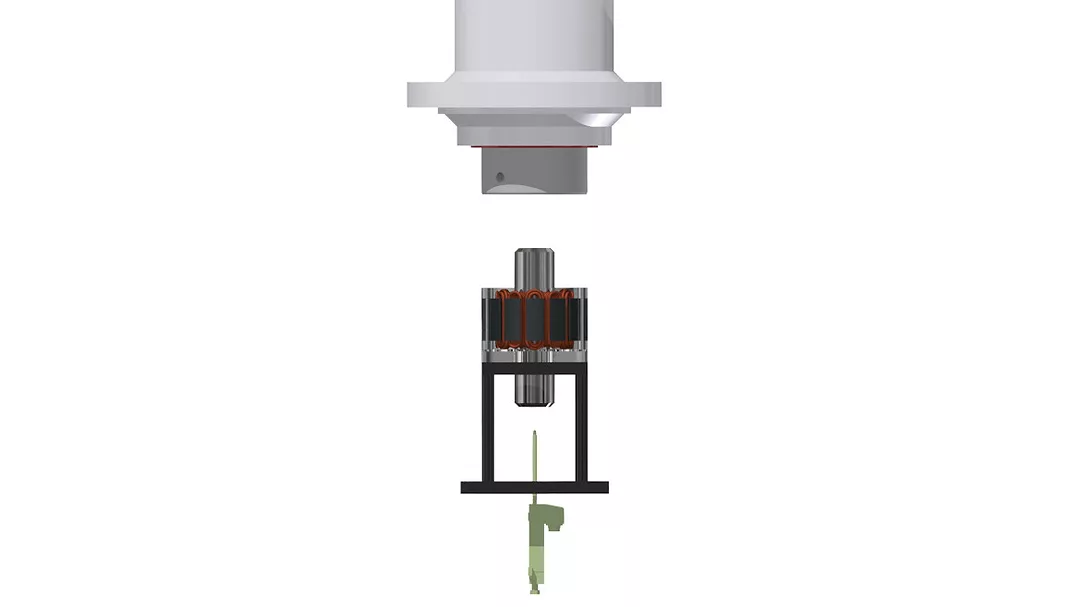
Better powered vehicles depend on better motors to deliver the drivetrain efficiency electric vehicles will need to be competitive with conventional vehicles. This is another area where intelligent assembly systems are helping automakers meet the goal. EMAPs, for example, are being used to assemble high-efficiency wheel drive motors at several automakers. The sophisticated system presses steel core stators and bearings onto a rotor hub in a single operation monitored and controlled with integral force and position sensors. All component positions are measured and recorded in real-time to ensure quality and provide 100 percent traceability for every assembly.
Building automotive motors using an EMAP is an efficient and precise method that leverages the latest technology. The servo EMAP, equipped with robust mechanical components and sophisticated software, is capable of producing high-quality motors with consistent precision and accuracy. The electric servo press allows for precise control of the pressure and speed of the compaction process, ensuring that the motors are manufactured with consistent performance characteristics. Furthermore, the advanced software system allows for real-time monitoring and adjustment of the manufacturing process, ensuring that the motors are built to meet exacting specifications. The use of an electric servo press in automotive motor manufacturing not only increases production efficiency but also improves product quality, making it an essential component in the modern automotive manufacturing process.
The Road Ahead
Batteries play a crucial role in the future of manufacturing, as they are the key components that will enable the widespread adoption of electric vehicles and renewable energy systems. Batteries provide a reliable and clean source of energy, allowing for the development of more sustainable and efficient manufacturing processes. Additionally, advances in battery technology are leading to the development of smaller, lighter, and more efficient batteries, which can improve the performance and portability of manufactured goods. The growth of the electric vehicle market, in particular, is driving demand for batteries, as well as creating new opportunities for manufacturers to develop innovative and environmentally friendly products. As the demand for renewable energy and electric vehicles continues to grow, batteries will play an increasingly important role in shaping the future of manufacturing.

Promess Inc.
11429 Grand River Road
Brighton, MI 48116
810-229-9334
Looking for a reprint of this article?
From high-res PDFs to custom plaques, order your copy today!