Assembly Magazine logo
search
Ask ASSEMBLY AI
cart
facebook twitter linkedin youtube
  • Sign In
  • Create Account
  • Sign Out
  • My Account
Assembly Magazine logo
  • TRENDS
    • Ask ASSEMBLY AI
    • Trends
    • News
    • New Products
  • INDUSTRIES
    • Aerospace
    • Appliance
    • DFMA Assembly
    • Medical Devices
    • Green Manufacturing
    • Lean Manufacturing
    • Machinery Assembly
    • Electronics Assembly
    • Automotive
  • TECHNOLOGIES
    • Adhesives & Dispensing
    • Assembly Presses
    • Automated Assembly Systems
    • Manufacturing Management
    • Manufacturing Software
    • Motion Control
    • Screwdriving & Riveting
    • Robotics
    • Test & Inspection
    • Plastics & Metal Welding
    • Wire Processing
    • Workstations
  • AUTONOMOUS & ELECTRIC MOBILITY
    • AEM Magazine Archives
    • Autonomy
    • Electrification
    • Mobility Services
    • Assembly & Testing
    • AV/EM News
  • MEDIA
    • Ask ASSEMBLY AI
    • Podcasts
    • Assembly News Now
    • Assembly TV
    • Webinars
    • eBooks
  • EVENTS
    • Calendar
    • The ASSEMBLY Show
  • MORE
    • Exclusives >
      • Plant of the Year
      • Capital Spending
    • Buyers Guide >
      • Supplier Insights
    • Classifieds
    • Featured Products
    • Newsletters
    • Store
    • White Papers
    • Columns
    • Sponsor Insights
  • INFOCENTER
    • Assembly & Test Solutions
  • EMAGAZINE
    • eMagazine
    • Archive Issues
    • Advertise
    • Contact Us
    • Sign Up
IndustriesColumnsAutomotive AssemblyGreen Manufacturing AssemblyThe Editorial

Manufacturing and the Circular Economy
By John Sprovieri
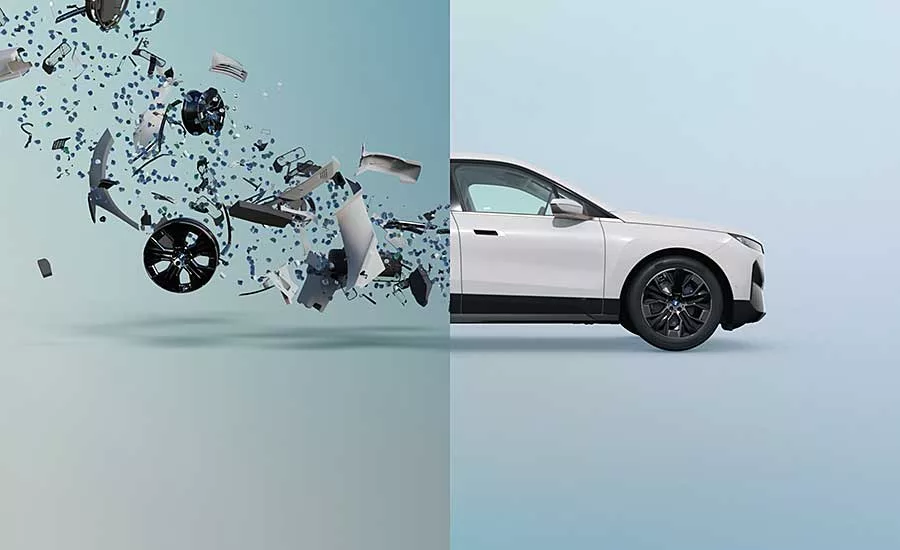
circular economy in automotive manufacturing

BMW is heading a research project to explore the circular economy in automotive manufacturing. Photo courtesy BMW

July 1, 2023

One company at the forefront of sustainability is the BMW Group. In April, the German carmaker announced that it will head up a new project to explore the circular economy in automotive manufacturing. BMW is joining forces with representatives from the recycling industry, commodity processors and academia to work on ways to improve the quality of secondary raw materials obtained from recycling end-of-life vehicles. 

Backed by $7 million from the Federal Ministry for Economic Affairs and Climate Action in Germany, the Car2Car project will focus specifically on improving the quality and availability of recycled aluminum, steel, glass, copper and plastic. In the future, innovative dismantling and automated sorting methods will generate far greater quantities of these resources to be recovered from end-of-life vehicles than has so far been the case. This project also includes an end-to-end evaluation of both the ecological and economic impacts of closed-loop recycling of these materials. 

“The successful transformation of vehicle manufacturers and suppliers is crucial for Germany as a business location,” says Michael Kellner, parliamentary state secretary at Germany’s Federal Ministry for Economic Affairs and Climate Action. “A stronger circular economy that conserves and reuses resources is a key step towards climate neutrality and safeguards supply chains at the same time. [The goal is] to make the automotive industry less dependent on raw material imports and ensure a long-term supply of raw materials for the economy, thereby boosting industrial value creation.” 

BMW has set a goal of increasing the proportion of secondary materials in its brands’ new models from around 30 percent to 50 percent. To help achieve this, the recyclability of materials is taken into account during the design process for new models. Rethinking how materials are recovered from vehicles at the end of their life is also important. The raw materials obtained from recycling can only be used if they also satisfy the carmaker’s quality standards. 

The BMW Group is supplying 500 end-of-life vehicles for the project, including BMW, MINI and Rolls-Royce vehicles. Vehicles with combustion engines, plug-in hybrid systems and all-electric drive units will be recycled to produce a representative spectrum of materials. Consortium partners will look for ways to improve the quality and quantity of the recovered materials. 

The consortium is working out the optimum balance between the dismantling process and post-shredder technologies from a qualitative, economic and ecological perspective to retain as much of the value initially invested in the manufacturing of a car as possible. Today’s recycling processes involve a high degree of manual effort and result in a loss of material purity, meaning they are only economically viable for a small number of vehicle components. The Car2Car project hopes to improve on that. 

Digital technology and artificial intelligence will be used to automate and speed up recycling processes that have previously been performed manually. For instance, the dismantling process could be partly or even highly automated with the help of robotics. Vision systems, assisted by AI, could be used to sort reusable materials after shredding, thereby improving the quality and purity of aluminum, steel, glass, copper and plastic materials. 

Looking for quick answers on assembly and manufacturing topics? Try Ask ASM, our new smart AI search tool. Ask ASM →

To achieve this, the consortium will need to develop new technologies, such as AI-enhanced spectroscopy, that can identify different steel and aluminum alloys. This will enable suppliers to obtain raw materials with a higher degree of purity, so less processing work will be required to turn scrap into reusable raw materials. 

BMW is also leading another consortium project called Future Sustainable Car Materials (FSCM). Under its lead, research institutes and companies are working together on innovative process routes and material concepts for sustainable use of secondary materials and for reducing the carbon footprint of raw materials such as steel and aluminum. The use of secondary aluminum is a prime example of how consistent use of recycled material can cut greenhouse gas emissions. 

BMW is also carrying out important groundwork when it comes to the actual recycling of vehicles at the end of their life. The company is the only carmaker to run its own recycling center, which has been in operation since 1994. Up to 10,000 vehicles a year are processed at the Recycling and Dismantling Centre in Unterschleißheim near Munich. 

We hope manufacturers in other industries are inspired by BMW’s efforts. Assemblers of many large, complex products, such as white goods, tractors and aircraft, could certainly benefit from a more circular economy.
KEYWORDS: circular economy recycling

Share This Story

Looking for a reprint of this article?
From high-res PDFs to custom plaques, order your copy today!

John has been with ASSEMBLY magazine since February 1997. John was formerly with a national medical news magazine, and has written for Pathology Today and the Green Bay Press-Gazette. John holds a B.A. in journalism from Northwestern University, Medill School of Journalism.

Recommended Content

JOIN TODAY
To unlock your recommendations.

Already have an account? Sign In

  • Made in the U.S.A.

    Consumer Products Manufacturing: Made in the USA

    Supply chain lessons learned during the coronavirus...
    Automated Assembly Systems
    By: Austin Weber
  • Best Practices for Press-Fit Assembly

    Best Practices for Press-Fit Assembly

    In manufacturing, ironclad formulas for success are hard...
    Assembly Presses
    By: Jim Camillo
  • aem0523leader-tesla1.jpg

    Tesla Rethinks the Assembly Line

    Engineers at Tesla Inc. have developed a new process that...
    Automotive Assembly
    By: Austin Weber
Manage My Account
  • eMagazine Subscription
  • Assembly Newsletters
  • Online Registration
  • Subscription Customer Service
  • Manage My Preferences

More Videos

Sponsored Content

Sponsored Content is a special paid section where industry companies provide high quality, objective, non-commercial content around topics of interest to the ASSEMBLY audience. All Sponsored Content is supplied by the advertising company and any opinions expressed in this article are those of the author and not necessarily reflect the views of ASSEMBLY or its parent company, BNP Media. Interested in participating in our Sponsored Content section? Contact your local rep!

close
  • ultrasonic welding
    Sponsored bySonobond Ultrasonics

    Engineering Efficiency in High-Performance Assembly: How Ultrasonic Welding Enhances Throughput, Reliability and Quality

  • UV curing system
    Sponsored byDymax

    Why UV Intensity Alone Doesn’t Define Curing Performance

  • wooden pallets
    Sponsored byLEAN Manufacturing Products

    Eliminating Waste on the Shop Floor: Applying Lean Principles to Improve Manufacturing Efficiency

Popular Stories

ASSEMBLY News Now, episode-30: Volvo Redesigns EV Manufacturing

Volvo Redesigns EV Manufacturing

Boeing CEO Kelly Ortberg announces 1 billion investment

Boeing Plans $1 Billion Wichita Investment, Workforce Training Center

GE Appliances Worker on Line

GE Appliances Expands Factory AI With 800 Gemini Enterprise Agents

Watch the latest episode of ANN now!

Events

July 24, 2025

From Shop Floor to CFO: How Manufacturers Are Closing the Loop Between Operations and Finance

On Demand Learn how manufacturers are bridging the gap between the shop floor and ERP systems to gain real-time visibility, streamline operations, and kick-start digital transformation—without waiting years.

Sponsored by:

PicoStratusGreen
July 30, 2025

Buffer Analysis and Design Fundamentals for Manufacturing Excellence

On Demand In this presentation, Dr. Herman Tang shares practical insights from his industry experience and research on buffer management in manufacturing operations.

View All Submit An Event

Poll

Difficult Assembly Processes

Which assembly process gives you the most difficulty?
View Results Poll Archive

Products

Manufacturing Cost Policy Deployment (MCPD) Profitability Scenarios: Systematic and Systemic Improvement of Manufacturing Costs

Manufacturing Cost Policy Deployment (MCPD) Profitability Scenarios: Systematic and Systemic Improvement of Manufacturing Costs

See More Products
Register for webinar - Modernizing Automotive Assembly: Why Upgrading Legacy MES is a Business Imperative

Related Articles

  • sustainable manufacturing

    Manufacturers Are Embracing the Circular Economy

    See More
  • automotive manufacturing

    Automotive Industry Prepares for Connected and Circular Economy

    See More
  • The Editorial: Manufacturing Leads the Way

    See More

Related Products

See More Products
  • smart.jpg

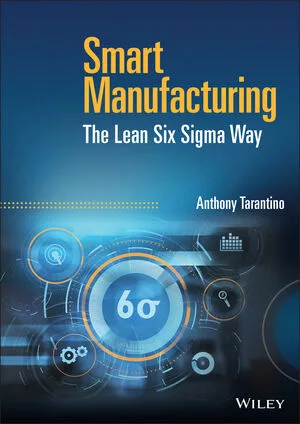
    Smart Manufacturing: The Lean Six Sigma Way

  • history.jpg

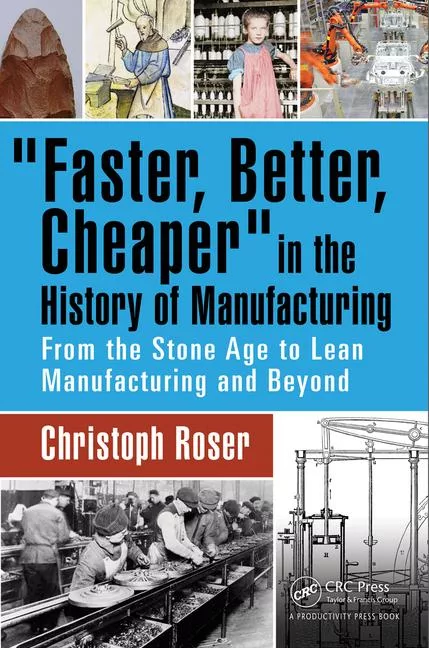
    Faster, Better, Cheaper in the History of Manufacturing: From the Stone Age to Lean Manufacturing and Beyond

  • smart.jpg

    Handbook of Smart Manufacturing Forecasting the Future of Industry 4.0

See More Products

Related Directories

  • The Grieve Corp.

    Grieve designs and manufactures industrial ovens and furnaces, including ovens for printed circuit boards.
×

Never miss the latest news and trends driving the manufacturing industry

Stay in the know on the latest assembly trends.

JOIN TODAY!
  • RESOURCES
    • Advertise
    • Contact Us
    • Directories
    • Manufacturing Division
    • Store
    • Want More?
  • SIGN UP TODAY
    • Create Account
    • eMagazine
    • Newsletters
    • Customer Service
    • Manage Preferences
  • SERVICES
    • Marketing Services
    • Reprints
    • Market Research
    • List Rental
    • Survey/Respondent Access
  • STAY CONNECTED
    • LinkedIn
    • Facebook
    • Instagram
    • YouTube
    • X (Twitter)
  • PRIVACY
    • PRIVACY POLICY
    • TERMS & CONDITIONS
    • DO NOT SELL MY PERSONAL INFORMATION
    • PRIVACY REQUEST
    • ACCESSIBILITY

Copyright ©2026. All Rights Reserved BNP Media, Inc. and BNP Media II, LLC.

Design, CMS, Hosting & Web Development :: ePublishing