Assembly Magazine logo
search
Ask ASSEMBLY AI
cart
facebook twitter linkedin youtube
  • Sign In
  • Create Account
  • Sign Out
  • My Account
Assembly Magazine logo
  • TRENDS
    • Ask ASSEMBLY AI
    • Trends
    • News
    • New Products
  • INDUSTRIES
    • Aerospace
    • Appliance
    • DFMA Assembly
    • Medical Devices
    • Green Manufacturing
    • Lean Manufacturing
    • Machinery Assembly
    • Electronics Assembly
    • Automotive
  • TECHNOLOGIES
    • Adhesives & Dispensing
    • Assembly Presses
    • Automated Assembly Systems
    • Manufacturing Management
    • Manufacturing Software
    • Motion Control
    • Screwdriving & Riveting
    • Robotics
    • Test & Inspection
    • Plastics & Metal Welding
    • Wire Processing
    • Workstations
  • AUTONOMOUS & ELECTRIC MOBILITY
    • AEM Magazine Archives
    • Autonomy
    • Electrification
    • Mobility Services
    • Assembly & Testing
    • AV/EM News
  • MEDIA
    • Ask ASSEMBLY AI
    • Podcasts
    • Assembly News Now
    • Assembly TV
    • Webinars
    • eBooks
  • EVENTS
    • Calendar
    • The ASSEMBLY Show
  • MORE
    • Exclusives >
      • Plant of the Year
      • Capital Spending
    • Buyers Guide >
      • Supplier Insights
    • Classifieds
    • Featured Products
    • Newsletters
    • Store
    • White Papers
    • Columns
    • Sponsor Insights
  • INFOCENTER
    • Assembly & Test Solutions
  • EMAGAZINE
    • eMagazine
    • Archive Issues
    • Advertise
    • Contact Us
    • Sign Up

Innovate or Die

By John Sprovieri
December 23, 2008
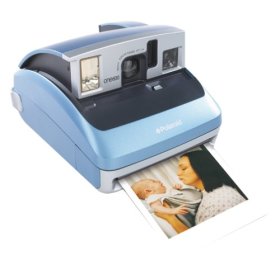
Got one of these? It'll be useless in a few months. Polaroid will stop making film for it this month.

At the risk of dating myself, let me tell you how we did things “back in the day,” when I first got in the magazine business. After I finished writing an article-on a PC, thank you, not a typewriter, I’m not that old-I sent it to a typesetting machine, which printed it out in one long column on a strip of photographic paper. The columns were cut apart with a razor blade, coated with a sticky wax, and pasted onto graph paper in straight, orderly rows. The graph paper was then photographed to produce the plate for the printing press. The whole process was slow and complicated, and required a small army of production staff. The smallest change to a page was greeted by the production department with the sort of grief you might get from toddlers who’ve been asked to clean their rooms.

Virtually overnight, the whole process changed. These days, of course, it’s all done on computers: writing, editing, photography, page layout. Better still, the finished page is sent directly to the press.

For me, the worst part of the old method was coating the columns with wax. Inevitably, the sticky stuff got everywhere: fingers, desks, clothes, notebooks, files. I can’t say I miss those days. Still, I often feel a tinge of regret for the folks that made the coating machine. No doubt they did their best to make the finest machine money could buy. But if a technology comes along that helps you do the job better, faster and cheaper, you have to make the switch.

It’s a familiar story in our technological age. Someone invents a mousetrap that’s so much better than the existing mousetrap that the older technology quickly becomes obsolete. The company that made the old mousetrap has two choices: Keep pace with the new reality or join its old product in the dustbin of history. The competition doesn’t care if you’re a household name or a pioneer in your field. You either innovate or you die.

The latest chapter in the struggle between old and new technologies is playing out now in Minnetonka, MN. Earlier this month, Polaroid Corp. announced that it would no longer make instant film for its cameras. Thanks to digital cameras, the Polaroid instant camera is about to go the way of the typesetter and the waxing machine. And last week, the company filed for Chapter 11 bankruptcy protection for the second time in its history. (To be fair, the latter is not necessarily related to the former. Polaroid is blaming its financial difficulties on its parent company, the Petters Group, whose founder is currently in federal custody for alleged fraud.)

What a shame it would be if we lost the company that, with Kodak, invented photography. At least Polaroid is trying to keep up, and now offers a slew of products for digital imaging. The company’s new PoGo portable printer, in particular, looks like a winner. The pocket-sized device prints photos from digital cameras and cell phones, without the need for ink or ribbons. The heart of this new gadget is ZINK photo paper, an advanced composite material with embedded yellow, magenta and cyan dye crystals. The printer uses millions of tiny pulses of heat to activate the crystals and thereby create an image. Read about it here.

What about your company? Are you working on the next PoGo printer in your field? I fear that many U.S. manufacturers are not. After a decade of uninterrupted increases, U.S. investment in research and development is set to fall next year, as corporations and the federal government tighten their belts in response to a faltering economy. After accounting for inflation, total R&D spending in the United States is expected to fall by about 1.6 percent in 2009, according to a report by Battelle Memorial Institute, a nonprofit trust that does scientific research for the government and industry.

That’s a distinct contrast from recent years. Since the late 1990s, R&D investment in the United States has increased annually at rates of between 1 percent and 2 percent, including inflation.

A similar shift is occurring overseas. Driven by China and other Asian countries, global R&D investment has risen steadily for several years running. In 2009, however, global R&D spending in inflation-adjusted dollars is expected to be flat.

In these tough economic times, many companies go into survival mode, cutting all but the most essential expenses. Justly so. I urge all U.S. manufacturers to consider R&D as one such expense.

Share This Story

John has been with ASSEMBLY magazine since February 1997. John was formerly with a national medical news magazine, and has written for Pathology Today and the Green Bay Press-Gazette. John holds a B.A. in journalism from Northwestern University, Medill School of Journalism.

Blog Topics

Austin Weber

Assembly Automation

Ergo Corner

Hoffmann on Testing

Jim Camillo

Jim Smith

John Sprovieri

Recent Comments

Helpful for Trainees

Cable Assembly Manufacturers

Huawei for manufacturing?

should have a scanner and then 3D print the repair

IPC-A-610 and IPC-j-std-001

Manage My Account
  • eMagazine Subscription
  • Assembly Newsletters
  • Online Registration
  • Subscription Customer Service
  • Manage My Preferences

More Videos

Sponsored Content

Sponsored Content is a special paid section where industry companies provide high quality, objective, non-commercial content around topics of interest to the ASSEMBLY audience. All Sponsored Content is supplied by the advertising company and any opinions expressed in this article are those of the author and not necessarily reflect the views of ASSEMBLY or its parent company, BNP Media. Interested in participating in our Sponsored Content section? Contact your local rep!

close
  • ultrasonic welding
    Sponsored bySonobond Ultrasonics

    Engineering Efficiency in High-Performance Assembly: How Ultrasonic Welding Enhances Throughput, Reliability and Quality

  • UV curing system
    Sponsored byDymax

    Why UV Intensity Alone Doesn’t Define Curing Performance

  • wooden pallets
    Sponsored byLEAN Manufacturing Products

    Eliminating Waste on the Shop Floor: Applying Lean Principles to Improve Manufacturing Efficiency

Popular Stories

ASSEMBLY News Now, episode-30: Volvo Redesigns EV Manufacturing

Volvo Redesigns EV Manufacturing

Boeing CEO Kelly Ortberg announces 1 billion investment

Boeing Plans $1 Billion Wichita Investment, Workforce Training Center

GE Appliances Worker on Line

GE Appliances Expands Factory AI With 800 Gemini Enterprise Agents

Watch the latest episode of ANN now!

Events

July 24, 2025

From Shop Floor to CFO: How Manufacturers Are Closing the Loop Between Operations and Finance

On Demand Learn how manufacturers are bridging the gap between the shop floor and ERP systems to gain real-time visibility, streamline operations, and kick-start digital transformation—without waiting years.

Sponsored by:

PicoStratusGreen
July 30, 2025

Buffer Analysis and Design Fundamentals for Manufacturing Excellence

On Demand In this presentation, Dr. Herman Tang shares practical insights from his industry experience and research on buffer management in manufacturing operations.

View All Submit An Event

Poll

Difficult Assembly Processes

Which assembly process gives you the most difficulty?
View Results Poll Archive

Products

Manufacturing Cost Policy Deployment (MCPD) Profitability Scenarios: Systematic and Systemic Improvement of Manufacturing Costs

Manufacturing Cost Policy Deployment (MCPD) Profitability Scenarios: Systematic and Systemic Improvement of Manufacturing Costs

See More Products
Register for webinar - Modernizing Automotive Assembly: Why Upgrading Legacy MES is a Business Imperative
×

Never miss the latest news and trends driving the manufacturing industry

Stay in the know on the latest assembly trends.

JOIN TODAY!
  • RESOURCES
    • Advertise
    • Contact Us
    • Directories
    • Manufacturing Division
    • Store
    • Want More?
  • SIGN UP TODAY
    • Create Account
    • eMagazine
    • Newsletters
    • Customer Service
    • Manage Preferences
  • SERVICES
    • Marketing Services
    • Reprints
    • Market Research
    • List Rental
    • Survey/Respondent Access
  • STAY CONNECTED
    • LinkedIn
    • Facebook
    • Instagram
    • YouTube
    • X (Twitter)
  • PRIVACY
    • PRIVACY POLICY
    • TERMS & CONDITIONS
    • DO NOT SELL MY PERSONAL INFORMATION
    • PRIVACY REQUEST
    • ACCESSIBILITY

Copyright ©2026. All Rights Reserved BNP Media, Inc. and BNP Media II, LLC.

Design, CMS, Hosting & Web Development :: ePublishing