Hot Upset Riveting
A new process is ideal for permanent part assembly.
 Riveting is one of the oldest joining processes used by manufacturers. It’s been around since the days of steam locomotives and coal-fired ocean liners.
A rivet is an unthreaded, headed pin used to join two or more parts by passing the pin through holes in the parts and then forming a second head in the pin on the opposite side. A head is formed on the plain end of the pin by hammering or by direct pressure. Once the rivet has been deformed, it cannot be removed except by breaking one of the heads.
Rivets are ideal for flexible joints or tightly joined mating components. They are an inexpensive alternative to threaded fasteners, especially for products that require pivot joints or mechanical repetitiveness.
There are three methods of riveting: compression, impact and nonimpact. In the compression method, the head of the rivet is formed by pulling or squeezing the rivet shank. In the impact method, the head is formed by the force of the impact against the top of the shank. In nonimpact riveting, the rivet head is formed by a rolling or spinning action against the top of the shank.
Riveting hasn’t changed much in the past 100 years. But, a process called hot upset riveting offers a new alternative for engineers. Hot upset riveting combines electrical current with pressure and time to compress and expand a boss or rivet to a desired diameter and shape.
The new forming and fastening technique was recently created by Orbitform Group. “We did not set out to develop a new process,” claims Sean Cumming, business development manager at Orbitform. “The principle of providing our customers with unbiased assembly solutions lead us to discover it, refine it and apply it as required to meet a customer’s need.”
 According to Cumming, hot upset riveting closely resembles impact riveting, an inexpensive, quick and reliable cold-forming process that uses short, metal rivets to permanently join parts. The rivet is cylindrical with a head on one end.
In solid impact riveting, a compressive axial load is applied to the end of the rivet shank. This causes the rivet shank to swell throughout its length as it shortens under the load. The rivet shank continues to expand until the hole in the parts being assembled restricts it from further expansion. The unrestricted rivet end then expands, forming the rivet clinch.
The hot upset riveting process begins where its cold riveting counterpart ends. “It is slower, uses less force, adds electric current, and each process has distinct rivet materials that are better suited to each process,” says Cumming.
“It is unique in that it introduces localized heat-via electrical current supplied by a specially programmed weld controller- through the fastener and joint,” adds Cumming. “In general, the machine cycle time for hot upset riveting is similar to our orbital forming process, which can be three to four times slower than that of our impact riveting process.”
The highest resistance area includes that portion of the rivet that needs to be raised to a hot upset temperature. “A truly vertical movement of the upper die is necessary to secure a forged head of symmetrical contour and to avoid relative movement of the parts during the operation,” says Cumming. “Design of the lower die should assure uniform contact with the lower head of the rivet, and clearance between the flat portion of the lower electrode face and the surface of the bottom sheet, in order that the full forging force may be applied to the rivet.”
 Advantages of hot upset riveting include greater speed; elimination of a helper to heat rivets; pressure is applied instantaneously when forging temperature is reached; and only a small portion of the rivet is heated. In addition, heat and pressure can be controlled automatically with high degrees of precision.
“In general, hot upset riveting can be used in any application that requires parts to be joined by a permanent fastener with hole fill, not just clamp load,” claims Cumming, who says the technology appeals to automotive, lawn and garden, furniture and hardware manufacturers. Applications include automotive door strikers (joining the striker wire to a mating plate) and ball studs (joining a hardened ball stud to a mating plate).
Due to the control requirements of the process, hot upset riveting is always automated to some extent. It cannot be a hand-held or a manual process.
Orbitform applies the hot upset technology primarily to standalone workstations, where the customer’s product is loaded and unloaded from the machine by an operator. “We have yet to automate the process with robotics, but we have integrated it into a multistation transfer line,” Cumming points out.
“Most everything we have applied hot upset riveting for to date has incorporated solid rivets,” adds Cumming. “We haven’t found a need to apply the process to semitubular riveting applications. We have processed a range of solid rivet diameters from 0.125 to 0.75 inch. We haven’t found any rivet size or style to be any more ideal than another.”
However, certain materials will harden and some will anneal during hot upset riveting. “Extreme rivet hardness can create a brittle joint, and an annealed joint could reduce strength,” warns Cumming. “Some rivet coatings can also cause issues. This is why it is critical that we have samples to process through our lab so the customer can test our results against their product specifications.”
• Putting the Squeeze on Rivets.
• How to be More Environmentally Friendly by Eliminating Wasted Rivet Stems From Your Assembly Line.
• Riveting: Heading in a New Direction.
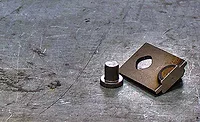
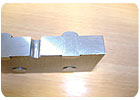
Hot upset riveting offers a new joining alternative for engineers. Photo courtesy Orbitform Group
A rivet is an unthreaded, headed pin used to join two or more parts by passing the pin through holes in the parts and then forming a second head in the pin on the opposite side. A head is formed on the plain end of the pin by hammering or by direct pressure. Once the rivet has been deformed, it cannot be removed except by breaking one of the heads.
Rivets are ideal for flexible joints or tightly joined mating components. They are an inexpensive alternative to threaded fasteners, especially for products that require pivot joints or mechanical repetitiveness.
There are three methods of riveting: compression, impact and nonimpact. In the compression method, the head of the rivet is formed by pulling or squeezing the rivet shank. In the impact method, the head is formed by the force of the impact against the top of the shank. In nonimpact riveting, the rivet head is formed by a rolling or spinning action against the top of the shank.
Riveting hasn’t changed much in the past 100 years. But, a process called hot upset riveting offers a new alternative for engineers. Hot upset riveting combines electrical current with pressure and time to compress and expand a boss or rivet to a desired diameter and shape.
The new forming and fastening technique was recently created by Orbitform Group. “We did not set out to develop a new process,” claims Sean Cumming, business development manager at Orbitform. “The principle of providing our customers with unbiased assembly solutions lead us to discover it, refine it and apply it as required to meet a customer’s need.”
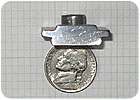
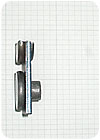
Hot upset riveting combines electrical current with pressure and time to compress and expand a rivet to a desired diameter and shape. Photo courtesy Orbitform Group
In solid impact riveting, a compressive axial load is applied to the end of the rivet shank. This causes the rivet shank to swell throughout its length as it shortens under the load. The rivet shank continues to expand until the hole in the parts being assembled restricts it from further expansion. The unrestricted rivet end then expands, forming the rivet clinch.
The hot upset riveting process begins where its cold riveting counterpart ends. “It is slower, uses less force, adds electric current, and each process has distinct rivet materials that are better suited to each process,” says Cumming.
“It is unique in that it introduces localized heat-via electrical current supplied by a specially programmed weld controller- through the fastener and joint,” adds Cumming. “In general, the machine cycle time for hot upset riveting is similar to our orbital forming process, which can be three to four times slower than that of our impact riveting process.”
The highest resistance area includes that portion of the rivet that needs to be raised to a hot upset temperature. “A truly vertical movement of the upper die is necessary to secure a forged head of symmetrical contour and to avoid relative movement of the parts during the operation,” says Cumming. “Design of the lower die should assure uniform contact with the lower head of the rivet, and clearance between the flat portion of the lower electrode face and the surface of the bottom sheet, in order that the full forging force may be applied to the rivet.”
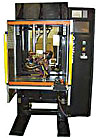
Only a small portion of the rivet is heated with hot impact riveting. Photo courtesy Orbitform Group
“In general, hot upset riveting can be used in any application that requires parts to be joined by a permanent fastener with hole fill, not just clamp load,” claims Cumming, who says the technology appeals to automotive, lawn and garden, furniture and hardware manufacturers. Applications include automotive door strikers (joining the striker wire to a mating plate) and ball studs (joining a hardened ball stud to a mating plate).
Due to the control requirements of the process, hot upset riveting is always automated to some extent. It cannot be a hand-held or a manual process.
Orbitform applies the hot upset technology primarily to standalone workstations, where the customer’s product is loaded and unloaded from the machine by an operator. “We have yet to automate the process with robotics, but we have integrated it into a multistation transfer line,” Cumming points out.
“Most everything we have applied hot upset riveting for to date has incorporated solid rivets,” adds Cumming. “We haven’t found a need to apply the process to semitubular riveting applications. We have processed a range of solid rivet diameters from 0.125 to 0.75 inch. We haven’t found any rivet size or style to be any more ideal than another.”
However, certain materials will harden and some will anneal during hot upset riveting. “Extreme rivet hardness can create a brittle joint, and an annealed joint could reduce strength,” warns Cumming. “Some rivet coatings can also cause issues. This is why it is critical that we have samples to process through our lab so the customer can test our results against their product specifications.”
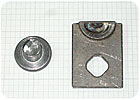
Hot upset riveting closely resembles impact riveting. Photo courtesy Orbitform Group
ASSEMBLY ONLINE
For more information on riveting, visit www.assemblymag.com for these articles:• Putting the Squeeze on Rivets.
• How to be More Environmentally Friendly by Eliminating Wasted Rivet Stems From Your Assembly Line.
• Riveting: Heading in a New Direction.
Looking for a reprint of this article?
From high-res PDFs to custom plaques, order your copy today!