Assembly Magazine logo
search
Ask ASSEMBLY AI
cart
facebook twitter linkedin youtube
  • Sign In
  • Create Account
  • Sign Out
  • My Account
Assembly Magazine logo
  • TRENDS
    • Ask ASSEMBLY AI
    • Trends
    • News
    • New Products
  • INDUSTRIES
    • Aerospace
    • Appliance
    • DFMA Assembly
    • Medical Devices
    • Green Manufacturing
    • Lean Manufacturing
    • Machinery Assembly
    • Electronics Assembly
    • Automotive
  • TECHNOLOGIES
    • Adhesives & Dispensing
    • Assembly Presses
    • Automated Assembly Systems
    • Manufacturing Management
    • Manufacturing Software
    • Motion Control
    • Screwdriving & Riveting
    • Robotics
    • Test & Inspection
    • Plastics & Metal Welding
    • Wire Processing
    • Workstations
  • AUTONOMOUS & ELECTRIC MOBILITY
    • AEM Magazine Archives
    • Autonomy
    • Electrification
    • Mobility Services
    • Assembly & Testing
    • AV/EM News
  • MEDIA
    • Ask ASSEMBLY AI
    • Podcasts
    • Assembly News Now
    • Assembly TV
    • Webinars
    • eBooks
  • EVENTS
    • Calendar
    • The ASSEMBLY Show
  • MORE
    • Exclusives >
      • Plant of the Year
      • Capital Spending
    • Buyers Guide >
      • Supplier Insights
    • Classifieds
    • Featured Products
    • Newsletters
    • Store
    • White Papers
    • Columns
    • Sponsor Insights
  • INFOCENTER
    • Assembly & Test Solutions
  • EMAGAZINE
    • eMagazine
    • Archive Issues
    • Advertise
    • Contact Us
    • Sign Up
ColumnsAutomated Assembly SystemsMotion Control

Function Blocks Simplify Programming

PLCopen has a library of 25 single- and multiaxis function blocks.

May 1, 2013

Software is playing an increasing role in industrial automation. That’s been good in terms of boosting the functionality and flexibility of machines. But, writing code can also add cost and time to the development process.

This was particularly true 10 years ago. The controls market then was heterogeneous. Each automation vendor promoted its own proprietary programming software. There was no consistency from one controller to the next. Even different models of controller within the same family may have had different ladder notation, so programs could not be seamlessly interchanged between models.

“One company’s controller would have a command to do a certain motion. If I switched vendors, I would have to learn another command for the same thing, and the behavior of the two different commands would be different,” explains Chris Knudsen, senior marketing strategist at Yaskawa America Inc.

Even when engineers could reuse code, it wasn’t easy. “The problem with discrete ladder logic is that functions don’t stand out on their own,” says Kevin Hull, senior applications engineer at Yaskawa. “They hide themselves in the crowd. It’s not easy to identify what exactly you can pull out and use in another project.”

Enter PLCopen. Founded in 1992, PLCopen is a vendor- and product-independent organization dedicated to resolving issues related to control programming. Its members include most major suppliers of motion control technology, including Yaskawa, Siemens, Bosch Rexroth, Omron and Mitsubishi Electric.

A core activity of PLCopen is to promote IEC 61131-3, a global standard for programming PLCs, embedded controls and industrial PCs. It includes the textual programming languages structured text and instruction list; the graphical programming languages ladder diagram and function block diagram; and the structuring tool sequential function chart.

The goal of PLCopen is to enable engineers to use the same set of commands whether they’re programming a controller from Yaskawa, Bosch or other vendor. And that should translate into faster development time for assembly machine builders, says Knudsen.

Looking for quick answers on assembly and manufacturing topics? Try Ask ASM, our new smart AI search tool. Ask ASM →

Function blocks are one way that IEC 61131-3 is simplifying programming. Function blocks act like subroutines in regular text programming. Function blocks are graphical. Inputs are on the left side of the block; outputs are on the right.

“Function blocks are encapsulated. Variables go in, and variables come out,” says Knudsen. “The code that’s inside never has to change. It’s already been tested and documented. The benefit to users is that they can reuse these function blocks over and over again.”

“Function blocks are abstractions,” adds Hull. “They remove some of that lower-level code from the forefront of the program, so users never have to see that. They’re left with a simplified interface window.”

Hull stresses that function blocks are not complete programs by themselves, but rather elementary tools or building blocks for creating a program for an entire motion control system. “You still have to arrange the blocks to make some overall activity happen,” he says. “There is no function block for programming a walking-beam assembly system. Rather, you would need several function blocks to program that system.

“That said, if you’re a systems integrator that builds several different machines with walking beam mechanisms, you can reuse the library of walking beam function blocks you created.”

PLCopen already has a library of some 25 single- and multiaxis function blocks, and at least another 25 are expected by the end of the year. For example, the single-axis function block “Move Absolute” tells a motion device, such as a servomotor, to move to an exact location at a certain speed, acceleration and deceleration. The multiaxis function block “Gear in Position” synchronizes two axes of motion. Such a function block could be used to coordinate the motion of two assembly conveyors.

 In addition, many motion control vendors have developed their own, more complex function blocks. For example, Yaskawa has developed function blocks for programming kinematic mechanisms. 

KEYWORDS: PLCs

Share This Story

Looking for a reprint of this article?
From high-res PDFs to custom plaques, order your copy today!

Recommended Content

JOIN TODAY
To unlock your recommendations.

Already have an account? Sign In

  • Made in the U.S.A.

    Consumer Products Manufacturing: Made in the USA

    Supply chain lessons learned during the coronavirus...
    Automated Assembly Systems
    By: Austin Weber
  • Best Practices for Press-Fit Assembly

    Best Practices for Press-Fit Assembly

    In manufacturing, ironclad formulas for success are hard...
    Assembly Presses
    By: Jim Camillo
  • aem0523leader-tesla1.jpg

    Tesla Rethinks the Assembly Line

    Engineers at Tesla Inc. have developed a new process that...
    Assembly and Testing
    By: Austin Weber
Manage My Account
  • eMagazine Subscription
  • Assembly Newsletters
  • Online Registration
  • Subscription Customer Service
  • Manage My Preferences

More Videos

Sponsored Content

Sponsored Content is a special paid section where industry companies provide high quality, objective, non-commercial content around topics of interest to the ASSEMBLY audience. All Sponsored Content is supplied by the advertising company and any opinions expressed in this article are those of the author and not necessarily reflect the views of ASSEMBLY or its parent company, BNP Media. Interested in participating in our Sponsored Content section? Contact your local rep!

close
  • ultrasonic welding
    Sponsored bySonobond Ultrasonics

    Engineering Efficiency in High-Performance Assembly: How Ultrasonic Welding Enhances Throughput, Reliability and Quality

  • UV curing system
    Sponsored byDymax

    Why UV Intensity Alone Doesn’t Define Curing Performance

  • wooden pallets
    Sponsored byLEAN Manufacturing Products

    Eliminating Waste on the Shop Floor: Applying Lean Principles to Improve Manufacturing Efficiency

Popular Stories

Ferrari

Ferrari Unveils Four-Door EV

ASSEMBLY News Now, episode-30: Volvo Redesigns EV Manufacturing

Volvo Redesigns EV Manufacturing

Robots working at Toyota Plant in Japan

Toyota Deploys Geekplus Robots for Factory Material Handling

Watch the latest episode of ANN now!

Events

July 24, 2025

From Shop Floor to CFO: How Manufacturers Are Closing the Loop Between Operations and Finance

On Demand Learn how manufacturers are bridging the gap between the shop floor and ERP systems to gain real-time visibility, streamline operations, and kick-start digital transformation—without waiting years.

Sponsored by:

PicoStratusGreen
July 30, 2025

Buffer Analysis and Design Fundamentals for Manufacturing Excellence

On Demand In this presentation, Dr. Herman Tang shares practical insights from his industry experience and research on buffer management in manufacturing operations.

View All Submit An Event

Poll

Difficult Assembly Processes

Which assembly process gives you the most difficulty?
View Results Poll Archive

Products

Manufacturing Cost Policy Deployment (MCPD) Profitability Scenarios: Systematic and Systemic Improvement of Manufacturing Costs

Manufacturing Cost Policy Deployment (MCPD) Profitability Scenarios: Systematic and Systemic Improvement of Manufacturing Costs

See More Products
ebook

Related Articles

  • XYZ - Software Simplifies Programming of Kinematics

    See More
  • AIA: Electric Press Inserts Sleeves Into Blocks

    See More

Related Products

See More Products
  • 1119722012.jpg

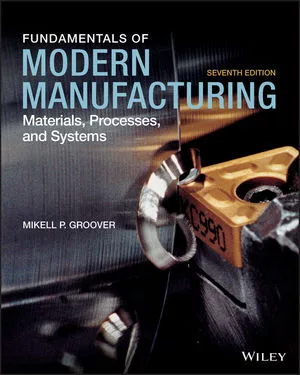
    Fundamentals of Modern Manufacturing: Materials, Processes, and Systems, 7th Edition

  • supply chain.jpg

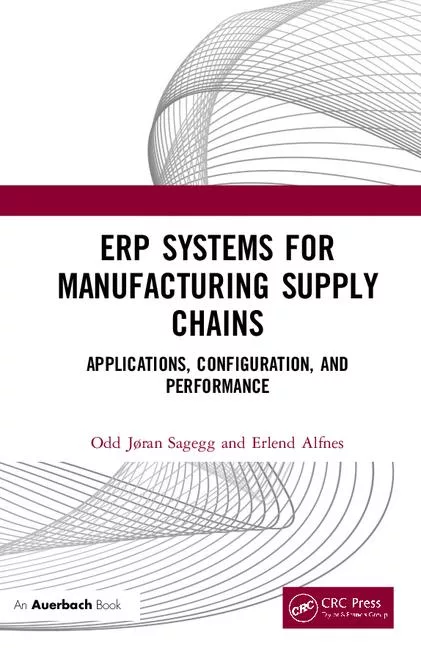
    ERP Systems for Manufacturing Supply Chains

  • advanced.jpg

    Functional and Smart Materials

See More Products

Related Directories

  • Worksmart Systems Inc.

    Worksmart Systems' Fleximate® Integrated Transport System combines a hybrid free conveyor with an ergonomic workstation. Linking multiple stations forms a lean assembly cell optimized for single-piece production flow. Equipped with a wide range of accessories and requiring just one tool, it effortlessly simplifies achieving maximum efficiency and supports continuous improvement.
×

Never miss the latest news and trends driving the manufacturing industry

Stay in the know on the latest assembly trends.

JOIN TODAY!
  • RESOURCES
    • Advertise
    • Contact Us
    • Directories
    • Manufacturing Division
    • Store
    • Want More?
  • SIGN UP TODAY
    • Create Account
    • eMagazine
    • Newsletters
    • Customer Service
    • Manage Preferences
  • SERVICES
    • Marketing Services
    • Reprints
    • Market Research
    • List Rental
    • Survey/Respondent Access
  • STAY CONNECTED
    • LinkedIn
    • Facebook
    • Instagram
    • YouTube
    • X (Twitter)
  • PRIVACY
    • PRIVACY POLICY
    • TERMS & CONDITIONS
    • DO NOT SELL MY PERSONAL INFORMATION
    • PRIVACY REQUEST
    • ACCESSIBILITY

Copyright ©2026. All Rights Reserved BNP Media, Inc. and BNP Media II, LLC.

Design, CMS, Hosting & Web Development :: ePublishing