Boeing's Bold Beginning
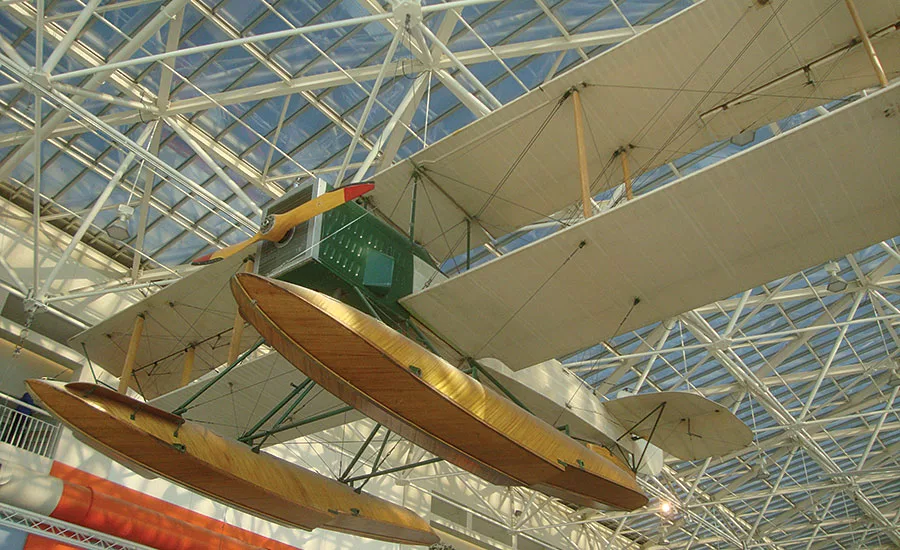
The Model 1 was Boeing’s first aircraft. Today, a replica is on display at the Museum of Flight in Seattle. Photo by Austin Weber
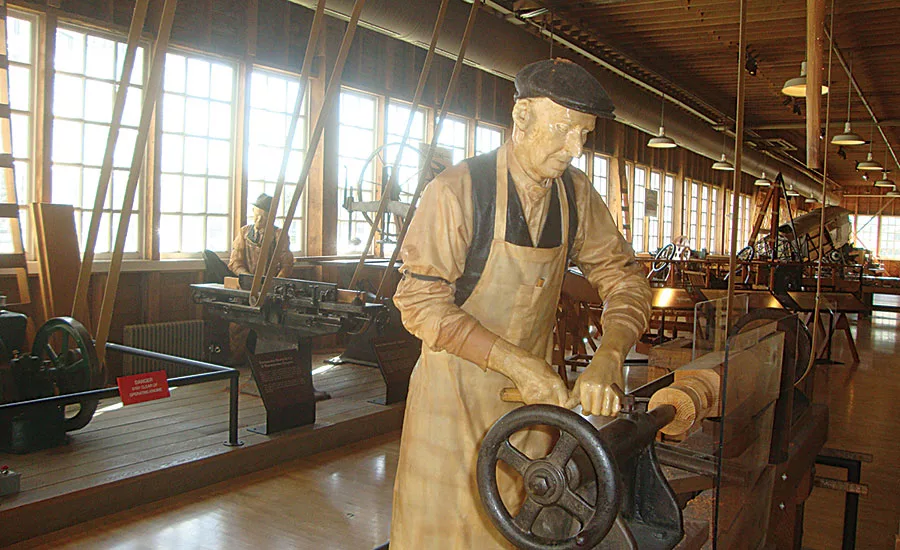
Boeing’s first factory employed woodworkers who operated overhead beltdriven machines that produced fuselage longerons, frames and other parts. Photo by Austin Weber
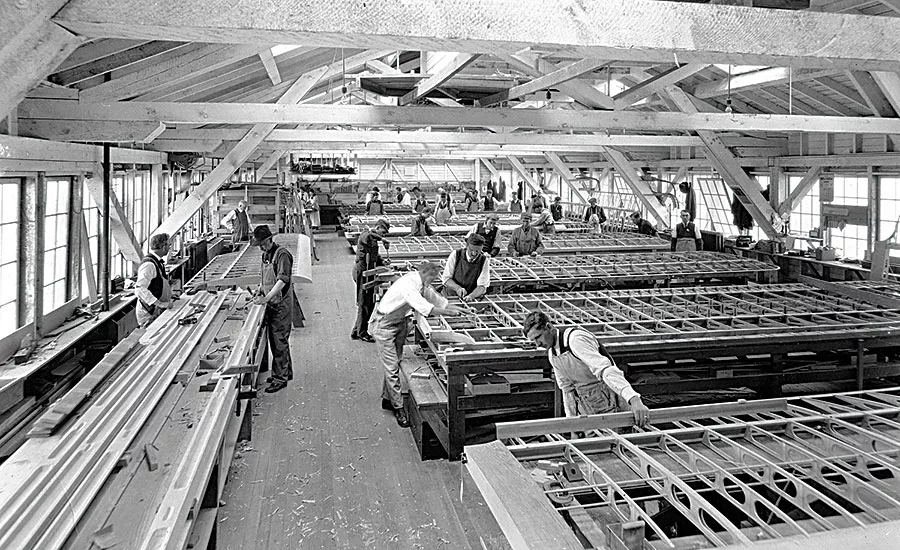
Wing ribs, spars and stringers were assembled in an upper loft of the Red Barn. Photo courtesy Boeing
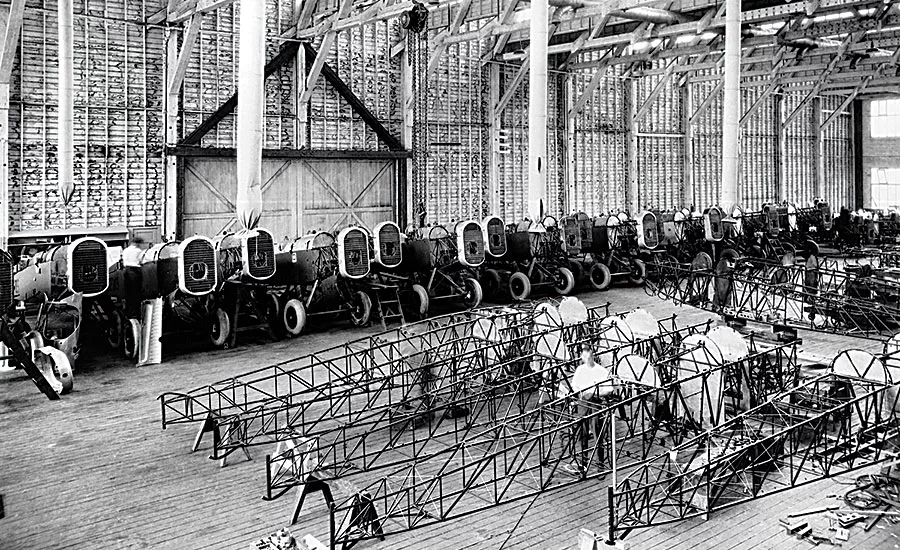
To speed up fuselage manufacturing in the early 1920s, Boeing developed an efficient process for arcwelding light steel tubing. Photo courtesy Boeing
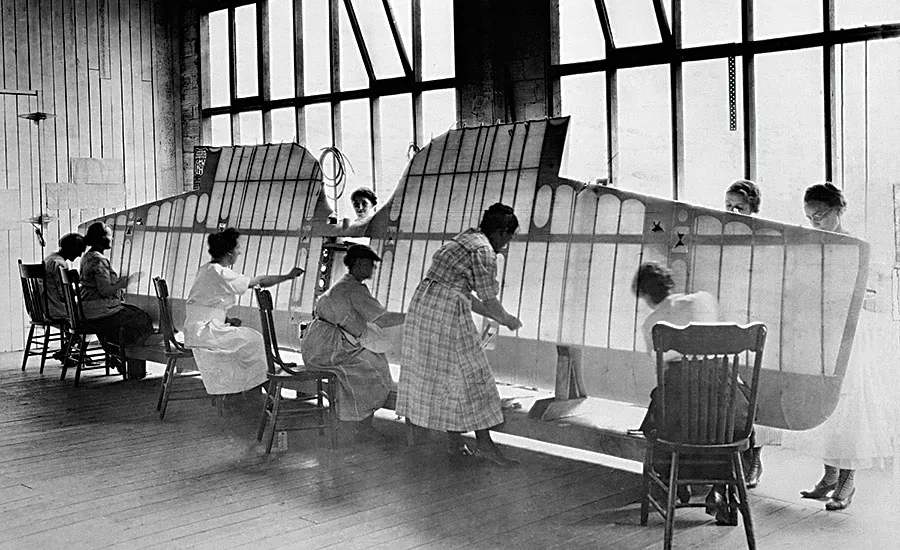
In its early days, Boeing employed teams of seamstresses who stitched together fabric-covered fuselages and wings. Photo courtesy Boeing
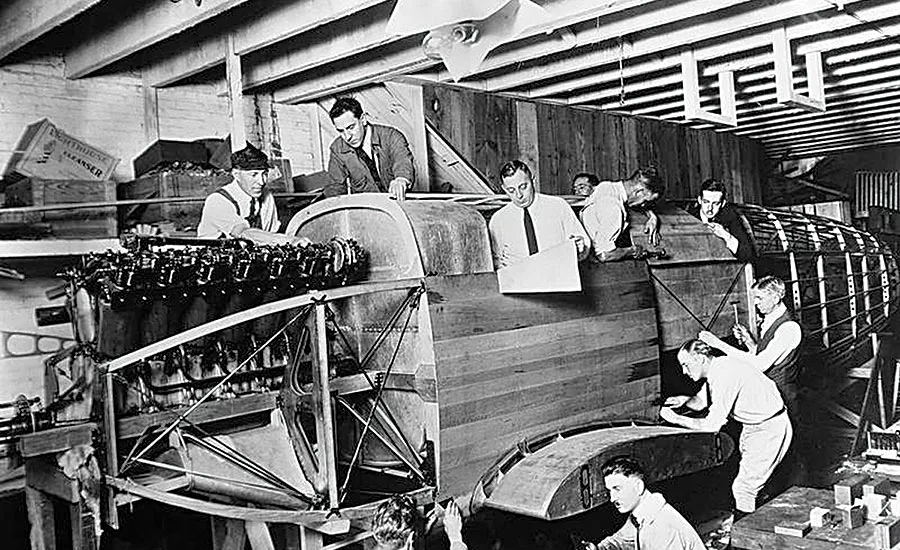
The Cloudster was the first airplane built by Donald Douglas. Photo courtesy Boeing
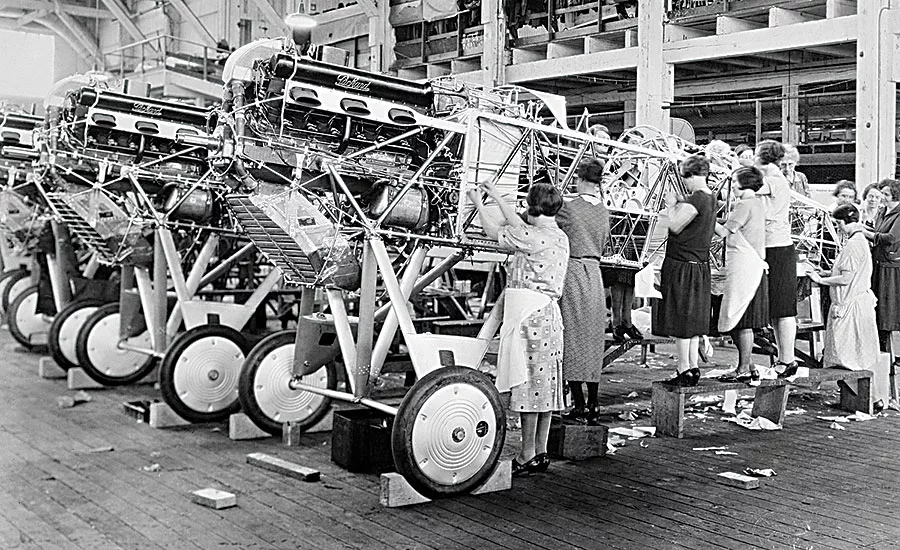
Early on, Boeing developed a reputation for quality, safety and reliability. Photo courtesy Boeing
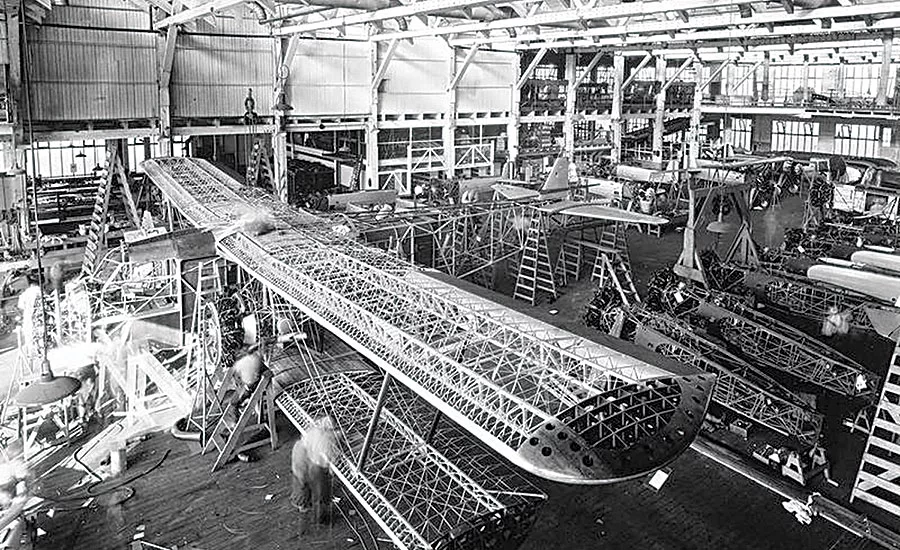
The Model 80 was much larger than the Model 40 mail planes being assembled in the background of Boeing’s factory. Photo courtesy Boeing
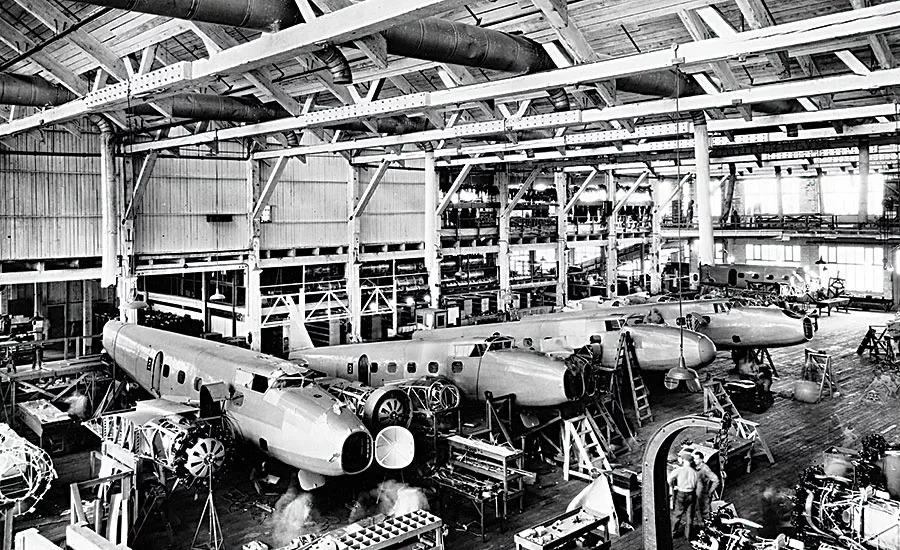
When it debuted in 1933, the all-metal, streamlined Model 247 was hailed as the “first modern airliner.” Photo courtesy Boeing
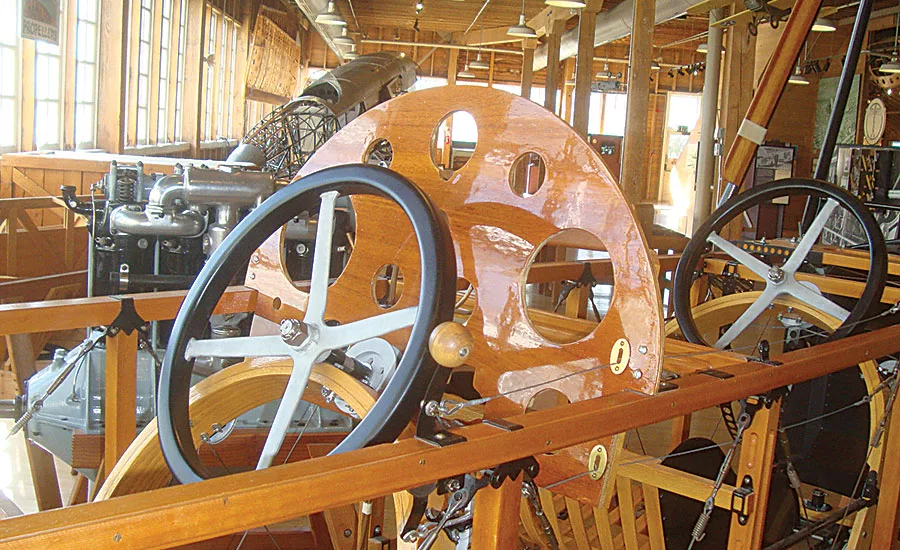
A century ago, plane building was a craft. Early Boeing engineers used materials, tools and production techniques adapted from the boatbuilding industry. Photo by Austin Weber
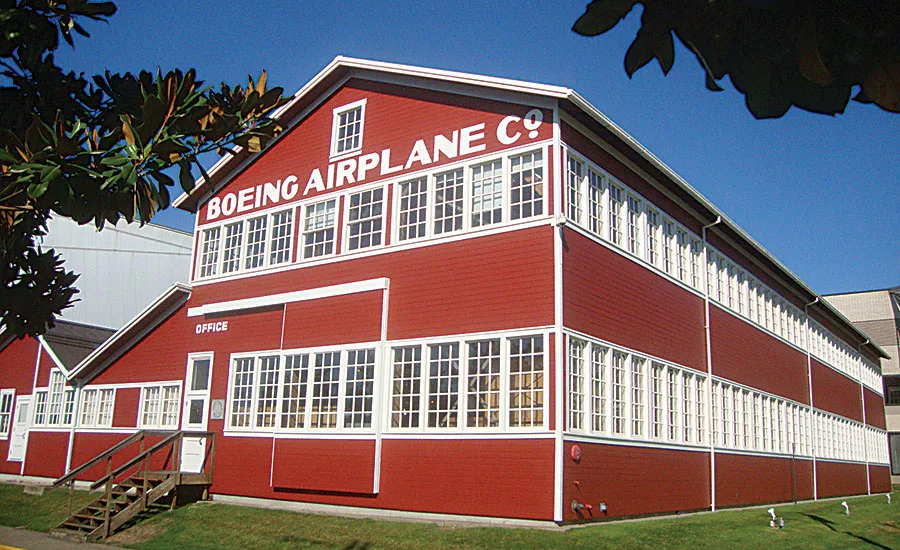
The “Red Barn” served as Boeing’s first factory. Today, it houses a museum dedicated to the company’s early days. Photo by Austin Weber
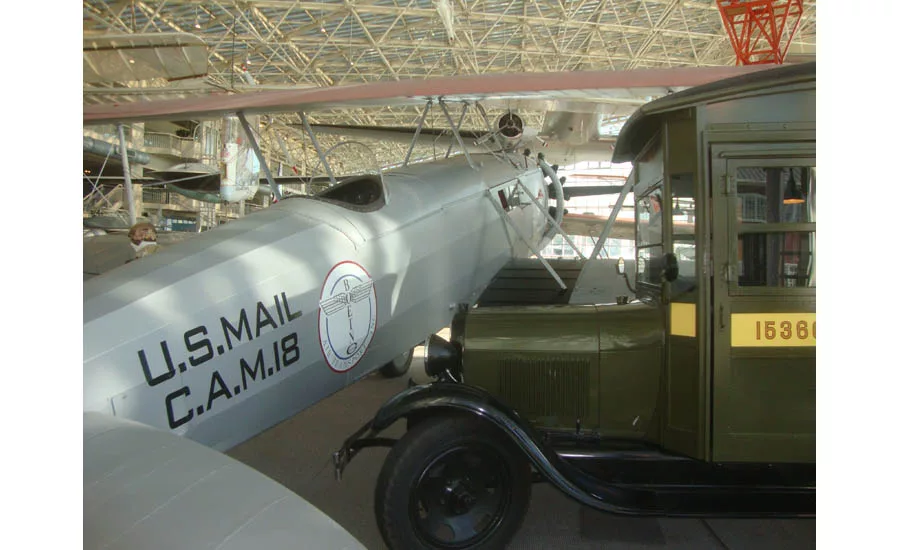
When the U.S. Post Office Department’s air mail service was formed, Boeing jumped at the opportunity to supply planes. Photo by Austin Weber
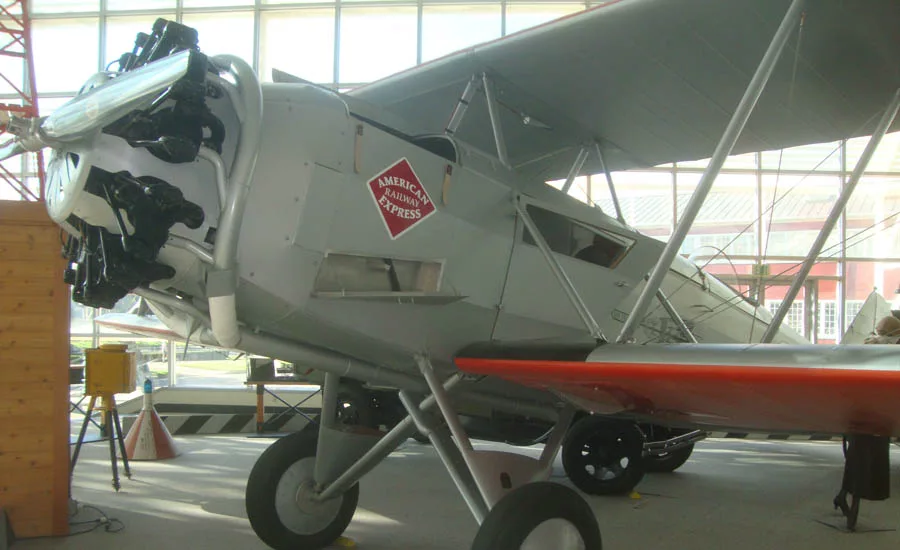
The Model 40 was the first Boeing commercial airplane to go into full production. The plane’s low weight allowed it to carry twice the payload as competitors. Boeing built 77 of the airplanes over a seven year period. Photo by Austin Weber
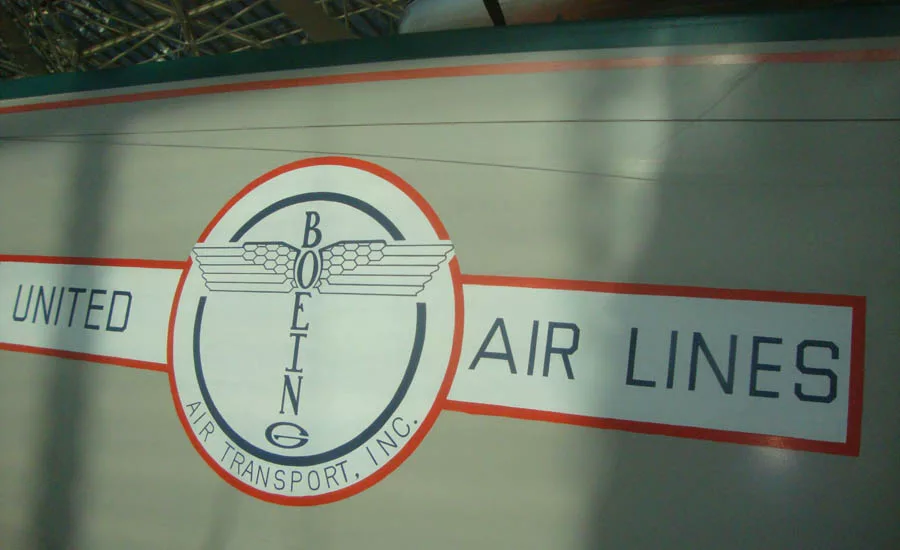
In 1927, Boeing was awarded a lucrative government contract to haul mail between Chicago and San Francisco. A subsidiary called Boeing Air Transport (the forerunner of United Airlines) was started to fly the transcontinental route. Photo by Austin Weber
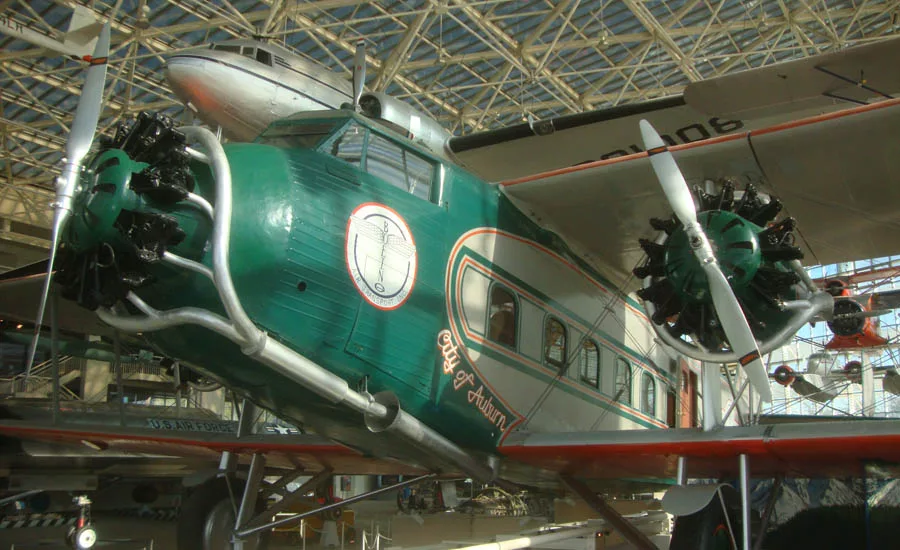
The Boeing Model 80 brought air travel into vogue in the early 1930s. However, it was quickly surpassed by the sleek Douglas DC-3 (plane above). Photo by Austin Weber
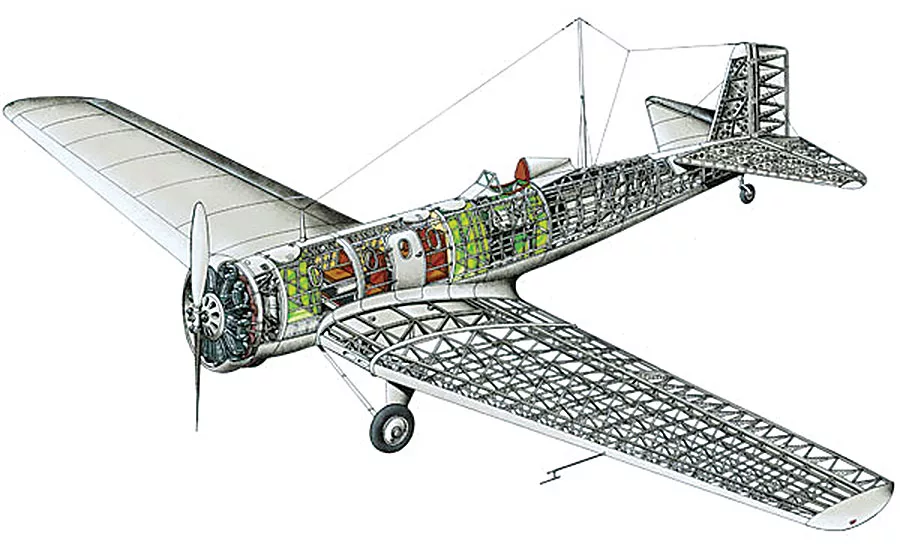
The Model 200 Monomail was a turning point for Boeing engineers. Unlike traditional biplanes, the wing was made entirely of metal and had no wing struts.
During the past 10 decades, Boeing and its heritage companies, such as Douglas Aircraft Co., McDonnell Aircraft Corp. and North American Aviation Inc., have designed and built a wide variety of aircraft. Boeing has evolved from seaplanes to space planes.
Their creations have defended the free world, landed men on the moon and transformed the way that millions of people travel. Aside from being one of the world’s largest companies, Boeing is also the only manufacturer that can lay claim to inspiring both a Hollywood movie and a Broadway play (“Boeing Boeing”).
The company traces its roots to July 15, 1916. That’s when a wealthy Seattle lumber merchant and aviation enthusiast named William Boeing started the Pacific Aero Products Co. (a year later, the name was changed to Boeing Aircraft Co.) to build seaplanes.
Working with an engineer who was stationed at the nearby Puget Sound Naval Shipyard, Boeing had recently designed a two-seat prototype. Twin pontoons handcrafted by local boat builders were attached to a wooden fuselage. Fabric-covered wings were braced with piano wire. A 125-hp engine made by the Hall Scott Motor Car Co. turned a two-blade wooden propeller.
Shortly after Boeing completed the successful maiden flight of the Model 1 over Lake Union, he received a contract to produce 50 trainers for the U.S. Navy, due to World War I.
Boeing set up a factory in a building that became known as the “Red Barn.” The historic facility still exists today and houses part of Seattle’s Museum of Flight.
Wood, Wire and Cloth
A century ago, plane building was a craft. In fact, many early models were built using materials, tools and production techniques adapted from the boatbuilding industry. Wood, wire and cloth were the rule rather than the exception.
Looking for quick answers on assembly and manufacturing topics? Try Ask ASM, our new smart AI search tool. Ask ASM
Early Boeing engineers used a wide variety of wood to build fuselages and wings, including balsa, Douglas fir and Sitka spruce. They also experimented with a new-fangled composite material called plywood. Mahogany was typically used to construct floats, because most planes landed and took off from water.
The Boeing shop employed woodworkers who operated overhead belt-driven lathes, planers and saws to produce fuselage longerons and frames, in addition to wing ribs, spars and stringers. Drill presses, glue pots, wire-bending machines and wire cutters were also a common sight on the factory floor.
The wooden parts were glued, screwed and nailed together with brass hardware using hammers, pliers, screwdrivers, wrenches and other hand tools.
Teams of seamstresses manually stitched together fabric-covered fuselages and wings. They used cotton, linen and silk instead of canvas, because those materials only weighed 3 to 6 ounces per square yard, less than half as much as canvas. The fabric was sealed for strength and durability, and to create a waterproof barrier to protect the wooden interior structure. It was sealed with a wide variety of substances, such as banana oil, celluloid, collodion, linseed oil, rubber and different types of varnishes. Areas around the cockpit where pilots climbed in and out were reinforced with heavier fabric.
After World War I ended in 1918, the domestic aviation industry collapsed. To survive, Boeing briefly turned its attention to manufacturing bedroom furniture and speedboats. However, when the U.S. Post Office Department’s air mail service was formed, Boeing jumped at the opportunity to supply planes. The fledgling company modified surplus war biplanes with tubular metal fuselages that were more rigorous for carrying heavy loads. While metal was stronger, more predictable and easier to use, assemblers were more familiar with wood. Many engineers believed that metal offered significant advantages over wood. However, wood was still lightweight and easy to work with. Plywood skin could be easily shaped to form a smooth surface.
Engineers also had a difficult time developing metal wings and airframes that weighed as little as wood. By 1929, metal wings still weighed up to 36 percent more than wood wings.
One of the big problems with metal was that it buckled when compressed. Unfortunately, stressed-skin structures made this problem more acute. To combat the problems associated with compressive buckling, metal structures required complex curves. In addition, unique riveting and reinforcement requirements increased production costs and added weight.
Welding the Future
When Boeing received a government contract to rebuild war surplus de Havilland DH-4 biplanes—the main aircraft used for airmail service in the 1920s—engineers were forced to explore new assembly processes.
To improve throughput, a Boeing metallurgist named Louis Marsh perfected an efficient process for arcwelding light steel tubing for use in aircraft. It was first used in the PW-9 fighter in 1922. This advanced, electrically based process laid the foundation for mass-production techniques that would become vital to Boeing’s efficiency in future decades.
The DH-4 and PW-9 planes eventually morphed into the Model 40, the first Boeing commercial airplane to go into full production. The plane’s low weight allowed it to carry twice the payload as competitors. The model debuted in 1925 and went into service in 1927. Boeing built 77 of the airplanes over a seven year period.
Boeing engineers used welded steel tubing for the nose and curved woodveneer laminate for the middle of the Model 40 fuselage. However, the wings of the biplane were still made from a combination of wood and fabric.
An air-cooled, 420-hp Pratt & Whitney Wasp engine was 200 pounds lighter than the water-cooled engines used to power the planes produced by rival manufacturers. Parts of the fuselage near the hot-running engine were covered in sheet metal instead of fabric to prevent fire.
Because the plane could carry a heavy payload and was less expensive to operate, Boeing was awarded a lucrative government contract to haul mail between Chicago and San Francisco. In addition to its cargo hold, the plane had a tiny cabin that could accommodate two passengers on the 23-hour journey.
A subsidiary called Boeing Air Transport (the forerunner of United Airlines) was started to fly the transcontinental route. Stops were made in several towns along the way, such as Iowa City, IA; Omaha, NE; Cheyenne, WY; and Elko, NV, to refuel and change pilots.
In the mid-1920s, Boeing also began experimenting with new designs for fighters that featured steel-tube fuselages assembled with arc welding equipment. The company’s big break came with the F4B in 1928. The U.S. Navy and the U.S. Army Air Corps bought 586 of these aircraft in different versions.
To reduce weight, Boeing engineers used bolted aluminum tubing for the fuselage’s inside structure, rather than traditional welded steel tubing. While the fighters were still primarily cloth covered, they incorporated corrugated aluminum control and tail surfaces.
Later versions of the aircraft had corrugated aluminum covering the fuselage instead of fabric and wood. In fact, the last Seattle-built Boeing aircraft with wood and fabric wings, an F4B-4, was delivered in February 1933.
Metal Monoplane
Boeing’s first foray into monoplanes occurred in 1930. Ironically, that’s also the same year that the company’s engineers developed a new welder.
“Boeing Airplane Co., which is an extensive user of electric arc welding in steel structural assembly work, has developed a low voltage, low amperage, AC arc welder that permits the welding of tubing and sheet stock ranging from 0.035 to 0.375 inches in thickness,” explained an item in the Feb. 22, 1930, issue of Aviation News.
“DC welding sets are also used,” it added. “Fuselages, landing gear and other steel structures are assembled by arc welding, while torch welding is used to a limited degree in small subassembly work.”
The sleek, all-metal Model 200 Monomail was a turning point for Boeing engineers. It featured a streamlined engine cowling and retractable landing gear that allowed the plane to be twice as fast as a biplane.
The Monomail also boasted a six-passenger cabin to accommodate growing interest in air travel. However, the pilot still sat in an open cockpit, exposed to the elements. Early pilots resisted change. They were a hardy breed who enjoyed the feel of wind in their hair.
Unlike traditional biplanes, the Monomail’s wing was made entirely of metal and had no struts, due to a construction technique pioneered by Boeing engineers. The 59-footwide wings were low-mounted and cantilevered, which eliminated the need for bracing wires. The innovative design created a much stronger structure and freed up space inside the wing that had previously been clogged with girders and spars.
Under the direction of chief engineer Charles “Monty” Montieth, the plane was originally designed in both monoplane and biplane forms until the advantages of the monoplane’s reduced drag became obvious. It was also the first plane to use a circularsection fuselage, which was covered with a smooth, stretched skin rather than a corrugated surface.
Unfortunately, the Monomail was plagued by propeller problems. But, it paved the way for Boeing’s development of large, multiengine aircraft, such as the Model 247 and the B-9 bomber.
In 1930, Boeing unveiled a plane equipped with three engines that could transport 18 passengers between Chicago and San Francisco in only 20 hours. The Model 80A brought air travel into vogue.
It featured an enclosed cockpit, a heated cabin with leather-upholstered seats and a lavatory with running water. Each of the planes also carried a registered nurse onboard to assist airsick and nervous passengers.
The Model 80A fuselage was assembled with bolted square duralumin tubes in place of welded steel. Boeing engineers designed fuselage bracing to provide unobstructed window openings, which was another nod to passenger comfort.
“The nose of the fuselage, as far back as the rear wing hinges, is constructed to chrome molybdenum steel tubing,” said an article in the May 10, 1930, issue of Aviation News. “From the wing cellules aft, the construction is of bolted square dural tubing.
“The side members of the fuselage have been held to a constant size, 2.25-inch square, over the length of the cabin,” explained the article “This is done to simplify the attachment of the cabin insulation, window frames and fairing strips. The cabin is finished with highly polished Honduran mahogany plywood, which has a thick core of balsa wood for sound insulation.”
While monoplanes were the big design breakthrough of the early 1930s, Boeing engineers insisted that the Model 80A use a biplane wing configuration for extra stability while flying over the Rocky Mountains and to keep landing speeds low at highaltitude airports. However, they used a modified biplane configuration. The upper wingspan was 80 feet vs. 64 feet for the lower wing.
“Both upper and lower wings are in three panels,” said the Aviation News article. “The center sections are attached above and below the body of the transport by four bolts each; the outer panels [are] attached to either end of the center sections by two hinge bolts each.
“Trusses are formed by bolting members together through dural gusset plates, and dural bolts are generally used,” added the article. “Steel bolts are used at some of the heavier stressed joints [such as] the landing gear fittings and the larger drag wires.
“The ribs are riveted dural trusses, with tubular chord members,” the article pointed out. “The diagonals are dural channels, except in cases where the loading required tubular sections. Wings are covered with fabric, with the exception of the upper side of the lower section, which is covered with a metal sidewalk, useful in loading mail or baggage, protecting the wings from gasoline and oil, and also giving access to the nacelles.”
A key development in aircraft assembly also occurred in the early 1930s, when Boeing engineers developed a new type of rivet that made it easier to build metal fuselages and wings.
“When the changeover from ‘stick, wire and cloth’ to all-metal airplanes began, round-head rivets were used to fasten skin to frame,” recalled an article in the May 1950 issue of Boeing magazine. “Soon it was found, however, that each round-head rivet was a tiny anchor, creating turbulence in the airstream and drag for the airplane.
“To escape this, Boeing developed in 1931 what was called BAC 1345, the Boeing skin rivet,” explained the article. “This rivet’s still-rounded head was thinner, flatter and of greater diameter than the conventional roundhead rivet. It did a lot to reduce rivet drag. The Army and Navy officially adopted it as AN 455 in 1932.”
In 1933, Boeing engineers finally said goodbye to the past with the lowwing, all-metal, twin-engine Model 247. The streamlined aircraft was hailed as the “first modern airliner” when it debuted at the Century of Progress world’s fair in Chicago.
The Model 247 featured variablepitch propellers, trim tab controls, retractable landing gear and a soundproof cabin. It could fly faster than existing trimotor transports and had lower operating costs, but the aircraft could only carry 10 passengers.
Quality Standards
Early on, Boeing developed a reputation for quality. In fact, according to period reports, Bill Boeing was a perfectionist. During one visit to the factory floor, he observed a frayed aileron cable. “I, for one, will close up shop rather than send out work of this kind,” quipped Boeing.
A state of the industry article in the Sept. 1, 1928, issue of Aviation News claimed that “Boeing has gained a fine reputation for the performance and reliability of its planes, and for the meticulous care that is has used in their construction.”
“Almost every item used in the construction of Boeing planes is manufactured there from raw materials,” added an article in the Dec. 1, 1928, issue of Aviation News.
In the May 3, 1930, issue of Aviation News, a Boeing production engineer named Robert Johnson wrote an article explaining how parts and components were inspected throughout the production process by a team of 30 people. He explained how quality standards were maintained throughout the factory’s various subassembly departments, which included brazing and welding, fabric and doping, sheet metal, wing assembly and woodworking.
“At the [Boeing plant], inspectors continually supervise the fabrication of the many thousands of parts entering into the assemblage of a single plane, and none of these parts may be used without the unqualified approval of the inspection staff,” claimed Johnson. “In short, the inspector protects the quality of the airplane throughout its entire construction.
“To eliminate the possibility of any unsatisfactory part entering into the construction of an airplane, a complete system of identification and classification of parts by prominently displayed tags, and stamping and numbering of parts, is maintained by the inspection staff,” added Johnson. “The tags are prepared for accepted parts, rejected parts, parts requiring further work, parts requiring repair work, parts accepted for heat treatment and completed planes released from the factory.”
An article in the May 1933 issue of Aviation News illustrated how far Boeing had progressed in just 17 years. “Today, the Boeing Airplane Co. occupies some 13 buildings with a total floor space of over 300,000 square feet, and ranks among the foremost producers of aircraft in the world. To date, the Boeing plant has produced a total of approximately 1,800 airplanes of 53 different types. As of Jan. 1, 1933, more Boeing-built airplanes were in service on American airlines than those of any other manufacturer.
“The changes made at the Boeing plant tell the story of certain trends in design in this country,” added the article. “Laid out originally to produce the old ‘stick and wire’ types, the equipment has gradually been changed over to produce practically 100 percent allmetal airplanes.
“During the intermediate period, when welded steel tube structures were in vogue, Boeing was one of the few manufacturers to develop the use of electric welding,” claimed the article. “Today, sheet metal workers handle virtually all parts going into production. The wood shop which once built the entire plane now is used only to manufacture mock-ups, jigs, templates, dies and fixtures, and to turn out cabin insulation and flooring.”
Heritage Companies
Boeing’s heritage companies, such as Douglas Aircraft Co., McDonnell Aircraft Corp. and North American Aviation Inc., also were innovators. Douglas and North American operated large factories in southern California that contributed to that region’s aerospace manufacturing prowess.
Donald Douglas became infatuated with flight when he witnessed Orville Wright fly above Fort Myer, VA, in 1908. A few years after receiving a mechanical engineering degree from the Massachusetts Institute of Technology (MIT), he started an aircraft company in Los Angeles in 1920.
The 28-year-old’s first product was called the Cloudster. It was designed as a long-range plane for a transcontinental nonstop flight that never occurred. However, it was the first aircraft to “lift a useful load equal to its own weight.”
The Cloudster became the basis for Douglas’ first Navy contract, the DT-1 torpedo bomber. An order for 90 aircraft helped Douglas establish a foothold in the aircraft manufacturing business.
When the U.S. Army was looking for a plane to fly around the world in 1923, the DT series was chosen as the basis for what became the Douglas World Cruiser. Several aircraft were built for the sole purpose of attempting the first circumnavigation of the globe by air.
The aircraft were modified by Boeing engineers in Seattle. They exchanged the planes’ wheels for pontoon floats for the long over-water portion of the flight. The four planes were named for major American cities representing north, south, east and west regions of the United States.
On April 6, 1924, the Boston, Chicago, New Orleans and Seattle took off from Lake Washington on the first leg of their long flight. However, only two of the aircraft survived the perilous journey. On Sept. 28, the Chicago and New Orleans returned to Seattle after logging 27,553 miles.
The flight was the greatest feat in aviation up to that time and earned the Douglas Aircraft Co. its motto, “First Around the World.” It also cemented the company’s reputation in the aircraft industry.
An article in the May 1933 issue of Aviation News said that Douglas Aircraft Co. “has grown to occupy a modern factory of 250,000 square feet [in Santa Monica, CA] and to hold an enviable position of financial strength in the aviation industry.
“The factory has been enlarged several times, and has done considerable original work in the development of such special processes as hydraulic dieforming of sheet metal, multiple drilling of flat plates, compressed air rivet squeezing and mechanically controlled torch cutting,” added the article.
“Several Douglas patented aircraft parts, including a flush type cowling fastener and a steerable fully swiveling tail wheel, are being produced in the shops for other manufacturers, as well as for use on airplanes built by the company,” the article explained.
In 1932, Douglas started building the Douglas Commercial Model One (DC-1) transport, which launched the company into a 60-year history of producing passenger aircraft.
By the mid-1930s, wood was no longer used on American multiengine passenger aircraft. When Douglas unveiled its revolutionary DC-1 twinengine model in 1933, it featured an all-metal, stressed-skin semimonocoque fuselage backed by aluminum alloy stiffeners. The plane quickly evolved into the legendary DC-3.
Like Douglas, James McDonnell was a fellow MIT engineering grad who developed a keen interest in airplanes. He worked for several small aircraft manufacturers and eventually landed a job at Ford Motor Co., which was a major player in the aviation industry during the late 1920s and early 1930s. However, he had the unfortunate distinction of being personally fired by Henry Ford.
In 1939, McDonnell started his own company in St. Louis. Over the next three decades, the McDonnell Aircraft Corp. became a leading producer of jet fighters and missiles. In the early 1960s, it also built the first spacecraft to carry American astronauts into orbit. Along the way, the company pioneered composites and electronics manufacturing in the aerospace industry.
Another company that eventually became part of Boeing was North American Aviation (NAA). It was formed in the 1920s as a holding company that comprised various aircraft suppliers, such as Sperry Gyroscope.
In 1934, under the direction of James “Dutch” Kindelberger (formerly chief engineer at Douglas), the company decided to focus its attention on aircraft manufacturing and built a state-of-the-art factory in Inglewood, CA. Like McDonnell, NAA specialized in military aircraft. By the end of World War II, the company had built more than 40,000 airplanes—more than any other manufacturer.
By 1954, Boeing had become the largest aircraft manufacturer in the world, but Douglas was close behind. Boeing ranked No. 20 on the Fortune 500 list. Douglas was No. 26, while NAA was No. 42.
Douglas Aircraft merged with McDonnell Aircraft in 1967 to create McDonnell Douglas Corp. That same year, NAA merged with Rockwell Standard to create North American Rockwell. At the time, McDonnell Douglas was the largest aerospace manufacturer in the world. It ranked No. 16 on the Fortune 500, followed by Boeing (No. 19) and North American Rockwell (No. 28).
In 1996, Boeing acquired the aerospace and defense business of Rockwell International. The following year, Boeing merged with McDonnell Douglas.
Looking for a reprint of this article?
From high-res PDFs to custom plaques, order your copy today!