Software Aids Harness Design at Porsche
To manage the increasing complexity of vehicle electrical systems, Porsche relies on object-oriented, database-driven design software.
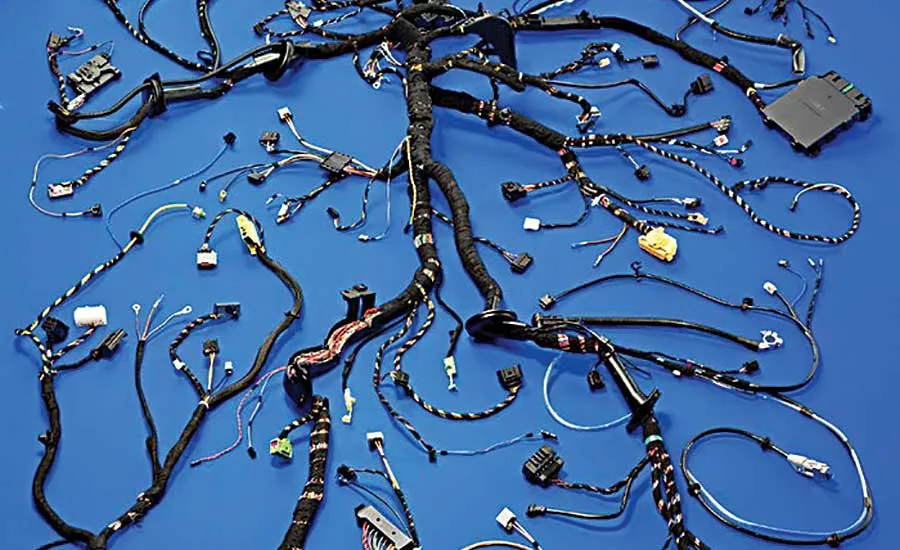
A typical Porsche sports car contains more than 2,000 individual wires. If laid end to end, the wiring would stretch 2 to 3 kilometers. Photo courtesy Porsche
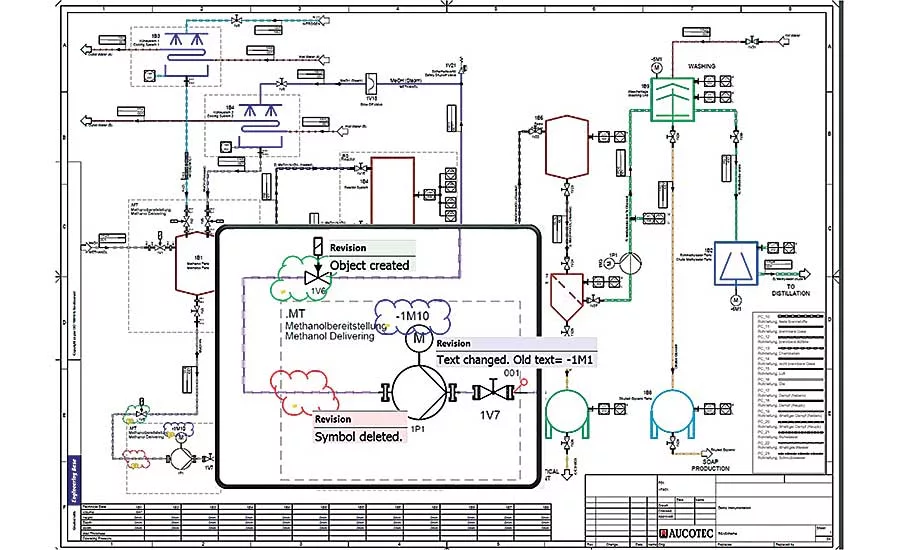
Engineering Base software can be used to design factory systems, such as electrical control systems or fluid distribution systems. Photo courtesy Aucotec
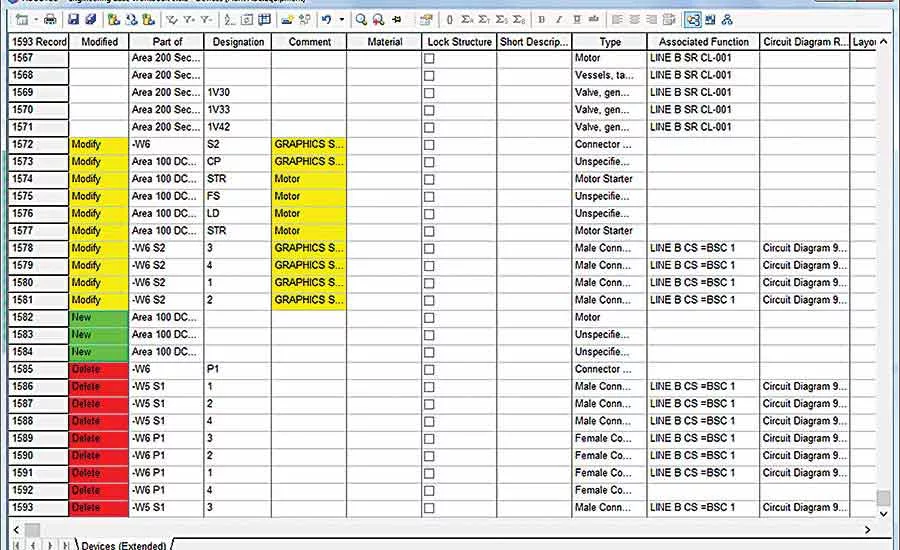
Whenever there’s a change to a harness design, all drawings, diagrams and component lists are automatically updated. Photo courtesy Aucotec

At Porsche, almost no harness design in series production matches another one. Photo courtesy Porsche
A typical Porsche sports car contains more than 2,000 individual wires. If laid end to end, the wiring would stretch 2 to 3 kilometers. Designing such a complex wiring system would be challenge enough, but at Porsche, almost no harness design in series production matches another one.
“Here, we talk about customer-specific wire harnesses, and that is a challenge,” relates Bernhard Metzenbauer, subject specialist for electrical systems, electronics and hardware integration at Porsche’s research and development center in Weissach, Germany.
A subsidiary of Volkswagen, Porsche is the epitome of automotive innovation and high-tech. The R&D center in Weissach has produced more than 3,500 patents, and each year another 100 are added. The center houses workshops, laboratories, wind tunnels and crash-testing facilities. It’s also where vehicle wire harnesses are designed.
To manage the ever-increasing complexity of vehicle electrical systems, the German automaker relies on
object-oriented, database-driven design software, called Engineering Base (EB), from Aucotec AG. Metzenbauer says EB is ideal for this purpose because it can optimally map cable harnesses, including their underlying intelligence, whether the vehicle is a luxury sports sedan with all the bells and whistles, like the Panamera 4S Executive, or a more basic (for Porsche) 718 Cayman sports car.
Using EB, engineers can design wiring harnesses and hydraulic systems for large, complex assemblies like cars, buses or tractors. The software can also be used to design factory systems, such as electrical control systems or fluid distribution systems.
For harness design, various harness components, such as wires, connectors, relays and fuses, are represented as objects. Each object has four relationships. It has a relationship to its visual representation (a two-dimensional drawing). It has a relationship to a list of its attributes and specifications. It has a relationship to a list of rules and logic. And, it has a relationship to other objects in the database.
To design a wire harness diagram, engineers select various harness component objects from a central database and then arrange and connect them on screen. Whenever there’s a change, all drawings, diagrams and component lists are automatically updated.
Looking for quick answers on assembly and manufacturing topics? Try Ask ASM, our new smart AI search tool. Ask ASM
Microsoft Tools
EB software is based on Microsoft components. At its heart is the Microsoft SQL Server, a relational database management system. As a database server, it is a software product with the primary function of storing and retrieving data as requested by other software applications—which may run either on the same computer or on another computer across a network (including the Internet). The SQL Server ensures common management of all engineering data, secure transactions, seamless integration with Windows, and simple administration.
EB’s Application Server manages business logic with its items and their mutual logical relationships. EB Explorer presents data with a familiar look and feel in the structure trees, worksheets and dialogues.
For 2D schematics, EB employs Microsoft Visio. A key feature is full compatibility with Microsoft Office. The entire development environment for Visual Basic for Applications is already integrated for simple workflow automation. These applications can be seamlessly integrated into EB’s database and menus, as can “.Net” solutions.
EB offers three ways to edit: using Explorer, diagrams and worksheets. For special tasks, sector-specific wizards provide optimized views.
Every object is centrally managed in EB. However, it can be edited in all views in the schematic display, as well as in tables or Explorer. Each user is free to choose the approach that is most appropriate for the current phase of work. EB matches itself to the user’s needs and methods.
Thanks to its database, EB can integrate and manage the entire technical content of a project, but also data from linked authoring systems, such as 3D CAD software and control software codes or parameters. Thus, it operates more intelligently than traditional enterprise data management systems, which typically provide a lower level of detail.
Each engineering work stage of each user is stored in EB’s central database and is thus displayed immediately in all documentation views such as Explorer, graphics or tables. Manual revisions, multiple inputs—and thus, multiple sources of error—are eliminated. Changes are visible immediately in each of the multiple representations of an object. All users involved can always see the up-to-date status of an assembly design, regardless of where and how they access the software.
At Porsche, everyone involved in central development now uses only one database for designing. This interdisciplinary planning is the basis of various optimization steps in all of the company’s product lines. That’s important for series production, where saving even a gram of copper can lead to enormous savings.
Each EB database can hold as many projects as necessary. Objects and projects can easily be reused.
One of the strengths of the EB system is its ability to integrate with other types of software used in a manufacturing operation. The software can connect with enterprise resource planning software, product data management and product life cycle management systems, 3D CAD software, and even software for predictive maintenance and simulation. Some links for offline editing of EB data by suppliers with external systems can be easily configured without any programming knowledge. There is also an option in EB for implementing customized integrations, such as Web services for mobile maintenance.
This is a key feature for Porsche. For example, EB can output “as-built” representations of each vehicle harness for Porsche’s service department, which gets the EB data one-to-one, without further processing and precisely matching each vehicle. This greatly facilitates fault localization in the garage.
Since implementing EB for harness design, Porsche is keen on having it established as the standard design software for the entire company. The software’s scalability and open-architecture format will help in making that a reality. “Only now in the live phase have we started to realize that EB offers additional possibilities. These we want to exploit and expand with Aucotec,” says Uli Loser, project manager for information systems for the product generation process at the PAG in Weissach.
Founded in 1985, Aucotec is based in Hannover, Germany, and has subsidiaries and locations in 35 countries, including the U.S. For more information, email USA@aucotec.com or visit www.aucotec.com.
Looking for a reprint of this article?
From high-res PDFs to custom plaques, order your copy today!