Health and Safety in Post-Pandemic Manufacturing
A comprehensive approach will ensure safety and productivity.
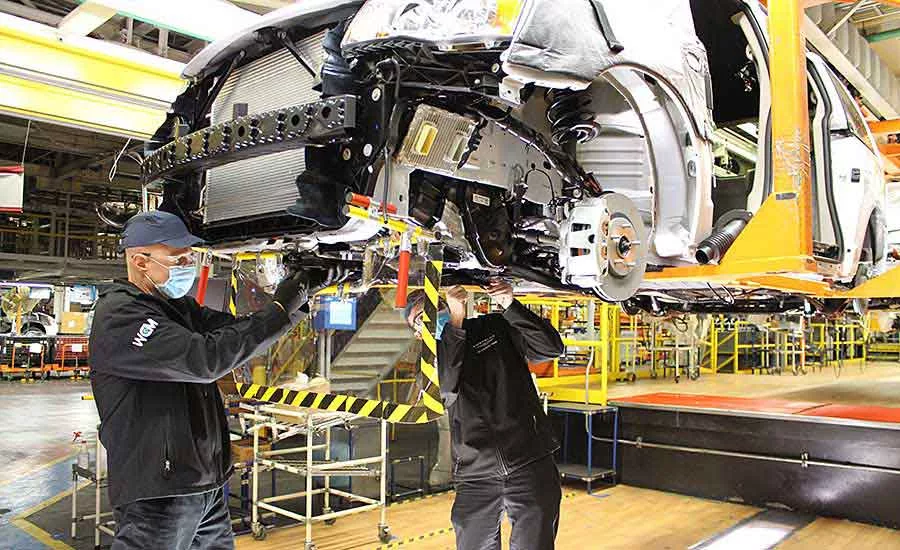
The COVID-19 pandemic has been the largest disruption to the manufacturing in modern history, causing even the largest global manufacturers to stop production. The pandemic forced factories to minimize or stop production for the safety of the employees and often at the demand of local and federal governments.
To minimize the spread, many companies required nonessential employees to work from home when possible and furloughed employees who worked on assembly lines. For essential manufacturers, this meant staggering shifts and running the facilities with the smallest number of employees possible, often producing at a significantly reduced rate.
As manufacturers resume production and workers are called back to the factory floor, there is no going back to the way things were. However, there are also no definitive answers on how to proceed. Agencies such as the Occupational Safety and Health Administration (OSHA) and the Centers for Disease Control (CDC) have put out a number of recommendations for reopening manufacturing facilities as safely as possible, but none of these regulations are required, since not enough information is available about the transmission of C-19.
Richard Kilgore Ph.D., an instructor in the Online Management and Business Administration program at Maryville University in St. Louis, suggests that federal and state regulations will come, but the research will take time.
“This is an unprecedented event, nothing that manufacturers could have ever anticipated,” says Kilgore. “As manufacturers begin to resume production, they are doing so in the safest way possible.”
Managing Contact
With limited regulations and constantly updating guidelines, manufacturers are focused on restarting production with employee health and safety in mind. Ananth Iyer Ph.D., senior associate dean of the Krannert School of Management at Purdue University in West Lafayette, IN, explains that this involves much more than just additional cleaning.
“Manufacturers need to look at the entire manufacturing process and monitor all possible interactions,” states Iyer, who is also director of the Dauch Center for the Management of Manufacturing Enterprises. “How can they optimize movements and build limited contact into the processes?”
Looking for quick answers on assembly and manufacturing topics? Try Ask ASM, our new smart AI search tool. Ask ASM
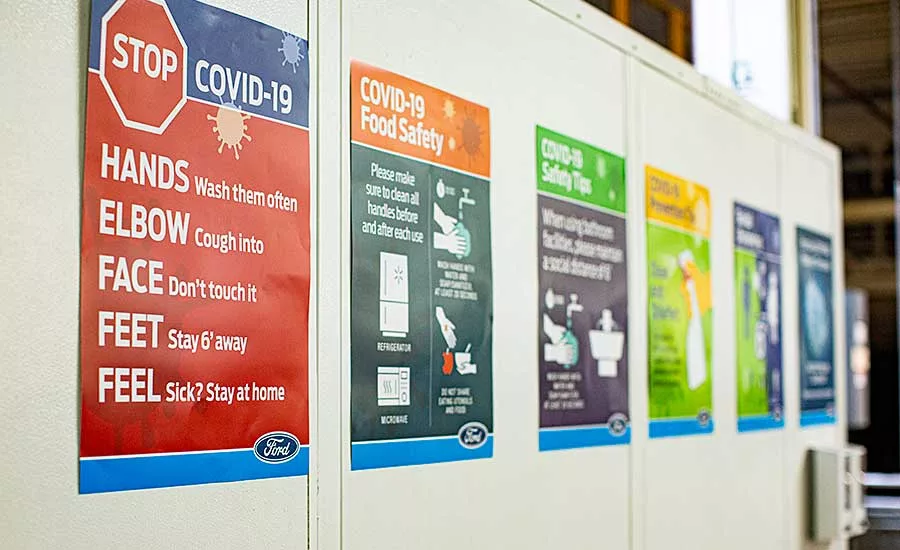
From an infection control perspective, managing contact begins with limiting the number of people entering the facility then ensuring appropriate distancing –e. Current CDC guidelines suggest a minimum of 6 feet of distance on the work floor and in shared spaces. Many companies are restricting access to common areas, such as break rooms and lunchrooms, to prevent unnecessary contact between employees.
Six feet of space between workers on an assembly line represent a major challenge for manufacturers. Iyer suggests adjusting the layout of the line if possible. By rotating a machine or section of the line, this distance can be created with minimal interruptions to the process. This may not be feasible for every company, in which case different options should be explored.
Julian Salguero, partner at the consulting firm McKinsey & Co., says that manufacturers should audit their processes to reduce the number of people working on each process in order to create more lines. For example, a certain assembly might have 50 people involved from start to finish. If the same assembly process can be completed with 10 people, then the company could create five identical assembly lines running simultaneously, thereby reducing employee contact.
Staggering shifts can also limit the number of employees per shift, while maintaining a rate of production that is similar to pre-pandemic levels.
Physical Barriers and Protective Equipment
While limiting the number of workers and maintaining appropriate distance are ideal, it is not viable for every manufacturer. Per CDC guidelines, barriers should be installed between workers. These can be made from metal, Plexiglas or any impermeable material. The downside of these physical barriers is they can slow down the assembly process and take up much-needed space. Kilgore points out that these barriers are also only effective where they are installed. Any movement by workers renders them ineffectual.
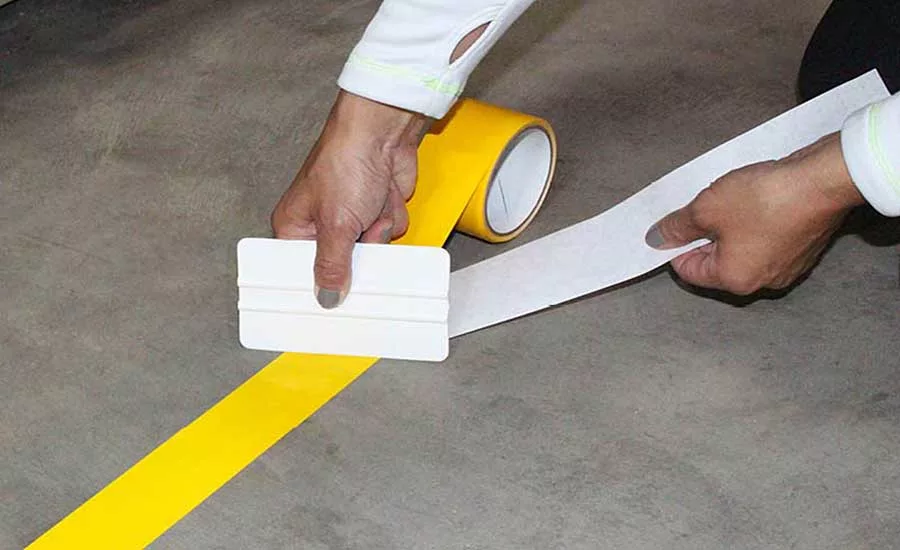
While physical barriers can block transmission, items such as signs and floor tape can be used to give employees a visual reference for appropriate distances. Tape and signs are available from companies such as Lean Factory America, Visual Workplace Inc. and ULINE.
Personal protective equipment (PPE) should be standard and part of the uniform, according to Kilgore. Face masks should be worn to prevent the transmission of Covid-19 through respiratory droplets. PPE is a more effective barrier since it moves with the wearer, unlike static barriers. While movement and contact should be limited, face masks and shields offer protection when close interaction is inevitable.
Kilgore says the companies should provide PPE for the employees and ensure that all equipment is standardized and certified by OSHA and the CDC. This is for the health and safety of the employees, as well as the company’s liability. Additionally, manufacturers should confirm the local and state regulations for barriers and acceptable PPE.
Screening and Technology
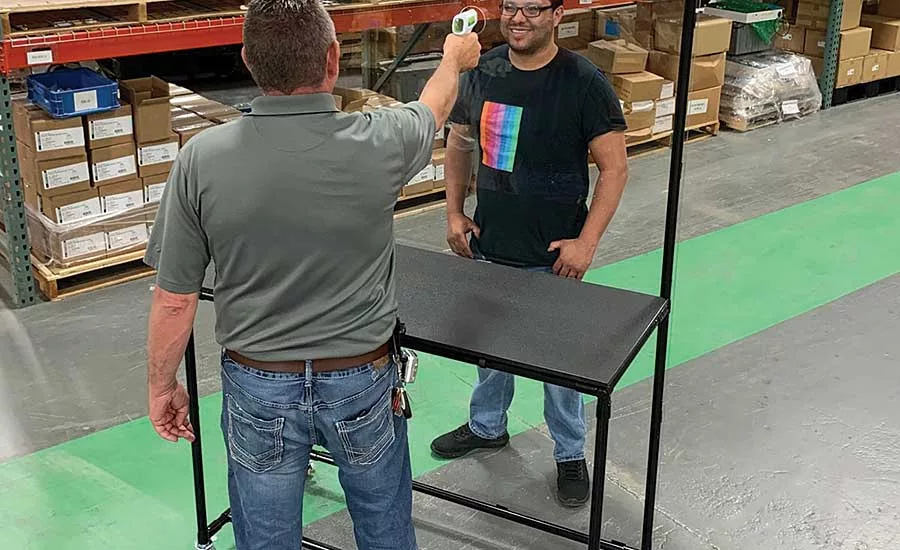
In addition to PPE and managing contact, screening employees is a crucial part of managing infection control in manufacturing facilities. One way in which companies are screening their employees is with temperature checks before entering the facility. Utilizing non-contact scanning thermometers at the entrance to a plant minimizes the risk of spreading infection. Any employee with a fever should be sent home. Creform offers a temperature screening station that keeps a protective barrier between the scanner and the employees for added protection.
Unfortunately, it has been shown that up to 50 percent of people with COVID-19 are asymptomatic, so a temperature check will not prevent them from entering the workplace. This is why many companies are opting to have employees fill out daily surveys or checklists, asking whether they have knowingly come in contact with anyone who has tested positive for Covid-19, if they are experiencing any symptoms and other related questions.
According to Salguero, data collection is key to preventing an outbreak and managing a facility with limited staff. Equally important is sharing the data with the employees. Iyer states that companies that are open with their employees about the preventative measures and safety protocols have higher rates of employee satisfaction and trust. Manufacturers may opt for an app or digital platform to keep an open line of communication with employees about the state of the facility.
Utilizing technology allows for added distancing and contact tracking. For example, Ford Motor Co. is using smart watches for contact tracing, and to ensure that employees are keeping safe distances and remaining in their designated zones. Real-time data collection on line performance allows management to work remotely while staying connected and allows for real-time error resolution.
In the future, Salguero anticipates the use of augmented reality for training and contracting. This would allow for hands-on learning and training at a responsible distance. Additionally, manufacturers who are diligent about data collection and metrics should be able to better prepare for another global crisis or second wave.
“There isn’t one solution or quick fix,” says Salguero. “Companies will be successful with a comprehensive set of measures and data collection.”
Cleaning and Sanitation
Once employees are in the facility, cleaning and sanitizing are one of the last lines of defense. While screening helps to minimize the risk of an infection entering the facility, cleaning can help minimize the spread within the facility. Since COVID-19 is still a new illness, the exact lifespan of the virus on surfaces and the means of transmission aren’t completely understood. According to Greg Wyatt, executive vice president for engineering and operations at Goodway Technologies, OSHA and CDC guidelines are evolving daily.
Cleaning and sanitation are both important to the health and safety of manufacturing employees, with cleaning.
“When employee health is at elevated risk, it becomes necessary to mitigate this risk by sanitizing,” says Wyatt. “By choosing a sanitizer and application method that has received EPA approval for the particular pathogen of concern, we gain some confidence in knowing we are following a process that is supported through rigorous efficacy testing. All of this is good protocol but ultimately what matters to employees is whether they feel safe while performing their jobs.”
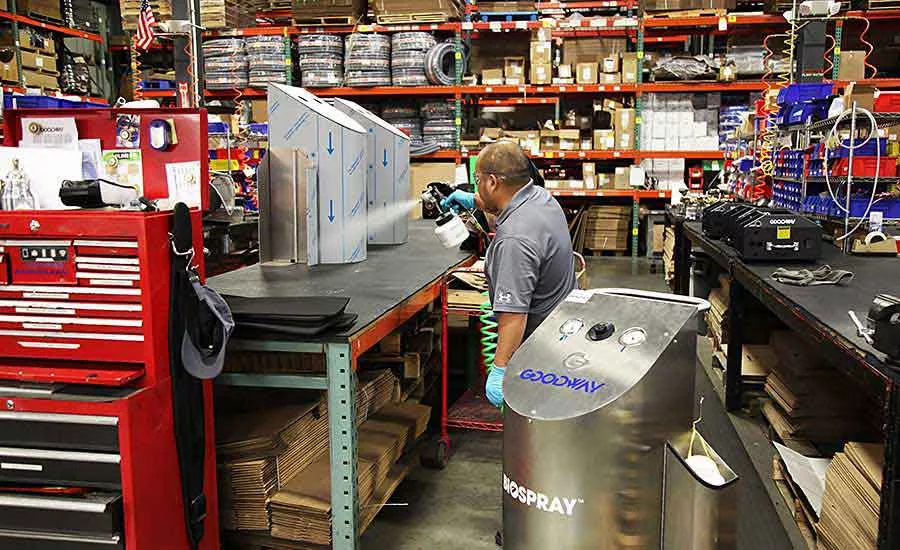
At Goodway, alcohol-based sanitizers are used to disinfect surfaces. The company’s Biospray system uniformly coats all surfaces which are then left for a set amount of time. This “dwell time” ensures that no pathogens are spread when the surface is wiped down. Goodways system can also be used to sanitize tools.
Tool manufacturers, such as Ingersoll Rand, have put out guides on how to properly clean and sanitize their products. These guides suggest cleaning products that will not damage the tools as well as what parts shouldn’t be exposed to liquids. Before and after coming in contact with shared tools and equipment, employees should be encouraged to wash their hands with soap and warm water for at least 20 seconds or use an alcohol-based hand sanitizer.
Additionally, airflow is a critical element to maintaining a safe facility. Iyer states that additional ventilation should be added to bring in fresh air and recycled air will need to be managed safely. Manufacturers should look to OSHA and CDC for updated guidelines on cleaning and sanitation, as well as information on transmission and acceptable PPE.
In addition to the CDC and OSHA websites, a number of resources are available to manufacturers. Visual Knowledge Share is offering a free version of itsVKS Lite software to convert operating procedures into paperless forms. Lear Corp. has produced a free handbook that outlines the steps to reopening, managing employee safety and productivity. Salguero suggests that supply chains work together to share costs and information. OEMs need their suppliers to succeed, so they should offer whatever support they can.
As much as companies would like to return to pre-pandemic levels of production, the goal should be to keep their employees safe and healthy even if it means abandoning some lean methods. Manufacturers, employees and customers will adjust to the new normal.
“Safety is always at the core of manufacturing. Safety precautions are built into normal operations and with every piece of tooling and machinery,” says Iyer. “This will just become another standard safety procedure.”
Looking for a reprint of this article?
From high-res PDFs to custom plaques, order your copy today!