Assembly Magazine logo
search
Ask ASSEMBLY AI
cart
facebook twitter linkedin youtube
  • Sign In
  • Create Account
  • Sign Out
  • My Account
Assembly Magazine logo
  • TRENDS
    • Ask ASSEMBLY AI
    • Trends
    • News
    • New Products
  • INDUSTRIES
    • Aerospace
    • Appliance
    • DFMA Assembly
    • Medical Devices
    • Green Manufacturing
    • Lean Manufacturing
    • Machinery Assembly
    • Electronics Assembly
    • Automotive
  • TECHNOLOGIES
    • Adhesives & Dispensing
    • Assembly Presses
    • Automated Assembly Systems
    • Manufacturing Management
    • Manufacturing Software
    • Motion Control
    • Screwdriving & Riveting
    • Robotics
    • Test & Inspection
    • Plastics & Metal Welding
    • Wire Processing
    • Workstations
  • AUTONOMOUS & ELECTRIC MOBILITY
    • AEM Magazine Archives
    • Autonomy
    • Electrification
    • Mobility Services
    • Assembly & Testing
    • AV/EM News
  • MEDIA
    • Ask ASSEMBLY AI
    • Podcasts
    • Assembly News Now
    • Assembly TV
    • Webinars
    • eBooks
  • EVENTS
    • Calendar
    • The ASSEMBLY Show
  • MORE
    • Exclusives >
      • Plant of the Year
      • Capital Spending
    • Buyers Guide >
      • Supplier Insights
    • Classifieds
    • Featured Products
    • Newsletters
    • Store
    • White Papers
    • Columns
    • Sponsor Insights
  • INFOCENTER
    • Assembly & Test Solutions
  • EMAGAZINE
    • eMagazine
    • Archive Issues
    • Advertise
    • Contact Us
    • Sign Up
ColumnsCoronavirus CoverageAutomated Assembly SystemsRobotics AssemblyMoser on Manufacturing

How Automation Accelerates Reshoring—Part 1

By Harry Moser
moser
How Automation Accelerates Reshoring—Part 1
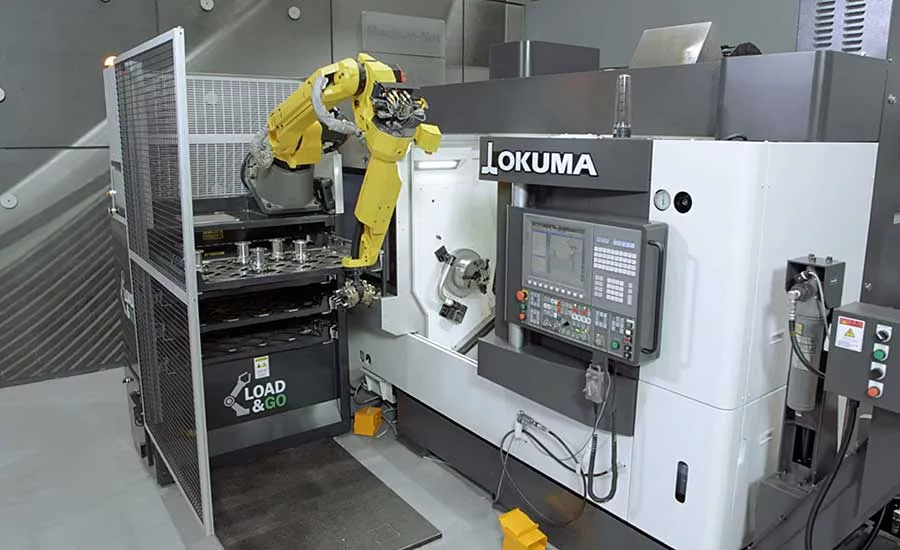
With its higher wages and workforce shortages, the U.S. should be investing much more than either country. Yet, in U.S. shops, machine tools are, on average two or three years older than those in German shops. Photo courtesy Okuma America Corp.
moser
How Automation Accelerates Reshoring—Part 1
December 11, 2020

COVID-19 has accelerated deglobalization in manufacturing, but that shift was already underway before the pandemic. Between 1990 and 2016, global trade had been growing at average annual rate of 4.9 percent, according to the World Trade Organization. It’s been waning ever since. Global trade grew just 3 percent in 2018, and it actually declined 0.1 percent in 2019.

New automation technologies that offset higher wages are driving deglobalization by increasing efficiency. As labor becomes a smaller share of the total cost of manufacturing, companies that once offshored due to cheap labor are beginning to favor production in closer proximity to the markets they serve. In other words, they are reshoring. Reshoring is also empowering risk mitigation, resiliency, agility, responsiveness and faster time to market.

Automation enables reshoring motivated by COVID-19. At the same time, COVID-19 drives automation, since machines cannot get sick. Companies are having problems attracting workers back from quarantines, and they are finding automation to be the only alternative.

This is a decisive moment for U.S. manufacturing. Implementation of automation technologies will transform U.S. manufacturing competitiveness and accelerate reshoring.

For example, Stitches USA, an Ohio-based flag-maker, and Buckeye Mask, a startup formed by three Cleveland-based manufacturing entrepreneurs, turned to automation technology to produce 1.5 million cotton masks needed for the COVID-19 pandemic. With a $3.5 million investment and an entrepreneurial spirit, the two companies partnered to install 15 automated sewing machines that could profitably make up to 100,000 masks per day. The investment in automation enabled them to compete globally on quality and price.

Industrial automation and reshoring are closely connected. Reshoring increases capacity utilization, which drives capital investment in the newest automation technologies. The new systems increase competitiveness and enable recruitment of a smarter, tech-oriented workforce—thus enabling more reshoring. The U.S. must improve the terms of trade (for example, by lowering the value of the dollar compared to other global currencies), so that U.S. manufacturing capacity utilization exceeds 80 percent. That would incentivize more U.S. manufacturers to invest and automate.

Electrical and automation-equipment company Schneider Electric is a good example. Pandemic-related logistics problems prompted the company to consider localizing more manufacturing for both itself and its customers. Pre-existing investments in automation and software enabled them to shift more work away from China without significantly increasing operating costs. The Schneider “smart factory” in Lexington, KY, now makes 70 to 80 percent of the parts needed for its products in-house. The Lexington plant is so productive that it now ships some parts to Schneider’s Mexico facilities instead of the other way around.

Looking for quick answers on assembly and manufacturing topics? Try Ask ASM, our new smart AI search tool. Ask ASM →

Automation will most certainly transform jobs in the manufacturing sector. However, the U.S. is not the only country in the world that is adopting automation. Other countries, especially China, are investing heavily in these technologies. The market research firm International Data Corp. reports that China’s spending on robotics will reach $59.4 billion in 2020 and account for 30 percent of worldwide robotics spending.

China also spends three times as much as the U.S. on CNC machine tools. Korea has three times as many robots per thousand manufacturing workers as does the U.S. With its higher wages and workforce shortages, the U.S. should be investing much more than either country. Yet, in U.S. shops, machine tools are, on average two or three years older than those in German shops.

The choice is clear. Either we automate or we lose more jobs to offshore automation than we would to domestic automation. Automation will continue to eliminate some low- and mid-skill jobs. However, it decreases cost and restores competitive advantage, making more reshoring possible. More reshoring and less offshoring means more manufacturing jobs.

In part 2, we will discuss using total cost of ownership and automation to enable reshoring.

KEYWORDS: coronavirus factory automation Jobs reshoring total cost of ownership

Share This Story

Looking for a reprint of this article?
From high-res PDFs to custom plaques, order your copy today!

Harry Moser is the president of the Reshoring Initiative. His column will appear every other month, alternating with Austin Weber’s “On Campus.” Has your company reshored production? Are you thinking about it? We’d like to hear of your success or help you achieve it. With your approval, we would love to report on your successes or opportunities in future issues. Contact harry.moser@reshorenow.org.

Recommended Content

JOIN TODAY
To unlock your recommendations.

Already have an account? Sign In

  • Made in the U.S.A.

    Consumer Products Manufacturing: Made in the USA

    Supply chain lessons learned during the coronavirus...
    Automated Assembly Systems
    By: Austin Weber
  • Best Practices for Press-Fit Assembly

    Best Practices for Press-Fit Assembly

    In manufacturing, ironclad formulas for success are hard...
    Assembly Presses
    By: Jim Camillo
  • aem0523leader-tesla1.jpg

    Tesla Rethinks the Assembly Line

    Engineers at Tesla Inc. have developed a new process that...
    Industries
    By: Austin Weber
Manage My Account
  • eMagazine Subscription
  • Assembly Newsletters
  • Online Registration
  • Subscription Customer Service
  • Manage My Preferences

More Videos

Sponsored Content

Sponsored Content is a special paid section where industry companies provide high quality, objective, non-commercial content around topics of interest to the ASSEMBLY audience. All Sponsored Content is supplied by the advertising company and any opinions expressed in this article are those of the author and not necessarily reflect the views of ASSEMBLY or its parent company, BNP Media. Interested in participating in our Sponsored Content section? Contact your local rep!

close
  • ultrasonic welding
    Sponsored bySonobond Ultrasonics

    Engineering Efficiency in High-Performance Assembly: How Ultrasonic Welding Enhances Throughput, Reliability and Quality

  • UV curing system
    Sponsored byDymax

    Why UV Intensity Alone Doesn’t Define Curing Performance

  • wooden pallets
    Sponsored byLEAN Manufacturing Products

    Eliminating Waste on the Shop Floor: Applying Lean Principles to Improve Manufacturing Efficiency

Popular Stories

ASSEMBLY News Now, episode-30: Volvo Redesigns EV Manufacturing

Volvo Redesigns EV Manufacturing

Boeing CEO Kelly Ortberg announces 1 billion investment

Boeing Plans $1 Billion Wichita Investment, Workforce Training Center

automated consumer goods assembly system

Best Practices for Cycle Time Optimization

Watch the latest episode of ANN now!

Events

July 24, 2025

From Shop Floor to CFO: How Manufacturers Are Closing the Loop Between Operations and Finance

On Demand Learn how manufacturers are bridging the gap between the shop floor and ERP systems to gain real-time visibility, streamline operations, and kick-start digital transformation—without waiting years.

Sponsored by:

PicoStratusGreen
July 30, 2025

Buffer Analysis and Design Fundamentals for Manufacturing Excellence

On Demand In this presentation, Dr. Herman Tang shares practical insights from his industry experience and research on buffer management in manufacturing operations.

View All Submit An Event

Poll

Difficult Assembly Processes

Which assembly process gives you the most difficulty?
View Results Poll Archive

Products

Manufacturing Cost Policy Deployment (MCPD) Profitability Scenarios: Systematic and Systemic Improvement of Manufacturing Costs

Manufacturing Cost Policy Deployment (MCPD) Profitability Scenarios: Systematic and Systemic Improvement of Manufacturing Costs

See More Products
Register for webinar - Modernizing Automotive Assembly: Why Upgrading Legacy MES is a Business Imperative

Related Articles

  • moser

    How Automation Accelerates Reshoring—Part 2

    See More
  • moser

    A deeper dive into Total Cost of Ownership (TCO): Part 1

    See More
  • moser

    Manufacturers cut out the middleman (part 1)

    See More

Related Products

See More Products
  • pocket.jpg

    How To Implement Lean Manufacturing, Second Edition

  • leaner

    Leaner Manufacturing: How to Make the Lean Production Process Easier, Faster, and More Cost-Effective

See More Products

Related Directories

  • HowToRobot

×

Never miss the latest news and trends driving the manufacturing industry

Stay in the know on the latest assembly trends.

JOIN TODAY!
  • RESOURCES
    • Advertise
    • Contact Us
    • Directories
    • Manufacturing Division
    • Store
    • Want More?
  • SIGN UP TODAY
    • Create Account
    • eMagazine
    • Newsletters
    • Customer Service
    • Manage Preferences
  • SERVICES
    • Marketing Services
    • Reprints
    • Market Research
    • List Rental
    • Survey/Respondent Access
  • STAY CONNECTED
    • LinkedIn
    • Facebook
    • Instagram
    • YouTube
    • X (Twitter)
  • PRIVACY
    • PRIVACY POLICY
    • TERMS & CONDITIONS
    • DO NOT SELL MY PERSONAL INFORMATION
    • PRIVACY REQUEST
    • ACCESSIBILITY

Copyright ©2026. All Rights Reserved BNP Media, Inc. and BNP Media II, LLC.

Design, CMS, Hosting & Web Development :: ePublishing