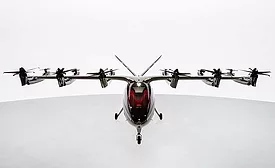
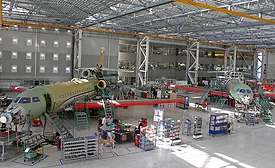
COVINGTON, GA—Archer Aviation Inc. will invest $118 million over the next 10 years to build a new assembly plant here to produce an electric vertical takeoff and landing aircraft (eVTOL).
Rotor blades, guide vanes and other components for jet engines are made from costly materials and machined to precise tolerances. Such components are typically made in batches, due to the time involved in setting up machine centers. The process also requires a fair number of people to tend the machines and assist in changeover.
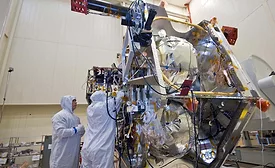
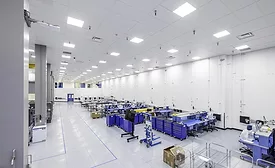
BALTIMORE—Northrop Grumman Corp. has opened the Maryland Space Assembly and Test 2 facility at its manufacturing campus here. The 55,000 square foot facility provides a digitally integrated manufacturing, assembly and test hub to support customer needs and the company’s growing space payload and ground systems capabilities.
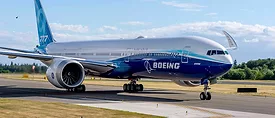
The Boeing 777 jetliner is the backbone of many international airlines. The reliable workhorse, which has been used on long-haul flights for three decades, is produced in several variants. The aircraft’s 20-foot-wide aluminum fuselages range anywhere from 209 to 242 feet long.
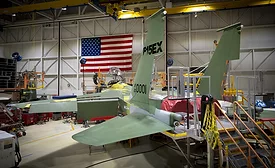
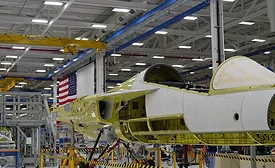
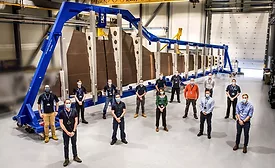
MESA, AZ—Boeing’s Defense, Space and Security business unit has unveiled its new Advanced Composite Fabrication Center here, which has been purpose-built to produce advanced composite components for future combat aircraft.
EL SEGUNDO, CA—Boeing has unveiled a new high-throughput assembly line here production, integration and testing of small satellites. Designed for efficiency and rapid delivery timelines, the line will be housed in Boeing’s 1-million-square-foot factory, the world’s largest satellite factory. The line will be run by Boeing subsidiary Millennium Space Systems.
ST. LOUIS—Boeing is investing $5 million over the next five years to expand the Advanced Manufacturing Innovation Center here. The investment will help fund a state-of-the-art advanced manufacturing facility, accelerate workforce development programs, and grow the region’s talent pipeline and technical and manufacturing abilities.
MELBOURNE, FL—Dassault Falcon Jet has announced plans to create 400 new jobs and build a $115 million aviation maintenance facility near the airport here.
Assembling the world’s most advanced air defense missile requires technological innovation, especially when annual production is set to increase to 500 by 2024.
 RSS
RSS