The N95 Respirator Scandal
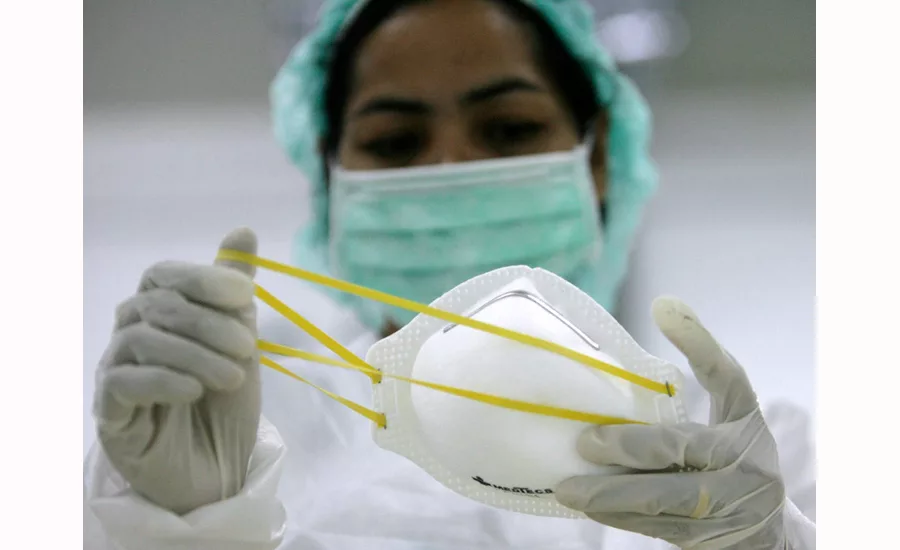
Here we are, nine months since COVID-19 upended the world, and the official federal government virus management strategy is…hopes and prayers. As I write this, the official U.S. virus death toll exceeds 200,000, though most epidemiologists are certain that the real number is much higher, and the fatality rate is heading up again. Adm. Brett P. Giroir, MD, assistant secretary for health at the U.S. Department of Health and Human Services and the director of U.S. coronavirus diagnostic testing, told CNN on Sept. 20 that “We could have as many as a hundred million doses [of vaccine] by the end of this year.” Except there’s no proof that any of the vaccines entering or in the critical third stage of testing (the evaluation of how the vaccine affects tens of thousands of people rather than a few hundred) will protect against the virus and not cause nasty side effects. That means we are still left with only one method of protection—masks.
COVID-19 is the most serious manufacturing crisis today. I included masks in my discussion here in June about safety strategies for assembly plants during the pandemic. Since then, more evidence has shown that the virus spreads primarily by aerosol. Breathing, in other words. It’s pretty clear now that wearing masks conscientiously is the most effective way of preventing infection. But, not all masks are equally effective, and some, consisting of a single layer of thin, highly porous fabric, may be useless. At least two layers of non-woven fabric are necessary and, ideally, we should all be wearing N95 masks, technically known as “respirators.”
In January, N95 respirators sold for less than $1 each in effectively unlimited quantities. In a matter of weeks, they became rarer than passenger pigeons. Medical workers died in shockingly high numbers because they had to go into medical battle without respirators (or, for a very long time, gloves, gowns and face shields). We need respirators in massive quantities now and, it seems likely, for a long time to come. Fortunately, this is America. Historically, U.S. manufacturers have been good at responding to production crises. So why on earth are hospital workers still forced to recycle N95 respirators when Detroit automakers with no aircraft experience were able to start turning out dozens of planes daily in less time than we’ve been dealing with the virus? After all, as the president keeps telling us, we are now up to our necks in ventilators. The absence of respirators is a failure of scandalous proportions that I’ve been struggling to understand for months. Until recently.
On Sept. 21, the Washington Post laid out in exquisite detail the reasons why hospitals, let alone you or I, still can’t lay our hands on N95 respirators. It turns out to be nothing more complicated than business incentives combined with a failure of will at the federal level. Let’s start with the business incentives.
Like many superficially simple objects, production of N95 respirators is a capital-intensive business. The handful of companies that make N95 respirators in America fear spending heavily to ramp up production for demand that may not last long enough to recover the investment. It’s a perfectly rational private sector decision. Unfortunately, the pandemic resides in the public sector (government, in other words) and the federal government has failed.
The respirator manufacturers’ problem is exactly what the Detroit automakers faced going into WWII. Transforming automotive factories into aircraft plants required enormous amounts of money and the demand for military planes would collapse quickly at the end of the war. So the federal government picked up the tab. The same thing happened this year when Detroit was drafted to make ventilators. The mechanism for such emergency manufacturing projects is the Defense Production Act (DPA). Essentially, the Department of Defense drafts the manufacturer and guarantees the manufacturer’s finances. And that hasn’t happened with respirators. Hospitals don’t have enough respirators (and you, personally, almost certainly don’t have any unless you happened to have some on hand at the start of the year), because masks became a political hot potato.
The Washington Post account of federal indifference to respirator production is stunning: “The administration has used the DPA to invest $296.9 million in bolstering the N95 and filter-making supply chains. The Department of Defense, which oversees that funding, spends more per year on instruments, uniforms and travel for military bands.” In contrast, we are swimming in ventilators.
Looking for quick answers on assembly and manufacturing topics? Try Ask ASM, our new smart AI search tool. Ask ASM
A followup Post report on Sept. 22 revealed even more appalling details about how little the Administration cared about protective gear. “A $1 billion fund Congress gave the Pentagon in March to build up the country’s supplies of medical equipment has instead been mostly funneled to defense contractors and used to make things such as jet engine parts, body armor and dress uniforms,” the Post reports. Nurses, doctors, assembly workers, and the population in general may be dying for want of respirators, but at least the military dresses nicely.
The Post also reports that the scientist who created the key technology behind the N95 respirator says supply constraints could be removed by enlisting companies that already make similar filters for vehicle emissions, air pollution and water systems. However, there is an issue with technology transfer: N95 manufacturers don’t want to share their proprietary knowledge with companies that could ultimately become competitors. But those sorts of issues can be handled by contracts and regulation.
The nation’s many failures in responding to COVID-19 challenges will fill many history books written over many years. The inability to meet the needs for a simple face covering should figure prominently in those accounts.
Editor’s note: Jim Smith began work in electronics assembly in 1965 and founded Electronics Manufacturing Sciences in 1981 to teach soldering as a unified science. Thousands of engineers, technicians and managers worldwide have attended his "Science of Soldering" classes. Jim’s articles have appeared in more than 100 publications worldwide. His "Unconventional Wisdom" column appeared monthly in ASSEMBLY Magazine for more than 10 years and he remains a regular contributor to the magazine. For more information, visit www.emsciences.com.