The Challenge of Automating a Manual Process
A systems integrator can provide invaluable assistance when automating a previously manual process
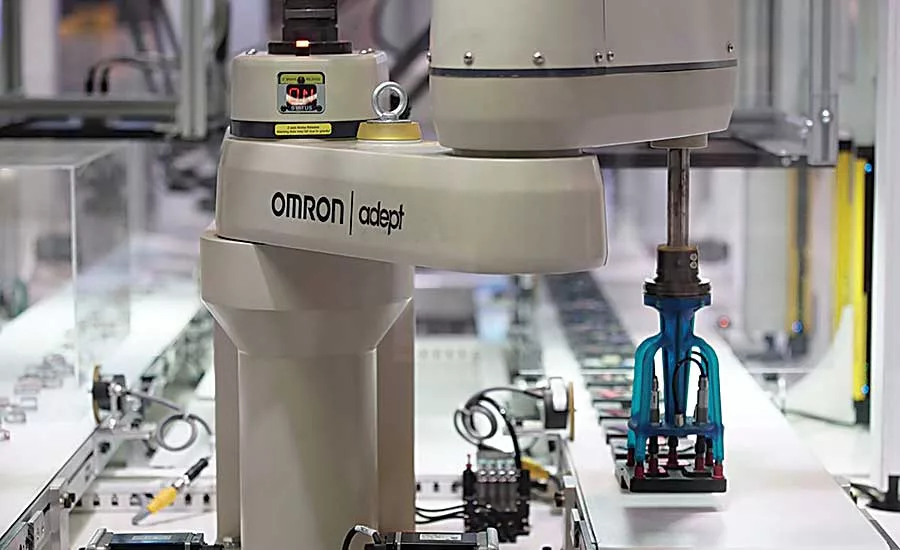

When manufacturing engineers are tasked with automating a process that is currently done manually, their main question for an automation supplier is, “Have you ever automated this specific process before?”
In complex applications, the answer is typically, “no.” Even simple applications can be more complex than at first glance. Most applications are unique. There is no one overarching solution for any given application process, and it is crucial to understand exactly what the customer is looking for and cater the solution to their needs.
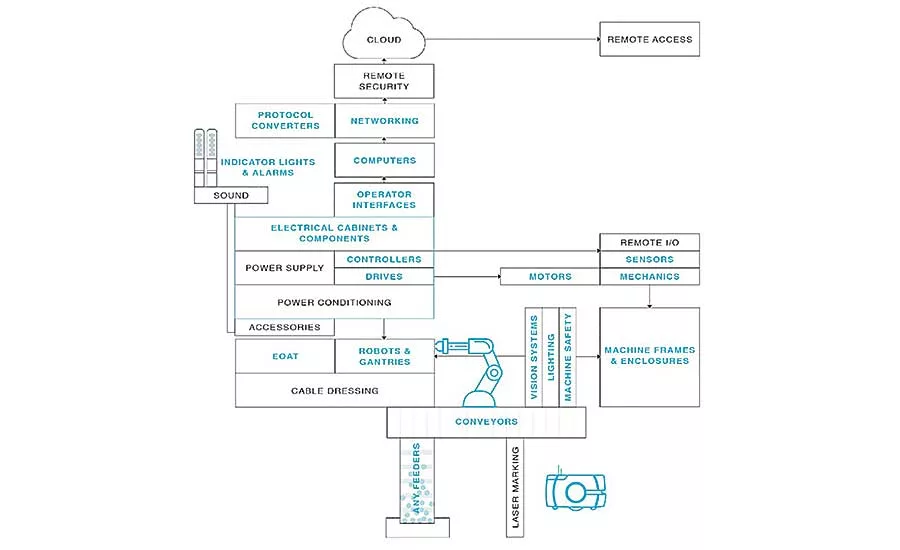
As a result, we begin the automation process by trying to understand the needs of the customer. Sometimes, this can be accomplished with standalone components that the manufacturing engineers can implement themselves. In complicated processes, outsourcing to automation suppliers to design and build a turnkey system may be more realistic. In still other cases, there could be some middle ground between these two paths.
Automation Challenges
Automating manual processes can be extremely difficult. Processes such as putting bottles in a box or screwing bolts into two parts have been automated for years, and these are relatively simple.
However, when it comes to pushing surgical tubing onto a barbed fitting, some complications could arise. Just think about what your hands and brain would have to do to wiggle and finesse soft plastic tubing onto a barbed fitting. Could we come up with the right method of holding the tubing with enough force to push it onto the fitting? Very possibly, yes. But, how does one specify what that force is without doing a bunch of research and development testing to figure it out? For example, the requirement may be 5 pounds with a tolerance of 0.25 pound, or it could be 6 pounds with a tolerance of 0.1 pound. To make matters worse, the customer could have many different combinations of tubes in various sizes and materials that would need to be matched up with different fittings. Each combination would need to be tested and figured out, and this drives up the research and development costs.
When personnel are manually putting together parts, they learn throughout the process how to match parts together that may not have consistent tolerances. They figure out how to mix and match these parts to make the process work.
When processes need to be automated, the manufacturing engineers may discover that their parts have inconsistent tolerances, which can make automating assembly quite difficult. A motor manufacturer I know of was transferring production from one facility to another, and production was mainly manual. After the move, the existing technicians had to teach the new technicians how to put the motors together. When the experienced technicians left, the quality of one of the motors plummeted because the new technicians didn’t know all the undocumented processes that their predecessors learned through trial and error. The experienced technicians didn’t even know what their manual “secrets” were that they needed to teach the new technicians.
Looking for quick answers on assembly and manufacturing topics? Try Ask ASM, our new smart AI search tool. Ask ASM
This is a huge issue that can arise in automating manual processes. The consistency of parts in both quality and tolerance is vital for a successful transition, since machinery is not as adaptable to component variations as human beings are.
Internally Managing Automation
When a company is looking to internally automate a process, a good recommendation is to acquire automation components that allow them to experiment with the process. This can lead to a deeper understanding of the application and some greater knowledge of the variables involved.
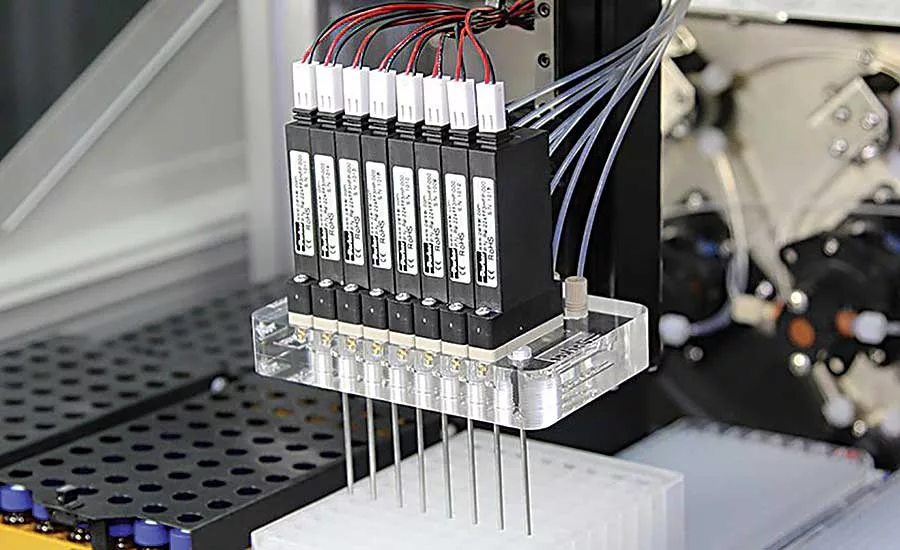
The most common components for automating manual applications will be motion control products, such as actuators, sensors and robots. “Fail fast” is a mantra to focus on. Test the biggest variables with the most risk and fail at those processes first. Failure is much less of an issue if the error happens earlier in the process than later on down the road.
I recently gave this same advice to a medical device manufacturer wanting to automate a production line that was predominantly manual. Following the “fail fast” mantra, the customer experimented with multiple robots. However, the company left it up to employees to learn how to use the robots. In the end, the employees would get distracted by more urgent issues, such as production problems, and the project was slow to take off.
That, of course, is the main drawback of the do-it-yourself approach. Your staff must not only have the knowledge and skills to automate a process, but also the time to figure it out. If your staff is maxed out, outsourcing may be a better option.
Outsourcing Automation
When outsourcing an automation application, manufacturing engineers must supply the systems integrator with a “scope of work” document containing detailed specifications of what the company ultimately wants to achieve from the application.
Often found within a “request for quote” document, a scope of work is very detailed, outlining the exact requirements needed to complete the project. Most importantly, a well-done scope of work should specifically establish the end goal of a project. Those looking to automate a process seldomly come to the automation supplier with a scope of work, and if they do, it is often incomplete. Even complete scopes of work will leave the supplier with some extra research and development to perform.
The main issue with a missing or incomplete scope of work is that the automation supplier will not know how the system should optimally perform. This makes it difficult to assess when the design process is done. How is it determined what “good” looks like? What should be prioritized when designing the system: performance or cost? The only way to know the answers to these questions is through a complete, thorough scope of work. Incomplete scopes of work can also lead to costly change orders to backtrack the design and incorporate some missing feature.
The design process for automating a manual assembly process can be summed up in eight steps:
- Identify the problem.
- Identify performance criteria and constraints.
- Brainstorm possible solutions.
- Generate ideas.
- Explore possibilities.
- Select an approach.
- Build a model or prototype.
- Refine the design.
Many times, do-it-yourself teams will jump straight to step 6. When they back up and try to discuss steps 3 or 4, they may not have even done step 2 yet. Perhaps, they aren’t even 100 percent sure of what is driving step 1!
One customer ended up asking the engineers at our company to provide the scope of work. During the process, our engineer conducting the study uncovered things about step 1 of the design process that hadn’t been uncovered during the initial discussions. The question was whether the manufacturer’s return on investment calculations were based on reducing labor time or improving ergonomics. The initial answer was reducing labor time, but ergonomics was, in fact, the driving matter. The company wanted its employees to stop doing physical labor. Time spent on the process was not the main issue.
However, when the scope of work was written, agreed upon, and then quoted against, the ROI question was still a sticking point. Knowing the answer to the ROI question would make a big difference in the design of the system and whether it needed to be attended or not. The price point between the two variations was significant.
Meeting in the Middle
Between the two approaches—internally automating a manual process or outsourcing the automation—settling somewhere in the middle tends to work best. Typically, the best results in challenging situations come when companies avoid asking their operations or manufacturing employees to learn to automate a process. It is often difficult for these employees to fit this extra work into their already demanding schedules.
Customers are sometimes most satisfied when their companies hire people from the outside specifically to automate a process in accordance with their input. This way, their internal resources, who are often manufacturing engineers, can focus their time on tailoring the specific process to their company’s needs. Automating a previously manual process will most likely always take longer than the expected timeline, so having an engineer solely focused on this alone will decrease the development time involved. Periodic design reviews on complex applications are a must to keep from compounding design errors and catch any oversights in the scope of work.
For more information, call Valin Corp. at 800-774-5630 or visit www.valin.com.
Looking for a reprint of this article?
From high-res PDFs to custom plaques, order your copy today!