Assembly Magazine logo
search
Ask ASSEMBLY AI
cart
facebook twitter linkedin youtube
  • Sign In
  • Create Account
  • Sign Out
  • My Account
Assembly Magazine logo
  • TRENDS
    • Ask ASSEMBLY AI
    • Trends
    • News
    • New Products
  • INDUSTRIES
    • Aerospace
    • Appliance
    • DFMA Assembly
    • Medical Devices
    • Green Manufacturing
    • Lean Manufacturing
    • Machinery Assembly
    • Electronics Assembly
    • Automotive
  • TECHNOLOGIES
    • Adhesives & Dispensing
    • Assembly Presses
    • Automated Assembly Systems
    • Manufacturing Management
    • Manufacturing Software
    • Motion Control
    • Screwdriving & Riveting
    • Robotics
    • Test & Inspection
    • Plastics & Metal Welding
    • Wire Processing
    • Workstations
  • AUTONOMOUS & ELECTRIC MOBILITY
    • AEM Magazine Archives
    • Autonomy
    • Electrification
    • Mobility Services
    • Assembly & Testing
    • AV/EM News
  • MEDIA
    • Ask ASSEMBLY AI
    • Podcasts
    • Assembly News Now
    • Assembly TV
    • Webinars
    • eBooks
  • EVENTS
    • Calendar
    • The ASSEMBLY Show
  • MORE
    • Exclusives >
      • Plant of the Year
      • Capital Spending
    • Buyers Guide >
      • Supplier Insights
    • Classifieds
    • Featured Products
    • Newsletters
    • Store
    • White Papers
    • Columns
    • Sponsor Insights
  • INFOCENTER
    • Assembly & Test Solutions
  • EMAGAZINE
    • eMagazine
    • Archive Issues
    • Advertise
    • Contact Us
    • Sign Up
ColumnsThe Editorial

Manufacturing: A Reason to Get Out of Bed in the Morning

By John Sprovieri
asb0523editsleeper1.jpg
asb0523edit1.jpg

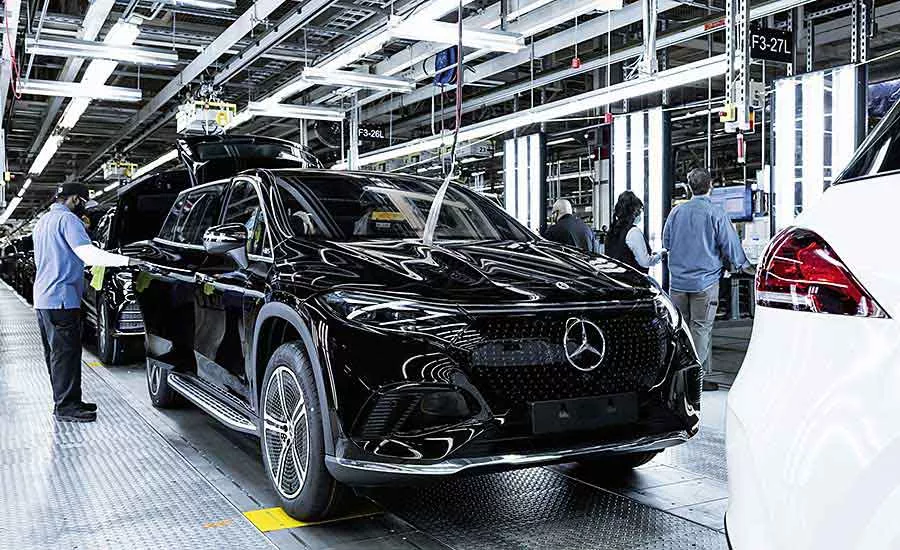
People employed in manufacturing stay in bed just 7 minutes after the alarm sounds—the least amount of time of any profession. Photo courtesy Mercedes-Benz

asb0523editsleeper1.jpg
asb0523edit1.jpg
May 1, 2023

What gets you out of bed in the morning? Whatever the reason, new evidence suggests that people who work in manufacturing are more eager to get up and go than people in other professions.

Best Mattress Brand—a website covering sleep health—recently surveyed 1,060 people to gain insights into our morning routines. Everyone is different, of course. Hundreds of factors influence our mornings, including when we go to sleep, when we wake up, how we prepare for bed, and how we prepare for the day ahead. However, Best Mattress Brand’s survey revealed that one important factor is the industry in which we work. It turns out the industry we work in influences our need to lie in bed after the alarm sounds.

Regardless of when we need to be at work, we’re going to set an alarm depending on how long it takes us to get up, get ready and get to our workplace. How long we lie in bed after the alarm goes off depends on factors such as the stress we must endure, the responsibilities we have, and how we decide to face the day ahead.

People with more “lightweight” jobs in industries like arts, entertainment and recreation stay in bed the longest—an average of 14 minutes—while those who stay in bed the least seem to work in more manual jobs, such as transportation, construction or manufacturing. In fact, people employed in manufacturing stay in bed just 7 minutes after the alarm sounds—the least amount of time of any profession.

Why is that? I like to think we take pride in producing a quality product that people love or depend on. Perhaps it’s the opportunity to learn something new or solve a problem, or maybe it’s the opportunity to work with a team of talented individuals. At The ASSEMBLY Show South in April, I met three young manufacturing engineers from Lockheed Martin. The pride they took in their work producing the F-35 was obvious. Similarly, I chatted with an engineer from the Mercedes-Benz assembly plant in Vance, AL. He faced a daunting challenge—to cost-effectively produce a new EV model—yet he was clearly stoked by the opportunity.

Another factor that makes people lie in bed is job satisfaction. Not surprisingly, people who are dissatisfied lie in bed 11 minutes—two minutes longer than those who are satisfied.

One more factor is how much time we need to get ready in the morning. This mostly depends on the environment we work in, as some jobs require more maintenance than others. Here, too, manufacturing has an advantage. On average, people employed in manufacturing need just 34 minutes to get ready for work, the second shortest timing of any industry. In contrast, those employed in government and public administration workers take the longest to get ready (42 minutes). This can be explained by the nature of the two jobs, as people with public roles often have a dress code and their contact with the public means they need to carry themselves a certain way.

Looking for quick answers on assembly and manufacturing topics? Try Ask ASM, our new smart AI search tool. Ask ASM →

This could help with recruiting new workers to our profession: “Manufacturing: Where you don’t have to wear a suit and tie!”

What gets you out of bed in the morning? Share your thoughts with me: sprovierij@bnpmedia.com.


How Long Do You Stay in Bed After the Alarm Goes Off?

Industry                                                       Time

Manufacturing                                             7 minutes

Construction                                                7 minutes

Homemaker                                                 8 minutes

Transportation and warehousing                    8 minutes

Information services and data processing       9 minutes

Hotel, food service, hospitality                      9 minutes

Wholesale and retail                                     10 minutes

Education                                                    10 minutes

Government                                                10 minutes

Technology                                                 11 minutes

Finance and insurance                                  11 minutes

Medical and health care                                11 minutes

Unemployed                                                13 minutes

Arts, entertainment and recreation                 14 minutes

KEYWORDS: Jobs

Share This Story

Looking for a reprint of this article?
From high-res PDFs to custom plaques, order your copy today!

John has been with ASSEMBLY magazine since February 1997. John was formerly with a national medical news magazine, and has written for Pathology Today and the Green Bay Press-Gazette. John holds a B.A. in journalism from Northwestern University, Medill School of Journalism.

Recommended Content

JOIN TODAY
To unlock your recommendations.

Already have an account? Sign In

  • Made in the U.S.A.

    Consumer Products Manufacturing: Made in the USA

    Supply chain lessons learned during the coronavirus...
    Automated Assembly Systems
    By: Austin Weber
  • Best Practices for Press-Fit Assembly

    Best Practices for Press-Fit Assembly

    In manufacturing, ironclad formulas for success are hard...
    Assembly Presses
    By: Jim Camillo
  • aem0523leader-tesla1.jpg

    Tesla Rethinks the Assembly Line

    Engineers at Tesla Inc. have developed a new process that...
    Industries
    By: Austin Weber
Manage My Account
  • eMagazine Subscription
  • Assembly Newsletters
  • Online Registration
  • Subscription Customer Service
  • Manage My Preferences

More Videos

Sponsored Content

Sponsored Content is a special paid section where industry companies provide high quality, objective, non-commercial content around topics of interest to the ASSEMBLY audience. All Sponsored Content is supplied by the advertising company and any opinions expressed in this article are those of the author and not necessarily reflect the views of ASSEMBLY or its parent company, BNP Media. Interested in participating in our Sponsored Content section? Contact your local rep!

close
  • ultrasonic welding
    Sponsored bySonobond Ultrasonics

    Engineering Efficiency in High-Performance Assembly: How Ultrasonic Welding Enhances Throughput, Reliability and Quality

  • UV curing system
    Sponsored byDymax

    Why UV Intensity Alone Doesn’t Define Curing Performance

  • wooden pallets
    Sponsored byLEAN Manufacturing Products

    Eliminating Waste on the Shop Floor: Applying Lean Principles to Improve Manufacturing Efficiency

Popular Stories

ASSEMBLY News Now, episode-30: Volvo Redesigns EV Manufacturing

Volvo Redesigns EV Manufacturing

Boeing CEO Kelly Ortberg announces 1 billion investment

Boeing Plans $1 Billion Wichita Investment, Workforce Training Center

GE Appliances Worker on Line

GE Appliances Expands Factory AI With 800 Gemini Enterprise Agents

Watch the latest episode of ANN now!

Events

July 24, 2025

From Shop Floor to CFO: How Manufacturers Are Closing the Loop Between Operations and Finance

On Demand Learn how manufacturers are bridging the gap between the shop floor and ERP systems to gain real-time visibility, streamline operations, and kick-start digital transformation—without waiting years.

Sponsored by:

PicoStratusGreen
July 30, 2025

Buffer Analysis and Design Fundamentals for Manufacturing Excellence

On Demand In this presentation, Dr. Herman Tang shares practical insights from his industry experience and research on buffer management in manufacturing operations.

View All Submit An Event

Poll

Difficult Assembly Processes

Which assembly process gives you the most difficulty?
View Results Poll Archive

Products

Manufacturing Cost Policy Deployment (MCPD) Profitability Scenarios: Systematic and Systemic Improvement of Manufacturing Costs

Manufacturing Cost Policy Deployment (MCPD) Profitability Scenarios: Systematic and Systemic Improvement of Manufacturing Costs

See More Products
Register for webinar - Modernizing Automotive Assembly: Why Upgrading Legacy MES is a Business Imperative

Related Articles

  • Learn How to Get the Most Out of Your Torque Wrench

    See More
  • Quality in Assembly: Get the MEOST out of Reliability Testing

    See More
  • Is the Furniture Industry Preparing to Get up off the Couch?

    See More

Related Products

See More Products
  • history.jpg

    Faster, Better, Cheaper in the History of Manufacturing: From the Stone Age to Lean Manufacturing and Beyond

  • achieving

    Achieving Excellence Through Lean Manufacturing: A Lean Leader’s Journey

  • handbook of digital.jpg

    Handbook of Digital Innovation, Transformation, and Sustainable Development in a Post-Pandemic Era

See More Products

Related Directories

  • Kent Manufacturing LLC, a Sur-Seal Co.

    Sur-Seal is a top-tier manufacturer of engineered components, helping customers solve complex sealing, insulation, thermal, and protection challenges. We offer a range of custom die-cut, molded, formed, and extruded parts. We strive to be a leader in our industry by delivering exceptional service and fostering a positive company culture that values the contributions of our employees and partners.
  • Made to Measure Metrology

×

Never miss the latest news and trends driving the manufacturing industry

Stay in the know on the latest assembly trends.

JOIN TODAY!
  • RESOURCES
    • Advertise
    • Contact Us
    • Directories
    • Manufacturing Division
    • Store
    • Want More?
  • SIGN UP TODAY
    • Create Account
    • eMagazine
    • Newsletters
    • Customer Service
    • Manage Preferences
  • SERVICES
    • Marketing Services
    • Reprints
    • Market Research
    • List Rental
    • Survey/Respondent Access
  • STAY CONNECTED
    • LinkedIn
    • Facebook
    • Instagram
    • YouTube
    • X (Twitter)
  • PRIVACY
    • PRIVACY POLICY
    • TERMS & CONDITIONS
    • DO NOT SELL MY PERSONAL INFORMATION
    • PRIVACY REQUEST
    • ACCESSIBILITY

Copyright ©2026. All Rights Reserved BNP Media, Inc. and BNP Media II, LLC.

Design, CMS, Hosting & Web Development :: ePublishing