Assembly Magazine logo
search
Ask ASSEMBLY AI
cart
facebook twitter linkedin youtube
  • Sign In
  • Create Account
  • Sign Out
  • My Account
Assembly Magazine logo
  • TRENDS
    • Ask ASSEMBLY AI
    • Trends
    • News
    • New Products
  • INDUSTRIES
    • Aerospace
    • Appliance
    • DFMA Assembly
    • Medical Devices
    • Green Manufacturing
    • Lean Manufacturing
    • Machinery Assembly
    • Electronics Assembly
    • Automotive
  • TECHNOLOGIES
    • Adhesives & Dispensing
    • Assembly Presses
    • Automated Assembly Systems
    • Manufacturing Management
    • Manufacturing Software
    • Motion Control
    • Screwdriving & Riveting
    • Robotics
    • Test & Inspection
    • Plastics & Metal Welding
    • Wire Processing
    • Workstations
  • AUTONOMOUS & ELECTRIC MOBILITY
    • AEM Magazine Archives
    • Autonomy
    • Electrification
    • Mobility Services
    • Assembly & Testing
    • AV/EM News
  • MEDIA
    • Ask ASSEMBLY AI
    • Podcasts
    • Assembly News Now
    • Assembly TV
    • Webinars
    • eBooks
  • EVENTS
    • Calendar
    • The ASSEMBLY Show
  • MORE
    • Exclusives >
      • Plant of the Year
      • Capital Spending
    • Buyers Guide >
      • Supplier Insights
    • Classifieds
    • Featured Products
    • Newsletters
    • Store
    • White Papers
    • Columns
    • Sponsor Insights
  • INFOCENTER
    • Assembly & Test Solutions
  • EMAGAZINE
    • eMagazine
    • Archive Issues
    • Advertise
    • Contact Us
    • Sign Up
IndustriesAutomotive AssemblyAutomated Assembly SystemsRobotics Assembly

Gripper Helps Automate Assembly of Shaft Seals
By John Sprovieri
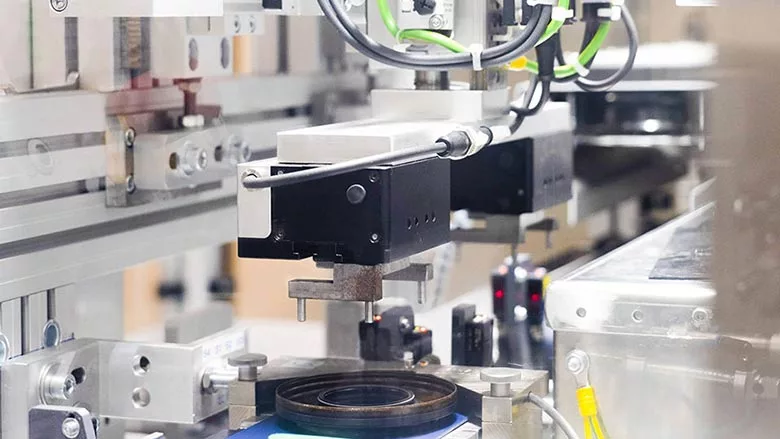
placing seal rings in a sliding wax application system

KACO needed a way to accurately place seal rings in and out of a sliding wax application system. The waxing process is the last step before the seals are inspected and shipped. Photo courtesy Zimmer Group

October 31, 2023

Radial shaft seals are used to seal rotating axles and shafts. They keep oil or transmission fluid in, and they keep dust and other contaminants out. They can be found in myriad applications, including cars, trucks, gearboxes, pumps, agricultural and construction machinery, and wind turbines.

A radial shaft seal consists of an elastomer bonded to a metal stamping. Two lips are typically molded into the elastomer. The primary lip faces inward to seal in the oil; a secondary lip faces outward to keep contaminants out. A garter spring surrounds the primary lip to supplement the radial force supplied by the elastomer.
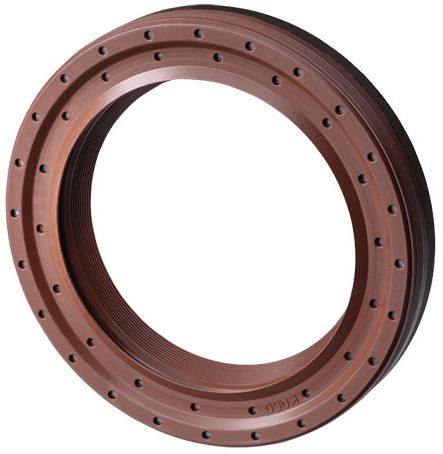
seal

The seal is typically installed in the bore as a press fit. The main lip and the dust lip engage the rotating shaft. The main considerations for designing and specifying a seal are temperature, speed, fluid and pressure.

Based in Kirchardt, Germany, KACO GmbH and Co. is a leading manufacturer of dynamic and static shaft seals, pressure compensation elements, encoders, shaft grounding rings, and other products for the automotive industry. The company got its start in 1914 making gaskets for car engines. Today, KACO employs some 2,000 people at six production facilities in Germany, Austria, Hungary, China and the US.

As engineers in Kirchardt were developing a new automated assembly line for radial shaft seals, they faced a challenge. They needed a way to accurately place seal rings in and out of a sliding wax application system. The waxing process is the last step before the seals are visually inspected and shipped to the customer. The wax acts as a lubricant, ensuring smooth installation.

To get the right gripper for the job, KACO turned to automation component specialist Zimmer Group. There were several key requirements for the application. First, because the gripper must handle seals in a variety of sizes, the stroke length had to be adjustable. That ruled out pneumatic grippers.

In addition, the application required internal gripping, since the rubber coating of the parts must not be damaged. Grippers offer two holding options: external and internal. Which to choose depends on the geometry of the part, the process to be performed, the orientation of the parts, and the physical space available. External gripping is the most common way to hold parts. The closing force of the gripper is used to hold the part. Internal gripping is used when the part geometry will allow and when the process to be performed needs access to the outside surface of the part. The opening force of the gripper is used to hold the part.

Looking for quick answers on assembly and manufacturing topics? Try Ask ASM, our new smart AI search tool. Ask ASM →
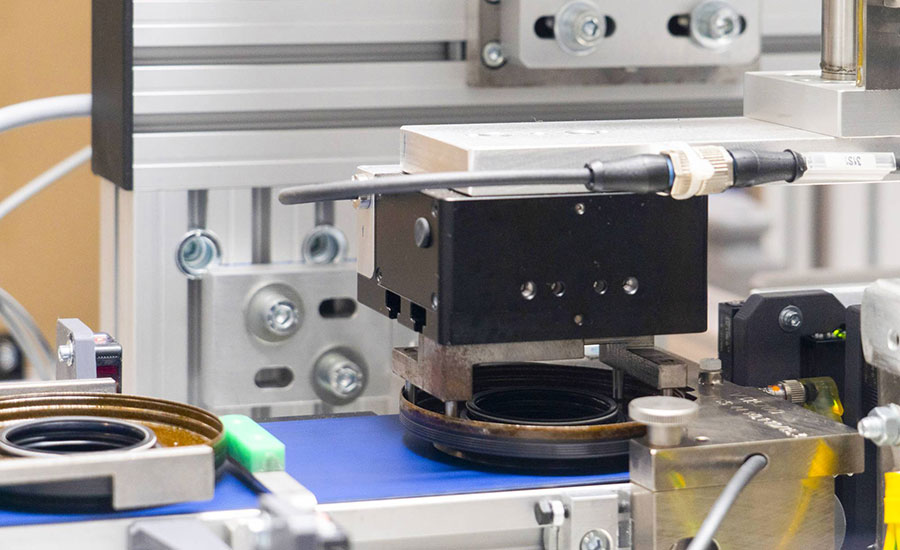
electric gripper

The application required internal gripping, since the rubber coating of the parts must not be damaged. Photo courtesy Zimmer Group


A Gripper with IO-Link Technology

The GEH6040IL-03-B electric gripper turned out to be the best option for these requirements. Its IO-Link technology enables precise force adjustment and programmable control of jaw position and speed thanks to the servo drive. Up to 32 settings can be stored in the gripper, which facilitates adaptation to new workpiece sizes and saves time during production changeover.

The gripper has a maximum stroke length of 40 millimeters per jaw, and it provides a maximum gripping force of 1,000 newtons. Designed for durability, the gripper provides up to 5 million cycles without maintenance.

The gripper is equipped with a mechanical self-locking device. This ensures that the workpiece is held firmly in the gripper in the event of a power failure or emergency stop. In addition, the gripper has a mechanical emergency release, so it can be opened manually in the event of a system or power failure.

“The mechanical self-locking when the position is reached is a big plus,” says Klaus Tritt, technical consultant at the Zimmer Group, who supported KACO in this project. “It ensures that the workpiece is held securely in the event of an emergency stop or power failure.”

For collaborative robot applications, the gripper has an optional “safe torque off” function operated via a separate cable with two safe NC contacts. In an emergency, the power supply to the drive is interrupted directly in the gripper, meaning that it is immediately torque-free. It is possible to move again after closing the contacts without a restart time. This function corresponds to stop category 0 according to EN 60204-1.

With protection rating of IP54, the gripper is protected against the ingress of both splash water and dust. To further minimize wear in adverse environments, the gripper can also be equipped with a protector. A mechanical superstructure on the gripper protects against external influences, such as cooling lubricants containing water and oil. The gripper can operate in a class 4 clean room.
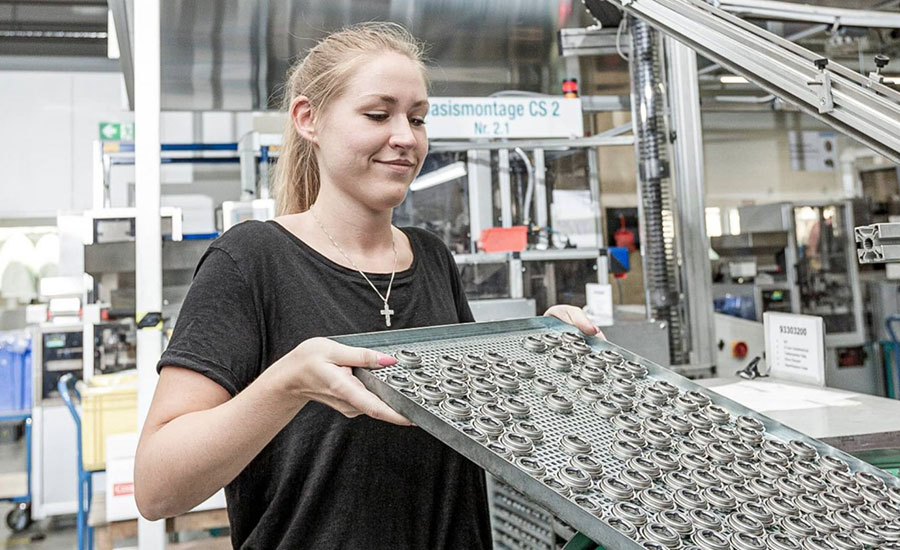
shaft seals

Based in Kirchardt, Germany, KACO is a leading manufacturer of dynamic and static shaft seals and other products for the automotive industry. Photo courtesy KACO GmbH and Co.

In KACO’s automated assembly system, two 6000 series grippers are connected in series to pick up parts from a conveyor, transfer them to the waxing station, and put them back on the conveyor for transport to the inspection station.

Integration of the grippers into KACO’s assembly line went smoothly. Close cooperation between Zimmer and KACO made it possible to develop a customized gripper that was perfectly tailored to the needs of the automotive supplier.

“The service and above all the technical advice from Klaus Tritt were always excellent. No matter what challenge arose during the integration of the grippers, Tritt was immediately at our side and was able to find a solution with us,” says Hubert Eckert, CAD designer and production optimizer at KACO.

Overall, the grippers have performed well. The application of sliding wax to the seal rings runs quickly and efficiently. Production costs have been reduced by half, mainly due to the saving of valuable time during setup for new seals.

For more information on grippers and other automation components, visit www.zimmer-group.com or visit Zimmer’s booth at The Assembly Show South, April 30-May 2, 2024, at the Music City Center in Nashville, TN.

KEYWORDS: factory automation flexible assembly robot grippers

Share This Story

Looking for a reprint of this article?
From high-res PDFs to custom plaques, order your copy today!

John has been with ASSEMBLY magazine since February 1997. John was formerly with a national medical news magazine, and has written for Pathology Today and the Green Bay Press-Gazette. John holds a B.A. in journalism from Northwestern University, Medill School of Journalism.

Recommended Content

JOIN TODAY
To unlock your recommendations.

Already have an account? Sign In

  • Made in the U.S.A.

    Consumer Products Manufacturing: Made in the USA

    Supply chain lessons learned during the coronavirus...
    Automated Assembly Systems
    By: Austin Weber
  • Best Practices for Press-Fit Assembly

    Best Practices for Press-Fit Assembly

    In manufacturing, ironclad formulas for success are hard...
    Assembly Presses
    By: Jim Camillo
  • aem0523leader-tesla1.jpg

    Tesla Rethinks the Assembly Line

    Engineers at Tesla Inc. have developed a new process that...
    Industries
    By: Austin Weber
Manage My Account
  • eMagazine Subscription
  • Assembly Newsletters
  • Online Registration
  • Subscription Customer Service
  • Manage My Preferences

More Videos

Sponsored Content

Sponsored Content is a special paid section where industry companies provide high quality, objective, non-commercial content around topics of interest to the ASSEMBLY audience. All Sponsored Content is supplied by the advertising company and any opinions expressed in this article are those of the author and not necessarily reflect the views of ASSEMBLY or its parent company, BNP Media. Interested in participating in our Sponsored Content section? Contact your local rep!

close
  • ultrasonic welding
    Sponsored bySonobond Ultrasonics

    Engineering Efficiency in High-Performance Assembly: How Ultrasonic Welding Enhances Throughput, Reliability and Quality

  • UV curing system
    Sponsored byDymax

    Why UV Intensity Alone Doesn’t Define Curing Performance

  • wooden pallets
    Sponsored byLEAN Manufacturing Products

    Eliminating Waste on the Shop Floor: Applying Lean Principles to Improve Manufacturing Efficiency

Popular Stories

ASSEMBLY News Now, episode-30: Volvo Redesigns EV Manufacturing

Volvo Redesigns EV Manufacturing

Robots working at Toyota Plant in Japan

Toyota Deploys Geekplus Robots for Factory Material Handling

can of soda pop

The “Diet Coke Problem” as Manufacturers Face Experts Retiring

Watch the latest episode of ANN now!

Events

July 24, 2025

From Shop Floor to CFO: How Manufacturers Are Closing the Loop Between Operations and Finance

On Demand Learn how manufacturers are bridging the gap between the shop floor and ERP systems to gain real-time visibility, streamline operations, and kick-start digital transformation—without waiting years.

Sponsored by:

PicoStratusGreen
July 30, 2025

Buffer Analysis and Design Fundamentals for Manufacturing Excellence

On Demand In this presentation, Dr. Herman Tang shares practical insights from his industry experience and research on buffer management in manufacturing operations.

View All Submit An Event

Poll

Difficult Assembly Processes

Which assembly process gives you the most difficulty?
View Results Poll Archive

Products

Manufacturing Cost Policy Deployment (MCPD) Profitability Scenarios: Systematic and Systemic Improvement of Manufacturing Costs

Manufacturing Cost Policy Deployment (MCPD) Profitability Scenarios: Systematic and Systemic Improvement of Manufacturing Costs

See More Products
ebook

Related Articles

  • asb0623siats1.jpg

    JOT Helps Battery Manufacturer Automate Assembly

    See More
  • robots automate assembly of air bag sensors

    Robots Automate Assembly of Air Bag Sensors

    See More
  • automated battery production at Lion Electric

    Robots Automate Assembly of Battery Packs for Electric Buses

    See More

Related Products

See More Products
  • Joining and Assembly of Medical Materials and Devices, 1st Edition

  • Kaizen Assembly: Designing, Constructing, and Managing a Lean Assembly Line

See More Products

Related Directories

  • Automated Assembly Corp.

    Automated Assembly Corporation stands at the forefront of the manufacturing industry, specializing in roll-to-roll assembly capabilities that range from low to high-volume production. Our advanced automation systems are engineered to handle diverse production requirements with precision and efficiency, making us the ideal partner for businesses needing scalable assembly solutions.
×

Never miss the latest news and trends driving the manufacturing industry

Stay in the know on the latest assembly trends.

JOIN TODAY!
  • RESOURCES
    • Advertise
    • Contact Us
    • Directories
    • Manufacturing Division
    • Store
    • Want More?
  • SIGN UP TODAY
    • Create Account
    • eMagazine
    • Newsletters
    • Customer Service
    • Manage Preferences
  • SERVICES
    • Marketing Services
    • Reprints
    • Market Research
    • List Rental
    • Survey/Respondent Access
  • STAY CONNECTED
    • LinkedIn
    • Facebook
    • Instagram
    • YouTube
    • X (Twitter)
  • PRIVACY
    • PRIVACY POLICY
    • TERMS & CONDITIONS
    • DO NOT SELL MY PERSONAL INFORMATION
    • PRIVACY REQUEST
    • ACCESSIBILITY

Copyright ©2026. All Rights Reserved BNP Media, Inc. and BNP Media II, LLC.

Design, CMS, Hosting & Web Development :: ePublishing