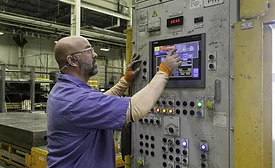
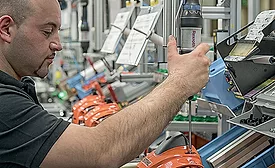
BIRMINGHAM, Mich. — Growing operational pressure, outdated systems and slow decision-making are increasing frustration among frontline workers across manufacturing and other industrial sectors, according to new research from SafetyCulture.
ATLANTA—
Manufacturers are entering 2026 facing a tightening labor market marked by an aging workforce, persistent skills gaps and hundreds of thousands of unfilled jobs.
Designing quality automation feeding equipment since 1973, Performance Feeders manufactures sustainable part feeding solutions for assembly and packaging operations.
WASHINGTON, DC — The U.S. Department of Energy (DOE) announced up to $3 million for high-performance computing, modeling, and simulation projects to improve manufacturing processes.
NEW YORK—The United States sits just behind China in terms of manufacturing competitiveness in 2016, and is expected to overtake the country by 2020, according to a study by consulting firm Deloitte Touche Tohmatsu.
Back in February, Terry Gou, founder and chairman of contract manufacturer Foxconn Technology Group, said he hopes to automate 70 percent of the company's assembly operations within three years.
The U.S. manufacturing workforce is among the most productive in the world. U.S. manufacturing productivity (measured as output per hour) increased 2.5 percent in 2014, according to the U.S. Bureau of Labor Statistics.
WASHINGTON—Nonfarm business sector labor productivity increased at a 2.3 percent annual rate during the third quarter of 2014, the U.S. Bureau of Labor Statistics reported today, as output increased 4.9 percent and hours worked increased 2.5 percent.
WASHINGTON—Private nonfarm business sector multifactor productivity increased at a 1.5 percent annual rate in 2012, the U.S. Bureau of Labor Statistics reported today. This gain in 2012 reflected a 3.8 percent increase in output and 2.2 percent increase in the combined inputs of capital and labor.
WASHINGTON—U.S. worker productivity grew a modest 0.5 percent rate from January through March after having declined in the previous quarter. Weak productivity growth could boost hiring if consumers and businesses spend more.