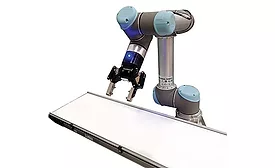
CULVER CITY, CA—Earlier this month, robotics firm OnRobot opened its first U.S. office dedicated specifically to research and development of its collaborative robot end-of-arm tooling.
LONDON—During the past decade, collaborative robots have taken the manufacturing world by storm. ABI Research predicts that the human friendly machines will generate $6 billion in annual revenue by 2027.
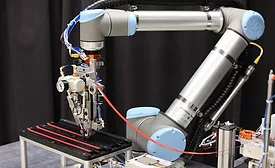
Collaborative robots are an exciting area of growth for automation and manufacturing. A potentially useful and cost-effective automated tool for manufacturing, "cobots" can work safely with people in a shared workspace, enhancing flexibility and reducing risk.
Plastic injection molding, metal casting and metal stamping are age-old processes that form the backbone of manufacturing. Traditionally, there's no better way to mass-produce plastic or metal parts.
Some automotive enthusiasts get their fix by building a car themselves. Others thoroughly enjoy watching the pros do it; i.e., assemblers on the production line.
More than 20,000 manufacturing professionals saw the newest robots, vision systems and motion control technologies during the 2019 Automate show and conference, which was held April 8-11 at McCormick Place in Chicago.
Denmark is famous for being the home of Hamlet, The Little Mermaid and Lego. The nation is also well-known for its thriving robotics industry, thanks in no small part to Universal Robots A/S.
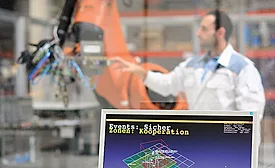
HANNOVER, Germany—Engineers at the Fraunhofer Institute for Machine Tools and Forming Technology (IWU) have developed a way for people and robots to work together in an intuitive way that feels like human teamwork.
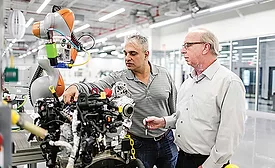
Most R&D activity in the auto industry these days is focusing on electric power trains and autonomous vehicles. But, efficiently assembling those products tomorrow will depend on harnessing state-of-the-art production tools and processes today.