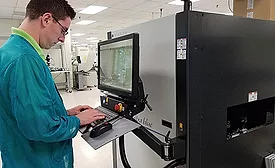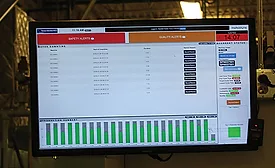
Capturing and controlling reliable production line data is the great mystery underlying the fulfillment of the promise of the Industrial Internet of Things (IIoT). Beyond storage solutions, the data that’s available on machines hasn’t been communicated correctly with business systems. Accepted solutions for data exchange create organizational conflicts and security issues that raise difficult barriers.
If you can’t see it, you can’t measure it, and if you can’t measure it, you can’t improve it! This is the simple mantra of successful manufacturers the world over. Manufacturing excellence can only come from manufacturing visibility.
It is rare for CEOs of competing airlines to be passengers on the same flight. But, that’s exactly what happened June 3, 2016, on SWISS Airlines’ flight BBA505, from Dublin to Zurich.
Approximately 2 percent of adults aged 45 to 54 have disabling hearing loss. That rate increases to 8.5 percent for adults aged 55 to 64, 25 percent for those aged 65 to 74, and 50 percent for those who are 75 and older.
Regardless of industry or product, all manufacturing organizations must continually strive to improve operational efficiency in order to remain competitive.
Luck is the key to winning on slot machines, but not to being a successful manufacturer in the gaming markets industry. To achieve that, a company needs to have foresight and be innovative.
Using software to optimize assembly processes is passé. Manufacturers now have the tools to ensure error-free production, increase line flexibility and minimize PC dependence.