Manufacturers increasingly rely on mobile and stationary technologies to obtain worker- and machine- performance data that optimizes plant productivity
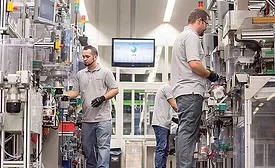
With wearable devices increasingly being used on the assembly line, it's definitely time to update the old expression that 'What you wear says a lot about you.' A more appropriate thing for manufacturers to now say about their assembly line workers is, 'What you wear tells us a lot about your productivity.'
Just as lean manufacturing is about more than eliminating waste, Industry 4.0 is not merely a matter of connecting machines and products via the Internet.
By now, we've all heard the hype: The Industrial Internet of Things (IIoT) will fundamentally change manufacturing and offer a cornucopia of benefits, including increased efficiency, higher quality and more responsive supply chains.
Data analytics, augmented reality, generative design, artificial intelligence, cobots, additive manufacturing and other technologies are already helping manufacturers increase efficiency, reduce downtime, lower prices, differentiate themselves in the marketplace, and improve service, delivery and quality.
Businesses increasingly recognize the growth opportunities offered by digitalization and interconnectedness. These technologies are enabling new business models, efficient use of resources, and cost-effective production of highly customizable products. These developments are collectively referred to as "Industry 4.0."
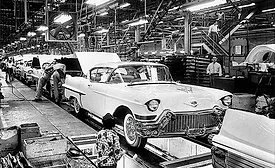
ASSEMBLY was born in October 1958 with the name Assembly & Fastener Engineering. Although its name was later shortened to Assembly Engineering, and subsequently to ASSEMBLY, it was then, and is today, a magazine of ideas and methods.
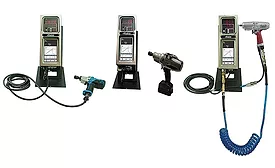
Error proofing, quality control and flexibility are essential on today's assembly lines. As a result, manufacturers are increasingly investing in DC electric fastening tools. These tools allow engineers to adjust tool speed to match various applications and control more aspects of the fastening process, including key parameters such as torque and angle.
The Industrial Internet of Things (IIoT) is more than just the latest manufacturing fad. It promises to transform the way that many types of products are designed, assembled and serviced.
Capturing and controlling reliable production line data is the great mystery underlying the fulfillment of the promise of the Industrial Internet of Things (IIoT). Beyond storage solutions, the data that’s available on machines hasn’t been communicated correctly with business systems. Accepted solutions for data exchange create organizational conflicts and security issues that raise difficult barriers.