Austin has been senior editor for ASSEMBLY Magazine since September 1999. He has more than 25 years of b-to-b publishing experience and has written about a wide variety of manufacturing and engineering topics. Austin is a native of Chicago and a graduate of the University of Michigan.
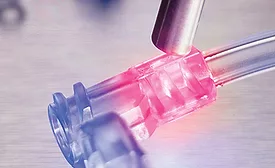
Although plastic medical tubing can be joined to itself, it’s often attached to a device, bag or connection. As medical device manufacturers look for alternatives to traditional solvent welding, demand for adhesives is increasing.
Medical tubing is made from several types of plastic, including polyvinyl chloride (PVC), polyethylene, thermoplastic elastomers, nylon and silicone. Traditionally, PVC is most widely used, because it bonds easily with other plastics. However, non-PVC tubing is often more difficult to bond.
Traditionally, plastic medical tubing is manually attached to valves, connectors, catheters, and other devices. But, medical device manufacturers are eager to automate the assembly process. It’s being driven by several trends, such as labor shortages, labor costs and increased levels of quality control.
General Motors Co. started assembling lithium-ion battery packs today at its new $43 million plant in Brownstown Township, MI. The 160,000-square-foot facility is the only one of its kind in the United States operated by a major automaker. Assemblers are building battery packs for the much-anticipated Chevrolet Volt, which will hit the market later this year.
The hottest toy this year is the Zhu Zhu Pet. But, once upon a time, all-metal building sets were the must-have item. In fact, Erector and Meccano sets inspired many generations of engineers.
The last time the U.S. economy was this topsy-turvy, American automakers turned their attention to film-making. They produced a variety of short documentaries in the 1930s that boosted consumer confidence and promoted what the Japanese call monozukuri (the art of making things). Perhaps it’s time for Ford and General Motors to go back to the past and develop some up-tempo manufacturing films for the 21st century.
Many grammar schools around the United States are using ball chairs in the classroom. The devices force students to frequently change positions to maintain balance. That leads to increased alertness and concentration. Ball chairs can be modified with wheels, arm rests and back supports for assembly line applications. However, the devices have pros and cons.
Adjustability is a key factor when choosing assembly line seating, especially in today’s flexible, lean work environment. Engineers should look for chairs that feature adjustable heights and back tilts. How the chair and the operator fit together is crucial.
The main difference between seated and standing workstations are in reaches and clearances. Seated work requires more leg clearances, and cannot accommodate long reaches. Work surface heights can vary for standing work.