Assembly Magazine logo
search
Ask ASSEMBLY AI
cart
facebook twitter linkedin youtube
  • Sign In
  • Create Account
  • Sign Out
  • My Account
Assembly Magazine logo
  • TRENDS
    • Ask ASSEMBLY AI
    • Trends
    • News
    • New Products
  • INDUSTRIES
    • Aerospace
    • Appliance
    • DFMA Assembly
    • Medical Devices
    • Green Manufacturing
    • Lean Manufacturing
    • Machinery Assembly
    • Electronics Assembly
    • Automotive
  • TECHNOLOGIES
    • Adhesives & Dispensing
    • Assembly Presses
    • Automated Assembly Systems
    • Manufacturing Management
    • Manufacturing Software
    • Motion Control
    • Screwdriving & Riveting
    • Robotics
    • Test & Inspection
    • Plastics & Metal Welding
    • Wire Processing
    • Workstations
  • AUTONOMOUS & ELECTRIC MOBILITY
    • AEM Magazine Archives
    • Autonomy
    • Electrification
    • Mobility Services
    • Assembly & Testing
    • AV/EM News
  • MEDIA
    • Ask ASSEMBLY AI
    • Podcasts
    • Assembly News Now
    • Assembly TV
    • Webinars
    • eBooks
  • EVENTS
    • Calendar
    • The ASSEMBLY Show
  • MORE
    • Exclusives >
      • Plant of the Year
      • Capital Spending
    • Buyers Guide >
      • Supplier Insights
    • Classifieds
    • Featured Products
    • Newsletters
    • Store
    • White Papers
    • Columns
    • Sponsor Insights
  • INFOCENTER
    • Assembly & Test Solutions
  • EMAGAZINE
    • eMagazine
    • Archive Issues
    • Advertise
    • Contact Us
    • Sign Up
TechnologiesManufacturing Management

ASSEMBLY Audible

PODCAST | What Manufacturers Miss About AI: It’s Not a Technology Problem

By JJ Moore
person talking to AI
Credit: Limitless Visions / Adobe Stock
May 7, 2026

As manufacturers adopt artificial intelligence, much of the focus has been on tools, systems and performance. But according to Chris Draper, CEO and co-founder of morriganAI and author of Safe AI Basics and co-author of Governing Artificial Intelligence, the real risk lies in how humans interact with those systems over time. 

Draper says this dynamic is one of the most overlooked aspects of AI implementation, especially in environments where humans are expected to monitor automated systems. 

Listen to our interview with Chris Draper!

Your browser does not support the audio element.

Browse our ASSEMBLY Audible podcasts

“If you put a human in a system to do something repetitively, the effectiveness of that human will always vary as a function of time and shift and experience.” 

In many cases, companies assume that simply keeping a person “in the loop” ensures safety. But Draper argues that’s not necessarily true. 

“Just having a human in a system does not make AI safe.” 

He warns that poorly designed systems — especially those where humans are expected to passively monitor performance — can actually increase risk. 

“Those are incredibly dangerous.” 

Looking for quick answers on assembly and manufacturing topics? Try Ask ASM, our new smart AI search tool. Ask ASM →

Draper describes three models for integrating humans into AI systems: “in the loop,” “on the loop” and “out of the loop.” In a human-in-the-loop system, work stops unless a person verifies each step, creating a high level of safety but limiting efficiency. In a human-out-of-the-loop system, processes are fully automated with no human intervention, which can be effective if designed correctly. However, Draper says most companies are implementing “on-the-loop” systems, where technology runs independently and humans are expected to catch errors, a model he warns carries significant risk. 

“Those have to be rolled out very thoughtfully. I argue in most of my strategy work, you should never have a human on the loop system in production, because a human on the loop, in production, is like a Tesla. It can theoretically be autopilot. But if it starts working well enough, the human who is supposed to be your safety feature gets worse. They get comfortable. They start missing errors because they assumed it was right 80% of the time, And then they just start missing a majority of that 20% they’re supposed to catch.” 

Draper has spent much of his career working on how humans interact with complex, high-risk technologies. Alongside Tom Foreman, he also co-created the AI Action Lab to help organizations better understand how AI behaves in real operational settings. 

At the core of his perspective is a fundamental reframing of what AI actually is, and what it is not. 

“If you look at your AI implementation as a technology process, it will always fail. There's no way around that.” 

Rather than viewing AI as a traditional automation tool, Draper argues it operates in a completely different category. 

“AI is not… like video conferencing. It's a tool much more like YouTube.” 

That distinction matters because AI does not simply execute predefined instructions. It interprets inputs and generates outputs based on probability. 

“Every AI tool… keeps continually generating synthetic information.” 

This introduces a level of uncertainty that manufacturers are not always prepared for. 

“AI is an ultra-hazardous technology. If I have a small change in hazard, I have potentially exponential impact consequences.” 

One of the most common mistakes, Draper says, is assuming AI can be layered onto existing processes to improve efficiency. 

“AI as a tool that is just going to speed up the process that stays the same is never going to return for you.” 

In some cases, that approach can amplify existing problems. 

“With AI, you can go bankrupt faster than ever before.” 

This is especially true when organizations deploy AI agents without fully understanding how they function or how closely they need to be monitored. 

A key issue, Draper explains, is that many organizations misunderstand the role of AI within a system. Rather than replacing human decision-making, AI should be seen as augmenting it. 

That means the success of AI depends heavily on where and how humans are positioned within the process. 

“If you put the human in the wrong place, you're going to have significant, serious issues.” 

For manufacturers, the takeaway is that AI is not simply a technology investment. It is a shift in how decisions are made, how systems operate and how humans interact with those systems. 

“It will always be something that is amplifying, accelerating the human.” 

As adoption continues, companies that recognize that reality, and design systems around it, will be better positioned to avoid the hidden risks that come with AI implementation. 

KEYWORDS: Artificial Intelligence (AI) manufacturing operations manufacturing quality

Share This Story

Looking for a reprint of this article?
From high-res PDFs to custom plaques, order your copy today!

Jj moore author

JJ joined ASSEMBLY Magazine in 2026. He has over a decade of writing and editing experience. As a lifelong learner, he particularly enjoys covering topics that are new to him and likes to keep up on emerging trends.

Recommended Content

JOIN TODAY
To unlock your recommendations.

Already have an account? Sign In

  • Made in the U.S.A.

    Consumer Products Manufacturing: Made in the USA

    Supply chain lessons learned during the coronavirus...
    Automated Assembly Systems
    By: Austin Weber
  • Best Practices for Press-Fit Assembly

    Best Practices for Press-Fit Assembly

    In manufacturing, ironclad formulas for success are hard...
    Assembly Presses
    By: Jim Camillo
  • aem0523leader-tesla1.jpg

    Tesla Rethinks the Assembly Line

    Engineers at Tesla Inc. have developed a new process that...
    Electrification
    By: Austin Weber
Manage My Account
  • eMagazine Subscription
  • Assembly Newsletters
  • Online Registration
  • Subscription Customer Service
  • Manage My Preferences

More Videos

Sponsored Content

Sponsored Content is a special paid section where industry companies provide high quality, objective, non-commercial content around topics of interest to the ASSEMBLY audience. All Sponsored Content is supplied by the advertising company and any opinions expressed in this article are those of the author and not necessarily reflect the views of ASSEMBLY or its parent company, BNP Media. Interested in participating in our Sponsored Content section? Contact your local rep!

close
  • ultrasonic welding
    Sponsored bySonobond Ultrasonics

    Engineering Efficiency in High-Performance Assembly: How Ultrasonic Welding Enhances Throughput, Reliability and Quality

  • UV curing system
    Sponsored byDymax

    Why UV Intensity Alone Doesn’t Define Curing Performance

  • wooden pallets
    Sponsored byLEAN Manufacturing Products

    Eliminating Waste on the Shop Floor: Applying Lean Principles to Improve Manufacturing Efficiency

Popular Stories

ASSEMBLY News Now, episode-30: Volvo Redesigns EV Manufacturing

Volvo Redesigns EV Manufacturing

Boeing CEO Kelly Ortberg announces 1 billion investment

Boeing Plans $1 Billion Wichita Investment, Workforce Training Center

GE Appliances Worker on Line

GE Appliances Expands Factory AI With 800 Gemini Enterprise Agents

Watch the latest episode of ANN now!

Events

July 24, 2025

From Shop Floor to CFO: How Manufacturers Are Closing the Loop Between Operations and Finance

On Demand Learn how manufacturers are bridging the gap between the shop floor and ERP systems to gain real-time visibility, streamline operations, and kick-start digital transformation—without waiting years.

Sponsored by:

PicoStratusGreen
July 30, 2025

Buffer Analysis and Design Fundamentals for Manufacturing Excellence

On Demand In this presentation, Dr. Herman Tang shares practical insights from his industry experience and research on buffer management in manufacturing operations.

View All Submit An Event

Poll

Difficult Assembly Processes

Which assembly process gives you the most difficulty?
View Results Poll Archive

Products

Manufacturing Cost Policy Deployment (MCPD) Profitability Scenarios: Systematic and Systemic Improvement of Manufacturing Costs

Manufacturing Cost Policy Deployment (MCPD) Profitability Scenarios: Systematic and Systemic Improvement of Manufacturing Costs

See More Products
Register for webinar - Modernizing Automotive Assembly: Why Upgrading Legacy MES is a Business Imperative

Related Articles

  • asb1122edit1.jpg

    Clean Energy Is Not a Zero-Sum Game

    See More
  • automated manufacturing

    Automation is not a one-size-fits-all proposition

    See More
  • Haier Group’s assembly plant in Hefei, China

    Don’t Fear AI; Use It to Improve Manufacturing

    See More

Related Products

See More Products
  • Kaizen Assembly: Designing, Constructing, and Managing a Lean Assembly Line

  • advanced.jpg

    Advanced Manufacturing and Processing Technology

  • integration.jpg

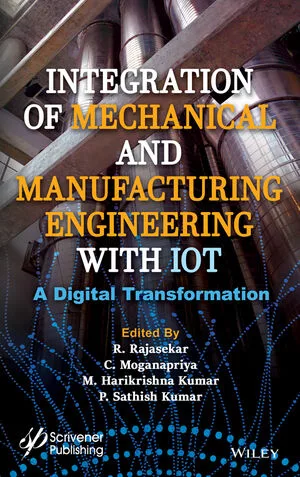
    Integration of Mechanical and Manufacturing Engineering with IoT: A Digital Transformation

See More Products

Events

View AllSubmit An Event
  • August 20, 2025

    K.I.S.S. MES (Keep It Simple, Stupid): Why Modern Manufacturers Are Choosing Modular MES with Real Shop Floor Control

    On Demand If you’re tired of MES that overpromises and underdelivers, it’s time to simplify. Learn how a modular approach gives you control where it counts—without the baggage.Sponsored by:
View AllSubmit An Event

Related Directories

  • Deltia AI

×

Never miss the latest news and trends driving the manufacturing industry

Stay in the know on the latest assembly trends.

JOIN TODAY!
  • RESOURCES
    • Advertise
    • Contact Us
    • Directories
    • Manufacturing Division
    • Store
    • Want More?
  • SIGN UP TODAY
    • Create Account
    • eMagazine
    • Newsletters
    • Customer Service
    • Manage Preferences
  • SERVICES
    • Marketing Services
    • Reprints
    • Market Research
    • List Rental
    • Survey/Respondent Access
  • STAY CONNECTED
    • LinkedIn
    • Facebook
    • Instagram
    • YouTube
    • X (Twitter)
  • PRIVACY
    • PRIVACY POLICY
    • TERMS & CONDITIONS
    • DO NOT SELL MY PERSONAL INFORMATION
    • PRIVACY REQUEST
    • ACCESSIBILITY

Copyright ©2026. All Rights Reserved BNP Media, Inc. and BNP Media II, LLC.

Design, CMS, Hosting & Web Development :: ePublishing