Auto Suppliers Struggle to Remain Competitive
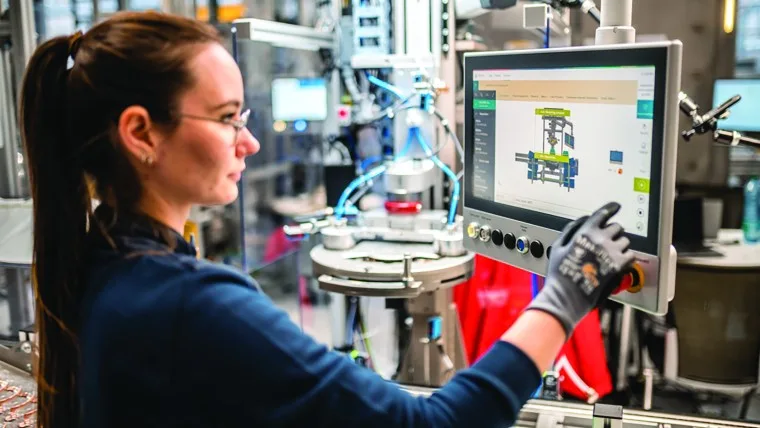
Automotive suppliers should consider five strategies to balance near-term resilience with long-term survival. Photo courtesy Bosch
DETROIT—Today is a tough time to be an automotive supplier, as OEMs are shifting gears with power train platforms. On top of that pressure, a majority of U.S. consumers believe that most new vehicles are unaffordable.
Tor survive, suppliers must navigate trade and policy uncertainty, vehicle demand volatility, evolving technology investments, and increasing cost pressure.
Deloitte Consulting LLP has just released a new report that explores the strategies suppliers can take to balance near-term resilience with longer-term optionality. According to Jason Coffman, the lead author of the study, companies must adapt an operating environment shaped by sustained constraint to remain flexible.
Coffman believes there are five strategies that suppliers must consider to balance near-term resilience with long-term survival:
• Design for resilience across supply chains. “Amid ongoing supply chain challenges, diversifying sourcing, enabling cross-plant production and strengthening scenario-based planning can help manage trade shifts, demand uncertainty and supplier risk,” says Coffman.
• Build digitally integrated, productivity-driven operations. “Suppliers that align workforce capability, data integration and operational digitization can enhance productivity, while mitigating labor constraints and supply uncertainty,” explains Coffman.
• Align product and platform strategy with evolving demand. “As some manufacturers rebalance portfolios toward hybrid expansion and multi-power train flexibility, suppliers can consider aligning to modular platforms and propulsion-agnostic systems to help manage demand uncertainty and preserve capital efficiency,” suggests Coffman.
Looking for quick answers on assembly and manufacturing topics? Try Ask ASM, our new smart AI search tool. Ask ASM
• Compete through differentiated systems and intellectual property. “As the boundaries between suppliers and OEMs blur, a strategic response may be to concentrate investment in differentiated technologies, proprietary intellectual property and system-level integration capabilities that are more difficult to replicate,” says Coffman.
• Institutionalize capital discipline as structural governance. “Suppliers that hardwire capital rigor into portfolio decisions may be better positioned to absorb volatility without sacrificing long-term competitiveness,” claims Coffman.
“Rather than pursuing rapid reshoring or large-scale relocation, many suppliers appear to be focusing on preserving optionality, maintaining the ability to adjust production, rebalance sourcing and respond to localized disruptions as conditions evolve,” adds Coffman. “In this environment, flexibility itself has become a strategic asset, allowing suppliers to absorb shocks without overcommitting capital or capacity.”
Looking for a reprint of this article?
From high-res PDFs to custom plaques, order your copy today!