Assembly Magazine logo
search
Ask ASSEMBLY AI
cart
facebook twitter linkedin youtube
  • Sign In
  • Create Account
  • Sign Out
  • My Account
Assembly Magazine logo
  • TRENDS
    • Ask ASSEMBLY AI
    • Trends
    • News
    • New Products
  • INDUSTRIES
    • Aerospace
    • Appliance
    • DFMA Assembly
    • Medical Devices
    • Green Manufacturing
    • Lean Manufacturing
    • Machinery Assembly
    • Electronics Assembly
    • Automotive
  • TECHNOLOGIES
    • Adhesives & Dispensing
    • Assembly Presses
    • Automated Assembly Systems
    • Manufacturing Management
    • Manufacturing Software
    • Motion Control
    • Screwdriving & Riveting
    • Robotics
    • Test & Inspection
    • Plastics & Metal Welding
    • Wire Processing
    • Workstations
  • AUTONOMOUS & ELECTRIC MOBILITY
    • AEM Magazine Archives
    • Autonomy
    • Electrification
    • Mobility Services
    • Assembly & Testing
    • AV/EM News
  • MEDIA
    • Ask ASSEMBLY AI
    • Podcasts
    • Assembly News Now
    • Assembly TV
    • Webinars
    • eBooks
  • EVENTS
    • Calendar
    • The ASSEMBLY Show
  • MORE
    • Exclusives >
      • Plant of the Year
      • Capital Spending
    • Buyers Guide >
      • Supplier Insights
    • Classifieds
    • Featured Products
    • Newsletters
    • Store
    • White Papers
    • Columns
    • Sponsor Insights
  • INFOCENTER
    • Assembly & Test Solutions
  • EMAGAZINE
    • eMagazine
    • Archive Issues
    • Advertise
    • Contact Us
    • Sign Up

The French and Italian Connection

By Austin Weber
November 1, 2001

Today's power tool batteries owe their basic design and operating characteristics to a pair of 18th century Italian engineers and a trio of 19th century French scientists. They laid the groundwork for cadmium-lithium, nickel-metal hydride and other portable cell technology that most people now take for granted.

Luigi Galvani (1737-1798) conducted a series of experiments on "animal electricity." He applied current to the nerves of a frog and observed the contractions of the muscles in its legs. Among other things, Galvani discovered that when connected pieces of iron and brass were applied to frog's legs, they caused them to twitch.

He speculated that electricity was stored in the leg, a theory that attracted a widespread following but was later proven wrong. The words "galvanic," "galvanize" and "galvanometer" are named after him.

Alessandro Volta (1745-1827) experimented primarily with static electricity until he heard of Galvani's observations. He was convinced that the presence of two metals was all that mattered, so he began experimenting with copper, silver, tin and zinc plates and rings. He used cardboard soaked in vinegar and U-shaped metal strips to produce electric currents.

In 1800, Volta stacked a series of alternating metal rings to form a pile, resulting in the world's first dry battery. The column battery or voltaic pile was the first device to produce electrical energy that could continuously flow down a wire.

The words "volt, "voltage" and "voltaic" are named after Volta. In 1881, the International Electrical Congress in Paris established the volt as the standard unit for measuring electrical pressure and electromotive force.

French scientists in the 19th century picked up where Galvani and Volta left off. The next important step in the evolution of electrical energy storage was the invention of the lead acid battery in 1859 by French physicist Gaston Plante. His chemical battery used a liquid electrolyte. The battery was made by rolling thin strips of lead foil, with porous insulating material between them, into a jelly roll shape. The cylindrical cell was submersed in dilute sulfuric acid electrolyte. Plante's battery was first used to keep the lights on in railway carriages while stopped at train stations.

Plante's countryman, Georges Leclanche (1839-1882), invented the dry-cell battery in the 1868. He used a damp paste electrolyte so there was no liquid to leak out.

In 1881, a third Frenchman, Camille Faure, invented a version of the lead-acid battery that substituted a flat lead grid structure in place of lead foil. These grids were cast as a flat lattice, into which a lead oxide paste was pressed, forming a plate. The plates were stacked to obtain the desired performance. This assembly method made is easy to mass-produce the battery.

Looking for quick answers on assembly and manufacturing topics? Try Ask ASM, our new smart AI search tool. Ask ASM →

Share This Story

Looking for a reprint of this article?
From high-res PDFs to custom plaques, order your copy today!

Austinweber headshot
Austin has been senior editor for ASSEMBLY Magazine since September 1999. He has more than 21 years of b-to-b publishing experience and has written about a wide variety of manufacturing and engineering topics. Austin is a graduate of the University of Michigan.

Recommended Content

JOIN TODAY
To unlock your recommendations.

Already have an account? Sign In

  • Made in the U.S.A.

    Consumer Products Manufacturing: Made in the USA

    Supply chain lessons learned during the coronavirus...
    Automated Assembly Systems
    By: Austin Weber
  • Best Practices for Press-Fit Assembly

    Best Practices for Press-Fit Assembly

    In manufacturing, ironclad formulas for success are hard...
    Assembly Presses
    By: Jim Camillo
  • aem0523leader-tesla1.jpg

    Tesla Rethinks the Assembly Line

    Engineers at Tesla Inc. have developed a new process that...
    Automotive Assembly
    By: Austin Weber
Manage My Account
  • eMagazine Subscription
  • Assembly Newsletters
  • Online Registration
  • Subscription Customer Service
  • Manage My Preferences

More Videos

Sponsored Content

Sponsored Content is a special paid section where industry companies provide high quality, objective, non-commercial content around topics of interest to the ASSEMBLY audience. All Sponsored Content is supplied by the advertising company and any opinions expressed in this article are those of the author and not necessarily reflect the views of ASSEMBLY or its parent company, BNP Media. Interested in participating in our Sponsored Content section? Contact your local rep!

close
  • ultrasonic welding
    Sponsored bySonobond Ultrasonics

    Engineering Efficiency in High-Performance Assembly: How Ultrasonic Welding Enhances Throughput, Reliability and Quality

  • UV curing system
    Sponsored byDymax

    Why UV Intensity Alone Doesn’t Define Curing Performance

  • wooden pallets
    Sponsored byLEAN Manufacturing Products

    Eliminating Waste on the Shop Floor: Applying Lean Principles to Improve Manufacturing Efficiency

Popular Stories

ASSEMBLY News Now, episode 30: Volvo Redesigns EV Manufacturing

Volvo Redesigns EV Manufacturing

ASSEMBLY News Now, Episode 29: Mercedes-Benz to Invest $4 billion in Alabama Assembly Plant

Mercedes-Benz to Invest $4 billion in Alabama Assembly Plant

Boeing CEO Kelly Ortberg announces 1 billion investment

Boeing Plans $1 Billion Wichita Investment, Workforce Training Center

Watch the latest episode of ANN now!

Events

July 24, 2025

From Shop Floor to CFO: How Manufacturers Are Closing the Loop Between Operations and Finance

On Demand Learn how manufacturers are bridging the gap between the shop floor and ERP systems to gain real-time visibility, streamline operations, and kick-start digital transformation—without waiting years.

Sponsored by:

PicoStratusGreen
July 30, 2025

Buffer Analysis and Design Fundamentals for Manufacturing Excellence

On Demand In this presentation, Dr. Herman Tang shares practical insights from his industry experience and research on buffer management in manufacturing operations.

View All Submit An Event

Poll

Difficult Assembly Processes

Which assembly process gives you the most difficulty?
View Results Poll Archive

Products

Manufacturing Cost Policy Deployment (MCPD) Profitability Scenarios: Systematic and Systemic Improvement of Manufacturing Costs

Manufacturing Cost Policy Deployment (MCPD) Profitability Scenarios: Systematic and Systemic Improvement of Manufacturing Costs

See More Products
Register for webinar - Modernizing Automotive Assembly: Why Upgrading Legacy MES is a Business Imperative

Related Articles

  • moving assembly line at Ford’s factory in Highland Park, MI

    Ford’s Chicago Connection

    See More
  • TIA 10-20

    French Companies With Industry 4.0 Expertise Create TIA Consortium

    See More

Related Products

See More Products
  • foreman.jpg

    The Foreman on the Assembly Line

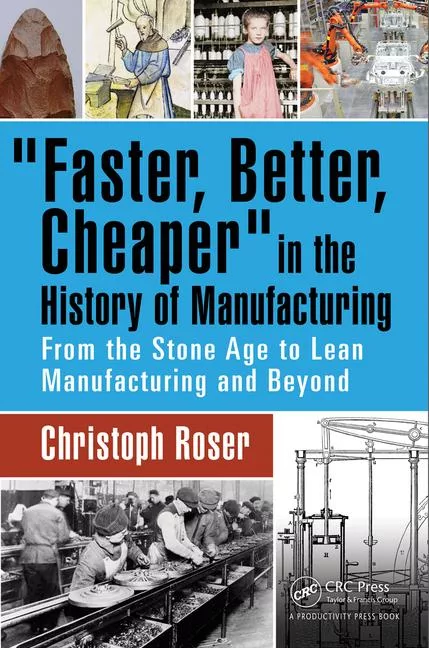
  • history.jpg

    Faster, Better, Cheaper in the History of Manufacturing: From the Stone Age to Lean Manufacturing and Beyond

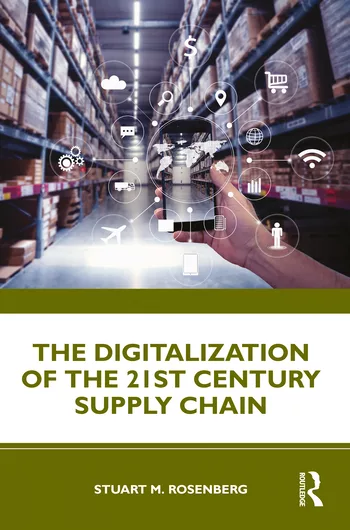
  • digitalization.jpg

    The Digitalization of the 21st Century Supply Chain

See More Products

Related Directories

  • The Test Connection Inc. (TTCI)

    The Test Connection Inc. (TTCI) supplies quality test engineering solutions with complete documentation allow our team to support needs from the earliest design stages to test development to testing of circuit card assemblies (CCAs). Our services range from: In-Circuit Test (ICT) development and board testing services for Keysight (formerly Agilent) 3070 and Teradyne (Formerly GenRad) TestStation/228X test systems, Flying Probe development and board testing services on our Seica Pilot V8 & Digitaltest MTS500 flying probe test systems, Boundary-Scan Test Solutions with the Keysight x1149 Analyser and XJTAG system and custom Functional Test solutions.
×

Never miss the latest news and trends driving the manufacturing industry

Stay in the know on the latest assembly trends.

JOIN TODAY!
  • RESOURCES
    • Advertise
    • Contact Us
    • Directories
    • Manufacturing Division
    • Store
    • Want More?
  • SIGN UP TODAY
    • Create Account
    • eMagazine
    • Newsletters
    • Customer Service
    • Manage Preferences
  • SERVICES
    • Marketing Services
    • Reprints
    • Market Research
    • List Rental
    • Survey/Respondent Access
  • STAY CONNECTED
    • LinkedIn
    • Facebook
    • Instagram
    • YouTube
    • X (Twitter)
  • PRIVACY
    • PRIVACY POLICY
    • TERMS & CONDITIONS
    • DO NOT SELL MY PERSONAL INFORMATION
    • PRIVACY REQUEST
    • ACCESSIBILITY

Copyright ©2026. All Rights Reserved BNP Media, Inc. and BNP Media II, LLC.

Design, CMS, Hosting & Web Development :: ePublishing