Assembly Magazine logo
search
Ask ASSEMBLY AI
cart
facebook twitter linkedin youtube
  • Sign In
  • Create Account
  • Sign Out
  • My Account
Assembly Magazine logo
  • TRENDS
    • Ask ASSEMBLY AI
    • Trends
    • News
    • New Products
  • INDUSTRIES
    • Aerospace
    • Appliance
    • DFMA Assembly
    • Medical Devices
    • Green Manufacturing
    • Lean Manufacturing
    • Machinery Assembly
    • Electronics Assembly
    • Automotive
  • TECHNOLOGIES
    • Adhesives & Dispensing
    • Assembly Presses
    • Automated Assembly Systems
    • Manufacturing Management
    • Manufacturing Software
    • Motion Control
    • Screwdriving & Riveting
    • Robotics
    • Test & Inspection
    • Plastics & Metal Welding
    • Wire Processing
    • Workstations
  • AUTONOMOUS & ELECTRIC MOBILITY
    • AEM Magazine Archives
    • Autonomy
    • Electrification
    • Mobility Services
    • Assembly & Testing
    • AV/EM News
  • MEDIA
    • Ask ASSEMBLY AI
    • Podcasts
    • Assembly News Now
    • Assembly TV
    • Webinars
    • eBooks
  • EVENTS
    • Calendar
    • The ASSEMBLY Show
  • MORE
    • Exclusives >
      • Plant of the Year
      • Capital Spending
    • Buyers Guide >
      • Supplier Insights
    • Classifieds
    • Featured Products
    • Newsletters
    • Store
    • White Papers
    • Columns
    • Sponsor Insights
  • INFOCENTER
    • Assembly & Test Solutions
  • EMAGAZINE
    • eMagazine
    • Archive Issues
    • Advertise
    • Contact Us
    • Sign Up
Columns

Fastening Threads: Nine Common Bolting Boo-Boos

By David Archer
April 29, 2009
As with most endeavors where success can’t be measured by keeping score, a good job of engineering is often defined by not doing a bad job. In other words, the most direct measurement of successful joint design and assembly is a lack of joint problems. Here’s a brief look at the most common reasons why problems occur during joint design, joint assembly and troubleshooting.


As with most endeavors where success can’t be measured by keeping score, a good job of engineering is often defined by not doing a bad job. In other words, the most direct measurement of successful joint design and assembly is a lack of joint problems.

As an independent test lab, we evaluate joint capabilities, failure modes and root causes of operational joint failure. This provides me an opportunity to survey what joint characteristics and development decisions are likely to reduce the capacity or reliability of bolted joints across a wide range of industries and applications.

Here’s a brief look at the most common reasons why problems occur during joint design, joint assembly and troubleshooting.

Joint Design:

  • Installation torque is established without specific testing of the torque-tension relationship (how much bolt tension is generated for a given torque input) or joint behavior (whether unexpected events occur during tightening). Without this knowledge, the joint’s suitability is an educated guess. Whether this is a cause for concern is largely dependent on the cost of failure.
  • The compressive strength of a joint member is exceeded before the installation torque is reached. In most structural joints, the fastener should be much less stiff than the clamped members and be the first element to yield under increasing clamp load. When this is not the case, unexpected joint behavior often results.
  • Inadequate consideration is given to the effect of the grip length to fastener diameter ratio on sensitivity to relaxation and resistance to loosening. Use of a larger diameter fastener is often incorrectly seen as providing an added safety factor-in fact, it can actually increase the tendency for vibrational loosening.

Joint Assembly:

  • Run-down sequence, driver type, driver speed, assembly tooling, and tightening strategy all influence the outcome of tightening a fastener. Often, no investigation of these factors is undertaken before a fastening operation is established. The lack of two-dimensional visualization makes investigation difficult.
  • When fastening problems occur in a production environment, personnel with joint engineering experience or people with the authority to make design changes are often unavailable. The pressure to maintain production then leads to inadequate solutions that don’t address the root cause, resulting in a lingering problem.
  • Even when it’s performed, the benefit of joint development and validation testing is not always optimized due to disconnects between the testing organization and the plant. Test parameters can either be unrealistically lab-oriented or production can override the parameters under which test results were generated to increase production rates. Communication beyond noting the recommended installation torque on a test report is often absent.

Troubleshooting:

  • Attempting to assign cause to a problem without diagnostic tools is time-consuming and often results in a lot of scrap. Understanding increases exponentially when joint behavior can be viewed in two dimensions by creating an X-Y graph of two parameters. The most widely used graph is the torque-angle plot, which reveals changes in apparent joint stiffness. A wide variety of causes can be uncovered with this simple tool Surprisingly, only a small percentage of the users of controlled tools, which contain a torque transducer and angle encoder, actually use this graph. For structural joints where clamp load is critical, bolt tension can be measured in real-time. This eliminates the impact of friction variation on the torque-angle plot and greatly increases investigative capability.
  • When bolt fracture or thread strip occurs, engineers typically call their fastener supplier first. However, it is more likely that the person who should be informed can be reached on an internal extension rather than an outside line. Unless the specified fastener was substituted for, it is far more likely the issue is based on joint design or assembly parameters than a fastener not meeting spec.*
  • As with any form of problem-solving in a stressful production environment, the inclination to start trying things in the hopes it will work is very strong. However, it’s better to rein in this desire and determine if this assembly problem is a process that was never really in control. For instance, did some small incremental variation make the problem visible? Or, did a distinct change in product or process occur? The person with the best answer to that question will always be the joint's "mom"-the operator who lives with it every day. The investigator's job, like the pediatrician's, is to ask questions that will obtain objective information.

Without question, the greatest barrier to assembling efficient and reliable bolted joints is the belief that, because threaded fasteners are seen as a ubiquitous commodity, the engineering required to implement them shouldn’t be more involved than picking a torque value from a table. A

Looking for quick answers on assembly and manufacturing topics? Try Ask ASM, our new smart AI search tool. Ask ASM →

Share This Story

Looking for a reprint of this article?
From high-res PDFs to custom plaques, order your copy today!

President
Archetype Joint LLC, Orion, MI

Archetype joint specializes in joint design, testing and validation.

Recommended Content

JOIN TODAY
To unlock your recommendations.

Already have an account? Sign In

  • Made in the U.S.A.

    Consumer Products Manufacturing: Made in the USA

    Supply chain lessons learned during the coronavirus...
    Automated Assembly Systems
    By: Austin Weber
  • Best Practices for Press-Fit Assembly

    Best Practices for Press-Fit Assembly

    In manufacturing, ironclad formulas for success are hard...
    Assembly Presses
    By: Jim Camillo
  • aem0523leader-tesla1.jpg

    Tesla Rethinks the Assembly Line

    Engineers at Tesla Inc. have developed a new process that...
    Industries
    By: Austin Weber
Manage My Account
  • eMagazine Subscription
  • Assembly Newsletters
  • Online Registration
  • Subscription Customer Service
  • Manage My Preferences

More Videos

Sponsored Content

Sponsored Content is a special paid section where industry companies provide high quality, objective, non-commercial content around topics of interest to the ASSEMBLY audience. All Sponsored Content is supplied by the advertising company and any opinions expressed in this article are those of the author and not necessarily reflect the views of ASSEMBLY or its parent company, BNP Media. Interested in participating in our Sponsored Content section? Contact your local rep!

close
  • ultrasonic welding
    Sponsored bySonobond Ultrasonics

    Engineering Efficiency in High-Performance Assembly: How Ultrasonic Welding Enhances Throughput, Reliability and Quality

  • UV curing system
    Sponsored byDymax

    Why UV Intensity Alone Doesn’t Define Curing Performance

  • wooden pallets
    Sponsored byLEAN Manufacturing Products

    Eliminating Waste on the Shop Floor: Applying Lean Principles to Improve Manufacturing Efficiency

Popular Stories

ASSEMBLY News Now, episode-30: Volvo Redesigns EV Manufacturing

Volvo Redesigns EV Manufacturing

Boeing CEO Kelly Ortberg announces 1 billion investment

Boeing Plans $1 Billion Wichita Investment, Workforce Training Center

GE Appliances Worker on Line

GE Appliances Expands Factory AI With 800 Gemini Enterprise Agents

Watch the latest episode of ANN now!

Events

July 24, 2025

From Shop Floor to CFO: How Manufacturers Are Closing the Loop Between Operations and Finance

On Demand Learn how manufacturers are bridging the gap between the shop floor and ERP systems to gain real-time visibility, streamline operations, and kick-start digital transformation—without waiting years.

Sponsored by:

PicoStratusGreen
July 30, 2025

Buffer Analysis and Design Fundamentals for Manufacturing Excellence

On Demand In this presentation, Dr. Herman Tang shares practical insights from his industry experience and research on buffer management in manufacturing operations.

View All Submit An Event

Poll

Difficult Assembly Processes

Which assembly process gives you the most difficulty?
View Results Poll Archive

Products

Manufacturing Cost Policy Deployment (MCPD) Profitability Scenarios: Systematic and Systemic Improvement of Manufacturing Costs

Manufacturing Cost Policy Deployment (MCPD) Profitability Scenarios: Systematic and Systemic Improvement of Manufacturing Costs

See More Products
Register for webinar - Modernizing Automotive Assembly: Why Upgrading Legacy MES is a Business Imperative

Related Articles

  • Fastening Threads: Target Torque Ouija

    See More
  • Fastening Threads: Torque Audits Are a Good Way to Check Joints

    See More
  • Fastening Threads: Better, Cheaper, Faster

    See More

Related Products

See More Products
  • Introduction to the Design and Behavior of Bolted Joints, Fourth Edition: Non-Gasketed Joints

  • achieving

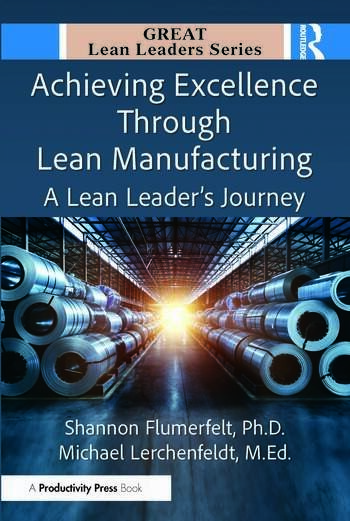
    Achieving Excellence Through Lean Manufacturing: A Lean Leader’s Journey

  • Joining of Plastics 3e Handbook for Designers and Engineers

See More Products

Related Directories

  • STANLEY Engineered Fastening

    Serving the complex needs of industrial and automotive manufacturing, we develop, manufacture and market precision threaded fastening solutions; from electric and pneumatic assembly tools to industrial power tools and engineered systems. STANLEY® Assembly Technologies delivers productivity, quality and safety to a wide range of assembly and manufacturing operations while reducing customer costs. Our primary industries include aerospace & defense, automotive & light truck, electronics & telecom, ground transportation, mining & agriculture, and recreational products.
×

Never miss the latest news and trends driving the manufacturing industry

Stay in the know on the latest assembly trends.

JOIN TODAY!
  • RESOURCES
    • Advertise
    • Contact Us
    • Directories
    • Manufacturing Division
    • Store
    • Want More?
  • SIGN UP TODAY
    • Create Account
    • eMagazine
    • Newsletters
    • Customer Service
    • Manage Preferences
  • SERVICES
    • Marketing Services
    • Reprints
    • Market Research
    • List Rental
    • Survey/Respondent Access
  • STAY CONNECTED
    • LinkedIn
    • Facebook
    • Instagram
    • YouTube
    • X (Twitter)
  • PRIVACY
    • PRIVACY POLICY
    • TERMS & CONDITIONS
    • DO NOT SELL MY PERSONAL INFORMATION
    • PRIVACY REQUEST
    • ACCESSIBILITY

Copyright ©2026. All Rights Reserved BNP Media, Inc. and BNP Media II, LLC.

Design, CMS, Hosting & Web Development :: ePublishing